If we as progressive funders are serious about blocking authoritarianism and building a liberated world, we must step up our support and resource the progressive South in the long term. Since the founding of this nation, the South has been the epicenter of the country’s deepest authoritarian tendencies, but it has also been the birthplace of our most significant achievements in democratic repair.
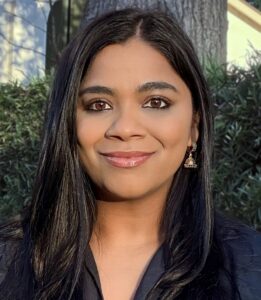
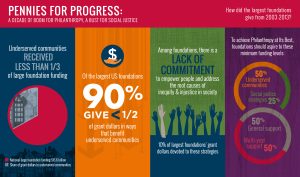
We are both from the South: ada smith from Kentucky and Hillary Holley from Georgia. For our entire lives, we have witnessed funders come in and out of our states, and our communities have felt the consequences. We see a boom of investment when Washington pollsters deem a Southern state “flippable,” and then the cycle ends, and the dollars disappear. Our friends and movement leaders have to lay off organizers and fight authoritarian attacks with mere pennies. Unlike that now-obsolete copper coin, progressive Southern communities are born every day and deserve funding that keeps up. Then, we watch as the nation spins out when those same autocratic actions spread to the federal level. It’s a dangerous cycle: One that has led us to this current political moment.
As we head into the 2026 midterms, candidates in Florida, Tennessee, and Texas showcase a 21st century vision of a new progressive South Despite little support from national funders, their success and ever-growing popularity is a testament to the power of state-based organizing and power-building efforts. It’s also proof that Southern communities are ripe and ready for change. Through real foundational organizing, a new era for the South – and the country – can emerge.
As funders and philanthropists, if we are to act on our responsibility to invest in the resistance against authoritarianism, the South must be centered, not just with short-term outcomes in mind, but through multi-year commitments for a generation. It’s critical that we unlock unrestricted 501(c)(4) funding so that groups on the ground can engage in direct political and electoral activities while continuing their year-round advocacy work.
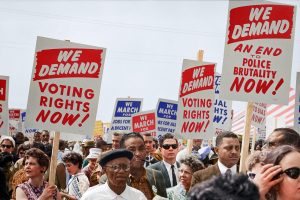
The South is rapidly moving into deeply dangerous territory. Louisiana v. Callais essentially demolished the Voting Rights Act, and conservatives are acting fast to collapse Black leadership. As many as 19 Black-led congressional districts and thousands of local offices and school boards are at risk of being erased this year, and conservatives are consolidating power at the same speed and with the same strategy as when they ended the Reconstruction Era and moved toward Jim Crow.
This rise of Jim Crow 2.0 is part of a broader strategy in which well-funded, authoritarian policies take root in the South and eventually spread across the nation. The examples are plentiful: Trump’s cuts to SNAP and Medicaid in 2025 extended a century-long undermining of public benefits, especially for Black and brown families in the South. Mississippi’s 15-week abortion ban, the 2018 legislation that led to the dismantling of Roe v. Wade, came after decades of attempts to pass “heartbeat” and “gestational age” bills in Southern states. And the influx of data centers in the rural South are the most recent iteration in a long history of racist corporate practices that benefit wealthy white entrepreneurs at the expense of the environment and poor, rural, and Black and brown families.
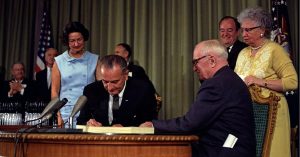
The South also provides perhaps the starkest, most necessary example of what a national plan for repair might resemble. During the Reconstruction, federal troops enforced voting rights and protected communities in a way that opened the doors for the election of 16 Black leaders to Congress and hundreds more Black representatives in state legislatures and local offices as well as an increase in investments in welfare, medical care, and public education. These examples benefited communities across the country, including Black Americans, rural residents, and people with low incomes.
Now, as we witness a regression back into Jim Crow-era levels of discrimination, how is philanthropy at large responding? Talk to leaders in the South – including battleground states like Georgia and North Carolina and often-overlooked corners of Louisiana and Alabama, and they’ll tell you: Political dollars are inconsistent and often withheld in non-election years. Support for high-profile races only happens when those races are deemed noteworthy on a national scale. Far too often, electoral losses are viewed as signs for further disinvestment.
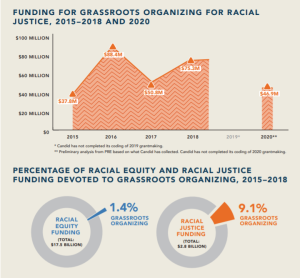
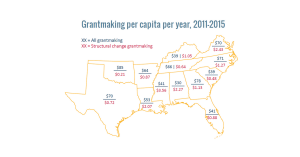
In 2024, the Council of Foundations reported that the South and small, rural communities see the least investment from grantmakers, and those funding gaps have catastrophic effects for year-round base-building efforts. When these programs do receive national investments, they are often coupled with unreasonable and burdensome expectations.
As the leaders of Women Donors Action and Backline Alliance, we are calling on funders to join us in a collective commitment to fund the South responsibly with long-term intentions – and the timing couldn’t be more ideal. Across the country, progressive movements are redefining what is politically possible. Progressive victories in Michigan, New York, Wisconsin, and Florida are not one-offs; They are the result of long-term investments and healthy organizing infrastructures. Women Donors Action, for example, has funded in Florida for 8 consecutive years: The fund moved resources to many of the organizations that helped power progressive candidates’ primary wins.
These organizations are the result of long-term investments and healthy organizing infrastructures.
This is not about counting electoral math but about funding the foundation of repair. We are asking donors and funders to invest not in transactional funding during elections, but in long-term strategies to build and sustain political power across the South. Our bases must be mobilized during elections and activated year-round for critical advocacy efforts. We must believe that building Southern governing power on a state level is achievable, and we must commit to funding that regardless of “battleground” status. Donors must trust organizers on the ground, move toward multi-year and flexible 501(c)(4) grants, and educate themselves and their peers about moving catalytic investments into Southern communities. This is what Backline Alliance and Women Donors Action are doing, and we welcome fellow progressive donors to join us.
It’s our collective responsibility to correct our course in the South. If we consider this a collective commitment – we’re making a down payment now and pledging to pay the 30-year fixed-rate mortgage – we can fill the South not just with dreams of change, but with the structural plans for true transformation. Because when the South transforms, so does the nation.
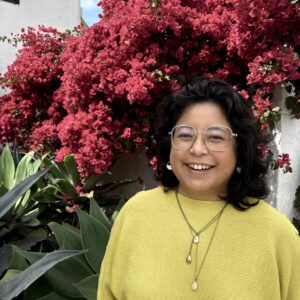
Hillary Holley is a proud, lifelong Georgian and the Vice President of Politics & Advocacy for Women Donors Action. Prior to joining WDA, Holley was Vice President of Civic Engagement for the National Domestic Workers Alliance and Executive Director of Care in Action, the political home for the country’s domestic workers, care workers, and women of color and immigrant women who rely on care. Her movement roots began in Atlanta, where she worked on Stacey Abrams’ 2018 campaign and helped found Fair Fight Action.
ada smith is the Governing Power Director for Backline Alliance, a donor and funder network backing frontline communities to build political power. Raised by Appalshop filmmakers, smith learned about cultural organizing at an early age. Her politic continues to be informed by Appalachian and rural landscapes, especially the myriad forms of resistance therein. She is a founding member of the Stay Together Appalachian Youth (STAY) Project, has served as a co-facilitator for the Kentucky Rural-Urban Exchange, sits on the steering committee of the Southern Power Fund, and finds political home in radical, Southern organizing formations.