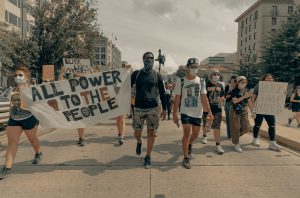
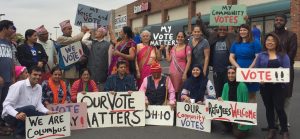
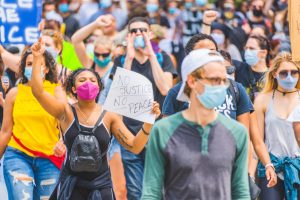
Long before philanthropy formalized intermediaries, movements relied on stewards. In the abolitionist era, networks collected funds to sustain newspapers, legal defense, and underground organizing. During the Reconstruction era, community-based funds protected Black political participation when law was weaponized. Throughout the Civil Rights Movement, philanthropic foundation, the Garland Fund’s critical resourcing enabled battles against lynching and segregation, while trusted fiscal hosts routed money to local organizers when mainstream institutions refused. In the early years of the HIV/AIDS crisis, pooled funds sustained direct action while government and philanthropy hesitated.
Designing for Accountability

These keepers of resources were not neutral administrators; they were the sowers of possibility. Their legitimacy flowed from proximity to wisdom, harm, and consequence. It informed them about who they were most accountable for. Community-rooted philanthropic intermediaries now inherit this legacy. Our ability to live in that bequest requires thoughtful design and practice. Borealis is proud to be part of the legacy of Black philanthropy, sowers of possibility building on that lineage.
Those of us who work in community-rooted intermediaries are not endowers, nor are we always the final signatories on grants. We are administrators, translators, bridgers, narrative holders, and strategists with lived experience. We interpret need and move capital. For us, the question— “accountable to whom?”—has never felt murky or abstract. It has always been about community.
Like many of our intermediary peers, I arrived to the philanthropic sector through organizing, community work, and proximity to harm, which later became proximity to capital. With that, the longer I sit in this work, the more I find myself underlining accountability as a priority and a compass.
As the grounds beneath us shift, here are some questions that our organization, Borealis Philanthropy, has grappled with over the past several years:
- As risk increases, how do we ensure that we are acting as a shield for our grantee partners, our donors and the people they both want to thrive? What systems do we have to move capital urgently and equitably in moments of crisis? What slows down our processes—and why? For example, according to ABFE’s 2024 research report on Black voices in corporate grantmaking, more than half of surveyed Black-led nonprofits said they felt pressure to tone down the racially specific language they used to describe their work. Additionally, NCRP’s 2025 report Hiding in Plain Sight found that one in twelve foundations in the sector censored themselves – changing their websites to remove language related to diversity, equity, and inclusion in the social sector.
- Understanding the critical role our institution plays in flanking U.S. movement ecosystems, how do we protect not just our partners, but ourselves? And how can we further bi-directional accountability so that funders understand the cost and precarity associated with the risks we absorb—and support our infrastructure accordingly?
- How is power distributed across our staff, board, grantee partners, community advisors, and funders? Where does formal decision-making authority sit? Who are we inviting to shape our decisions related to grant making, operations, and how we communicate about the work? What mechanisms have we created for communities to challenge, influence, or redirect our institutional strategies?
- When donor preferences and movement needs diverge, what role must we play in bridging these gaps? How do we help donors and movement partners see each other more fully and understand each other’s operating environments and constraints? How do we muscle up our “translator” skills to ensure the continual flow of resources to movements?
Accountability in Action: A Case Study
Ten years into Borealis’ existence, we have applied these questions to our work in myriad ways. They have become guardrails for us. They ensure we stay aligned with our mission and responsive to the communities we are accountable to.
One way this shows up is through Borealis’ disability work. As Program Officer for the Disability Inclusion Fund at Borealis Philanthropy, Nikki Brown-Booker shares, “we’re trying to fund a community that’s doing disability justice work, particularly at the intersection of other movements. Borealis has a Black Disabled Liberation Fund through which we have granted over a million dollars. We’re actually now granting a million five because we’re doing renewals.”
Supporting Black communities is not always clear-cut. A few years ago, this realization led us to sunset the Racial Equity in Philanthropy Fund (REP).
We moved through a process of critique, asking ourselves and our partners: What value-add do we bring to our REP grantee partners? What role do we have in sharing and distributing power? Does the Fund’s continued existence provide our partners with unique and necessary resources and/or opportunities needed to meet and grow through the current moment?
The Racial Equity in Philanthropy (REP) Fund was created to resource philanthropy-serving organizations at the forefront of informing, educating, and equipping funders to integrate racial equity policies and practices into their grantmaking and programs. In 2023, we received feedback from grantee partners questioning the continued relevance and role of the fund. Since the Fund’s inception in 2017, the philanthropic sector had demonstrated greater awareness and adoption of racial equity principles, and partners named their needs at levels that exceeded the Fund’s original inception and capacity.
“Putting an intermediary [Borealis] in place of direct funding [created] a networking /educational / advocacy container for orgs that were already networking/educational/advocacy convenors and containers,” one partner summarized. “Additionally, it tied up funding for those of us with histories of deeper racial justice work at a point when organic and strategic collaborative efforts desired by all parties were already happening for some of us.”
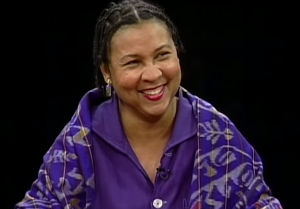
As the organizer and writer adrienne maree brown has explained, “Critique is a way we ensure collectivity in the process of generating our future—to say ‘not that, this’; to increase rigor in our values; to increase the quality of our creative work.”
Questions of perpetuity are not just applicable to whole institutions. In our case, we knew that no pooled fund that we hosted was assumed to exist forever. There should be a continuous reflection and assessment of progress. Impact and the degree to which the assumptions on the theory of change are still true. We recognized that the sector had evolved, due in large part to the work of REP grantee partners, and in this new state, long-term, direct funding relationships would better support these philanthropy-serving organizations in scaling and further shifting the sector landscape. In discussion with REP fund grantee partners and donors, we decided to sunset the Fund. Today, this work carries forward via direct relationships, enabling these partners to grow and Borealis to continue connecting donors and agents of change to each other in ways they would not be but for our role.
The Choices Ahead
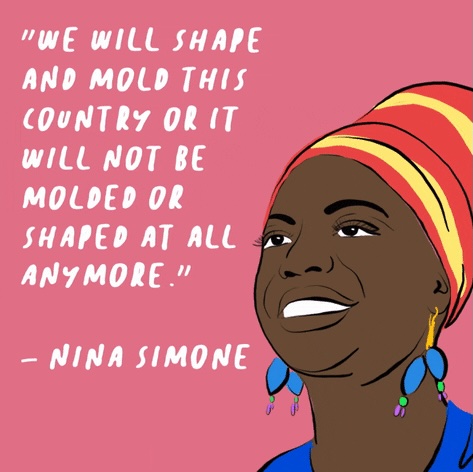
As our movements face intensified pressure, funders are turning to intermediaries for community proximity, coordinated funding, and meaning making. Funders partner with us to help them understand what today’s shifting sociopolitical realities mean for their work and our movements.
They choose us for our ability to synthesize and translate information in real time, aggregate and move capital quickly, operate compliantly and at scale, coordinate across issues and geographies, and absorb risk and reduce burden of grantee partners. Intermediaries have become increasingly vital. Their presence and influence have shaped the field. With this expansion, intermediary landscapes have become a defining force in the field and will continue to play a crucial role in its future.
As we grow, we must speak plainly and openly to funders about what it means to exist in “the middle.” Funders must understand the expectations it creates, the distinct challenges that arise, and the resources authentic, sustained community accountability truly requires. Intermediaries can exist as guides or offer blueprints for this work and help carry forward our inherited legacy with love and assurance. Donors who care about the resilience of our nonprofit sector and social change leaders must commit to the resilience of philanthropic intermediary infrastructure. Resource us wholly, so that we can sustain this rigor, and carry forward our inherited legacy with love and assurance.
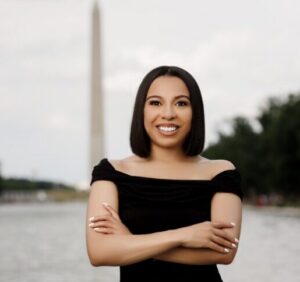
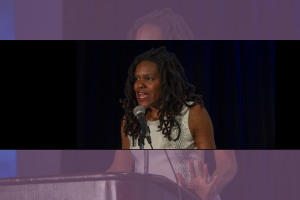
Amoretta Morris is the President of Borealis Philanthropy, a national philanthropic intermediary that has deployed over $200 million to grassroots movements leading transformative change. From her early days as a youth activist, Morris has worked to build power, equity and justice by supporting community-led change. Prior to Borealis, Morris led national community change strategies for the Annie E. Casey Foundation, student engagement efforts at DC Public Schools and juvenile justice organizing efforts across Washington, DC. Morris earned a bachelor’s degree in economics and African studies from Washington University in St. Louis and a master’s in public policy from Harvard Kennedy School.