Trigger Warning – gendered violence
Reproductive Justice Ancestors
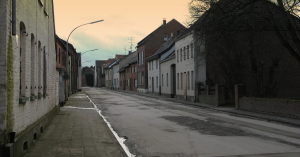
In the spring of 2025, I took a trip back to my motherland of Andhra Pradesh. In a small village on the coast of eastern India, I visited, for the second time in my life, my paternal grandmother’s home. Up until that point, all I knew about her death was that she died at home in poverty.
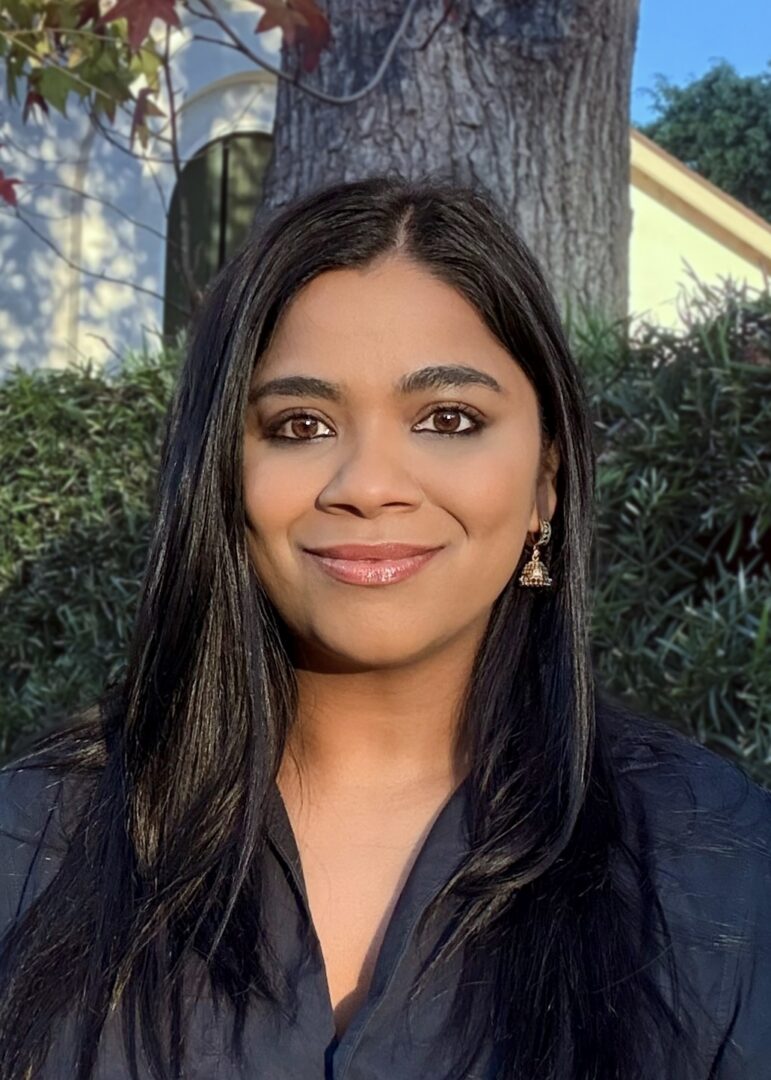
Standing on the soil where my dad and his seven siblings were raised, my cousin shared with me a secret about my grandmother. Kamala died of cervical cancer. She bled out and no hospital care came in time to help her. It was graphic and ugly, and not how I had imagined my grandmother, who I never met, would leave this earth. My grandmother’s name was Kamala, which means ‘lotus flower’ in Sanskrit.
When I returned home from India, I looked up cervical cancer and learned that too many pregnancies increased the risk of HPV and cervical cancer. Kamala carried out at least eight full-term pregnancies. When I looked up from my laptop, I thought of my other grandmother, who lived till nearly 95 years old and had all the medical care western medicine could cover. The stark contrast between my two grandmothers and the way their bodies left the earth was unsettling, and yet it perfectly explained why I came into the work of reproductive justice (RJ) in the first place. I had always had a strong conviction that no person should be without bodily autonomy. Not a person living under systems of colonialism and imperialism that continue to shape our world, not a person subjugated to economic inequality, not a person whose gender or sexuality is denied, not a person whose body has been violated. No person should have to pay for the cost with their body, their happiness, their freedom.
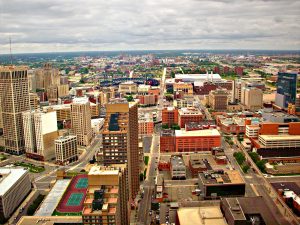
Before I left for SisterSong’s Let’s Talk About Sex Conference (LTAS), I saw that their social media reels referred to Chicago, Illinois, where the conference would take place as “the birthplace of reproductive justice.” I had never heard that before. I knew that there was a group of 12 Black women who coined the phrase reproductive justice and was familiar with the four pillars of Reproductive Justice. What I didn’t know was that my visit to Chicago was a visit back to RJ’s own motherland. 32 years earlier in the city of Chicago, these courageous women coined the term reproductive justice and created the RJ framework we use today.
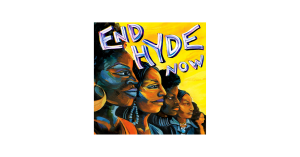
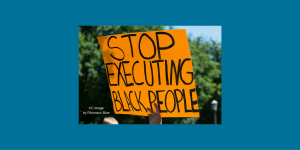
The RJ movement has always gone beyond abortion access. The movement recognized that abortion wasn’t safe long before Roe fell, and it recognized the risk of relying on crisis funding after Dobbs. While other feminist rights organizations focused on an abstract right to choose, Black women explicitly called out abortion safety following the passing of the 1976 Hyde Amendment.
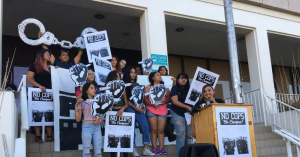
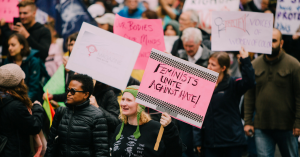
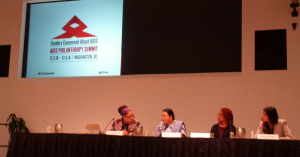
RJ included the whole story: healthcare, contraception, sex ed, fair wages, housing rights, and discrimination. It centered marginalized folx, built coalitions, and trained organizers. And somehow, I was lucky enough to be among that history at the LTAS conference. NCRP was able to take a seat at the table and listen to what the people in these rooms wanted to ask philanthropy in this moment, when bodily autonomy and rights are being stripped, especially from Black, brown, Indigenous, queer, and trans peoples.
The Movement
This was my first time attending the LTAS Conference. I was there as communications lead for NCRP’s Reproductive Justice team. My professional goals were to get grounded with frontline repro work, meet key partners from this initiative in real life, and build communications relationships with other repro comms leads. But LTAS was not like a typical professional conference. It felt personal. Somehow, even though I had a fairly strong idea of my own theory of change and my own RJ story up until this point, this story of my grandmother kept blooming all week until I realized—Kamala was my RJ story.
I understood how my own experiences with reproductive access and gendered violence shaped my work. What I didn’t consider was the legacy I had carried unknowingly all these years – especially after I learned this secret about Kamala.
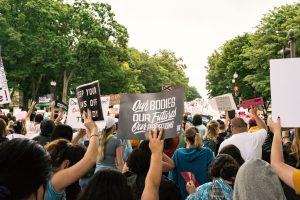
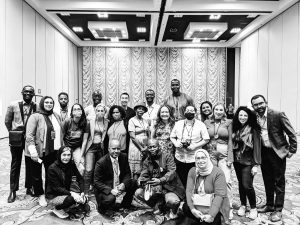
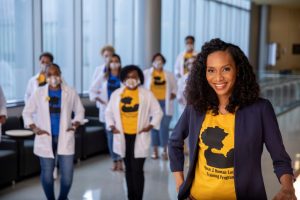
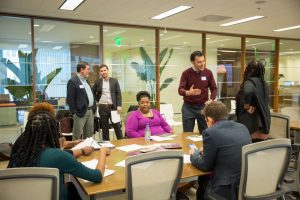
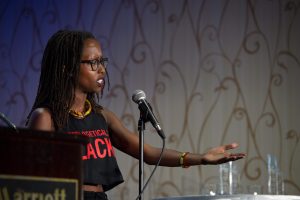
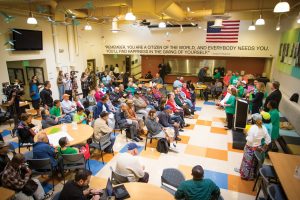
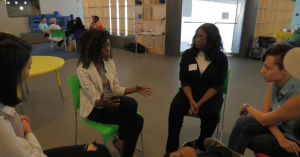
The LTAS 2026 conference, organized by SisterSong Women of Color Reproductive Justice Collective, brought together hundreds of movement leaders, grassroots organizers, academics, and medical professionals. It centered on reproductive justice, human rights, and bodily autonomy. No matter the topic of the panels and speaking engagements I attended, they were all held and celebrated through the lens of healing justice. And as I had this realization about my grandma Kamala surrounded by hundreds of RJ practitioners, I felt held.
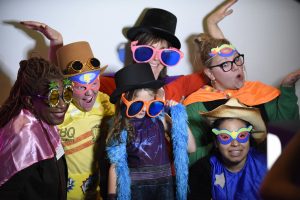
I felt held looking out into Lake Michigan with tears in my eyes when I realized how integral my grandmother Kamala was to my work. I felt held and validated by a panel on somatic sovereignty, where we connected with our nervous systems and repeated together out loud “if you feel like it is an attack, it is an attack.” I felt held and joyful among local drag queens performing Whitney and Selena songs with fellow queer practitioners at a late-night meet-up. I felt held dancing to Chloe Bailey.
I felt held by the southern leaders who never back down in their fight to build a more autonomous liberated future for all. I felt held by funder intermediaries who were not shy about calling out and calling in philanthropy to witness and fund the full spectrum of the RJ movement.
I felt held not only by the data points and academic basis for our movement, but by the lived experiences that brought us all there. RJ was not singular; it does not sit in history, the present, or the future. It contained them all at once. The work was for the past – ancestors like my paternal grandmother, for the lack of control and autonomy so many women in my family experienced, for the privilege I live with in my body now, and for the freedom we are still so far from.
LTAS did something I didn’t expect. It reconnected me with my own theory of change—my why, my own RJ story—my who. Suddenly the fullness of why I did this work became more real. I saw the throughline: the connection, power, community, grief, anger, anxiety, joy, sex, choice, the freedom that this movement held all at once.
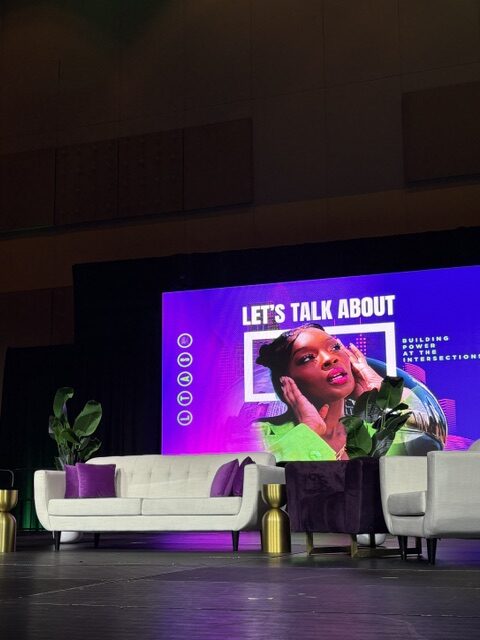
I brought together what I had learned from advocating for bodily autonomy in my community, what I understood through NCRP’s work within the RJ movement, what I learned from organizers I met at LTAS. Together, they held the past, present, and the imagination necessary to create a more autonomous future for all.
The Future of RJ
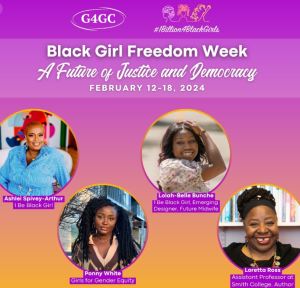
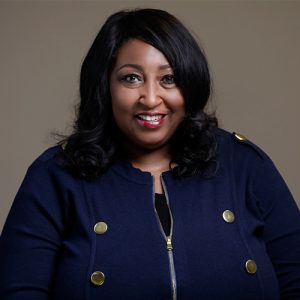
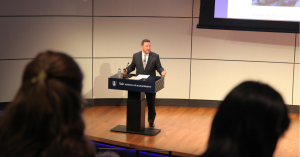
At the Panel on Reproductive Justice Futurism, Loretta J. Ross (one of the 12 women who coined RJ in Chicago in 1994) reminded the audience “there is no future without us.” In front of the main stage during the entire conference – during lectures and film screenings, during concerts and poetry readings, during calls to action and history lessons – there sat an altar to our ancestors of this movement.
LTAS keynote speaker and the coiner of the term ‘intersectionality’ Kimberlé Crenshaw reminded us that our theory of change is not only academic research. Our personal stories are foundational, too. And if those are part of the foundation, where can we build from here? Yes, the goal is to create equitable healthcare systems that protect human dignity and ensure everyone has equal access to reproductive care. But it is also to eradicate the need for an extractive model in the first place. Our imagination is a powerful tool to build that future.
The lotus flower, my grandmother’s namesake, is rooted in muddy, murky water. With roots in these conditions, it may seem impossible for something beautiful to emerge, but lotus flowers do. They break the surface. They bloom. That is the ancestry I am proud to carry. That is the ancestry that was honored on the altar throughout the conference. People ended circumstances they didn’t choose, and they found ways for their communities to not only survive but thrive. When I think of Kamala and the Black women who rooted the RJ movement in struggle and liberation, I am reminded that our work cannot simply help people survive in the mud. We have a responsibility to change those conditions that keep them there.
Philanthropy can work to excavate them by trusting the movements closest to harm, resourcing their visions, investing not just in survival but in creating conditions for all people to flourish. No matter the roots we inherit, we can rise, we can bloom, we can build a future where everyone has the freedom to choose.
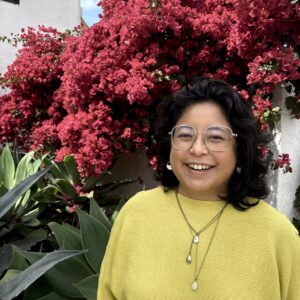
Suhasini Yeeda is the Editorial Manager at NCRP. She is also a California Arts Council Emerging Artist Fellow, a two-time Pushcart Prize nominee and The Best American Short Stories and Best of the Net nominee. She holds an MFA from Sarah Lawrence College and a BA from Texas Wesleyan University. Her short stories, essays, criticisms, and book reviews can be found at Ms. Magazine, The Los Angeles Review of Books, The Indian Review, and more. Suhasini lives and writes in Los Angeles.