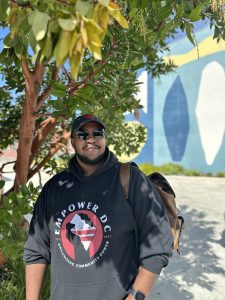
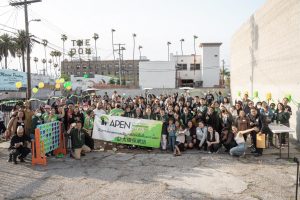
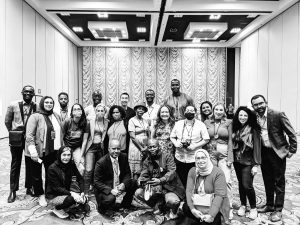
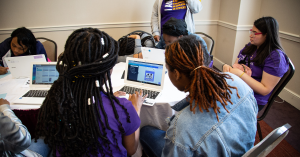
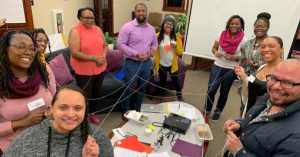
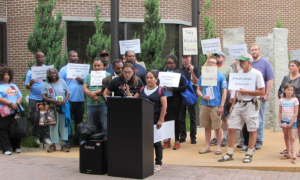
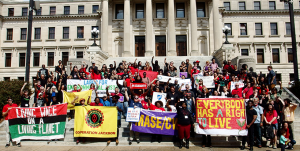
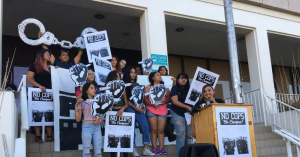
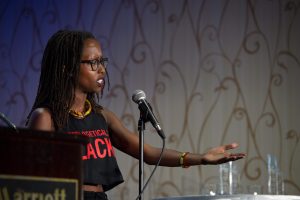
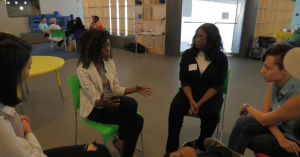
Picture a room of student leaders from Historically Black Colleges and Universities (HBCUs) laughing, hugging, and celebrating two years of advancing Reproductive Justice through advocacy that transformed them, their campuses, and their communities. That was the energy in the room at our 2026 Next Generation Leadership Institute Graduation Retreat in Washington, D.C.
I was filled with immense pride as we ushered this outgoing class into the next phase of their journey as budding Reproductive Justice activists. From the moment our 2026 fellows entered the program, they made history as the most inclusive cohort we have ever welcomed, with the largest representation of HBCUs to date. And what makes this distinct class even more remarkable is that they didn’t stop there. They carried that same spirit of excellence and purpose throughout their entire two-year fellowships.

As I stood in that room watching these young leaders reflect on the connections they made and the impact of the campus programming they hosted, I was moved beyond words. I was reminded of exactly why this work matters and why it demands our full investment. These students didn’t arrive at this moment by accident. They arrived because In Our Own Voice: National Black Women’s Reproductive Justice Agenda made a deliberate, sustained commitment to equip the next generation of Reproductive Justice leaders. As we close out the 2024–2026 programmatic cycle, I want to share what that investment produced, and what I believe funders need to understand about the kind of support that makes results like this possible.
In Our Own Voice is a national-state partnership that amplifies the voices of Black women leaders to secure Reproductive Justice for Black women, girls, and gender-expansive people. The Next Generation Leadership Institute is our flagship fellowship, the leading Reproductive Justice program for students at HBCUs. While it’s important to focus on what this program is, it’s equally important to focus on what it isn’t.
This is not a pipeline program designed to funnel talented young people into pre-existing structures and call that leadership development. The Next Generation Leadership Institute is built on a fundamentally different premise: that young Black people at HBCUs already have the passion and the vision to create change. What they need are the resources, infrastructure, and perhaps most critically, trust.
An Effective, Responsive Model
Why HBCUs? Why youth? Why Reproductive Justice? The majority of HBCUs are located in states with the most restrictive reproductive rights in the country. Our students are not studying these issues from a distance; they are on the frontlines. Their campuses are communities of deep culture and extraordinary organizing power. When you provide resources to young leaders, the ripple effects reach far beyond campus gates, energizing the broader Reproductive Justice movement.
Amid a hostile political climate, our fellows didn’t just show up. They showed out. Across the nation, the Next Generation Leadership Institute fellows organized 64 campus programs, each one tailored to the specific needs of their own campus community. Each fellow conducted a campus needs assessment, surveying their peers to understand what resource and programming gaps existed at their HBCUs. From that data, they built campus events that filled the Reproductive Justice needs outlined by their peers.
The results speak for themselves: more than 4,500 menstrual products distributed, 1,500 safe sex kits placed directly in the hands of students who needed them, and four Reproductive Justice Hotlines launched at Spelman College, Howard University, Xavier University, and Langston University, giving students on-demand access to contraceptives and reproductive health resources.
The beauty of our model is that it puts the decision-making power exactly where it belongs: in the hands of the young people who know their campuses best. A menstrual equity initiative at Xavier University of Louisiana looked nothing like one at Tougaloo College and it shouldn’t have. At Xavier, fellows Christina Anderson, and Alicia Spight, partnered with New Orleans Bounce artist and community advocate Vickeelo, turning what could have been a standard product distribution drive into a vibrant cultural celebration rooted in the spirit of their New Orleans community. At Tougaloo, fellow Nayla McClure, extended her reach beyond campus entirely, partnering with a local middle school in Jackson, Mississippi, to establish a menstrual care closet for young girls who needed it most. Both were made possible by a program design that gave fellows a clear framework and the freedom of trust to adapt it.
Standardized programming produces standardized results. To achieve transformative, community-rooted outcomes, our model proves that funders must resource and trust the people closest to the problem to design the solution.
Supporting Young Leaders Builds Lasting Power
Over the years of leading this work, I have learned that meaningful leadership development builds lasting power but only when it is resourced to do so. I say this not to scold, but because I genuinely believe funders who are paying attention can and will do better. Especially for organizations like ours that are pouring into young people to be fully equipped and prepared to lead the fight for Reproductive Justice. Here is what that looks like in practice.
Multi-year, flexible funding is not a luxury for this work. It is a prerequisite. Our fellows needed a full year to earn trust on their campuses, to build relationships, and to understand the landscape before their advocacy efforts could truly take root. The most powerful results such as new Reproductive Justice hotlines, coalitions, and community partnerships will long outlast our students’ fellowships. A one-year grant cannot capture that arc, and it certainly cannot sustain it.
While longevity in funding is crucial, so is trust. The Next Generation Leadership Institute works because we trust young people to identify their campus needs and design solutions to address critical Reproductive Justice issues at their HBCUs. When funders layer on excessive reporting requirements, rigid deliverable structures, or intense scope restrictions, that can send an unintentional message of distrust. The impact of distrust is not neutral. It costs time, energy, and momentum that our fellows could be spending on activating their campuses.
Black-led organizations are not high-risk investments. In fact, the Next Generation Leadership Institute’s impact including 64 programs created thousands of menstrual and contraception products distributed, and numerous hotlines launched proves that. These programs thrived, even against a backdrop of unprecedented political hostility towards reproductive rights, health, and justice. What we witnessed in those outcomes is not fragility. We saw resilience, resourcefulness, and visionary leadership, which can only be strengthened when it is funded.
I return to that Graduation Retreat room, and I find that I don’t want to leave, because what happened in that space deserves to be showcased. The fellows who fill the room know all too well the stakes when young people don’t have a seat at the table. We deliberately designed this celebratory gathering to firmly plant their seats at the helm of the Reproductive Justice leadership table. Watching them claim those seats with confidence and purpose reminded me that this is exactly what investment in young people is supposed to look like.
The lesson for funders is clear: When we trust young HBCU students, invest in their success, and fully resource them as partners in this work, the result is a stronger, more collaborative, and more resilient Reproductive Justice movement for everyone. In short, we all benefit from investing in the next generation of youth advocates.
Giovanteey Bishop is a program strategy executive and leadership development architect dedicated to advancing Reproductive Justice for Black women and communities across the nation. As Director of Programs & Training at In Our Own Voice: National Black Women’s Reproductive Justice Agenda, she leads the strategic vision of high-quality national programs and designs training ecosystems that develop the next generation of Reproductive Justice leaders. She holds a Master of Science in Administration with a concentration in Health Advocacy from Trinity Washington University, grounding her work in health program design, community needs assessment, and program evaluation. Beyond her professional role, Giovanteey serves as a mayor-appointed Commissioner on the Washington DC Commission for Women and is a proud member of Alpha Kappa Alpha Sorority, Incorporated.
To learn more about the Next Generation Leadership Institute and how to support this work, visit blackrj.org.