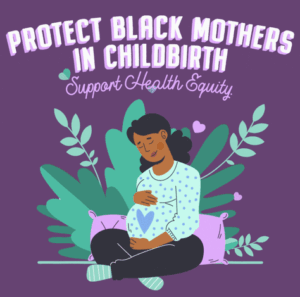
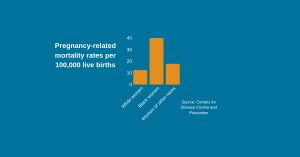
Alabama remains one of the most restrictive and challenging reproductive health environments in the country. The state’s laws, healthcare infrastructure, and political climate combine to create conditions where access to basic reproductive care is inconsistent, limited, and often unsafe. Black women experience maternal mortality rates three times higher than their white counterparts, meaning the burden of this hostile landscape is not shared equally. Philanthropy must respond with more than think-pieces and reports. This moment demands deep relationship and monetary investment into the solutions created by Birth Justice Leaders in Alabama and the Deep South.
In 2022, reproductive health, rights, and justice organizations across Alabama began preparing for significant changes when the Dobbs decision leaked, signaling that already fragile abortion access would face further erosion. As a trigger law state, Alabama immediately outlawed abortion following the overturn of Roe v. Wade. In the aftermath, the attorney general threatened prosecution against individuals assisting others in traveling out of state for care. Alabama Department of Public Health attempted to introduce regulations targeting birth centers and midwifery care that would have severely limited their ability to operate, while hospitals known for providing safer care for Black women closed their doors.
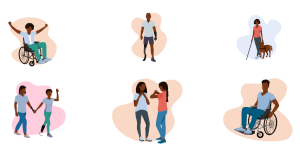
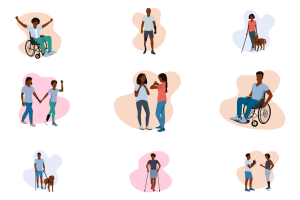
For rural communities, the absence of services shapes daily life. More than one third of Alabama counties lack obstetric care, forcing families to navigate long distances to access essential services. For low-income families, the cumulative costs of appointments, transportation, and childcare combined with race-based criminalization place care out of reach even when it technically exists. People living with disabilities face additional barriers through provider bias and inadequate accommodations, further reinforcing exclusion from essential reproductive and maternal health services.

We must do more than grieve. We must do more than witness. We must do more than write. Alabama Birth Equity Initiative (ABEI) is a statewide, community-driven effort that confronts Alabama’s maternal health crisis through a holistic, Reproductive Justice-centered approach rooted in the leadership, knowledge, and survival strategies of those most impacted.
The call for Alabama Birth Equity Initiative’s work is as ancestral as granny midwives, as natural as birthing in the room where your child was conceived, as familiar as scratching and surviving.
As Qiana Lewis of Holy H.O.E. Institute reminds us, “Our grandmothers caught babies in conditions that many of us would not survive. Their suffering wasn’t magical; they had an intense sense of responsibility for the people around them. We have to take the lessons and the history and build upon them.”
While ABEI is new in its public-facing form, it is not a new partnership nor a new body of work. The birth justice workers and advocates involved are people who have been doing this work independently and collaboratively for years. What ABEI represents is not a departure into new territory, but a strategic decision to formalize and scale work that already exists and already has momentum. Over the past two years, we intentionally focused on building coalition infrastructure before launching publicly. This included aligning leadership, clarifying shared values, establishing operational systems, and identifying where our individual strengths intersected most effectively. We reached the conclusion that building shared infrastructure was essential to achieving durable, statewide impact.
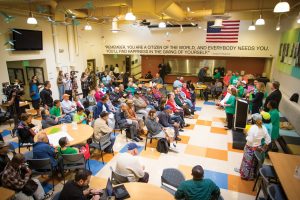
Alabama Birth Equity Initiative exists because we are past time to move beyond theory. Importantly, this initiative is grounded in data and direct community input, not assumptions. Through a 48-county bus tour across rural Alabama, we partnered with PhD candidate Shawnda Chapman, and Abby El-Shafei of Strength in Numbers to conduct a comprehensive reproductive health needs assessment. We engaged more than 500 community members to ensure that the services, advocacy, and systems we are building reflect what communities have identified as their actual needs and priorities from a Reproductive Justice standpoint.
Guided by the lineage of Southern midwives, mutual-aid societies, and organizers, we treat care itself as strategy: a way to dismantle the conditions that produce crisis while rehearsing the liberated future we seek. We witness the need for a new model, for care centered in community.
ABEI’s care-based strategy has three pillars. ABEI’s strategy for the workforce is to Increase the number of Black Midwives achieving licensure to practice within the state. They also want to improve access and provide mobile reproductive health units for rural Alabama. Finally for infrastructure, ABEI will build a Reproductive Justice center for birthing, working, and community resources.
ABEI builds directly on proven work that is already underway. Oasis Birth Center has helped double the number of midwives practicing in Alabama. Yellowhammer Fund has served as a trusted intermediary since 2022. In March 2025, Yellowhammer Fund served as lead plaintiff in the federal case that blocked Alabama from criminalizing anyone who helps residents travel for out-of-state abortion care. The ruling restored our travel-grant hotline, protected volunteers from prosecution, and is now cited in parallel suits across the South—proof that community-rooted organizations can move constitutional law. Alabama Birth Center has functioned as a preceptor site, contributing to workforce development. ABC has worked with countless student nurse practitioners, student midwives, and resident physicians to facilitate training in low-resource settings. Chocolate Milk Mommies works to bridge gaps by providing lactation and breastfeeding support creating safe spaces where mothers feel seen, heard, and valued, Chocolate Milk Mommies also connects families with trusted birth workers and maternal health resources, promoting awareness about disparities impacting Black maternal and infant health. Margins has served hundreds of families to ensure that pregnancy would not become a catalyst into poverty and that they would be able to raise their children with dignity and respect.
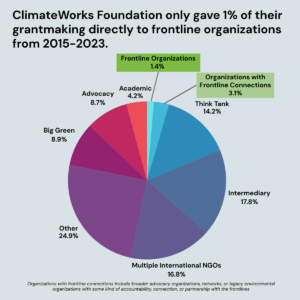
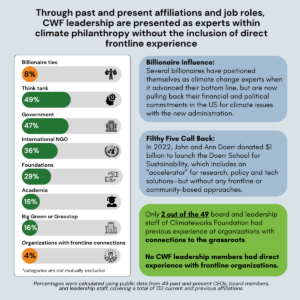
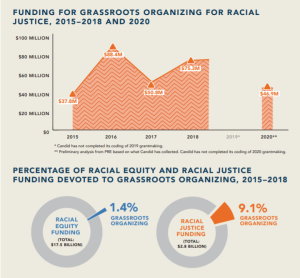
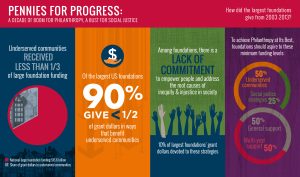
There has been a sector wide divide between abortion access and birth equity., That must end. Grassroots organizations like the members of ABEI and local abortion funds like Yellowhammer Fund serve people who are not living single issue lives. When we are asked to isolate our programming because a funder only funds abortion, we are being asked to abandon the framework of Reproductive Justice, which is central to our work. Funders can and must do better. Initiatives like ABEI are gateways to the full spectrum of care. The Combahee River Collective’s statement articulates how Black women face interlocking systems of oppression— race, gender, sexual orientation, and class— and how Black women’s liberation requires addressing all of these simultaneously. The Collective argues that identity politics emerge from material conditions of oppression and that the most radical politics come from those most marginalized. For ABEI, this provides foundational language for understanding why infrastructures of care must address food, housing, healthcare, childcare, and safety together. These needs are not separate, but interlocking. Meeting them is both practical survival work and radical political practice.
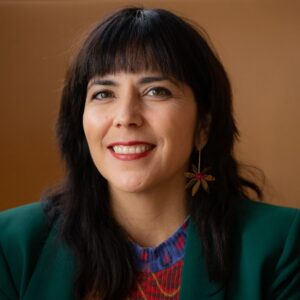
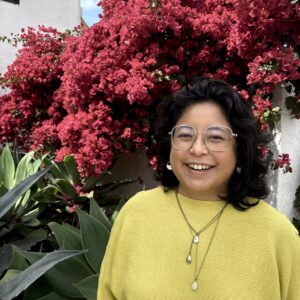
Jenice Fountain is the Executive Director of Yellowhammer Fund, where she leads Reproductive Justice work in Alabama and the Deep South with a focus on mutual aid, health equity, and economic justice. Fountain is a fearless organizer and strategist, building grassroots power in a region too often abandoned by national funders. She brings deep expertise in care-centered leadership and radical community resourcing. “My journey is fueled by rage, radical imagination and fierce love for my community. I am grounded in the belief that we can create what we need.”