It’s been called “California Forever,” and described as a chance to rejuvenate a struggling rural community in Solano County, California. The slick website promises 53,000 jobs, affordable homes, good schools, and thriving local businesses.
California Forever is pitched as a “gift” from some of the state’s wealthiest to the good people of East Solano County. Among its funders are a handful of billionaires including Michael Moritz, the tech investor behind Google and YouTube, and Marc Andreessen, the venture capitalist who made early — and lucrative — bets on Facebook and Airbnb.
If it sounds too good to be true, that’s because it is.
New for-profit charter cities like California Forever are being furthered using the language of philanthropy and “community wellness.” However, they are simply another vehicle for enriching their funders, made possible by keeping their intentions in the dark. Now more than ever, resourcing aligned, community leaders – like Solano Together – is how we can support our movements like we want them to thrive and last.
Combatting Self-Interest Cloaked in Philanthropy
The most effective way to combat self-interest cloaked in philanthropy is to shine a light on the individuals involved and their true intentions. At the Phoenix Project, we report on astroturf groups – billionaire-backed political pressure organizations in San Francisco and the greater Bay Area and their attempts to use wealth to unduly influence the political process and increase their wealth at the expense of working and vulnerable people.
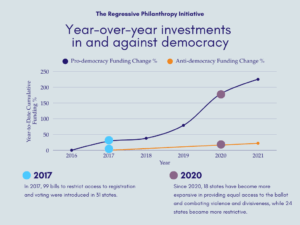
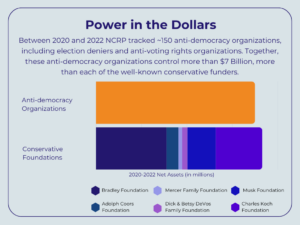
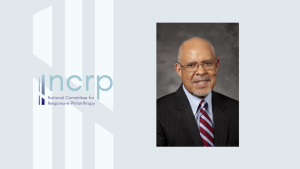
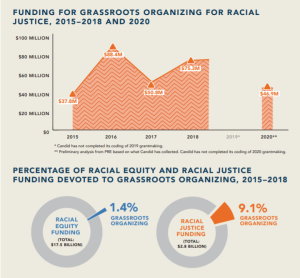
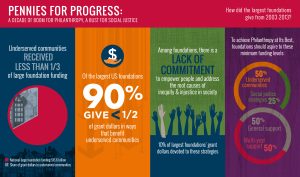
The National Committee for Responsive Philanthropy (NCRP) has a similar goal with a project that explains the ways that grantmaking has been used both wittingly and unwittingly to attack representative government. NCRP’s regressive philanthropy research found that from 2020-2023 over $1.5 billion dollars were granted to attack representative democracy and to attempt to reverse progress on racial, gender, and economic justice in the United States. Today, philanthropy designed to maintain inequities and push anti-democratic ends is enjoying more support from foundations and giving vehicles like donor advised funds than giving intended to further justice and equality. In the case of California Forever, would-be residents of this so-called utopia will be forced to trade away rights, while the current agrarian and blue-collar population will be displaced, with long-standing environmental and social impacts. As a for-profit charter city, California Forever will not be subject to the rules of traditional governance. The billionaires, who have been secretly scooping up Solano farmland since 2017, are creating a city that will operate by its own rules. Michael Moritz has called it a chance to experiment with “alternative” forms of government. That form of government is authoritarian, or at the very least governed in a way that does not resemble representative democracy. Instead, this area and its government will operate according to the whims of the oligarchs bankrolling it and technocrats governing it. Although details are still sketchy, so-called Network State experiments like Próspera in Honduras, or Elon Musk’s Starbase in Texas, have established appointed governing board rather than elected bodies and have privatized public services like schools and police. Indeed, these largely crypto-backed ventures look more like the company towns of old than democratically run American cities.
Who’s Influencing These So-Called Parallel Establishments?
California Forever is part of the Network State, an idea born in Silicon Valley, and taken up among leading figures in the tech industry as well as the administration of President Donald Trump. The originator of the scheme is Balaji Srinivasan, a former partner at Andreessen Horowitz, the venture capital firm founded by storied entrepreneur and investor Marc Andreessen and Ben Horowitz.
As Srinivasan describes it, a Network State is a “parallel establishment,” a territory governed by technology elites. Anyone who opposes the plan — Srinivasan calls them “Blues,” a shorthand for liberals — would be made uncomfortable, and, as a result, leave. “Just like Blues ethnically cleansed me out of San Francisco, like, push out all the Blues.” Srinivasan has gone so far as to compare himself to Moses, leading fellow tech elites to the promised land.
The project, as far-fetched as it sounds, proved attractive to Silicon Valley leaders, who like to think of the tech industry as the ultimate meritocracy and have become increasingly uncomfortable with the messiness of democratic processes. A number of Network State-aligned cities have popped up over the last five years: Próspera, Honduras and Próspera, Africa; Starbase in Texas; Itana in Nigeria; and Balaji’s own Forest City in Malaysia to name a few. While there are variations to these Network State ventures –the Prósperas present themselves as techno-utopic colonies that allow for unregulated medical experimentation and run on cryptocurrency, while Starbase operates more similarly to a company town for employees of Elon Musk’s SpaceX facility – the overlap exists largely in their funding. Many Network State-aligned cities receive their funding from Andreesen Horowitz, Peter Thiel’s Founders Fund, and Promonos Capital, a joint venture between Marc Andreesen, Peter Thiel and Balaji Srinavasan. from Andreesen Horowitz, Peter Thiel’s Founders Fund, and Promonos Capital, a joint venture between Marc Andreesen, Peter Thiel and Balaji Srinavasan.
Politically, Andreessen, Horowitz, Thiel and Srinavasan have all become outspoken supporters of then-candidate Trump in 2024, with Srinavasan having been considered to run the Food and Drug Administration during Trump’s first term. Collectively, the billionaire posse spent millions to see him elected while a few, like fellow Silicon Valley tech elites Elon Musk and David Sacks, ultimately took prominent roles in his current administration.
In alignment with his tech billionaire backers, Trump has re-branded the Network State concept as Freedom Cities, Freedom Cities, proposing to develop the ten new for-profit charter cities as “Accelerating Zones” on federally-owned land across the countr. Among the dozen or so sites he proposes for this experiment is the Presidio National Park in San Francisco. Others have proposed that the Trump administration declare a national emergency to build a Freedom City on the site of a former Naval Air Base in the city of Alameda, California.
Going Global: Modern Day Colonialism Branded as Libertarian Experiment
To understand the implications, look no further than Próspera, a Network State operating on Roatan, an island off the coast of Honduras. Próspera was founded by Venezuelan wealth fund manager Erick Brimen who began buying up land in 2017. Among its investors are Andreessen, Srinivasan and Thiel. Construction began in 2021.
Próspera has been called a “libertarian experiment.” A more apt description is that it’s a haven for businesses seeking to evade governmental oversight and regulation. Honduras Prospera Inc., the corporation established by Brimen, wields power over the city and ensures that companies operating there are not subject to the stringent labor, environmental, and other health and safety laws governing businesses that operate In the United States and other industrialized countries. Corporate taxes are a scant 1%. Plans to expand Próspera include taking the land of a long-established Black Caribbean community, leading to charges of “crypto colonialism” and legislation intended to shut down Próspera.
Success Stories from the Community
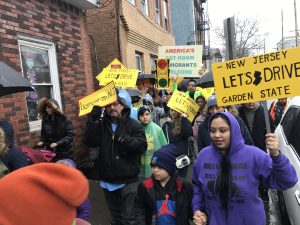
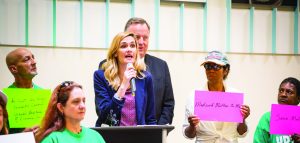
Locally, the Bay Area’s own proposed Network State California Forever has been met with similar opposition. Solano Together, a coalition of community groups was successful in preventing an initiative on the November 2024 ballot that would have rezoned 17,000 acres of farmland to allow for a Network State of some 400,000 residents. After spending $9 million to see it passed, the measure, which was headed for defeat, was pulled. However, it is expected to be brought before voters in next year’s elections.
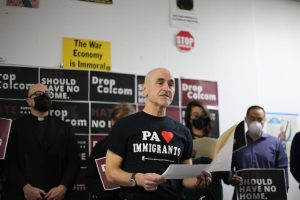
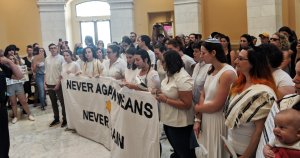
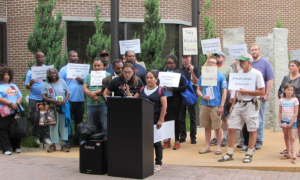
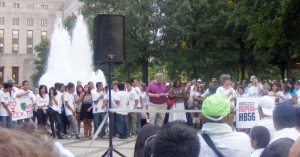
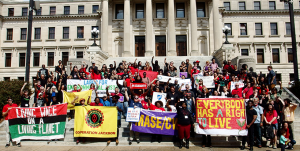
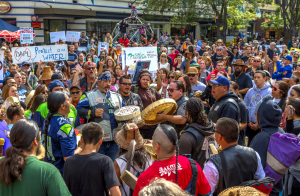
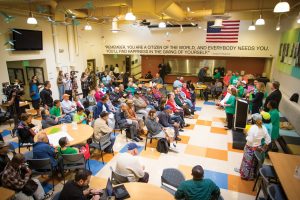
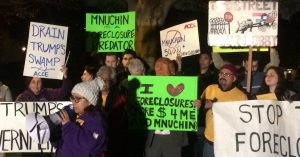
Since then, opposition, led by the Coalition of Artists Against Billionaires and Solano Together, and joined by a local chapter of the Sierra Club and Greenbelt Alliance, has continued. It has even united Solano County’s Democrat and Republican parties in opposition. Backers of California Forever recently used Vallejo’s monthly art walk as a vehicle to promote the project, drawing protests from the groups. Hundreds of residents were again warned of the threat to the community. The coalition is broad, drawing many first-time volunteers who pursue a grassroots strategy, educating residents on the more disturbing elements of Network State schemes like California Forever.
Residents’ fears are well founded. Balaji himself has alluded to California Forever as being an example of a Network State, while California Forever’s CEO Jan Sramek has increasingly described California Forever as being a tech-backed industrial manufacturing hub similar to Musk’s Starbase. After failing to convince Solano voters to support the initiative the first go-around, Sramek’s recent proposal is to build a deep sea shipping port that will be used in tandem with nearby Travis Airforce Base and the Military Ocean Terminal Concord to build military industrial technologies, which have become en vogue as of late with AI startup companies such as Thiel’s Andruil Industries and Palantir Technologies. This would be on top of massive luxury development geared towards employees of these industries, displacing the largely agrarian and blue-collar workers that currently call Solano County and the surrounding area home.
Phoenix Project and NCRP Model How to Fight Against Regressive Philanthropy in Network States and Beyond
Given the unprecedented wave of philanthropic funding used being leveraged to support increasingly anti-democratic ends, it is critical that those in the industry keep a critical eye towards supporting genuine community-supporting initiatives such as grassroots groups such as Solano Together and the Phoenix Project, as opposed to pro-Network State and other community-displacing initiatives. Calling out astroturfing efforts is an important first step in preventing corporate take-over and community displacement, and to do that means supporting genuine grassroot groups – those of marginalized economic and racialized identities and their efforts to protect their communities.
The Phoenix Project and NCRP believe that knowledge is power and will continue to shine a light on anti-democratic efforts masquerading as philanthropy and similar attempts happening both in the Bay Area, and across the country. To support the Phoenix Project, you can download their reports and sign up for their newsletter here. To continue to support NCRP, please continue to follow our blog highlighting the use of philanthropy towards anti-democratic ends, as well as support the ongoing work of our Regressive Philanthropy Initiative.
Julie Pitta is a former investigative journalist. She currently serves as president of the Phoenix Project, a nonprofit that exposes the dark money in local politics.