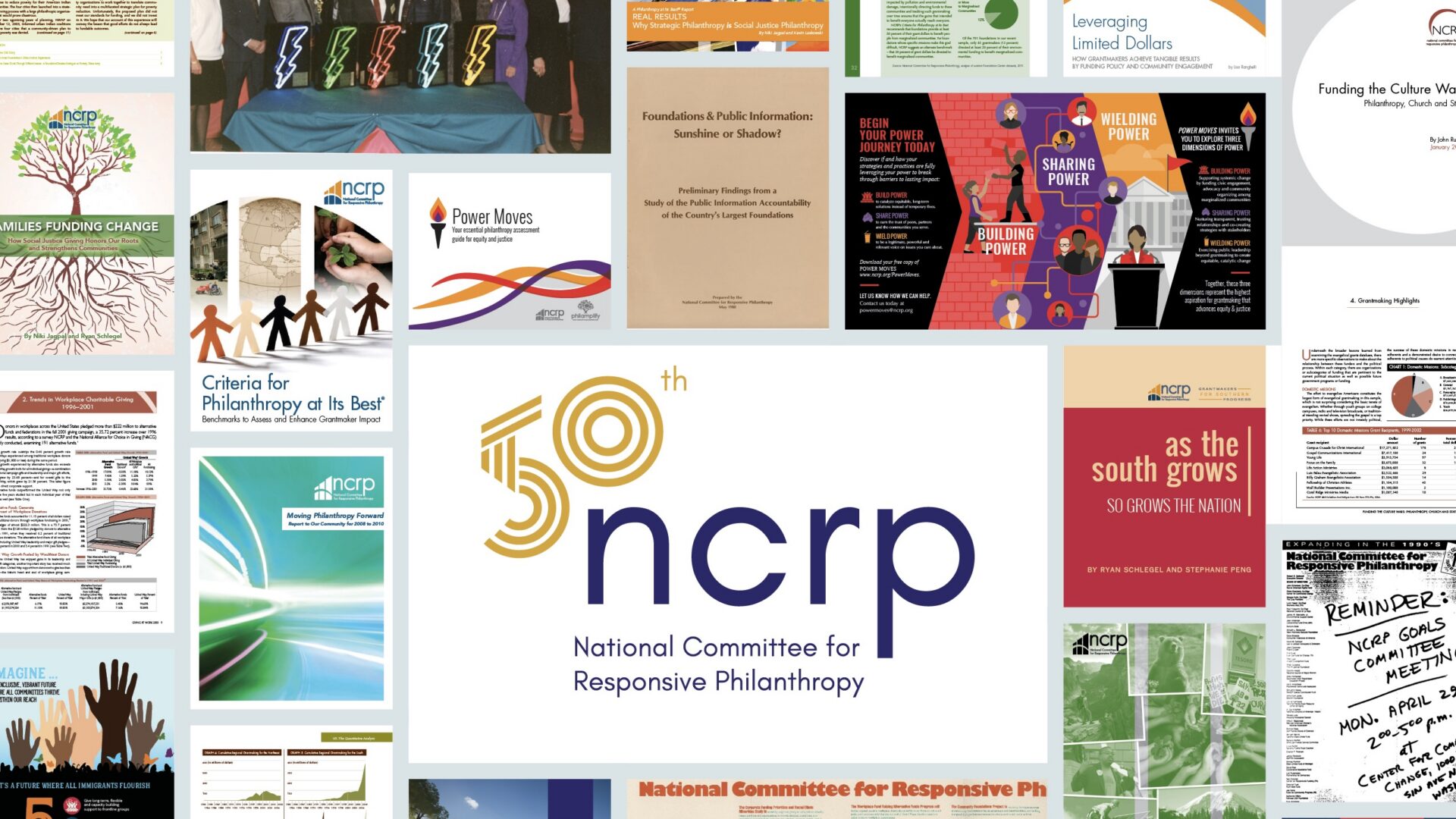
When the first Responsive Philanthropy (RP) journal was published, it did not have a fancy cover, website presence or social media platform on which to promote its content. It was born from the need to really dive into difficult or misunderstood subjects and expand the means of how language can create impact. Sure – it did not have the fancy frills of modern technology. What it did have, however, is what it still offers today – one of the nation’s few platforms for longform narrative within the philanthropic sector. A unique space for the best actors in our little world to share trade secrets, hail wisdom from lived experience over data points, see things from perspectives beyond our own and learn from the very best. It’s for folks in local settings to share their experiences as they undeniably relate to the national conversation.
While nonprofit websites, like our own, carry the strength of efficiently speaking to and about the sector in 800 words or less, sometimes we need more space to tell the whole story. Inside our flagship publication, you’ll hear from real experts about the most pressing issues facing our sector. RP and NCRP broaden the definition of expertise beyond data alone and value lived experience as a vital source of wisdom for the sector. In choosing depth over immediacy, RP prioritizes thoughtful reflection over speedy rapid-response statements. Longform storytelling becomes an art in itself, creating space for nuanced meaningful dialogue at a time that rarely allows for thoughtful reflection.
Our journal has covered a myriad of themes. In recent years, we have tackled issues like abortion and reproductive justice, the climate change movement and its funders, the growing threats to our democracy, and the power of antifascist storytelling. The increasing importance of voice, the very real threats we are facing in losing our rights to free speech, and how much we have to say during increasingly unprecedented times are not lost on us. As writer and activist Arundhati Roy said, “there is no such thing as the voiceless, there are only the deliberately silenced, or the preferably unheard.” At NCRP, we take our responsibility as a leader in our field seriously to create space for voices that are too often silenced. By intentionally amplifying their perspectives, we not only broaden the conversation, but also encourage changemakers with greater resources, visibility and institutional safety to do the same.
A Look Back to the Beginning of Responsive Philanthropy
RP was born from the principle that philanthropy is at its best when it listens to and learns from the groups it seeks to serve. NCRP’s members – funders and nonprofits – recognized the need to organize locally and do better. From the beginning, the journal has amplified frontline voices by inviting stories from the field and showcasing them across the sector.
RP illuminated emerging practices like the federation model, which highlights how local communities are responding to challenges when their resources are aligned with their realities. It showcased how fully funded community foundations operate differently and more effectively through community-led change.
RP served to fill a gap in the philanthropy ecosystem around accountability, calling out bad practices and lifting up exemplary grant making. It was also a window into a sometimes-secret world of philanthropy for nonprofits. It pulled back the veil and showed how philanthropy worked or didn’t work for nonprofits. This was especially true for organizations led by and representing those with the least wealth, power and opportunity. This was the founding vision for RP and NCRP. We know that nonprofits have historically gotten plenty of money from philanthropy. The missing piece was bringing an explicit class, gender, race, migrant and climate justice lens to that process in order to question whether philanthropy’s “business as usual” is neutral. That was and remains a cornerstone that we explore through RP that many others do not. It made the issue plain and understandable.
It’s amazing to see that the journal’s first objective of organizing philanthropy has now inspired a career field that includes formal trainings, academic programs, and a new generation of practitioners committed to creating a more responsive and equitable world.
Preserved in the archives of the Lilly Family School of Philanthropy at Indiana University, RP acts as both record and roadmap. Its history reminds us that philanthropy’s role is not neutral, but as a provocateur and partner with the social movements pushing for justice today and in the generations to come.
Our Authors as Ancestors
We could not produce this journal without the talent and expertise of our authors. The wide perspectives we publish, including executive directors of nonprofit organizations, frontline organizers and activists, funder intermediaries, and NCRP’s own board members and former staff mates, also help us build a fair and true-to-form journal.
RP authors are often taking time out of their already-busy careers and personal lives to really dive into these longform articles, and they do it all with great passion as well as courage. For some of our nonprofit and frontline organizer authors, they take risks to write honestly about their expertise within philanthropy and speak truth to power in a way that should be inspiring to those with more privilege who are cowering in a moment when they have less to lose. Each of these articles, in their own little way, builds a blueprint for our sector to – simply put – do better.
We must not allow the temptation toward cowardice during ugly regimes like the one we are facing to win. Instead, we must run so far in the opposite direction that we create something so beautiful and free that we can really be proud of one day.
Our hope is that RP’s authors can look back in 50 years to these articles and see manifestations of the world we will build.
The Future of NCRP and Responsive Philanthropy
Philanthropy must continue to progress – not retreat. Founded in 1976 on the eve of the Reagan administration, NCRP emerged during a period of retrenchment that mirrors the challenges we face today. Then and now, social justice movements and the communities they serve have been under threat, and philanthropy has been asked to respond with courage rather than restraint.
NCRP has many examples of courageous narrative in our legacy. “As the South Grows” is a series of reports that addressed decades-long disparity in grantmaking in the South. “Power Moves” – still one of our most-viewed resources – encourages foundations to leverage their full power for equity and justice. Without the foundation of reports like “The Strategic Philanthropy of Conservative Foundations” we would not have the success of one of our most recent initiatives “Regressive Philanthropy,” where NCRP showcased how philanthropic giving designed to resist progress, maintain inequities, and ultimately take us backwards as a society has played a significant role shaping the authoritarian present. “Black Funding Denied” is our report critiquing community foundation support for Black communities, has a throughline to our more recent report “Cracks in the Foundation, Philanthropy’s Role in Reparations for the DMV.”
Our reports, infographic data drops, blog articles and organizational newsletter are all done with courage and in spite of adversity or who sits in office. The RP journal is just one of the many ways we use our voice and the voices of the communities we serve to convince philanthropy to do better.
Since its inception, RP has served as a shared playbook for the field, documenting lessons from the frontlines and challenging philanthropy to be more accountable, equitable and community led. While its form has evolved – from newsletter to both printed and digital – it remains a vital space for learning from the sector’s best. In whatever form it takes in the future, we will remain steady in that mission – we can do better.
I am a firm believer that deep thoughts become clear words, and clear words have the power to create meaningful and impactful actions. NCRP is grateful to have multiple mediums to do that work: our immensely talented research team and the data we are known for, webinars and conference attendance where our movement leaders conduct and attend panels, and reports and publications that have helped built our reputation as a thought leader in this space. The keen perspective we offer is unique, provocative and not scared to explicitly name the difficult things.
We believe that longform narrative has the power to start and deepen dialogue to influence change makers and power holders. There are many vehicles for change, and no matter what form NCRP and RP take in the next 50 years, we will have the courage to challenge norms that don’t serve us, listen to and amplify the experts who hold the wisdom to know how to, and to be the conduit to change that we have been for 50 years.
About the Author
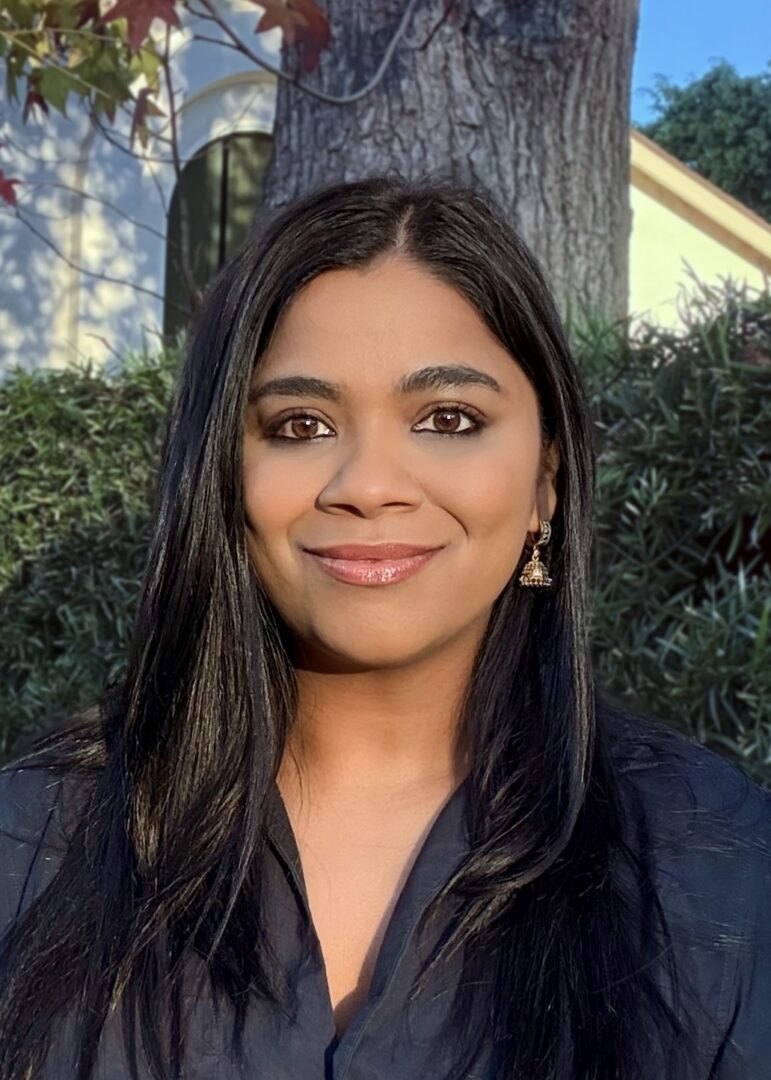
Suhasini Yeeda is the Editorial Manager at NCRP. She is also a published writer, a California Arts Council Emerging Artist Fellow, a two-time Pushcart Prize nominee, and The Best American Short Stories and Best of the Net nominee. She holds an MFA from Sarah Lawrence College and a BA from Texas Wesleyan University. Suhasini lives and writes in Los Angeles.