Grand Victoria Foundation
“Changing Course” Award for Incorporating Feedback
Press Release | Video
When Grand Victoria Foundation (GVF) was founded in 1996, its mission was to make Illinois a great place to live and work. Over the next two decades, the Foundation distributed more than $184 million in grants statewide—protecting land and water and funding education and community development. Yet as partners and grantees reminded the Foundation, “greatness” meant little if systemic racism continued to shape who could thrive.
That feedback became GVF’s turning point. In listening sessions with grantee partners, community organizers, and peer funders, the Foundation heard a clear message: philanthropy must do more than fund projects—it must share power. Communities most affected by inequity must have the authority to set the agenda, direct resources and define success.

In response, GVF fundamentally reimagined its role. Guided by the wisdom of grantee partners and community leaders—and with strategic oversight from its board, months of deep working sessions with staff, and amid a national reckoning sparked by the murders of George Floyd and Breonna Taylor—the Foundation moved from being a traditional grantmaker to becoming a partner in building community power and advancing racial justice. GVF examined whether its own structures—its mission statement, funding priorities, and internal culture—reinforced or disrupted inequity. What followed was a multi-year process of transformation.
GVF launched a Racial Justice Framework that centers community power-building as the pathway to change. Rather than funding isolated projects or prescribed issues, the Foundation now invests in organizations that mobilize and organize Black communities and other communities of color to shape policy, shift harmful narratives and influence decision-makers. This evolution has meant shifting most of its portfolio to general operating and multi-year grants, expanding rapid response funding for urgent community needs, and substantially increasing investments in Black-led organizations outside of Chicago’s core philanthropic corridors.
Listening Our Way Toward Racial Justice
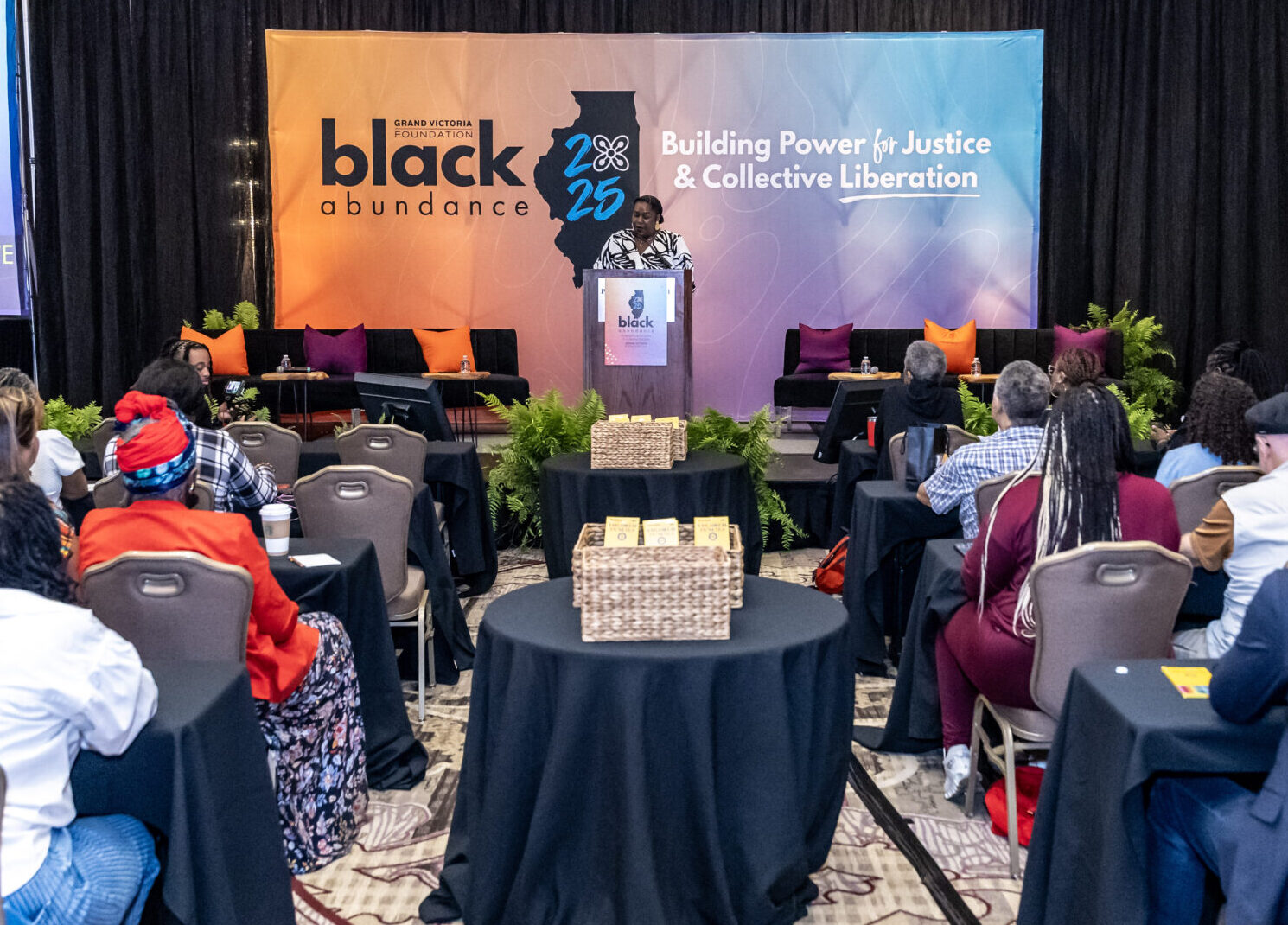
Listening continues to shape GVF’s practice. When partners expressed a need for time and resources for rest and leadership development, GVF created the Leadership, Rest, and Respite Fund—a first-of-its-kind program providing $25,000 in flexible support to nurture well-being and organizational sustainability. When organizations described barriers to rapid, flexible funding, the Foundation streamlined its Rapid Response Grant Program, cutting turnaround time to under 30 days. And when partners called for more spaces to connect and build collective strategy, GVF launched the Black Abundance Convening, a statewide gathering designed to strengthen relationships, share learning and co-create the future of racial justice in Illinois.
Internally, GVF’s staff and board also embarked on a culture-building process—acknowledging that the Foundation cannot promote equity externally without practicing it within. This included staff-led learning circles, equity audits, and the creation of a “Culture Crew” that fosters accountability and inclusion across the organization.
Today, GVF’s grantmaking is organized around three pillars—Building Community Power, Shifting Black Narratives, and Rest, Respite, and Reflection—reflecting both what the Foundation has learned and who it has become. GVF’s partners are no longer just grantees; they are co-strategists guiding a shared journey toward equity and justice.
Receiving NCRP’s “Changing Course” Impact Award for Incorporating Feedback affirms that deep listening leads to deep transformation. For GVF, this honor is not a destination but a milestone on a shared path—one paved by the voices of communities that continue to teach philanthropy what true partnership looks like.
As Grand Victoria Foundation President Sharon Bush reflects, “This award belongs to every community that challenged us to listen harder and act bolder. Their feedback is our compass, guiding us toward a future where philanthropy is measured not by what it gives, but by how it transforms.”