In 2016, we added 80 new posts to NCRP’s blog. Below are the 10 most popular posts during the past 12 months. Thank you to all of our excellent contributors and our readers for helping us keep a close eye on philanthropy! Stay tuned for more exciting posts from staff and guest contributors in 2017!
Whiskers isn’t the only one who was surprised to learn about the unexpected contributions to the radical right-wing agenda by the M. J. Murdock Charitable Trust, which NCRP Senior Fellow and Director of Public Policy Dan Petegorsky detailed in this post from March.
In May, NCRP President & CEO Aaron Dorfman authored this tribute to Niki Jagpal, former NCRP senior director of research and policy, who moved on from NCRP in 2016.
PT Partners Program Director Kate Kelly, M.S.W., explained how Fairfield County’s Community Foundation is fostering change that is more responsive to the needs of its residents in this popular post from March.
NCRP Senior Associate for Learning and Engagement Caitlin Duffy called on foundations to use explicit racial equity language in their work in this post from mid-May.
In this February repost from the National Center for Family Philanthropy’s blog, Jennifer Teunon, executive director of the Medina Foundation, asked this question to encourage philanthropy to increase unrestricted grants.
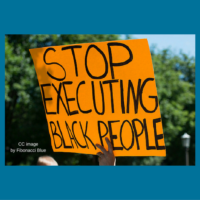
After foundation leaders expressed outrage over the police shooting deaths of Philando Castile and Alton Sterling in July, NCRP Senior Associate for Learning and Engagement Ben Barge detailed how grantmakers can back up their words with action.
NCRP Senior Associate for Learning and Engagement Caitlin Duffy makes her second appearance on the list with this post from September, describing her learning journey after experiencing discomfort with Black rage.
In one of our first posts of 2016 (and the most popular post of the first six months of the year), Laura Zabel, executive director of Minnesota nonprofit Springboard for the Arts, provided five tips for how foundations can build leadership and relationship capacity in the communities they serve.
In September, Alissa Hauser, executive director of The Pollination Project, told the story of how her foundation developed an Applicant Bill of Rights after receiving a critical email from a grant applicant.
Peter Haldis is NCRP’s senior associate for communications. Follow @NCRP on Twitter.
Our work together is more important than ever. Over the Thanksgiving holiday, I found myself reflecting about how grateful I am for all of you, staff, volunteers and trustees for an amazing web of nonprofits and foundations. I know this to be true: Philanthropy has a vitally important role to play in building a more just, fair and democratic world.
I hope by now you’ve seen the new strategic framework that will guide NCRP for the next 10 years. We’re expanding the scope of our work to engage with wealthy individuals who don’t give through foundations. We’ll intentionally link with movements to help our nation move forward. And we’re continuing some of our key major initiatives.
This issue of Responsive Philanthropy includes some terrific articles that we hope will spur conversation and much-needed action on equity, the untapped potential of the South and the rigorous study of our sector’s role in a democratic society.
How has philanthropic support in the South changed over the past few years? How can we strengthen partnerships between Southern and national funders? NCRP’s Ryan Schlegel posed these and other questions to Mary Reynolds Babcock Foundation executive director Justin Maxson and network officer Lavastian Glenn. Read about it in “Grantmaking in the South: An opportunity to support equity and opportunity.”
A few months ago, the Ford Foundation announced that it will explicitly include people with disabilities in their focus on addressing inequality. In “Ford Foundation and supporting the disability rights movement: We’ve only just begun,” disability rights organizer Jim Dickson and Sarah Blahovec of the National Council on Independent Living ask: “What is the rest of the philanthropic community going to do?”
Philanthropy has been largely ignored by academia despite its important role in our democratic society. In “Moving philanthropy from the margins to the center,” Robert Reich, Chiara Cordelli and Lucy Bernholz are encouraging scholars to ask tough questions about how philanthropy may contribute to or threaten the public good.
Finally, we’re excited to feature the National Birth Equity Collaborative in this edition’s Member Spotlight. NBEC, based in New Orleans, seeks to reduce Black maternal and infant mortality through research, collaboration and advocacy.
Let us know what you think of these articles. We’re always eager to hear your comments and story ideas, so don’t hesitate to send your feedback to community@ncrp.org.
There are pressing challenges facing our society, and philanthropy can and must play a meaningful role in building a fairer, more just and more democratic nation. The recent election results make the next few years incredibly important.
In the near term, we will see concerted efforts to erode our basic human rights and the improvements we’ve made to protect our planet. Decades of social progress may be undone if organized grassroots voices don’t fight against destructive ideas based on hate and exclusion.
Despite these challenges, we believe that we could still see significant progress to advance women’s equality, reform our criminal justice system, combat climate change, expand economic opportunity, secure fair treatment for immigrants and combat structural racism.
America needs philanthropy to step up and be part of the solution.
Over the next 10 years you’ll see NCRP expand its scope to increase the effectiveness and impact of high-net-worth donors who do not give through foundations. We are already seeing the tremendous influence that these wealthy individuals have on issues that affect all of us. It’s important that they, and the various organizations that serve them, have the tools and information they need to give in ways that advance justice and equity.
We’re eager to announce the acquisition of Bolder Giving, pending the approval of Massachusetts authorities. Established by philanthropist activists Anne and Christopher Ellinger, Bolder Giving uses storytelling and practical tools to encourage wealthy individuals to give more and take risks in support of positive social change.
In the strategic framework, you’ll also see NCRP intentionally connect to movements that are important drivers of progress and social change in our country. Notice how we have restructured our team to be in deep relationship with the nonprofits and funders that are leading the most exciting movements with the biggest potential to improve and strengthen our communities.
NCRP will continue to produce research you can trust and that helps philanthropy improve. We also will continue to critique philanthropic practices that don’t measure up, and praise grantmakers that are practicing smart giving.
We believe NCRP’s new strategic framework will enable us to significantly contribute to shaping a country that truly embodies our core values of equity, democracy and justice for all.
How our nation’s grantmakers and high-net-worth donors deploy their resources, and how they practice the craft of philanthropy makes a tremendous difference. Will we take advantage of the historical moment and help our nation make lasting progress on important issues? Ten years from now, we are hopeful that the answer is “Yes.”
We look forward to working with you as we implement our 10-year strategic framework to ensure that philanthropy contributes in meaningful ways to building the kind of world we all want to see.
Sherece West-Scantlebury is the chair of NCRP’s board of directors and president and CEO of the Winthrop Rockefeller Foundation. Aaron Dorfman is president and CEO of NCRP.
The respected author Octavia Butler explored the potential and power of change in her acclaimed novels Parable of the Sower and Parable of the Talents. In the stories, a disabled, Black teenage girl named Lauren Olamina was able to build a diverse community of people around the qualities of change because they needed a new perspective about the problems in their societies, which seemed insurmountable.
The problems that that we in philanthropy attempt to solve now – growing poverty, climate change and rampant violence – are not unlike those faced by Butler’s characters, and at times they can seem equally insurmountable. I sometimes get discouraged, and there are moments when I grow weary from the weight of advancing social justice. But then I remember I am not alone in this journey because thankfully, we have CHANGE.
For over 25 years, the members of CHANGE Philanthropy have been leaders in prioritizing the most marginalized and underserved in our communities, and in nurturing and promoting the leadership of individuals from these communities within the sector. Many of the CHANGE partners had early priorities of cultivating communities for people who wanted to thrive in philanthropy, but were marginalized from sector leadership.
Over the years, their programming has provided unique resources for philanthropy to not only diversify the profession but also to expand the sector’s understanding of and motivation for grantmaking for equity.
ABFE and Native Americans in Philanthropy have developed curricula to help our sector better serve Black and Native American communities. Funders for LGBTQ Issues and Women’s Funding Network have led innovative research about the gaps in funding across identities. Asian Americans/Pacific Islanders in Philanthropy and Hispanics in Philanthropy have created unique platforms to cultivate the philanthropic power of members of those communities, showing they are givers as well as recipients of philanthropy. And Emerging Practitioners in Philanthropy has boldly nurtured a sector-wide conversation about power dynamics and opportunity within foundations and in grantmaking.
Just as Lauren did, CHANGE members have attracted a network of people who choose to engage with our society’s problems in transformative ways.
The impact of CHANGE Philanthropy goes beyond tools and resources. The partners have always been committed to collectively advancing equity in the sector, and more and more serve as a resolute conscience for philanthropy. As the membership, influence and power of each partner organization grow, so does the resounding call for equity in the echo chamber they’ve created. CHANGE’s message has contributed to our sector’s finally starting to recognize the urgency around leveraging philanthropy to address the impacts of systemic oppression.
This message strongly aligns with NCRP’s legacy of improving philanthropy’s accountability to those with the least wealth and access to opportunity. As NCRP moves into a period of deeper engagement with social justice movement leaders and the funders who want to support them, it is natural and timely that we formalize our partnership with CHANGE Philanthropy to advance our shared goals. We have long considered CHANGE partners as key allies, teachers and friends in our work, and as a new collaborating partner, we plan to add our perspective as a watchdog to philanthropy.
At the end of Parable of the Sower, Lauren and the others who followed her had an important decision to make. They had been journeying together, mostly for safety and convenience, but having reached a safe stopping place, they had to choose between stopping there to intentionally build a community together or continuing their sojourn. Ultimately they decided to stay together and build a place that became a haven for others and the foundation for work that could change the country.
CHANGE Philanthropy, too, is in a transitional moment – a pause during which we partners can take stock of where we are and build foundations for something greater.
We look forward to working more closely with all the CHANGE partners, including the other new collaborating partners, Neighborhood Funders Group and Philanthropic Initiative for Racial Equity, to ignite CHANGE in philanthropy and advance equity.
Jeanné Isler is vice president for learning and engagement, and serves as NCRP’s primary liaison to CHANGE Philanthropy. She is also a loyal and shameless fan of Octavia Butler.
The recent widespread rallying behind the Standing Rock Sioux Tribe’s fight against the Dakota Access Pipeline (DAPL) along with actress Shailene Woodley’s arrest at the pipeline site has brought a lot new attention to an issue that Indigenous people have been struggling with for generations. The fight to preserve tribal sovereignty and sacred sites has long been at the forefront for Native issues.
The U.S. federal government has obligations to protect tribal lands and resources and to protect tribal rights to self-govern. The U.S. first attempted to terminate reservations in 1946 when Congress set up the Indian Claims Commission to hear Indian claims for any lands stolen from them since the creation of the USA in 1776. The commission’s intention was to “get out of the Indian business” by providing only financial compensation instead of the return of land.
The protection of sacred sites is closely tied to treaty rights and sovereignty. In the past, the government has actively discouraged, and even outlawed, the exercise of traditional Indian ceremonies and practices on their own tribal land. To assume that the land is separate from the cultures erases the long-standing history of how these sites are an intrinsic part of continued practices and beliefs.
As an article by Cultural Survival points out, “Most of the disputes between traditional Indian religious practitioners and federal and state governments were resolved in favor of the government – with a resulting impact upon the ability of practitioner to utilize these sacred sites. For example, cases were decided which permitted the following activities to take place: Development of a ski area on the San Francisco Peaks in Arizona, sacred to the Hopi and Navajos; Construction of viewing platforms, parking lots, trails and roads at Bear Butte in South Dakota, sacred to many Plains Indians; and Flooding of sacred Cherokee sites by the Tennessee Valley Authority.”
Even today, there are struggles Native American communities are facing that are similar to Standing Rock. Bear Butte in Sturgis, South Dakota, is being threatened by encroaching bars and campgrounds. The Rosebud Sioux Tribe and the Black Hills is a well-known struggle and more recently, the tribe has been trying to assert their treaty rights to oppose the transfer of the Black Hills to the state of South Dakota.
In Utah, leaders from five tribes founded the Bears Ears Inter-Tribal Coalition, representing a historic consortium of sovereign tribal nations united in the effort to conserve the Bears Ears buttes cultural landscape, asking Obama to designate the site as a U.S. Presidential National Monument.
After Native American youth first sparked the push back against the DAPL, the Sacred Stone camp at the site of the pipeline has now seen the largest gathering of Native Americans and tribal representatives in more than a hundred years. The camp has been a display of unity and solidarity in Native nations, showing the world the resiliency and endurance of Native Americans, all recognizing that this fight is not just for the local tribes. Choosing to identify themselves as “protectors” instead of “protesters,” those at the frontline are looking at the bigger picture by fighting for a healthier environment for everyone.
With many allies and supporters asking “how can we help?,” Native Americans in Philanthropy (NAP), in partnership with the Standing Rock Sioux Tribe, is extending an opportunity for those wanting to make meaningful, long-term investments that will extend past the national spotlight of the protest. A funder tour from October 19-21 is showing the work happening on the ground for the tribe and ways in which they’re looking for help in their priority areas of youth, environmental justice and health.
Sarah Eagle Heart is CEO of Native Americans in Philanthropy (NAP), a nonprofit promoting equitable and effective philanthropy to achieve a vision of healthy and sustainable Native communities. NAP members include Native and non-Native philanthropy, tribal programs, Native nonprofits and national networks, all dedicated to collectively improving equity and well-being for Native peoples across the United States. Follow them on Twitter @NativeGiving.
Photo courtesy of Native Americans in Philanthropy.
This commentary was originally published on The Chicago Community Trust website.
When The Chicago Community Trust held its first On the Table, we heard loud and clear from the community that race and segregation is the biggest issue we face.
What if I lived in a neighborhood where 80 percent of the adults I knew didn’t have a job? Where getting through school was a matter of chance – a 50/50 proposition at best – and where getting to school could be life-threatening? Would I still be striving for my share of the American Dream?
Would I even think the American Dream was meant for someone like me?
Against all odds, against any standard of reasonableness, our fellow residents who call Englewood, or Austin or North Lawndale home, do just that.
But for those of us who don’t live in those neighborhoods, there is a corrosive narrative that the crisis in our neighborhoods is the result of poverty, and poverty is the result of bad choices: choosing to drop out of school, choosing to get pregnant while in high school, choosing drugs and gangs over hard work. This allows us to be comfortable with the disparities we see every night on the evening news.
If we were to look any deeper, we would have to confront our unreconciled heritage of racism and white supremacy.
The responsibility to talk about racism in our city must be shared by white people. We must be brave and vocal about racism and white privilege, otherwise the status quo prevails.
The reality is, we continue to live in one of the most segregated cities in our country with a deep legacy of racism.
A few months ago, the Trust and the Chicago Public Library hosted Jim Wallis, pastor and founder of Sojourners, to talk about his powerful new book America’s Original Sin: Racism, White Privilege and the Bridge to a New America. Through the lenses of historical events and current tragedies, Wallis asserts an incisive and coherent theological framework for racism as our original sin – and a path forward through acts of repentance and action.
The title of his book traces the roots of racism in our country to its founding, when we sought to resolve the dissonance between scriptures that state all men are created in God’s image and an economy based on slave labor.
The result is the compromise embedded in our U.S. Constitution, which calculates population for determining seats in the U. S. House of Representatives based on three-fifths of “other persons” and excludes Native Americans altogether. With this formulation, the idea of white supremacy is baked into our national DNA – reinforced originally through law and today through the culture of white privilege.
Let me propose a different way to think about white privilege. There is a famous commencement speech delivered in 2005 at Kenyon College by David Foster Wallace. He began with a story: Two young fish meet an older fish, who asks them, “How’s the water?” The younger fish look at each other and say, “What the hell is water?”
As Wallace explains, “The point of the fish story is merely that the most obvious, important realities are often the ones that are hardest to see and talk about.” This is what institutional and structural racism is in our society: It is water. For white people it is invisible to us, because it is our water. Yet, in our state and our city:
We provide black and brown children three-fifths of funding for their education.
Only three-fifths of young black men aged 18 to 24 are able to find jobs.
Black women are paid three-fifths of what white men earn.
African Americans experience, on average, longevity that is 15 years less than whites and Hispanics.
We have state-sanctioned oppression, disproportionate laws and policing that result in one-third of all black males having some interaction with our justice system.
African Americans constitute 74 percent of the victims of police-involved shootings.
The forced release of the Laquan McDonald video by Jamie Kalven has been catalytic for social transformation, and I applaud the important role media has played in these events. As Bill Moyers once said, “The quality of democracy and the quality of journalism are deeply entwined.”
To quote the report: “If you are not severely and wholeheartedly dealing with racism, you are not going to get to the bottom of this issue.”
In response, Fraternal Order of Police president Dean Angelo stated in a recent Chicago Sun-Times article that “if you look at crimes and murders, gun, narcotics and homicide arrests ward by ward, the top 10 wards in the city are over 80 percent African American. That’s where the officers are assigned, and that’s where more contact occurs. Officers aren’t responding to neighborhoods of color. They’re responding to neighborhoods of crime.”
There it is. This is exactly what Reverend Jim Wallis discusses: The dehumanization and criminalization of African Americans.
Let me go back to what Angelo said: “They’re responding to neighborhoods of crime.” Neighborhoods that just happen to be 80 percent African-American. In his view, they are not responding to criminal activity, or criminals – they are responding to “neighborhoods of crime.”
Now, here is our dilemma. Angelo’s statement is very hurtful to African Americans, especially those living in the neighborhoods he singles out. And our predictable human response would be to lash out, fight back – especially if you have endured generations of sanctioned oppression.
Our challenge is to acknowledge the pain, and also to move to reconciliation. For us to make progress in reducing racism in our city, Dean Angelo and the FOP must be at the table. All of us must be on the same side, confronting racism – not negotiating across the table, with black lives in the balance.
The death of Laquan McDonald implicates other parts of our society. His educational experiences, or lack thereof; his opportunities for employment, or lack thereof.
Unfortunately, we see the pattern of structural racism in the concentrated segregation of Chicago’s schools. But we also see glimmers of hope.
Chicago is a great city with a bright future.
That is our vision of hope to sustain us all, to become comfortable discussing and confronting racism, to seek reconciliation and to work toward a more inclusive future.
Terry Mazany is president and CEO of The Chicago Community Trust. Excerpted from Terry Mazany’s address to the City Club of Chicago on April 27, speaking about the state of the nonprofit sector, education and racial inequity in our community.
You may remember last year’s controversy between Nicki Minaj and Miley Cyrus. In response to being excluded from nominations for a Video Music Awards category, Minaj expressed public critique on Twitter about double-standards and racial bias in the industry.
As host of the 2015 VMAs, Cyrus took the opportunity to critique the artist in an interview: “What I read sounded very Nicki Minaj, which, if you know Nicki Minaj is not too kind. It’s not very polite. I think there’s a way you speak to people with openness and love.” The next day, while accepting an award on stage, Minaj turned to a surprised Cyrus and pointedly asked, “Miley, what’s good?”
Minaj later explained her response, stating, “If you want to enjoy [Black] culture and our lifestyle, bond with us, dance with us, have fun with us, twerk with us, rap with us, then you should also want to know what affects us, what is bothering us, what we feel is unfair to us.”
Cyrus was clearly uncomfortable with Minaj’s rage. Whether the hip-hop artist was attempting to change the industry, shame specific people, vent her own frustration and anger or heighten awareness, her refusal to be polite was a necessary political statement.
I was reminded of this exchange when I read Rodney Foxworth’s recent post “The Need for Black Rage in Philanthropy.” Foxworth compels white philanthropists to embrace a sense of moral urgency, writing that philanthropy should “lean into the impatience and rage that simmers throughout Black America” in order to advance change.
Before we can lean into another’s righteous anger with urgency, it’s necessary to face our own discomfort. As a white person, I’ve struggled with discomfort in the face of anger from people of color. Robin DiAngelo writes that white people in North America are largely insulated from race-based stress, and that challenges to our racial worldviews and social norms can be very unsettling. But as Foxworth rightly asserts, Black rage is an appropriate response to the level of injustice our societies face, and white folks like me need to work through our fragility in the face of our colleagues’ anger. Lives depend on it.
My prior reactions to Black rage have been marked by defensiveness and frustration with what I perceived as over generalizations about white people. For example, two years ago I wrote a personal blog post titled, “To my fellow social justice activists and friends of color.” Among the sentiments I shared were:
“Your frustration and anger with an unfair and oppressive system are justified, and your experiences are valid. To defend yourself and amplify your voice, at times harsh words and even violent reactions are required. Yet to those in my network I ask … Please do not generalize and make sweeping statements about ‘whites’ in a disparaging manner when criticizing unjust societal structures and institutions, considering that there are many people who look like me and who stand in solidarity with you. I recognize that I cannot fully participate in your struggle, but I can’t help but feel that the energy that is expressed behind such attitudes smacks of stereotyping and exclusion, which is antithetical to the advancement of struggles for equality and justice.”
Looking back, my post was laden with a discomfort with Black rage and my own white privilege in trying to control discourse. Minaj wasn’t there to call me out, but a white friend reached out to me. She wisely wrote, “Not being defensive, and internalizing what is or could be true about what people of color are saying that is different from my current perspective, is an important practice for me as a white ally. I really try not to seek affirmation of my rightness as an ally when I’ve recently been called out, especially affirmation by people of color.” Unfortunately I deflected her offer to meet and discuss it, though I’ve since thanked her and can only wish that I had been more open to hearing her advice at the time.
Especially as white people working in philanthropy, we might get racism caught in our teeth during a panel, or a presentation at a conference, or a conversation with a colleague. I sure had some white privilege caught in mine when I wrote my self-righteous post. It’s impossible to separate the personal from the professional when it comes to implicit bias.
White people in philanthropy, embrace discomfort and avoid defensiveness in your own “Miley, what’s good?” moments to truly listen and learn. I detailed why it’s important to do so in another NCRP blog post entitled “Philanthropy: Let’s Talk About Race, Baby.”
With growing dialogue in the sector around race and racial justice, I’m emboldened to share my cringe-worthy experience, and I do so with the hopes of challenging you to be more open about your own learning journey.
When have you experienced or observed white discomfort with Black rage in philanthropy?
In the wake of Philando Castile and Alton Sterling’s deaths, foundations across the country released a new wave of public statements brimming with shock and horror. Many talked about solidarity with black communities. Some were honest enough to say they didn’t quite know what to do.
These words are important. They show philanthropy is made up of real people who pay attention when horrible things happen. But words aren’t enough. These tragedies aren’t about a single event, or a single person. They’re about a system of unjust laws and practices that consistently place black communities in greater danger. A statement by itself is a comment, but it’s not an action.
The next Tamir Rice and Sandra Bland can’t afford for philanthropy to hang its hat with a press release. If you’re a foundation trustee or staff member, a donor or donor advisor now is the time for action; not tomorrow, not next week, not next year. Funders can and should respond urgently by taking the following steps to share resources with black-led organizations working to change the complex policies, practices, biases and culture that allow racial injustice to flourish in the first place.
1) Listen to black-led organizations and black organizers confronting these injustices about what they need, and invite them to play a greater role in your grantmaking process.
The best place to start is in your own backyard. If your funding institution doesn’t already fund black community organizers, use this growing interactive map of black-led organizations addressing racial equity. Many of these folks have been doing vital, underfunded work long before #BlackLivesMatter began trending on Twitter.
Go out of your comfort zone to build relationships if you don’t have them already. Ask them what they need and be ready to respond, even if it’s a change from what you normally fund. A funder’s specialty or geographic focus is not an excuse to abstain from racial justice work, but rather a unique opportunity to make a difference.
Funders should also follow the calls to action already issued by Philanthropic Initiative for Racial Equity, the Philanthropic Action for Racial Justice and others in consultation with black organizers on the ground. All highlight the need for philanthropy to assess the biases within their own institutions, support black-led advocacy and organizing, use their bully pulpits to call for change and invest in sustainable ways that build the capacity of this work for the long-term, like leadership development, relationship building and flexible forms of grantmaking. These resources aren’t exhaustive, but they’re a great start.
2) Act decisively and inclusively on what you learn by devoting greater resources to black-led organizing currently operating on shoestring budgets.
As with any course of action, the devil is in the details. To ensure you have institutional buy-in, make the case to your trustees about why funding black-led organizing is crucial to your work. Ask program officers to take tests on implicit bias. Simplify your application procedures to create greater access to your programming and resources. Track who’s receiving your grants, and evaluate whether the leadership you support is as intersectional as the black women, LGBTQ folks, youth and formerly incarcerated people who are primarily leading this movement.
If your foundation hasn’t historically supported such work at significant levels, take a hard look in the mirror and ask why. Is it truly about “fit,” or have you unnecessarily defined your interest area in a way that black-led organizations have a hard time meeting? Is it honestly about staff capacity, or have you prioritized different things? Is it really about grantee capacity, or have you not taken the time to meet chronically underinvested black leaders where they are?
3) Be a leader in helping other peer funding institutions overcome their misconceptions, fear, or inertia to take similar steps and open up more resources for racial justice.
Funders have power in addition to the financial resources they provide. You can convene conversations in your local community and invite practitioners working on racial injustice to lead, like the Deaconess Foundation has done in St. Louis. You can talk about race explicitly as it relates to your field, like the Washington Regional Area Grantmakers’ “Putting Racism on the Table” series and the Sustainable Agriculture and Food Systems Funders’s latest conference. You can invoke the history of philanthropy in past civil rights struggles.
You can remind folks that saying “black lives matter” isn’t an attack against white people, but rather a chance to make this country greater for all of us.
You can even release a public statement. Just don’t stop there.
Over a decade ago, I was a faith-based community organizer in central Florida. My job was to visit churches, build relationships with pastors and church members, agitate them around concerns they had for their community, and organize them to make demands for systemic change. The key to motivating most churches was to draw from their faith traditions, so my days were spent talking about values that lead to a just world, reading about leaders from scripture who drew on their faith to build communities of fairness and equity and listening for testimonies from community members about what their faiths tell them the right solutions are to the problems they face.
Community leaders often asked me about my own faith tradition as a means to get to know me, but one pastor asked me a pointed question that shifted my outlook on my work. He turned my questions back to me, asking, “How does your faith inform your work?” It forced me to think about whether I considered religion to be a tool to advance justice, a motivator to pursue justice or an institution where justice was needed. The webinar NCRP hosted on April 20th wrestled with those questions and others as the panelists considered how philanthropy can engage more with faith communities.
I moderated a conversation among three leaders working at the intersection of faith and social justice. Shireen Zaman, program director at the Proteus Fund, Lauren Spokane, fund development coordinator at PICO National Network, and Abby Levine, director of the Jewish Social Justice Roundtable, spoke to common questions that funders have about faith-based or faith-focused work. Several common themes arose during the conversation.
Often when I engage with leaders who do faith-based social justice work, the conversation veers towards unpacking the stereotypes about the groups involved and the purpose of the work. Not all stereotypes are negative, but all are limiting, leading funders and potential partners to discount the scope, effectiveness and possibility of faith-based work. Lauren suggested that one way to overcome this acute challenge is for faith-based groups to think about how to translate their work to the priorities of funders.
But a large part of the responsibility lies with funders to check their own stereotypes. All the speakers discussed some specific stereotypes that affect the faith traditions involved in their work, and they acknowledged that stereotypes can get in the way of the work. But they noted that the rewards are worth the challenge of overcoming this obstacle. When we are able to get beyond stereotypes, organizations and faith leaders can draw on people’s values through their faith traditions to be a powerful motivator for systems change work. Not only does it drive individuals to act, but it can illuminate commonalities among faith groups that lead to strong coalitions.
Such coalitions are important to advancing social justice with a faith perspective. Despite the challenges that come with building coalitions of any type – aligning values, strategies and tactics; addressing conflict; balancing power within the group – faith and religion can transcend those obstacles and propel coalitions beyond differences across racial groups, age, class and geography and other aspects of identity.
The power of faith-based work is building relationships, and all the speakers emphasized that funders need to support that practice; it’s not enough for funders to say that it should be done. Shireen talked about the investment that Proteus Fund has made to build unlikely alliances across groups with shared experiences. Both time and monetary resources are needed to build strong relationships among partners.
The potential of faith-based social justice work is undervalued by philanthropy; each speaker talked about successes through their work, and I encourage readers to watch the recording of the webinar to hear more about these wins.
The question that the pastor asked me over a decade ago was laced with a recognition of this potential. I don’t remember how I answered him then, but my experience since has taught me that faith traditions and religion serve all three purposes: They are tools, they are motivators and they are housed in institutions that can reflect the justice we seek in the world.
What would it look like if we reclaimed faith in the fight for social justice? Funders have an important role to play in that.
Jeanné Isler is the field director at NCRP. She is a former faith-based community organizer, a practicing Catholic and a leader in interfaith and social justice events in Washington, D.C. Follow @NCRP on Twitter.
“When [donors] come here … they get an invitation to be part of a group of donors that can solve important problems or be more aware of what’s going on in specific communities or around the state.” – Max Williams, President and CEO, The Oregon Community Foundation (OCF)
“There are very few foundations that are willing to get beyond the comfort level of social service to fund social change. … If they can only understand that what politics is about is building communities better, maybe they could open themselves more.” – A DAF holder at OCF
All community foundations face the challenge of serving the different and often divergent charitable interests of each individual donor while also generating investment that will systemically address community issues and needs. According to CFLeads, a key building block of community leadership by community foundations is to “engage donors and other co-investors in community leadership work.” How well do community foundation staff walk that fine line in their relationships with donor advisors to cultivate their leadership?
Our recent Philamplify assessments of Oregon Community Foundation and the New York Community Trust examined each institution’s donor engagement approach. The Trust is a big-city grantmaker with a donor relations team of six. OCF is a statewide foundation with regional offices and a donor relations staff of 14.
As we reported, “OCF’s donor engagement is proactive and robust. The community foundation connects donors to community grant applications, invites support for its special initiatives and offers educational events where donors can connect with staff, professional advisors, other donors and nonprofit organizations.” OCF has also begun efforts to reach new and more diverse donor audiences, for example by hosting a targeted event, Women Give: Creating Impact with Money.
In contrast, we found the Trust’s donor engagement approach to be less dynamic and effective. The foundation hosts around six donor briefings per year, yet staff reports that attendance among its 1,300 donors is low. Trust program officers serve as a resource to donors with particular interests, and the Trust solicits DAF funding for some of its special initiatives and funder collaboratives. Attracting more diverse donors is an ongoing challenge, despite the diversity of the donor relations staff. Yet the Trust has a low financial threshold for establishing a DAF: $5,000, compared to $25,000 at OCF.
To serve a geographically dispersed set of constituencies in urban and rural areas, OCF has developed unique structures to engage donors, volunteers and residents that include regional offices, leadership councils and volunteer grants evaluators. Regional and statewide events bring these constituencies together, often with grantees.
Both OCF and NYCT could do more to connect their donor advisors to social change nonprofits, especially those led by people of color and other underserved groups seeking to advance equity. NCRP research has found a significant return for investments in such organizations: as much as $115 for every dollar spent.
Social change leaders in Oregon see DAFs as mysterious and OCF staff as “gatekeepers” who are reluctant to connect their donors to advocacy and organizing efforts. As part of OCF’s recent commitment to equity, diversity and inclusion, the staff is grappling with how to do this effectively. Senior donor relations officer Kirsten Kilchenstein explained, “There are polarizing trigger words … We’re learning how to use language and bring folks together around shared interests to improve lives for underserved … communities who have been historically disadvantaged.” An OCF donor survey found that many donors already have an appetite to “engage more deeply with other donors and OCF around key issues in the state,” including equity.
And both foundations could do a better job of communicating publicly their vision for an equitable community and how donors can be part of realizing that vision. For example, NCRP Impact Award winner the California Community Foundation (CCF) communicates on its website very clearly that it “advocates for those who struggle” and invests in systemic change. CCF offers donors the option to invest in the Future of Los Angeles Fund to address pressing issues, as well as encouraging donors to help “transform L.A.”
If you are interested in rallying your donors to advance equity, ask yourself these questions:
How does your website convey this purpose? How do your newsletters and other communications with donors make the case?
Do you have strategies and benchmarks for donor investment in community change organizations, and offer vehicles for donors to easily invest?
How do you foster interaction between donors and residents of color and culturally specific nonprofits?
A public vision for an equitable community that donors can rally around; intentional conversations with donors about equity, and networking among donors and social change nonprofits; and specific funding vehicles that provide an easy way for donors to contribute to advancing systemic change – these are three ways community foundations can exercise leadership in partnership with their donors to address longstanding disparities for communities of color, LGBTQ communities, people with disabilities and others.
Community foundations are complex institutions, distinct from place to place, but they have much to learn from each other in a common pursuit of equity and justice.
Lisa Ranghelli is director of foundation assessment at NCRP.
What other strategies are you aware of? Share them in the comments section or join the conversation on Twitter @NCRP and #Philamplify.