Social justice work is tiring, painful and unpopular, but there is nothing that is more important to me than this work. I am grateful that it is so integral to our foundation’s mission.

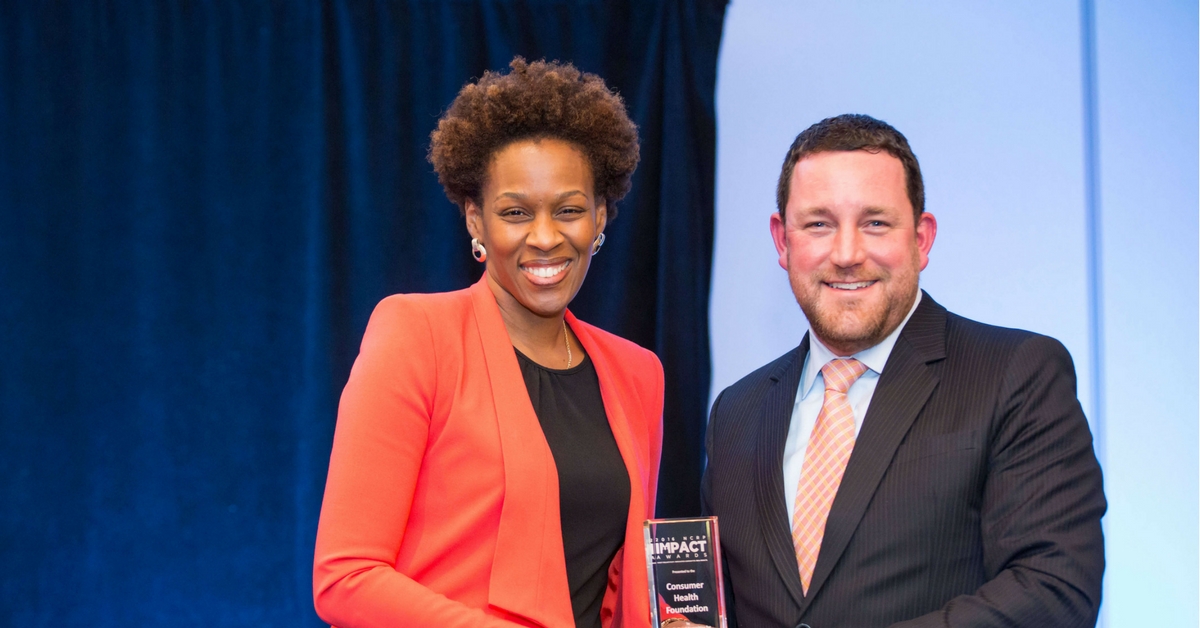
Consumer Health Foundation, as one of our board members puts it, has run into burning buildings when others were running out. So, it was an honor to receive a 2016 NCRP Impact Award, knowing that we were joining 17 other courageous peer foundations who have prioritized smart philanthropy practices such as targeted grantmaking and supporting advocacy and community organizing.

Since winning the award, we continued to demand bolder grantmaking and leadership of ourselves on racial equity, especially given our current moment. We revisited our grantmaking protocols and developed a new practice to ensure that our investments are truly impacting communities of color.

For the first time in our history, we are requiring that potential grantee partners use a racial equity impact assessment tool when applying for a grant. Although we are mindful of the burden that learning how to use a new tool places on our partners, we are committed to supporting the field of advocates who have asked for assistance in operationalizing racial equity. We believe that engaging in racial equity impact assessment is a first step.

According to Race Forward, a Racial Equity Impact Assessment (REIA) is a systematic examination of how different racial and ethnic groups will likely be affected by a proposed action or decision. REIAs are used to minimize unanticipated adverse consequences in a variety of contexts, including the analysis of proposed policies, institutional practices, programs, plans and budgetary decisions. The REIA can be a vital tool for preventing institutional racism and for identifying new options to remedy long-standing inequities.

In partnership with Western States Center and borrowing from existing tools, we have developed an REIA tool that asks questions such as:

  • Are people of color disproportionately and adversely impacted by this issue, policy, regulation, program, practice or budget? If yes, in what way and why?
  • Are stakeholders from different racial/ethnic groups – especially those most adversely impacted, leading the development of proposals to address the issue, policy, regulation, practice, program or budget? If not, who is missing? If yes, in what way? If not, why not and how can they become engaged?
  • Do the stakeholders know the systems of power that must be interrupted in order to gain racial equity? If no, what would be needed to make that possible?
  • If there is a policy, regulation, practice, program or budget under consideration to address an issue, does it address the root causes of racial inequities and racialized outcomes? If not, how could it address the root causes?
  • If there is a policy, regulation, practice, program or budget under consideration, can you anticipate adverse impacts of unintended consequences?

It is no longer enough to say that our organizations are impacting communities of color because of the issues that we work on or where we are located. To reduce inequities, we must do more. We must analyze the way history informs current conditions faced by communities of color in order to determine the right interventions.

We must disaggregate data by race/ethnicity to identify groups and places where our interventions will have the most impact. We must be in partnership with communities so that those most impacted are leading the development of solutions. And we must work with our elected officials and agency leaders to educate them about the solutions that they can formulate into policies, programs and systems changes to advance racial equity.

For some, thinking in this way has been difficult. For others, it is very natural to consider their work through a racial equity lens. We recognize the continuum, and we are balancing the need to take leadership in this way while providing capacity building for advocates who are expressing commitment to racial equity.

We will share lessons with the field after our first full year of implementation, and we hope other funders will join us in having more intentional conversations with our grantee partners about how their work advances racial equity.

Consumer Health Foundation (2)Yanique Redwood is president and CEO of the Consumer Health Foundation. Follow @chfprez on Twitter.
As the South Grows: Strong Roots coverDo you work at or with a national foundation investing in systemic change? Does your program include wealth- and power-building in the South? If not, your efforts may not bring sustained change.

Our latest report, “As the South Grows: Strong Roots,” details how foundations can make lasting investments in wealth-building in the South. It profiles six community, foundation and nonprofit leaders in the South, specifically the Coal Country of Kentucky and the coastal Lowcountry of South Carolina, to highlight opportunities for foundations and philanthropists to build Southern wealth by investing in local assets and capacity.

As Karen Watson of the Positive Action Committee said in our recent webinar on philanthropy in the South, as long as the South is underfunded, regressive policies will take root in the South and then spread nationwide. 


Learn about:
  • Six community leadersSix Southern leaders working to increase local assets and capacity, and protect existing ones.
  • Three Do’s and Three Don’ts for grantmakers interested in investing in wealth- and capacity-building in the South.
  • Four tips funders can take to get started with engaging with and investing in equitable economic development in Southern communities.

“As the South Grows: Strong Roots” is the second report in the five-part As the South Grows series. The third report will be released in the fall.

We hope “As the South Grows” inspires you to look at the South as an important opportunity for deeper engagement, investment and partnerships.


Jennifer Choi is vice president and chief content officer at National Committee for Responsive Philanthropy (NCRP). Follow @jennychoinews and @NCRP on Twitter. 

Does your foundation or those in your area invest in the South in ways that promote strong, vibrant communities where all residents thrive?

If not, you’re not alone.

“Many philanthropists choose not to invest in Southern communities or choose short-term opportunities that undermine the long-term capacity of Southern nonprofits. Other funders invest in what they think is ‘safer’ direct service work. While aid to those in need is undoubtedly critical, only investments in systemic change can achieve widespread, deep impact in the region.”

– LaTosha Brown and Aaron Dorfman
in “
Foreword” of As the South Grows: On Fertile Soil


You can do something about this now.

Read the stories of four nonprofit leaders from the Deep South and how they are standing up for the well-being of communities of color, the poor, women, immigrants and other vulnerable populations in NCRP’s newest report As the South Grows: On Fertile Soil.

Like many of their colleagues, these activists face opposition that have considerably deeper pockets in their work for racial, economic and social justice. And oftentimes, they see very little philanthropic support.

We can learn much from these Southern leaders.

“Our new national reality of unified, reactionary, anti-democratic government has been a reality for Southerners off and on for more than a generation. Therefore, national and non-Southern organizations have much to learn from their Southern counterparts.”

– LaTosha Brown and Aaron Dorfman
in “
Foreword” of As the South Grows: On Fertile Soil


Learn about:

We hope “As the South Grows” inspires you to look at the South as a fertile ground for deeper investments, collaboration and partnerships.


Yna C. Moore is senior director of communications at the National Committee for Responsive Philanthropy (NCRP). Follow @ynamoore and @NCRP on Twitter.

Photo by Wendy Ettinger, 2016. Used with permission.

We’re excited to announce that Jennifer Choi, program officer at Robert R. McCormick Foundation, will be NCRP’s new Vice President and Chief Content Officer beginning March 15.

She will oversee the creation and distribution of NCRP’s content, which, for more than 40 years, has helped push foundations to be more accountable, transparent and responsive to the needs of underserved communities.

Jennifer Choi

Jennifer Choi

“I am thrilled that Jenny will be joining NCRP. Her passion for justice, her experience promoting racial equity and her commitment to ensuring philanthropy benefits the most vulnerable in our society will all be tremendous assets for our team.”

– Aaron Dorfman, President and CEO, NCRP

Under our new strategic framework, NCRP will provide social justice movements and their current and potential funders with useful resources that will help increase impact and win important campaigns. We will also expand programming to encourage wealthy donors to give in ways that promote equity and justice.

“NCRP is a beacon for all of us who believe in the power of bringing together our best collective selves, and that by being brave, kind and generous advocates for each other, we can work towards a shared vision of healthier and stronger communities. I’m humbled by NCRP’s legacy and look forward to amplifying this work in these critical times.”

– Jennifer Choi

About Jennifer Choi

Jenny is wrapping up her current work on Robert R. McCormick Foundation’s journalism and democracy initiatives. Prior to McCormick, Choi was director of institutional initiatives at Chicago Public Media and held various staff positions at a number of nonprofits including the Illinois College of Optometry, Access Living of Metropolitan Chicago and Korean American Women in Need (KAN-WIN).

She serves on the boards of the Chicago chapter of Asian Americans and Pacific Islanders in Philanthropy (AAPIP), the Illinois chapter of Common Cause and Chicago Women in Philanthropy.

Jenny holds a M.A. in Linguistics from Northeastern Illinois University and a B.A. in English from University of Illinois at Urbana-Champaign.

We’re all looking forward to having Jenny on board. Help us share the news on Twitter and Facebook.

California is a philanthropy powerhouse in its own right, with 256 of the country’s largest foundations calling it home.

The state is also a leader in many progressive efforts such as minimum wage, universal access to quality health care and immigrant rights.

Recently, we looked at New York’s and Michigan’s largest foundations and found that the majority gave less than half of total grant dollars to programs that directly benefit underserved communities from 2003-2013. Also, in both instances, only a fraction of these foundations supported efforts to engage these communities in solving pressing social problems.

Is California any different?

Sadly, it is not, according to my colleague, Ryan Schlegel. Ryan, who wrote NCRP’s Pennies for Progress report, once again looked at Foundation Center’s FC1000 to find that only 22 percent of the $35.7 billion in total grants from these funders went towards supporting efforts that explicitly target people of color, LGBTQI community, domestic workers and other vulnerable populations.

However, some of these foundations stepped up by allocating at least 50 percent or more of their total grant dollars during that period in ways that benefit these communities.

Foundation Name Share of grant dollars for underserved Total grant dollars for underserved
Craig H. Neilsen Foundation 96%  $              54,281,713
The Christensen Fund 87%  $               7,929,370
The California Wellness Foundation 84%  $           399,073,000
Phoebe Snow Foundation 81%  $            109,905,631
The California Endowment* 79%  $        1,030,259,687
Levi Strauss Foundation* 76%  $              24,192,174
Blue Shield of California Foundation* 70%  $            193,181,798
Evelyn and Walter Haas, Jr. Fund* 69%  $            214,292,802
California Community Foundation* 67%  $             96,740,764
Weingart Foundation 67%  $            251,762,166
Wells Fargo Foundation 55%  $            389,512,789
Based on Foundation Center’s FC1000 data.


Likewise, a number of these large foundations gave 25 percent or more of grant dollars in support of work that seeks long-term equitable solutions such as through advocacy, community organizing and other strategies.

Which of California’s largest foundation allocated the most share of grant dollars to programs that sought long-term solutions to social inequities and injustice, 2003-2013?
Foundation Name Share of grant dollars for systems change strategies Total grant dollars for systems change strategies
Sea Change Foundation 58%  $          96,904,350
Evelyn and Walter Haas, Jr. Fund* 56%  $        173,382,494
Phoebe Snow Foundation 50%  $          67,525,456
Omidyar Network Fund, Inc. 46%  $          59,030,016
The James Irvine Foundation 41%  $        285,748,808
The Christensen Fund 36%  $             3,271,600
Stuart Foundation 35%  $          56,877,418
Sierra Health Foundation 35%  $             7,596,895
The California Endowment* 34%  $        443,535,694
Wallace Alexander Gerbode Foundation 33%  $             7,947,772
Based on Foundation Center’s FC1000 data.

*The foundations highlighted above are recipients of the NCRP Impact Awards.

Surprised to find Wells Fargo Foundation on the list of top givers to underserved communities, considering the bank’s role in the collapse of the real estate market?

Interestingly, Ryan found that a number of corporate foundations were among the largest contributors to funding for marginalized communities across the country. Check out “Are corporate and community foundations investing in underserved communities?” from Pennies for Progress.

Additionally, Ryan noted in Pennies for Progress that “Between 2003 and 2013, corporate grantmakers surged ahead of their independent counterparts when it came to their share of grant dollars devoted to benefitting underserved communities.” (Check out “Which types of foundations are giving most to underserved communities.”)

What do you think of our findings? Are you surprised (or not) by any of the foundations on this list?

Yna C. Moore is senior director of communications at the National Committee for Responsive Philanthropy (NCRP). Follow @ynamoore and @NCRP on Twitter.

Michigan has some of the country’s largest and well-known foundations. A number helped Detroit climb out of bankruptcy through the “Grand Bargain.”

So I asked my colleague, Ryan Schlegel to look at Foundation Center’s FC1000 data that was the basis of NCRP’s Pennies for Progress report to identify which of Michigan’s largest foundations gave most to underserved communities and social justice. (Last week, we looked at New York’s largest foundations.)

Underserved communities and finding long-term systemic solutions were not priorities

Michigan’s 66 foundations that are considered among the country’s largest gave more than $10.3 billion in total grants for U.S.-based programs from 2003-2013.

Only 31 percent of this amount went towards programs that directly benefit the lower-income people, people of color or other underserved populations hit hard by the recession. Less than a handful of the state’s largest foundations gave 50 percent or more of their grant dollars during the period.

Support for advocacy, community organizing and other efforts that engage citizens to come up with long-term solutions to systemic injustices and inequities were even lower, with only two foundations giving 25 percent or more.

Which Michigan-based foundation gave the most in support of underserved communities, 2003-2013?
Foundation Name Share of grant dollars for underserved
Manoogian Simone Foundation 79%
The Skillman Foundation 60%
Charles Stewart Mott Foundation 57%
W. K. Kellogg Foundation 55%
McGregor Fund 43%
Fremont Area Community Foundation 35%
The Kresge Foundation 34%
Kalamazoo Community Foundation 33%
Comerica Charitable Foundation 33%
Ruth Mott Foundation 31%
Based on Foundation Center’s FC1000 data.


Which Michigan-based foundation gave most to find long-term solutions to social inequities and injustice, 2003-2013
Foundation Name  Share of grant dollars for systems change strategies
The Skillman Foundation 36%
W. K. Kellogg Foundation 32%
Charles Stewart Mott Foundation 18%
Earhart Foundation 10%
The Kresge Foundation 9%
General Motors Foundation, Inc. 8%
Ford Motor Company Fund 8%
DTE Energy Foundation 7%
The Chrysler Foundation 7%
McGregor Fund 6%
Based on Foundation Center’s FC100 data.

However, there were some improvements during the period studied. The Kresge Foundation “has moved 180 degrees from risk avoidance to risk pursuit,” which has put it on “a path toward achieving significant impact in underserved communities,” according to our 2015 Philamplify report on the foundation.

The big picture

Don’t forget to check out Pennies for Progress: A decade of boom for philanthropy, a bust for social justice for national-level findings and analyses.

What do you think of our findings? Are you surprised (or not) by any of the foundations on this list?

Yna C. Moore is senior director of communications at the National Committee for Responsive Philanthropy (NCRP). Follow @ynamoore and @NCRP on Twitter.

New York State is a philanthropic powerhouse. It houses 335 foundations that are among the country’s largest.

Our recent report titled “Pennies for Progress: A decade of boom for philanthropy, a bust for social justice,” found that less than a third of the country’s top foundations prioritized people and communities that need help the most. And only 10 percent gave toward social justice.

I got curious: Are New York’s foundations giving in ways that benefit vulnerable people and communities? Which foundations stepped up before, during and after the Great Recession?

So soon after the release of report, I asked my colleague and the author of Pennies for Progress, Ryan Schlegel, to run some numbers on New York’s largest foundations. (We also looked at a few other states, which will be the subject of future blog posts.) Here’s what he found.

High demand, not enough resources

New York’s top foundations, based on Foundation Center’s FC1000 data, gave more than $43.6 billion in total grants for U.S.-based programs from 2003-2013. Of this amount, 22 percent went towards supporting efforts that directly benefit the poor, people of color, women and girls, immigrants or other groups hit hardest by the recession.

It sounds like a lot. However, many nonprofits struggled to meet higher demand from those who lost jobs, homes and what little savings they because of the financial crisis.

I asked Ryan what he thought of the numbers. He said, “New York’s foundations – and others across the country – could have done a better job at being more responsive to community needs.”

Band Aid Philanthropy

People and communities that felt the impact of the recession the most were already grappling with unemployment, below-living wages, lack of quality education and other chronic social problems.

But grants to support community involvement in finding long-term solutions to inequities and injustice was only at 11 percent of total foundation giving during the same period.

New York foundations that broke the mold

The majority of New York’s largest foundations gave less than 50 percent of their grant dollars in ways that directly benefitted the underserved.

A number did step up by giving a larger percentage of grants in support of vulnerable communities. Among them: Ford Foundation, M.A.C. AIDS Fund, New York Foundation and Open Society Foundations.

Which New York-based foundation gave the most in support of underserved communities from 2003-2013?
Foundation Name Share of grant dollars for

underserved communities

The M.A.C. AIDS Fund 96%
Lavelle Fund for the Blind, Inc. 92%
New York Foundation* 85%
The Edna McConnell Clark Foundation 85%
Tiger Foundation 80%
The F. B. Heron Foundation 78%
Essel Foundation, Inc. 75%
Jessie Smith Noyes Foundation, Inc. 74%
Ford Foundation 74%
The Ira W. DeCamp Foundation 68%
Citi Foundation 66%
Open Society Foundations* 62%
The Rockefeller Foundation 56%
Schlegel used Foundation Center’s FC1000 data to identify which among New York’s largest foundations allocated most of their grant dollars to help the women and girls, domestic workers and other marginalized populations.

Only 15 of the 335 foundations spent at least 25 percent of their grant dollars in support of advocacy, community organizing and other strategies that sought to solve pressing social, economic and political inequities.

Which New York-based foundation gave the most for social justice in 2003-2013?
Foundation Name Share of grant dollars for

social justice

New York Foundation* 61%
Jessie Smith Noyes Foundation, Inc. 58%
Arcus Foundation 58%
Carnegie Corporation of New York 58%
Robert Sterling Clark Foundation, Inc. 54%
Open Society Foundations* 54%
Mertz Gilmore Foundation 51%
The Overbrook Foundation 49%
William T. Grant Foundation 49%
Ford Foundation 47%
The Nathan Cummings Foundation 46%
The Commonwealth Fund 46%
The Wallace Foundation 42%
Surdna Foundation, Inc. 29%
The Rockefeller Foundation 25%
Schlegel also used Foundation Center’s FC1000 data.

*The foundations highlighted above are recipients of the NCRP Impact Awards.

Don’t miss: National trends

Want to know which of the country’s largest grantmakers gave the most in support of underserved communities and social justice from 2013-2013? (Hint: A number of N.Y.-based foundations are on the lists.) Then check out Pennies for Progress today.

The report also digs deeper into a few interesting findings on community foundations and corporate foundations.

What do you think of our findings? Are you surprised (or not) by any of the foundations on this list?

Yna C. Moore is senior director of communications at the National Committee for Responsive Philanthropy (NCRP). Follow @ynamoore and @NCRP on Twitter.

2016 was a volatile year, and we’ve been inundated with lists of the best and worst of what happened. None of us can deny that we are in a unique political and social climate, a time of change foretell great challenges for those who care about social justice, and the opportunity to do be creative, tenacious and bold in our work.

A few weeks ago, NCRP released a new strategic framework that describes how we plan to navigate the next 10 years. While we will continue our legacy of calling for high standards in institutional philanthropy, we have identified a few shifts that will make our work even more responsive to the needs of the 21st Century.

Our board and staff have recommitted ourselves to work that can drive more money to the organizations and leaders that advance movements. We have expanded our audience to include high net-worth individuals, encouraging them to prioritize marginalized communities and social justice strategies in their philanthropy. And we know that we cannot be successful unless we engage our partners in allies in the next steps.

Over the next few months, we will speak with foundation leaders, nonprofits, donors and other allies in 10 key regions around the country to discuss what the framework can look like in action and how we can all work together to advance shared goals.

Two themes have consistently emerged from our first three conversations in D.C., Chicago and Seattle. Leaders in each city offered that we who care about funding social justice movements should more intentionally “build community” to advance our shared work.

A range of ideas emerged about how to build community – and who should be included – but the consensus is that we need to expand our thinking around who should be invited to act with us in supporting social justice strategies and that we need to be creative about how to effectively engage all the players.

As we discussed who our partners could be and should be, each conversation naturally turned to questions about strategy, not only for NCRP but for all the organizations represented in the room. Most noted that there are some urgent concerns that need to be addressed – and philanthropy can help with rapid response funds or collaborative funds.

But the urgent should not distract us from a long-term collective strategy. How do funders support a range of groups, covering both federal and local strategies? How do we build capacity of the groups who will be on the front lines over the next decade? What does “funding movements” look like in practice?

NCRP is excited to continue to wrestle with these questions with our peers and allies, and allow the insights from these conversations to refine our work over the next 10 years. As more conversations take place, we’ll add summaries of each event on our website. So far, over 100 people have made it clear that we need to move quickly, but not forget the long game. And whatever we do, we need to do it together and continuously invite others.

How are you engaging others – especially unlikely partners – in refining your strategy to support social justice movements? Share with us in the comments and on Twitter, and join the conversation about how together we can build a collective strategy for funding justice.

Jeanné Isler is vice president for learning and engagement at the National Committee for Responsive Philanthropy. Follow @NCRP on Twitter.