Adelina Nicholls, co-founder and executive director of Georgia Latino Alliance for Human Rights (GLAHR) described the challenges of her work in the As the South Grows: Bearing Fruit NCRP report with a simple yet illustrative quote:

 “I am the one keeping the books, moving around money and paying the bills. I am the only one writing the grants, and I am the one leading our community organizing.”

In spite of the financial limitations with which her organization has had to operate in the past almost two decades, the accomplishments of GLAHR speak of an effective organization staffed mostly by volunteers and cemented in the community.

Adelina’s case is not unique; in fact, it is the reality for a myriad of small Latino serving nonprofit organizations working in partnership with thousands of Latinx families, students and entrepreneurs across Georgia.

These organizations, Latino-led and largely underfunded and unknown to funders and decision-makers, are, in our opinion, the key to building a more equitable future for Georgia. This is why:

According to the University of Georgia’s Carl Vinson Institute of Government, one in five Georgians will be Latino in 2030. With significant geographic dispersion and significant limitations in transportation, immigration and language, it is only through a network of agencies that already have built trust and respect in our families, that we are able to have the wide and deep reach needed to bridge the gap between opportunity and talent for our hard-working, entrepreneurial and resilient community.

Since the early ‘90s, when Georgia experienced for the first time (since the African slave trade closed down) a large-scale influx of “non-traditional” population – in this case Latinos, coming to build the city for the Olympics – the Hispanic community has evolved significantly, yet funding models have not.

What made sense 30 years ago, which was to fund a few national or well-known organizations and expect them to deliver basic services to Spanish-speaking, mostly young males working in construction, following a pyramidal model that funds organizations at the top (more visible and larger) expecting benefits and funding to reach the middle and base of the pyramid (the communities) does not work today.

Today, the community has evolved and diversified. We are 10 percent of the state population, and mostly young families. While most Latinx adults are still first generation immigrants, 87 percent of all Latinos under 18 are American citizens. Latinas in Georgia are one of the fastest segments opening businesses in the country and very civically engaged, dominating voter participation rates with 73 percent of us casting ballots in 2016 (according to the report issued by Georgia Association of Latino Elected Officials, 2016: The Latino Electorate in Georgia Continues to Grow and Vote).

Many challenges remain. Unlike other states with a more mature Latino community, we do not have “barrios” where generations of Latinos have traditionally lived, grown and develop influence and iconic institutions and leaders. Our realities as recent immigrants and new Americans are translated into barriers for self-sufficiency and efficiencies, even more clear when we, Latinos, lead our own institutions.

A new funding model needs to take place to meet the needs of this new community. 

This new funding model, an inverted pyramid, funding a network of organizations, versus one or two, needs to use a deliberate equity lens and criteria to assessing capacity that is sensitive to the realities of our community.

While perfect English, minimum budgets and complex strategic plans are often appropriate standards and blanket criteria for mainstream organizations, they do not serve a community that has been historically underfunded, many times ignored and at best tokenized.

These standards limit well-meaning organizations by overlooking the very attributes and capacities that make Latino-led and majority Latino-serving grassroots organizations uniquely qualified to serve our own community:

  • Our immigrant competencies
  • Our shared experiences
  • Our language and cultural sensitivities and capabilities
  • The trust, respect and love we have with the families we serve

The only way to build a sustainable ecosystem of competent Latino-serving organizations is to invest in local and community-centered leadership.

With 41 percent of Latino children living in poverty in the state (Pew Hispanic Center) and only 0.3 percent of grantmaking in Metro Atlanta allocated to immigrant-serving organizations (according to NCRP), we must do better.

Yes, investments in large and national organizations with local chapters are still important, but it is equally important to support the existing infrastructure of organizations already influencing and doing the heavy lifting through deep community connections across counties and regions in the state.

This inverse pyramidal funding model is a model that we see replicated in politics, where mayors are leading change in their cities (versus Washington leading from the top down) and also in efforts to bridge the digital divide (from internet cafes and hubs, to mass access via subsidized digital products and technology). The model is key to ensuring economic opportunity, building capacity and supporting effective action and power building in our community.

Our network, 22 members strong, is a testament of the willingness of our Latino-led and majority Latino-serving organizations in Georgia to work together towards a better future for all. Because yes, we are stronger together and we, Latinx, help Georgia grow.

Gilda (Gigi) Pedraza is the executive director of Latino Community Fund (LCF Georgia). Follow @GigiPedrazaM and @LatinoConnectGA on Twitter.

California and the American South have much in common. They’re both economic powerhouses. They’re both engines of culture, literature and film. And they’re both dynamos of resistance, from the mayor of Oakland’s recent Immigration and Customs Enforcement raid warning, to today’s Southern youth pioneering movements like their forebears did half a century ago.

Yet philanthropy has built few bridges between these two regions. This gulf constrains our country’s progress. That’s why, as part of our As the South Grows initiative, NCRP, Grantmakers for Southern Progress (GSP) and Solutions Project hosted two “South Meets West” funder briefings last month in California.

The first event took place with Northern California Grantmakers in San Francisco at the James Irvine Foundation.

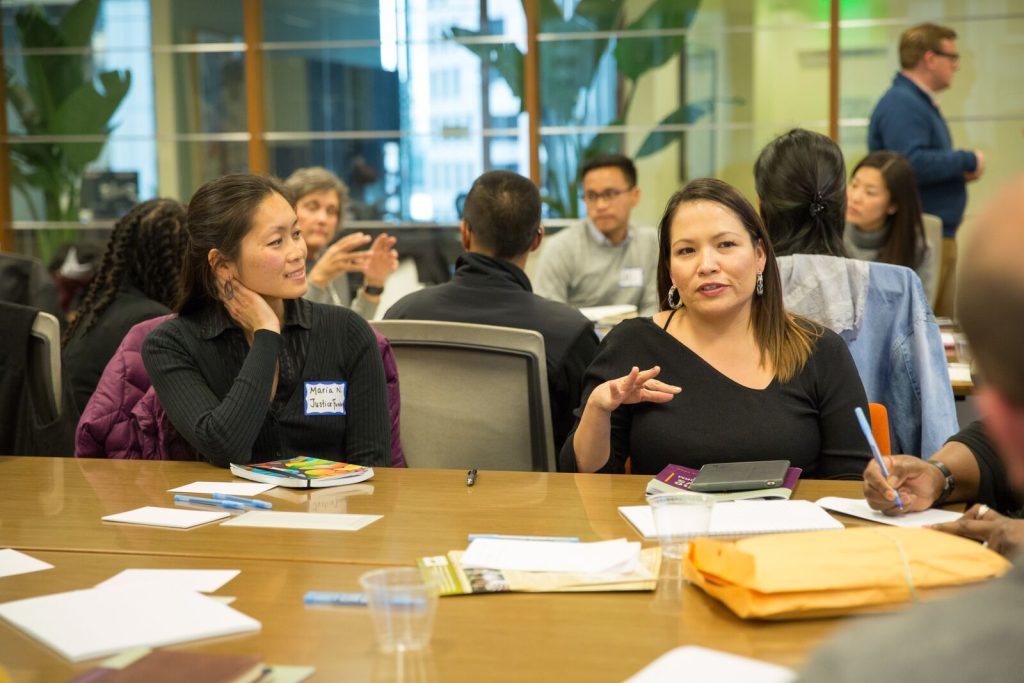
Attendees at the “South Meets West” funder event in San Francisco.

The second took place in downtown Los Angeles.

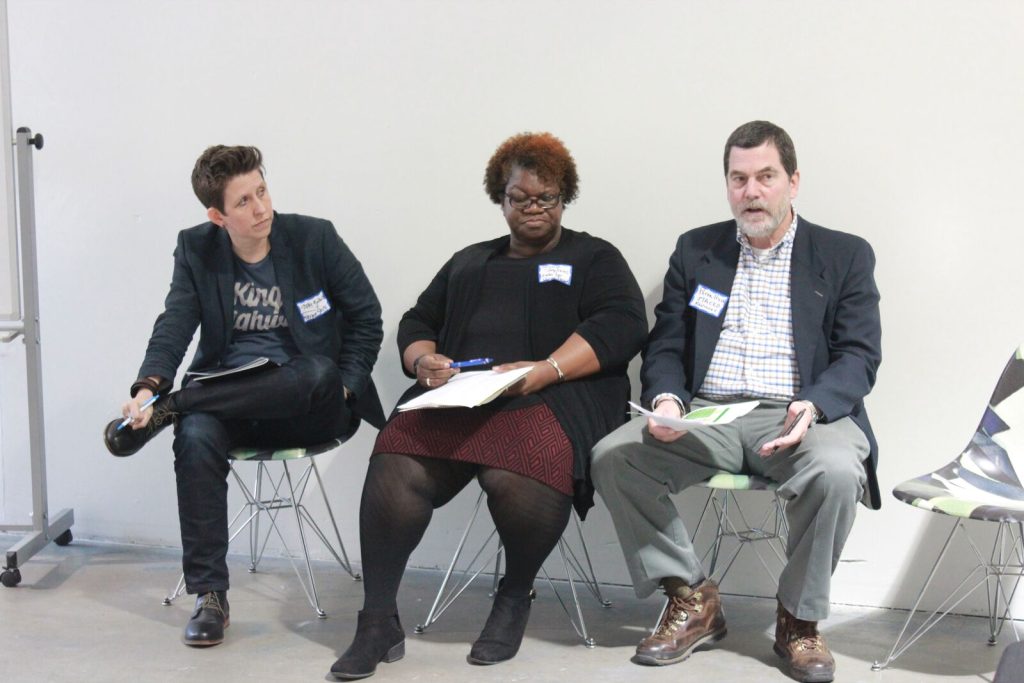
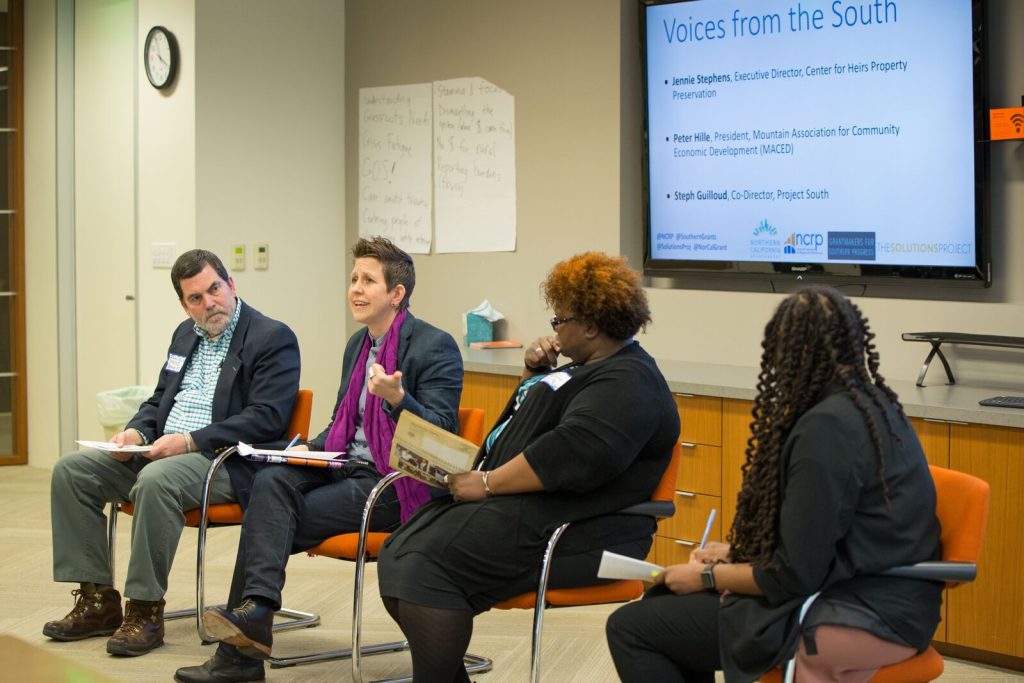
Southern leaders Stephanie Guilloud, Dr. Jenny Stephens and Peter Hille present at the "South Meets West" even in Los Angeles.

California-based community foundations, private foundations, rapid response funds and individual donors met with Southern foundations, nonprofit leaders and community organizers from across the South.  

Attendees at the San Francisco "South Meets West" event.

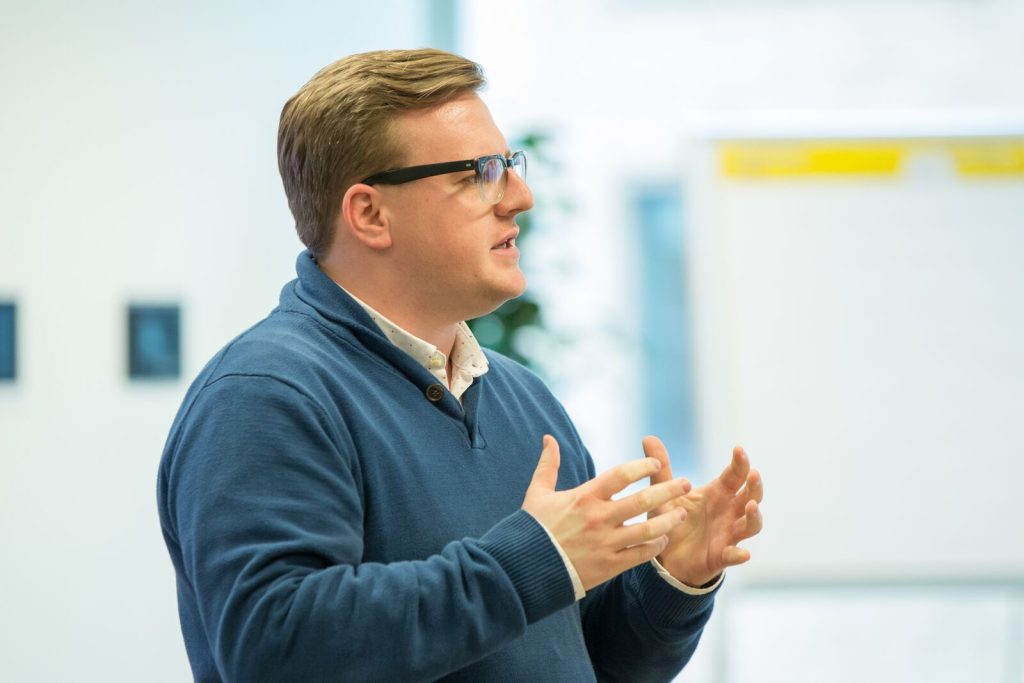
Tyler Nickerson kicked things off by sharing why, as a progressive funder, Solutions Project believes in funding the grassroots in both regions.

Tyler Nickerson of Solutions Project at the San Francisco "South Meets West" event.

NCRP Vice President and Chief Engagement Officer Jeanné Isler and GSP Co-Chair and Mary Reynolds Babcock Foundation Program Director Lavastian Glenn shared highlights from NCRP and GSP’s As the South Grows series.

Organizing, advocacy and civic engagement (per capita grantmaking, 2010-2014).


Southern leaders shared how the road to national progress runs through the South. They included Stephanie Guilloud from Project South in Atlanta, Dr. Jennie Stephens from the Center for Heirs’ Property Preservation in South Carolina and Peter Hille from the Mountain Association for Community Economic Development in Kentucky (all NCRP nonprofit members).

Peter Hille, Stephanie Guilloud and Dr. Jennie Stephens at the San Francisco "South Meets West" event.

We strategized together and told stories together.

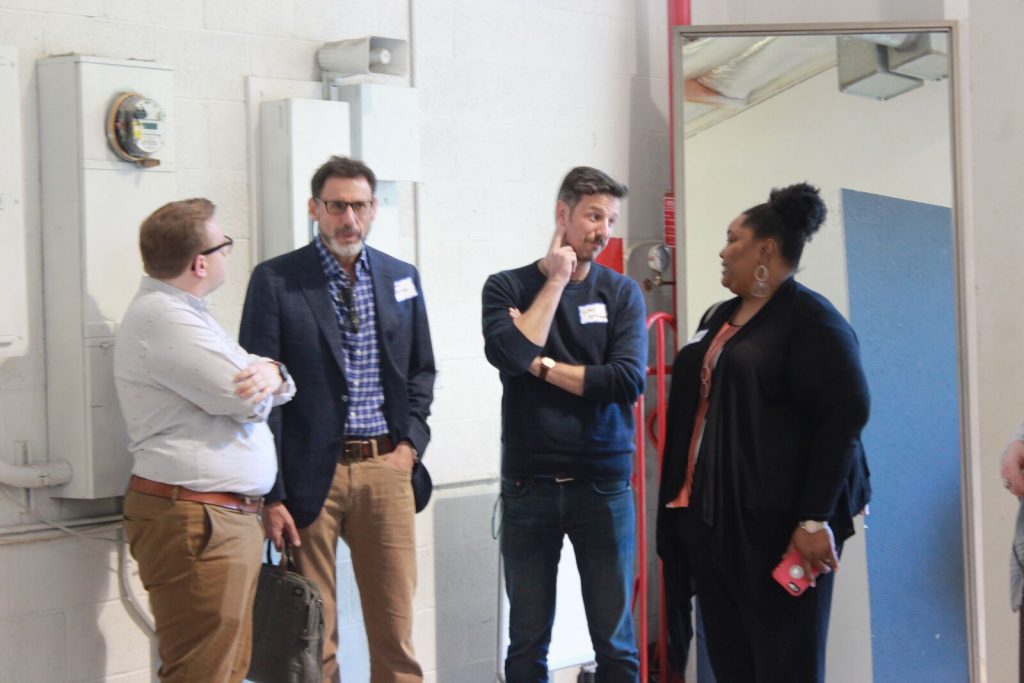
Attendees at the "South Meets West" event in San Francisco.

We even went to happy hour together. 

People left with commitments to move money, make phone calls and visit the South in person.

Attendees at the "South Meets West" event in San Francisco.

And we left inspired with what can happen when the South and California partner together. 

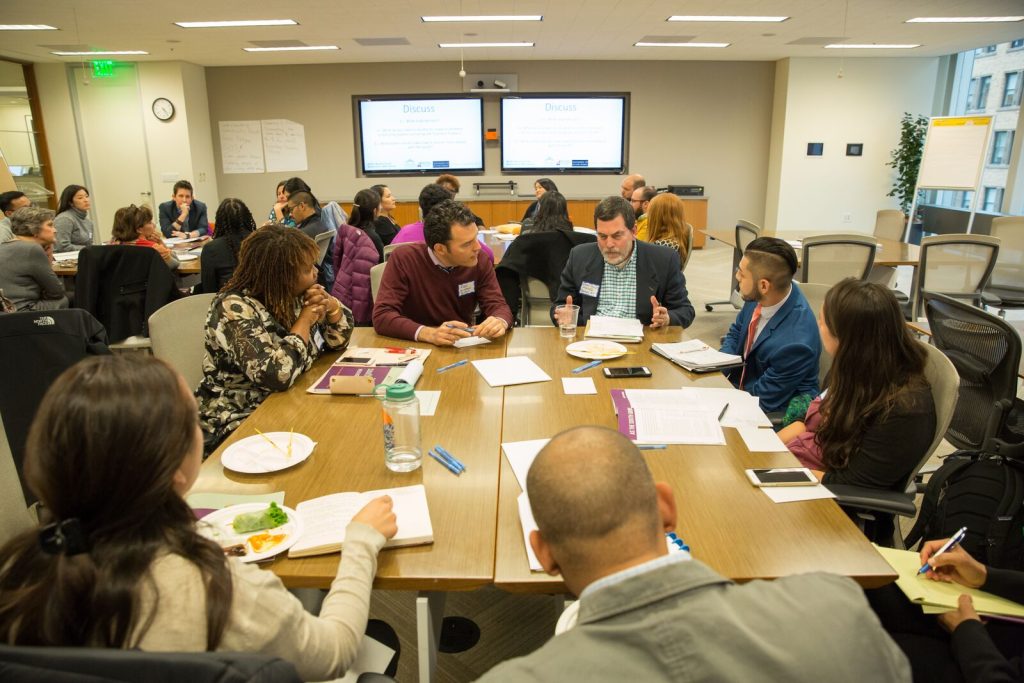
Attendees at the "South Meets West" even in Los Angeles.

These events were a first step. True change in the philanthropic relationship between the South and California will take long-term relationships, as well as a willingness to risk our comfort with the status quo. Here at NCRP, we’re excited to roll up our sleeves.

To learn how you can get involved with NCRP, GSP and As the South Grows, contact Ben Barge at bbarge@ncrp.org and Tamieka Mosley at tmosley@southerneducation.org.

Ben Barge is senior associate for learning and engagement at NCRP. Follow @NCRP on Twitter.

Atlanta is the philanthropic center of the South, and is known as a city of prosperity and inclusiveness. Unfortunately, that reputation is not the reality for all residents of the Metro Atlanta region, as many of the city’s underserved citizens have been pushed to the margins in the name of progress.

Fortunately, there is a huge opportunity for foundations and wealthy donors to step in and support those communities. Currently, most of the city’s philanthropy supports direct service work. Just 2 percent of funding goes to the power-building strategies that would enable grassroots organizations to advocate for themselves. And, only 20 percent of Atlanta’s philanthropic dollars go to low- and middle-income communities, people of color, immigrants, LGBTQ people and other underserved communities.

NCRP’s newest report, “As the South Grows: Bearing Fruit,” provides a blueprint for how foundations and wealthy donors can respond to the “historic dearth” of philanthropic investment for these strategies and communities in the “city too busy to hate.”


Learn about:

As the South Grows: Bearing Fruit” is the fourth report in the five-part As the South Grows series. The final report will be released in May.

We hope “As the South Grows” inspires you to look at the South as an important opportunity for deeper engagement, investment and partnerships.

Aaron Dorfman is president and CEO of NCRP. Follow @NCRP on Twitter.

The last few years have been complicated and challenging ones for the country. The three and a half years since the Ferguson Uprising have brought a renewed national focus on the depth, breadth and cost of pervasive structural racism, as well as a resurgent white supremacist political movement whose chief proponent holds our nation’s highest office.

A reinvigorated national movement for racial justice has gained steam, and other broad-based movements for gender, economic, climate and immigrant justice are successfully moving their agenda into the mainstream of progressive politics.

I have been encouraged by the reaction of many philanthropic institutions – both foundations and the organizations, such as the one I lead, that monitor and support them. It’s clear our diverse sector mostly agrees that systemic racial bias and inequity are the challenges of our time, challenges that philanthropy must wrestle with just as the country does. Many in the sector now agree that sitting on the sidelines during this national reckoning is not a viable option.

So I was pleased to read from my colleague Kathleen Enright, CEO of Grantmakers for Effective Organizations (GEO), that in October 2017 GEO’s board adopted a new position on the centrality of racial equity to their organization’s mission.

“In the years ahead,” Kathleen wrote, “we are committed to supporting racial equity in philanthropy in ways that are aligned with the GEO community’s identity, [and] we are committed to helping develop a new concept of effectiveness … that integrates racial equity.”

I think it’s a good and healthy development for our sector that GEO has entered this space. For too long, effectiveness has been divorced from justice and equity.

NCRP agrees with GEO that “sound management” and “strong governance” – two key facets of its definition of organizational effectiveness – are fundamentally subjective, and therefore vulnerable to implicit bias. We also agree that executing programming well is only a public good if those programs are not based in what Kathleen called “false narratives” about the root causes of injustice.

We agree that these factors are undoubtedly at play in a nonprofit and philanthropic sector where whiteness – and white-dominated definitions of what effectiveness looks like – have always been the driving force behind the movement to identify and invest in effective organizations.

I am grateful to hear GEO name these contradictions and challenges in its work. They are the same contradictions and challenges that NCRP, also a white-led organization seeking to influence the philanthropic sector, has been wrestling with for decades.

During that time we’ve learned that the philanthropic sector’s understanding of effectiveness will never be complete or just without true responsiveness to communities harmed by inequity. Such responsiveness demands we examine our own privilege and how it distorts our understanding of effectiveness and impact.

Our research on grantmaking in the Southeast, the site of some of the most stubborn racial disparities in the country, confirms one of Kathleen’s observations: “[N]onprofits deemed ‘effective’ are often those most skilled at navigating the thicket of hurdles, requirements, and processes put in place by philanthropy,” and this dynamic converges with philanthropy’s white-dominant culture to disadvantage organizations led by and serving communities of color.

As we noted a year ago in As the South Grows: On Fertile Soil, “when funders expect a college degree or a polished grant proposal to justify an investment, they exclude organizations in need of philanthropic resources that are led by people who are most capable of organizing their communities. Funders often misconstrue signs of privilege for signs of capacity.”

“In New Orleans at the Unity Summit,” Kathleen wrote, “amazing and effective leaders who have been working for racial equity for many years – often at considerable personal risk and sacrifice – told us from the podium that they are not getting the support they need from philanthropy.”

NCRP has been documenting this woeful underinvestment for decades, helping under-resourced communities speak truth to power, and we’ve concluded that to truly advance equity, philanthropy needs to share its power with community leadership, especially leadership from communities of color.

Funders must embrace an ideal of responsiveness that cedes the power to define what is effective and what impact looks like, and shares the power to determine who is worthy of foundation investment with those communities directly affected by the challenges we confront. We must acknowledge that to continue to define effectiveness within the white-dominated halls of philanthropy is to perpetuate the racial injustice we deplore.

This aspirational responsiveness, which is difficult to achieve because philanthropy holds more power and privilege, has been and will continue to be at the center of NCRP’s work to change the sector. I cannot say that it comes easily to us: We operate in a space of contradictions – very much a creature of the sector we hope to hold accountable to people with whom we don’t always share lived experiences.

But the aspiration is at the heart of all our work. It drives our Philamplify initiative, whose objective has been to elevate grantee feedback as a tool for greater justice and equity in the field. It drives our As the South Grows campaign, which spotlights Southern grassroots leadership and challenges grantmakers to shift their understanding of Southern capacity and potential for progress.

I hope that a radically responsive perspective on grantmaking will also find its way into GEO’s push to implement racial equity values in its work. I’m optimistic it will, given GEO’s boldness in striking out into this new and challenging territory, Kathleen’s leadership and the strength of GEO’s board of directors (two of whose members also serve on NCRP’s board).

If, however, the GEO community doubles down on a definition of effectiveness that centers foundation voices and foundation perspective on the public good, they will have missed the mark.

I welcome GEO to a movement within philanthropy that has many visionary leaders. You are not in this alone.

Ultimately, all of us in the sector must move beyond a closed loop of redefining organizational effectiveness within a white-dominant framework. Until grantmakers cede the power to define what works to those for whom we work, racial equity grantmaking will remain beyond our reach.

Aaron Dorfman is president and CEO of NCRP. Follow @NCRP on Twitter.

Four years ago, the Saint Paul Federation of Teachers (SPFT), along with parents and community members, committed ourselves to ensuring that students in Saint Paul, particularly students of color, receive a quality education. 

While we’ve made great strides to improve public education in Saint Paul, there is much more that still needs to be done. Class sizes are still too big; there are not enough nurses, counselors or social workers; and we need to include more schools in programs that have proven effective in disrupting the school-to-prison pipeline, such as restorative practices and teacher home visits.     

However, like many school districts across the country, the Saint Paul Public School system is financially broke. It’s become an annual tradition that they announce how big the deficit is and then make the needed cuts.

SPFT decided to do something different in our current negotiations. We are using our contract campaign to show that corporate philanthropy is not an adequate substitute for corporations paying their fair share of taxes for public education and that there are serious problems with the way corporations carry out their philanthropy for our schools.

Our campaign is challenging the myth of scarcity. We have highlighted how changes in state law have resulted in Minnesota’s largest corporations paying lower state tax rates than they did previously and that many of those same corporations use loopholes and tax havens to pay even less taxes. 

For instance, we calculated that UnitedHealth and US Bank avoid paying a total of $25 million a year in Minnesota state income taxes. Ecolab, the largest corporation based in St. Paul, is holding $2.1 billion in offshore accounts to avoid paying income taxes in the U.S.

School districts are so underfunded and desperate for money, that they have developed a kind of Stockholm syndrome, in which they honor and praise the very same corporations that are starving our schools by not paying their taxes. SPFT proposed that the St. Paul school district join us in seeking increased funding from these corporations, but the district instead issued public statements defending those corporations.

Charity is not a replacement for government. When we fund schools through taxes, we have democratically elected representatives who decide how to best spend those funds for the common good. In contrast, with charitable contributions, corporations decide what is best for our schools and dictate how to use their donations.

Corporate donors can – and often do – make applicants jump through numerous hoops to receive funding. For instance, contrary to NCRP’s Philanthropy at Its Best criteria, the Ecolab Foundation has burdensome application requirements for minimal grants. Ecolab Foundation gave $244,000 to the Saint Paul Public Schools last year through the company’s Visions for Learning grants, which require individual teachers to each fill out a five-page application for grants of about $2,000 to buy classroom equipment and materials.

Some corporate donors also tie their funding to consumer spending:

  • Target gave the Saint Paul schools $124,000 through its now discontinued “Take Charge of Education” program, in which the company donated 1 percent of Redcard holders’ total purchases to a school of their choice. This means that customers who designated a specific school in Saint Paul made $12.4 million in Target purchases on their Target Redcards.
  • General Mills donated $4,800 from its Box Tops for Education program, which rewards schools at a rate of 10 cents per box top. Saint Paul parents collected box tops from almost 50,000 General Mills products to earn this amount of money.

There is a clear imbalance of power between the school district and the corporations. The “power of the purse” has made the district grateful for corporate donations of any amount, regardless of how the funds are designated to be used. A true partnership in which the grantmaker and grantee are working towards the same goals would involve real conversations between the corporate donors and the district, along with teachers and parents, to identify the most pressing school needs and the best avenues for the corporate involvement.

The “power of the purse” is also responsible for the school district deliberately ignoring the leadership role that the district’s corporate donors play in opposing tax increases for public education. Ecolab CEO Doug Baker is on the Executive Committee and chairs the Fiscal Policy Committee of the Minnesota Business Partnership, which is made up of the CEOs from the state’s 100 largest employers. 

Baker, who received $25 million in total compensation last year, led the Business Partnership’s opposition to an increase in the Minnesota state income tax rate for the wealthiest households. Despite their opposition, the legislature raised the top tax rate in 2013, which allowed the state to invest an additional $350 million a year for K-12 education.

Minnesota is a rich state. Our large corporations are making huge profits, while contributing less and less to the community. We need those corporations to pay their fair share so that all of our children can receive the education they deserve.

Nick Faber is president of the Saint Paul Federation of Teachers. Follow @SPFT28 on Twitter.

Too many corporate philanthropies and corporate social responsibility (CSR) initiatives are restricted in their ability to produce substantive change. And, corporations’ relentless pursuit of business success, and the consequential harm to people and places that resulted, was long considered the price of living in a capitalistic society. 

But today’s consumers have shifted expectations. According to Nielson, 66 percent of consumers are willing to spend more on sustainable brands. That number is even higher for millennials who also overwhelmingly prefer companies make public statements about their beliefs.   

As consumers become more loyal to conscious brands, more businesses are concerning themselves with the triple bottom line. Are these sincere efforts or merely good PR window dressings intended to increase profits?

Instead of exploring the full organization’s potential for constructive societal influence, corporations tend to look at their corporate philanthropy and CSR departments as “do good” arms of the larger body: The corporation continues to create messes in the lives of average Americans through practices like wage stagnation, the pursuit of aggressive penalties and leaning on corporate welfare, while the “do good” arms write checks for the brooms we in the nonprofit sector can use to clean the messes up.

I’ve long believed that there must be a better way for companies, beginning with those whose corporate giving arms are staples in our social justice giving community, to better align their efforts in order to be profitable and strong American businesses that also help support cities and citizens.

Thankfully, it looks like there is a case study in Newark, New Jersey, where Audible, the Amazon subsidy created 22 years ago by Don Katz, is transforming the community.

Audible, which has grown to become the largest producer and seller of audiobooks, saw its move from suburban Wayne, New Jersey, in 2007 as an opportunity to “impact a community in need at its core” and bring “economic vitality” to a dwindling city. Audible offered a housing lottery for 20 employees to support downtown redevelopment, a program that has now expanded to a $250 monthly subsidy for employees who want to relocate to the city.

In addition to bringing in new players to spur the local economy, they are inviting the people and businesses that have long called Newark home into this reimagining. The company offers prepaid debit cards for employees to frequent the city’s restaurants and uses locally sourced food in their office cafeteria each day. 

Audible also hires locally. One of the first steps Katz took after the move to Newark was a commitment to only hiring Newark kids for paid internships, a program that has grown into mentorships, college scholarships and partnerships with community schools — even communicating with educators on issues they’ve noticed in students like vocabulary gaps and struggles in college. (However, I recommend that Audible read Charter School Leaders are Complicit with Segregation, and It’s Hurting their Movement by Andre Perry.)

Audible can also boast that almost half of their entry level customer service positions are held by Newark residents and their recruitment team is steadily working to identify home-grown talent for openings at all levels of the company.

To further insulate Newark’s burgeoning economic success, Audible is working to position more employers of their size throughout the city while simultaneously tapping into the city’s 40,000 college students, a majority of which are a combination of immigrant backgrounds and first-generation students.

The Newark Venture Partners Fund was created to support budding companies and entrepreneurs and is currently housing 26 companies and 70 founders on the seventh floor of the Audible office space. The Audible staff provide master classes for this up-and-coming talent and have the start-ups measuring their impact on Newark in areas such as job growth, taxable revenue and foot traffic, in addition to standard business metrics.

This investment in Newark, one that wasn’t inspired by tax-breaks and subsidies, and one that people warned would cause Audible to lose 25 percent of its employees, has instead helped unemployment and crime reach historic lows while the company enjoys a 40 percent growth in their memberships each year. Katz calls this form of philanthropy “Activating Caring,” which puts the good of the people at the forefront and not as an afterthought to remedy a company’s daily missteps.  

Audible has decided to wholeheartedly commit itself to doing good while others have merely positioned their philanthropic efforts to lessen the blow of the corporation’s harm. 

This post is not a statement against traditional philanthropic giving. Money is needed, and corporations should continue doing the great work of identifying and financially supporting the nonprofits that are working to advocate and organize for change. But we see their full selves daily doing things like holding poverty simulators and other efforts intended to end homelessness while being a cause of poverty themselves. 

In order to actualize what their “do good” arms are working towards, companies must pull together a holistic approach to demonstrate that they, like Don Katz and Audible, are unequivocally committed to seeing people and places thrive.

Janay Richmond is NCRP’s manager of nonprofit membership and engagement. She earned a master of business administration degree from Saint Xavier University. Follow @JanayRichmond1 and @NCRP on Twitter.

Illustrated portrait of Dr. Martin Luther King Jr.Are the teachings of the Rev. Dr. Martin Luther King, Jr., the great civil rights leader whose birthday we celebrate today, relevant in the current political climate? Absolutely.

Last week, a prominent liberal opinion columnist for The Washington Post, Dana Milbank, criticized United We Dream, the nonprofit group organizing undocumented young people to fight for their rights and for full citizenship. Milbank wrote that he was sympathetic to the group’s demands, but he claimed their attacks on Democrats were “counterproductive” and he suggested they should stop “training their fire on those who support them” and instead go after Republicans. His critique reminded me of the white preachers of Birmingham who were critical of the tactics being used by Dr. King and others in the Civil Rights Movement.

I’m sure that some in philanthropy privately share Milbank’s critique of the dreamers and their campaign, or are similarly critical of other groups that push in ways that make people uncomfortable. I don’t tend to see foundation leaders arguing publicly that activists should be patient and wait, or that they shouldn’t use controversial tactics. But the truth is, foundation leaders speak more with their dollars than they do with their words and their dollars say they aren’t comfortable funding groups that employ aggressive tactics.

NCRP analysis of available Foundation Center data shows that between 2006 and 2016, just 9 percent of total foundation grantmaking intended to benefit communities of color, poor people, immigrants, incarcerated people, LGBTQ people and people with disabilities was for policy change, advocacy and systems reform work. The rest, we can reasonably conclude, was for work more “acceptable” to foundations like direct services.

Photo of the Dr. Martin Luther King Jr. memorial in Washington, D.C.In the same decade, just 0.8 percent of all grantmaking for community and economic development was for strategies specifically designed to build power, like organized labor, tenant organizing and community organizing more generally. In the same decade, foundations directed 16 times as much funding to business and industry.

This reticence of philanthropy to fund movements and direct action isn’t new, of course. Just a handful of foundations played any kind of meaningful role funding the Civil Rights Movement, as we documented a few years ago in Freedom Funders.

Milbank’s critique and a clear-headed recognition that philanthropy hasn’t embraced groups that make elites uncomfortable suggest that now would be a good time for everyone in philanthropy to re-read Dr. King’s Letter from a Birmingham Jail. In that letter, Dr. King responded to intense criticism from liberal white preachers who claimed they supported the goals of the Civil Rights Movement but not its confrontational tactics. Here are excerpts of what Dr. King wrote in response to those white preachers:

My Dear Fellow Clergymen:

While confined here in the Birmingham city jail, I came across your recent statement calling my present activities “unwise and untimely.” Seldom do I pause to answer criticism of my work and ideas. If I sought to answer all the criticisms that cross my desk, my secretaries would have little time for anything other than such correspondence in the course of the day, and I would have no time for constructive work. But since I feel that you are men of genuine good will and that your criticisms are sincerely set forth, I want to try to answer your statement in what I hope will be patient and reasonable terms.

You may well ask: “Why direct action? Why sit ins, marches and so forth? Isn’t negotiation a better path?” You are quite right in calling for negotiation. Indeed, this is the very purpose of direct action. Nonviolent direct action seeks to create such a crisis and foster such a tension that a community which has constantly refused to negotiate is forced to confront the issue. It seeks so to dramatize the issue that it can no longer be ignored. My citing the creation of tension as part of the work of the nonviolent resister may sound rather shocking. But I must confess that I am not afraid of the word “tension.” I have earnestly opposed violent tension, but there is a type of constructive, nonviolent tension which is necessary for growth. 

I must make two honest confessions to you, my Christian and Jewish brothers. First, I must confess that over the past few years I have been gravely disappointed with the white moderate. I have almost reached the regrettable conclusion that the Negro’s great stumbling block in his stride toward freedom is not the White Citizen’s Counciler or the Ku Klux Klanner, but the white moderate, who is more devoted to “order” than to justice; who prefers a negative peace which is the absence of tension to a positive peace which is the presence of justice; who constantly says: “I agree with you in the goal you seek, but I cannot agree with your methods of direct action”; who paternalistically believes he can set the timetable for another man’s freedom; who lives by a mythical concept of time and who constantly advises the Negro to wait for a “more convenient season.” Shallow understanding from people of good will is more frustrating than absolute misunderstanding from people of ill will. Lukewarm acceptance is much more bewildering than outright rejection.

Perhaps it is easy for those who have never felt the stinging darts of segregation to say, “Wait.” 

There comes a time when the cup of endurance runs over, and men are no longer willing to be plunged into the abyss of despair. I hope, sirs, you can understand our legitimate and unavoidable impatience. 

Am I saying that grantmakers should never question the strategic and tactical choices of grantees? Of course not. But Dr. King’s letter reminds us that we in philanthropy must never write off potential grantees as naïve or politically unsophisticated because of the tactics they have chosen. If we want to win, if we want to be effective, we must stop reflexively and perpetually deciding to fund groups that “know how the system works” instead of choosing to fund grassroots organizations led by people of color that employ tactics that make us uncomfortable – tactics that challenge that system directly and sometimes confrontationally.

What other teachings of Dr. King do you think are relevant for philanthropy today? Please share in the comments.

Aaron Dorfman is president and CEO of NCRP. Follow @NCRP on Twitter.

[Disclosure: Cristina Jiménez, executive director and co-founder of United We Dream, serves on the NCRP board of directors. Full board list here.]

A new year means new goals, new hopes and sometimes, a revitalized sense of purpose. At the beginning of the year, it’s important to both reflect and move forward, understanding that now is the time to welcome tips, wisdom and guidance from our peers. How can we grow in this upcoming year? What did we miss last year? How can we focus our efforts to be more effective?

As we think about these questions, we want to turn some attention to funder-grantee relationships. In 2018, what are some ways to deepen funder-grantee relations? NCRP staff members share their thoughts below:

“Often grantees and program officers communicate only in relation to pending proposals. You can break this pattern and deepen relationships by setting up regular phone calls outside of the proposal process. Pick a handful of key contacts, and plan to speak at regular intervals during the course of the year: monthly, quarterly, etc.”

– Dan Petegorsky, Senior Fellow and Director of Public Policy

“Stay in touch with your grantees throughout the year. And during those conversations ask, ‘How can we help?’

“Grantmakers have limited resources and their own internal and external constraints. But by asking grantees what they need while being transparent about what is and isn’t possible, these conversations can surface other ways that funders can help: connecting grantees to other nonprofits or donors doing related work, taking a public stance behind the issue your grantee is working on, sharing that grantee’s initiative on social media, covering the registration fee to leadership development opportunity and other ways of showing support.”

–Yna Moore, Senior Director of Communications

“A one-on-one up-close-and-personal lunch date with each grantee representative(s) at a restaurant of the grantee’s choice. Sharing a meal brings out the best in all of us. Sharing a meal in a neutral place removes some of the trappings of power and difference (fancy office, big desk, formal attire) and serves as a reminder of the simplicity and equality of the partnership, i.e., success cannot exist without each of the partners.”

– Beverley Samuda-Wylder, Senior Director of Human Resources and Administration

“Check out these three resources for building trust and transparency to strengthen relationships with grant partners: The Whitman Institute’s Nine Key Practices of Trust-Based Investment, Foundation Center’s GlassPockets Steps to Transparency tool and Project Streamline’s best practices to reduce burdensome grant requirements.”

– Lisa Ranghelli, Senior Director of Assessment and Special Projects

What are some tips you can think of to deepen funder-grantee relations in 2018? Does your organization have goals, aims or resolutions for the New Year? Let us know in the comments below!

Jack Rome is the communications intern at NCRP. Follow @NCRP on Twitter.