Recently, I had a family emergency that took me away from work for a couple of weeks. During that time, my colleagues encouraged me to take the time I needed to be with my family, and most importantly, to take care of myself.

And I did. With the help and support of my colleagues, I was able to focus on my family and myself, and did not need to think about my work duties.

But community organizers dedicated to making our communities better and addressing the inequities they see and experience don’t have the staff, resources and time to take days off.

This is especially true for organizers in the immigrant and refugee rights movement who are facing an endless barrage of attacks against their communities at the federal, state and local levels.

In our work building relationships within the movement, NCRP has heard from organizers experiencing burnout, working long hours day after day to reach and support their communities with limited staff.

Funders that want to see movements grow and succeed can help by funding in ways that prevent and alleviate organizer burnout.

Organizations don’t just benefit from having a full, healthy staff with sustainable salaries and paid time off, the whole movement benefits.

With less organizer burnout, organizations would have more capacity for:

  • Mobilizing people.
  • Building power within communities.
  • Healing from the trauma they experience.
  • Resilience against the threats and attacks they face.

By prioritizing mental, emotional and physical health, organizers could fight the dehumanization they face every day. They would have more power to:

  • Prevent deportations.
  • Prevent harmful laws from being passed.
  • Secure rights for immigrants and refugees.

And funders can help make the healing, resistance and power-building happen. It starts with flexible general operating support and multi-year funding, which can go a long way for an organization, as well as what the movement achieves. This support will help organizations:

  • Pay their staff livable salaries.
  • Hire more staff.
  • Ensure that staff have health benefits and paid time off.

And when organizers are mentally and physically healthy, they increase their capacity to build relationships, and connect communities so that, collectively, communities can heal and fight back.

Organizers’ emotional, mental and physical health are at stake

“Organizers and community leaders are burning out. Particularly if you are someone who is directly affected and this isn’t work, but your life. People are suffering from anxiety, depression, burning out and quitting,” said Nayely Pérez-Huerta, co-director of the Southeast Immigrant Rights Network of working in the movement.

For many leaders and organizers, community organizing is not just work. It’s their lives, families and communities that come under attack.

Like Pérez-Huerta, Mariana Deseda, organizer and law fellow at the Alabama Coalition for Immigrant Justice also feels the effects of the work.

“I’ll drive 3 hours a day, then come back and give a conference talk. I’m tired. I often work more than 40 hours a week. My mental health and physical health is at stake, especially my emotional health. A lot of the people that come to me don’t have happy stories. It’s a lot for us to digest.”

If organizers aren’t physically and emotionally healthy themselves, how can we expect them to lead and mobilize their communities?

Relationships are the foundation of community organizing

And building relationships can be mentally, emotionally and physically taxing.

“Building relationships takes a lot of time. It’s not just ‘Come and join our network,’” said Pérez-Huerta. “It’s about ‘Who are your people, how can we collaborate, how can we support you,’ and that takes a lot of time.”

In order to build relationships and a network, grassroots organizations need to have the staff to reach and connect with communities.

“With limited funds and limited staff, there’s only so much we do. If we had more projects, more funding and more people we’d have more connections, and at the end of the day, maybe more power,” said Deseda about the importance of having enough resources for their work.

Beyond funding benefits and salaries for organizations, funders can also support whole communities to be healthy. Communities need to be resilient in order to withstand the constant threats and attacks and to continue fighting for their rights and safety.

Practicing cultural traditions heals and strengthens communities

“We are being dehumanized from a federal level to a local level,” Pérez-Huerta said. “We see culture as key in making sure that our communities are resilient and can fight back. We are centering ourselves in the fact that our ancestors have been resisting for so long and we’re here because of them.”

As Pérez-Huerta explained, incorporating cultural traditions enables communities to build solidarity and reaffirm the humanity of the people behind the movement in a dehumanizing environment.

It is also a way for communities to recognize that the battles of today are connected to a much longer history of resistance. Healing from the trauma of past and present are part of the process of strengthening and building resilient communities to continue resisting.

In a time when immigrants face daily threats in their communities, funders have a unique opportunity to make sure that the leaders at the forefront of the movement are healthy and whole enough to be able to fight back against those threats.

With flexible long-term funding, organizations can provide livable staff salaries and health benefits, and organizations can incorporate creative strategies to heal and strengthen communities. In addition to preventing and alleviating burnout, it translates to more people and, ultimately, more power for the movement.

Stephanie Peng is a research and policy associate at NCRP. Follow @NCRP on Twitter. Image by Dennis Skley, used under Creative Commons license.

Dear Mr. Schultz,

Don’t do it!

The Washington Post reported last week that you might spend $300-$500 million of your own money on a campaign to run for President. Please reconsider.

Others have made the political argument for why you shouldn’t run, and they’re not wrong. But I want you to think about how you could help the country with philanthropy instead of spending that money on your campaign.

Investing in community organizing and grassroots social change is extremely effective and has a high return on investment. In fact, research suggests that you could probably unleash $34-$58 billion worth of benefits for families, communities and taxpayers by philanthropically funding those high-leverage strategies with the same $300-$500 million you intend to spend on your campaign.

A handful of billionaires have figured this out and are helping the country without putting themselves in the spotlight:

  • Chuck Feeney, through Atlantic Philanthropies, funded the grassroots organizing that helped push the Affordable Care Act over the finish line. Millions of Americans have been helped as a result.
  • Dustin Moskovitz and Cari Tuna, through their Open Philanthropy Project and their Open Philanthropy Action Fund, are making an incredible contribution to reforming our nation’s unfair criminal justice system. I was especially impressed with their funding of the successful ballot measure in Florida this last election cycle that has restored voting rights for more than a million Floridians.
  • George Soros, through Open Society Foundations, is one of the most important funders of grassroots organizing in the nation. NCRP gave his foundation an award in 2015 because we were so impressed with the tangible difference the foundation was making in people’s lives on issues such as education, health, justice and government accountability.

Mr. Schultz, I know you want to help our country, and I admire that. Please be smart and spend your money investing in the most marginalized in our society and strengthening their voices. It will do so much more good than a self-funded campaign for President.

Sincerely,

Aaron Dorfman

Aaron Dorfman is NCRP’s president and CEO. Follow @NCRP on Twitter. Image by Chairman of the Joint Chiefs of Staff. Used under Creative Commons license.

Two recent philanthropic sector news items have attracted the attention of philanthro-folks on social media. Both channel current debates about whose voices are heard in public discourse, and both hint at opportunities for foundations to embrace sharing their power with the communities they serve.

On Jan. 9, The Chronicle of Philanthropy reported that a group of extended Andrus family members who object to the Surdna Foundation’s current racial equity grantmaking strategy had sent letters to the Surdna board of directors expressing their displeasure.

Now their objections have been aired in a prominent industry publication.

The next day, Hewlett Foundation CEO Larry Kramer published an open letter in which he announced that, in order to “hear our opponents and make them feel heard,” the foundation’s staff would, over several months, spend time listening to the foundation’s opponents and deliberate the merits of their opinions. 

The implied identity of “opponents” in the letter seems to be those who would, like the Andrus family members, take issue with the Hewlett Foundation’s systems-change approach to their grantmaking.

What connects these stories is what is conspicuously missing: The voices of grantees and the often-marginalized communities they serve.

Both assert that foundation staff have a responsibility to engage meaningfully with those who would question their grantmaking strategies, but appear to presuppose that that category includes other philanthropists or ideological opponents.

In other words: People with similar levels of power and privilege as the foundation leadership and staff themselves.  

Neither speaks to the value of grantee community voices in that conversation, and that’s a missed opportunity that, luckily, can be easily remedied.

It’s no surprise that foundations, like the rest of us, have begun to wrestle publicly with hot-button issues in the past few years: Whose voice is worth listening to? Who has power and privilege in a changing country and world? Who should?

Whose voice is worth listening to?

“Foundations depend on their boards for wisdom, perspective, and sense-making. Board members who bring authentic relationships, experiences, and an understanding of the communities the foundation aims to serve are more likely to help shape strategies that are responsive to real needs.” – Jim Canales and Barbara Hostetter, Barr Foundation

Our capacity to listen empathetically should expand in light of the deep divisions recently exposed in our civic life. But we shouldn’t listen as if power and privilege do not exist.

The descendants of a mega-wealthy donor whose ideological viewpoint is echoed in the halls of the Senate, the White House and on the country’s most-watched TV network are not under-represented in the public discourse.

Those who would deny facts to defend the status quo – people who deny the facts of our changing climate, for example – are not those whose perspective is sorely missing from philanthropy.

It may feel broad-minded to give hearing to voices of dissent when they come from other people with power. But inviting conversation with other wealthy, privileged and, often, white people about what good grantmaking looks like is not a shift in the status quo. It’s what most foundations do by default every day.

In 2014, the D5 Coalition’s research showed that 92% of foundation CEOs and 87% of their board members were white. Just 38% of foundation board members were women, 2% identified as LGBTQ and just 1% identified as disabled.

No data exist on the socio-economic status of foundation CEOs and board members, but it’s not going out on a limb to conclude the overwhelming majority are people with high incomes, high wealth or both.

This begs the question: In a sector that is still overwhelmingly staffed by well-heeled white people, what would a shift in empathetic listening look like? Grantee organizations and the communities they serve hold part of the answer.  

Who has power?

“Public officials, grantmakers, and others in power may tap constituents for their ‘input’ at a neighborhood charrette or community meeting, but they often ultimately ignore community ideas and insights. As a result, many communities have plenty of experience with people in power telling them what is really good for them, rather than being able to speak for themselves and act on their own behalf.” – Linda S. Campbell, Detroit People’s Platform and Building Movement Project

Listening with empathy is necessary, but insufficient. The most effective foundations go beyond listening to actively sharing power in order to co-determine the best interventions with their grantees and the communities they are part of, which are closest to the sticky problems foundations are working to address.

These ideas are being put into practice by innovative institutions in the sector. In 2014, the Brooklyn Community Foundation launched a community engagement initiative that brought foundation staff and leadership into conversation with nearly 1,000 Brooklyn residents through 30 neighborhood roundtables.

The results: The foundation created a 17-member community advisory council, invested $100,000 in community-identified priorities and decided to implement the resident-driven process every year.

A wealth of knowledge, experience and innovation are left out of the grantmaking process when foundations make decisions in a vacuum without grantee and community input.

There are paths for institutions to take to begin listening with empathy to the unheard voices of philanthropy and sharing power through accountability.

NCRP’s Power Moves guide provides a host of different options for foundations interested in embarking on that journey.

And NCRP’s staff is ready to be a thought partner to those who decide they’re ready to take the leap toward accountability.  

It’s for each foundation to chart its course through this era when questions of power and privilege are inescapable, especially for a sector that is largely built on both.

Philanthropic leaders have incredible opportunities in this challenging time. Foundations that embrace sharing their power with their grantees and the communities they serve can unlock innovative new solutions to our pressing problems and begin to transform their grantmaking practices to become more effective, more authentic and more mission-aligned. 

Ryan Schlegel is NCRP’s director of research. Follow @NCRP on Twitter.

One of the key charges in David Callahan’s recent compelling indictment of progressive philanthropy is that progressive foundations have wasted time and money by committing to a harebrained scheme of endless program grants while their conservative opponents long ago embraced the power of general support giving.

An empire of conservative philanthropy giants “didn’t invest in issues or programs, or dole out one-year restricted grants. They invested in ideas, institutions and people. They gave general support to a core group of multi-issue think tanks, legal groups, leadership institutes, and media outfits year after year, decade after decade.”

Since we launched Criteria for Philanthropy at Its Best in 2009, NCRP has been banging the same drum on general support.

We agree that foundations who share our values of equity and justice hamstring themselves and their grantee partners when they make grants piecemeal, forcing organizations to string together a series of restricted grants while their opposition fires on all cylinders without worrying about rent, salaries or the electric bill.

The percentage of general operating support grants is the same as 15 years ago

Philanthropy’s version of the “gig economy” has bedeviled the progressive nonprofit sector for decades: Nonprofit leaders chase program grants that pay some portion of their bills – effectively serving as short-term contractors for foundations – while hoping one day their luck will break with a general support grant that gives them time and space to actually lead.

Despite what appears to be broad consensus on the value of general support grantmaking, foundation staff and executives don’t seem to be able to jump the mental, institutional or structural hurdles that prevent them from giving general support grants.

NCRP’s research shows that among the largest 1,000 foundations in the country, general support grantmaking still only comprises 20% of all domestic funding – roughly the same as in 2003 when NCRP began collecting data.

Between 2010 and 2015 (the most recent year available), the share of domestic funding given as general support declined from 25% to 20%.

The real reason foundations don’t give general support: They don’t trust their grantees

The TCC Group’s “Capturing General Operating Support Effectiveness” by Jared Raynor and Deepti Sood may offer some explanation.

While our data contradicts their assertion that general operating support has increased, their thoughtful recommendations for measuring general support impact are something we agree on: The barriers to general support grantmaking are not primarily evaluation or metrics, but trust, control and power.

Recognizing that many foundation staff cite “difficulties in measuring the impact of general support” as an excuse for not giving more of it, the authors’ goal is to “present a comprehensive outcomes framework to ground practitioners and evaluators in thinking about GOS effectiveness.”

The report outlines good reasons why evaluating the impact of general support can be beneficial to the grantee-funder relationship and provides sample indicators of impact from general support.

The report concludes: “We believe that evaluation issues should not be used as an excuse” to justify continued reliance on program grants.

They also shouldn’t be used to mask a far knottier problem: The massive imbalance of power and trust between funders and grantees.

The report suggests sample indicators for evaluating general support impact, positive externalities that might be generated and negative externalities for funders to be wary of. The last category could mostly be grouped under the header “Loss of Funder Control.”

Examples include:

  • “Over-reliance on grantee goals” (at the expense, it is implied, of the foundation’s).
  • “Lack of clarity on how funds are used when integrated into the broader organization” (clarity for the funder, it is implied).
  • “Complacency or reductions in urgency” on the part of grantee staff.

The report’s appendices, especially on “foundation readiness to award GOS,” are substantial and revealing. Down the line, nearly every capacity the authors suggest is some form of trust, risk-tolerance or funder accountability.

  • “Foundations need enough field credibility to have the trust of grantee organizations.”
  • Foundations must show a “willingness to relinquish control.”
  • “Foundation program officers … need to be both a sounding board for any questions the grantee might have, and also have enough trust in the organization to allow them to maintain independence.”
  • “Foundations need to be committed to supporting the grantee’s work and mission and to nurturing the relationship.”
  • Foundations must adapt an “open and honest ‘learning culture.’”

The odds are against general support from the beginning

A funding decision tree provided by the authors offers some insight: 5 of 11 possible paths lead to “don’t support,” and 2 each to “capacity building support” and “negotiated general support funding,” by which they mean “general support with significant funder control.”

Just 2 of 11 paths lead to “unrestricted general support.” Already the odds are stacked against general support. The question is: Why?

While the tree’s questions begin innocuous enough, other questions with answers highly susceptible to implicit bias appear too:  

  • “Does the organization have strong leadership and adaptive capacity?”
  • “Does the organization have a strong existing funding base?”
  • “Do you want to support this organization, writ large?”

The first, as NCRP has argued in publications like As the South Grows, is too often an opportunity for white- and male-dominant, funder-centric definitions of capacity to crowd out those better suited to the context of, for example, faith organizing in rural Alabama.

The second would establish a nonprofit ecosystem where the lack of foundation support justified and perpetuated itself ad infinitum.

The third question’s meaning is vague enough to enable a plethora of biases.

Frameworks and decision trees are not a replacement for trust in grantees

These questions serve as a deadly effective filter for any potential grantee that does not have conventional (which usually means white and male) leadership; any new innovative organization without robust funding; and any organization that just “doesn’t feel right” to the foundation making that call.

The TCC Group evaluative framework is useful to those grantmakers who have already taken that “leap of faith” toward trusting that their grantees know how best to do their work.

But there isn’t a decision tree or framework in the world that can get a program officer to trust that they can let go of some of their control and still see inspiring results.

Foundation staff who recognize the value of general support in theory, but aren’t making it happen in practice, should reflect on the reasons why.

Ryan Schlegel is NCRP’s director of research. Follow @NCRP on Twitter.

We recently announced NCRP’s new Selections Committee and call for Ambassadors for the 2019 Impact Awards, which was a great way to close out a stellar year.

To share more highlights from 2018, I invited summaries of accomplishments from colleagues, featured below!

Evolution of Philamplify and high praise for Power Moves
Contributed by Lisa Ranghelli, senior director of assessment and special projects

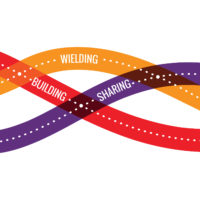
In May, NCRP released Power Moves: Your essential philanthropy assessment guide for equity and justice. The guide provides a framework and comprehensive set of resources for funders to reflect on the extent to which they build, share and wield power mindfully, with attention to issues of privilege in order to advance racial equity.

Since the release, sector response has been overwhelmingly positive. More than 2,000 people have downloaded the guide, including 855 grantmakers. We’ve kept busy promoting Power Moves and offering opportunities to engage with the project, including:

  • Launching 2 peer learning groups for funders and consultants – a new experiment for NCRP – to support each other as they dig into the guide, test out different ways to use it and provide advice and insights to staff.
  • Hosting 4 webinars, including an overview of the toolkit and deeper dives into building, sharing and wielding power, averaging 265 registrants per webinar.
  • Curating powerful stories from leaders such as Vanessa Daniel of Groundswell Fund, who authored an extremely popular journal article and urgent call to action for NCRP on the gentrification of movements. The article has had an astonishing 7,900 page views in the 3 months since publication.
  • Partnering with Stanford Social Innovation Review to feature 8 distinguished authors in a series of articles on Power in Philanthropy.
  • Partnering with other sector groups on in-person presentations on Power Moves themes, including sessions at conferences hosted by PEAK Grantmaking, Equity in the Center and Race Forward.

New milestones for As the South Grows
Contributed by Ben Barge, senior associate for learning and engagement

In June, NCRP launched the capstone report in our joint As the South Grows initiative with Grantmakers for Southern Progress (GSP), So Grows the Nation.

The report includes grantmaking dollars on social justice giving for the region and each Southern state, and grassroots recommendations to philanthropy from over 120 interviews. It’s a can’t-miss read for any Southern or national foundation.

But we did not let these learnings sit on a shelf. Over the past 2 years we’ve had hundreds of 1-on-1 calls and 24 presentations with funders and organizers to change the way philanthropy works in the South, culminating in a presentation with GSP this November at the Southeastern Council on Foundations.

We’ve heard from some major national foundations that As the South Grows has changed the way they think about investing in the South.

And some of our key partners in the work were involved in historic voter education and turnout efforts across the region whose transformative impact we are only beginning to understand.

Stay tuned for a survey capturing the impact of this initiative thus far!

Bold thought leadership
Contributed by Aaron Dorfman, president and CEO

As usual, NCRP sounded the alarm when we saw philanthropy failing to do what it should to help the most marginalized.

I partnered with other sector leaders to write an op-ed calling on foundations to do more in Puerto Rico. The piece was first published in the Washington Post and later in the Miami Herald, and came after a moving trip to the island for the CHANGE Philanthropy retreat and learning tour.

Our team also wrote compelling and timely thought pieces on:

NCRP attends 40-50 sector conferences per year, and I was honored to give keynotes for important gatherings like the Yale Philanthropy Conference and the Southern California Grantmakers Family Philanthropy Conference.

Dramatic transformations in Human Resources and Administration
Contributed by Beverley Samuda-Wylder, senior director of human resources and administration

A successful 1st year using the new Bamboo human resource information system software at NCRP helped automate and streamline requesting time off, conducting quarterly assessments to replace annual reviews, tracking work goals, and hiring and onboarding staff.

Our department trained new supervisors and collaborated with senior staff to hire 3 consultants and 7 new team members, including Timi Gerson who joined us in May as vice president and chief content officer and a record 5 interns. We now have 22 team members.

Not always evident is the important role of the executive assistant, a new addition to our executive office. Garnetta Lewis has quietly supported the management of the day-to-day office operations, human resources and accounting. She successfully scheduled more than 600 important high-stakes fundraising and other in-the-field meetings for the CEO and internal staff meetings.

Great strides in fundraising and fiscal growth
Contributed by Kevin Faria, senior director of foundation engagement

NCRP has had several successes in fundraising for our operations this year. We raised more than $2.8 million, the most in NCRP’s 42-year history.

This was almost a 20% jump from our 2017 fiscal year, and more than double what we raised 10 years ago. Part of this growth was due to the receipt of NCRP’s largest grant ever from Borealis Philanthropy’s Racial Equity in Philanthropy Fund, currently supported by the W.K. Kellogg and Ford foundations.

Along with nonprofits and individuals, we’re pleased to be sustained financially by more than 125 grantmakers of all types and sizes. Also, 100% of NCRP’s board made a personal donation to NCRP, another sign of their commitment to the organization.

We’re making enormous strides towards our goal of having a $4 million budget by 2026, and with your help we’ll continue our growth.

What did you appreciate the most from NCRP in 2018?

Caitlin Duffy is senior associate for learning and engagement at the National Committee for Responsive Philanthropy (NCRP). Follow @NCRP and @DuffyInDC on Twitter.

Last month, our communities came under physical attack again.

The president sent more than 5,000 troops threatening state-sponsored violence against a caravan of Central American refugees seeking political asylum.

Two Black senior citizens, Maurice Stallard and Vickie Jones, were murdered in cold blood in a grocery store in Kentucky.

A shooter screaming “all Jews must die” killed 11 elderly Jewish congregants at a synagogue in Pittsburgh.

The men who perpetrated this violence are very clear on the connection between these acts. The question progressive movements and funders need to ask ourselves moving forward is: Are we?

White supremacists have a twisted worldview, deftly laid out by Eric Ward of NCRP member group Western States Center in an article last year, in which “anti-Semitism forms the theoretical core of white nationalism.”

Racism, xenophobia and anti-Semitism are not separate strands of hatred for these ethno-nationalists, but rather deeply intertwined and mutually reinforcing. So too must be our strategies for combating it.

Some in our communities have always understood that our safety lies in solidarity. Ancient rabbis in the Babylonian Talmud (Gittin 61a) taught: “We sustain the non-Jewish poor with the Jewish poor, visit the non-Jewish sick with the Jewish sick, and bury the non-Jewish dead with the Jewish dead, for the sake of peace.”

Thousands of years later, Black civil rights leader Fannie Lou Hamer put it more succinctly: “Nobody’s free until everybody’s free.”

Our practice, however, too often fails to act on this communal knowledge.

It is vanishingly rare to find a mention of anti-Semitism, much less a discussion of the intersection of it with anti-Black racism and xenophobia, in progressive philanthropic spaces (Kudos to the Women Donors Network for hosting a sadly prescient session on this topic last week at their conference in Seattle).

Anti-Semitism does not fit neatly into American narratives around oppression. And very little has been done by most people who would otherwise consider themselves social justice-minded activists or funders to understand it.

Part of the complexity is the small gain towards attaining “whiteness” that the majority of the U.S. Jewish community has been able to make in the last few decades.

The fact that state-sponsored protection in the form of extra police was extended to Jewish synagogues and schools contrasts markedly with the response to attacks on Black churches.

Regardless of whether you believe police protection is useful or desirable, it bears noting that Black churches were not offered it despite the historic and present trend of white supremacist violence where African-Americans gather to worship.

This kind of disparity perpetuates nominal divides between two communities that are facing threats connected at the root.

So too do scandals that seek to obfuscate the difference between the real violent threat of white supremacists compared to the ignorance reflected in anti-Semitic and anti-Black comments that occasionally rears its ugly head in both communities.

We do not believe that this happens by oversight or accident. Rather these divisive tactics are expressly designed to strengthen white supremacy by distracting us from our shared values and goals, and obscuring the clear and present danger represented by the white nationalist movement.

Philanthropy has a role to play in navigating this dynamic. Don’t use your power to re-entrench divisions.

Instead leverage your power to deepen your analysis and educate others about the connection between anti-Semitism and anti-Black racism.

Instead of excluding groups who are mostly values aligned, but may be ignorant about this connection, make space to wrestle with hard history towards joint action. It is our hope that with these terrible massacres, we are motivated to search our blind spots and expose them to the light.

To learn (through resources such as this Jews for Racial and Economic Justice toolkit or National Coalition Building Institute), to dialogue and, more than anything else, to act in ways that reflect a newfound understanding of what this moment in our history demands of us.

Photo by Governor Tom Wolf. Used under Creative Commons license.
Editor’s note: This post is part of an ongoing series of posts featuring NCRP nonprofit members.

Cities are congested places, packed with people, cars and, yes, philanthropy. If funders stepped out of the urban grind for some fresh air countryside, they’d find organizations like Family & Youth Counseling Agency in Southwest Louisiana are as professionally run and ready to scale as their allies in the concrete jungle.

Philanthropy needs to get up, stretch its legs and explore regions outside major cities to address its near invisibility in rural communities.

Family & Youth offers integrated counseling services for children and families in southwest Louisiana, while also advocating on their behalf in the state legislature and training nearby nonprofit staff in the basics of running an organization. 

The organization’s work runs from counseling and support services for children with autism to children who were sexually or severely abused to couples and families to local businesses. Housing all of these under one roof makes for a streamlined, holistic case management process that saves a not inconsequential amount of money.

And yet, like so many other rural-serving nonprofits, Family & Youth manages to pack even more programming into its $2 million budget.

It operates a Court Appointed Special Advocates program, which is comprised of volunteers who speak in court for a child’s best interests after they’ve been removed from homes where they’ve been abused or neglected.

Family & Youth trains and supports these volunteers, providing 1,100 hours of training for 82 volunteers in 2016 alone.

The Human Services Response Institute (HSRI) supports people in crisis due to a natural disaster or emergency. From Hurricane Rita onward, HSRI has led the way for immediate disaster response and long-term recovery and resource coordination.

Family & Youth not only works on the front lines ensuring the wellbeing of the southwest Louisiana community, but at the systems level too.

The organization has built an advocacy network to ramp up civic engagement and participation among local nonprofits and volunteers.

Through the network, Family & Youth shares information on local, state and national issues related to children and families; trainings to help organizations build mission-based advocacy teams; networking opportunities; and tools necessary to shape public policy around child abuse prevention, education, coastal restoration and health care access.

A separate initiative works with 1,000 high schoolers every year on leadership development, career exploration and civic engagement opportunities.  

Nonprofits and funders alike know the importance of collaboration in driving public policy wins; Family & Youth is no different. What’s missing are allies with which they can collaborate.

The nonprofit sector in southwest Louisiana is small and not fully professionalized. Family & Youth, in addition to all its regular services, has to pull double duty as a network organizer and a trainer for its nonprofit neighbors, complete with lessons on basics like fund development and grant writing 101.

And neither local nor national foundations have any real presence in Family & Youth’s native Lake Charles.

Located in between Houston and New Orleans, the three-hour drive from either location sees philanthropic investment dry up faster than gas in the tank.

For every $1 per person philanthropy invests in southern Louisiana, it invests $58 in Orleans Parish.

It should thus come as little surprise that Family & Youth currently receives zero foundation funding, instead relying on individual and corporate donations and fee-for-service contract work.

That sounds sufficient, except individual and corporate donors want their dollars to go exclusively towards the families and children Family & Youth serves, leaving little room for critical back office infrastructure.

Foundations (purportedly) better understand the importance of supporting the administrative side, but none seem to be paying any attention.

They need to straighten up. Recent breakthroughs in oil and natural gas extraction have swelled economic investment and demands for labor in the region. Current estimates forecast more than $100 billion in construction projects within the next decade.

But we know the economic gains from fossil fuels will bring little benefit to anyone other than a powerful few, while extracting even more from the most vulnerable communities. Southwest Louisiana’s underdeveloped nonprofit sector will be strained to adequately serve them.

Funders, especially national ones, should see in Family & Youth a special opportunity to back an organization fighting for marginalized communities with an integrated, scalable model at a time when greater scale is essential.

Family & Youth has already begun forming a statewide network drawn from the five corners of Louisiana to meet and share best practices a few times a year. Imagine how many more childhood survivors of sexual assault or abuse could be taken care of, and how much better that care would be, if nonprofits across Louisiana adopted a model informed by Family & Youth’s experience. Philanthropy could accelerate getting there.

There’s no shortage of exemplary nonprofits outside of major U.S. cities. Philanthropy just has to put the work in to find and support them.

Troy Price is NCRP’s membership and fundraising intern. Follow @NCRP on Twitter.

78 foundations have invested $30 million, but hundreds haven’t yet engaged.

Funders and leading national activists recently gathered at the Newseum in Washington, D.C., for the Stand Up For the Count 2020 Census Summit to explore the challenges we face in ensuring an accurate count and to share solutions.

Kudos to the 78 foundations (listed below) that have already invested a collective $30 million in the national effort and the many other funders that are supporting state and local work.

I urge the rest of the nation’s foundations to get involved and put some money into this important initiative.

As Vanita Gupta of The Leadership Conference on Civil and Human Rights wrote in “Philanthropy and the 2020 census: A once-in-a-decade chance to get it right,” every issue that foundations care about is affected by the census – from education and health care to rural development and veterans’ services. Communities that have been historically marginalized are especially at risk of being under-counted.

Generally, I’ve been impressed with philanthropy’s engagement thus far with the 2020 census:

  • The field is well organized, and many funders started early. The Funders Census Initiative of the Funders’ Committee for Civic Participation and the United Philanthropy Forum has been leading outreach to funders and encouraging participation.
  • Some of the country’s top funders hosted activists and grantmakers during the Stand Up For The Count The co-hosts included Patrick McCarthy of The Annie E. Casey Foundation, Darren Walker of Ford Foundation, La June Montgomery Tabron of W.K. Kellogg Foundation, Gary Bass of The Bauman Foundation, Patrick Gaspard of Open Society Foundations and Barbara Picower of The JPB Foundation.
  • Antonia Hernández of the California Community Foundation along with Gary Bass, Barbara Picower and Darren Walker co-authored an op-ed that clearly and succinctly makes the case for why grantmakers should invest in the census. Their key message in Every Person Counts: Why the Census Must Be Rescued is: “All philanthropists have a stake in the census, no matter what they fund or where. It is incumbent upon us to do whatever we can to guarantee that it proceeds accurately, apolitically, ethically, and efficiently. And we are running out of time.”
  • There’s a great video available to help folks understand what’s at stake.

But census funders say they need an additional $35 million to support national efforts to reach hard-to-count populations and encourage them to participate, and for a Census Equity Fund that will provide grants to hard-to-count areas in states where there is limited philanthropy.

Even more funding is needed at the state and local levels. The goal is to make sure everyone gets counted.

Nonprofits will do media campaigns in multiple languages, along with door-to-door outreach and other high-touch engagement strategies.

As I reviewed the list of funders participating with this funder collaborative thus far, several large national foundations were conspicuously and disappointingly missing such as Bloomberg Philanthropies, The MacArthur Foundation, The Leona M. and Harry B. Helmsley Charitable Trust, Laura and John Arnold Foundation, Charles and Lynn Schusterman Family Foundation, Lumina Foundation, Walton Family Foundation and The Rockefeller Foundation.

Also not on the list are large regional funders like Robert W. Woodruff Foundation, William Penn Foundation, McKnight Foundation, Houston Endowment, Daniels Fund, Duke Endowment, Richard King Mellon Foundation, The Brown Foundation and The Heinz Endowments.

Every single community foundation in the nation should also be a part of this effort, yet I only see a handful of them on the list.

Given the missions of these grantmakers, why aren’t they engaged? Word is that Houston Endowment, The Heinz Endowments and Schusterman Family Foundation are in discussions and will soon come on board, but what about the others?

I realize that it’s possible some of these funders are indeed doing census-related funding and they just haven’t connected yet with the national effort. I really hope that’s the case.

There is no more time to waste. Philanthropy can play a meaningful role in helping to ensure the 2020 census produces an accurate count. To succeed, foundations large and small need to get engaged now, before the end of the year.

If you’re considering being a part of this important effort, reach out directly to one of the leaders I mentioned above, or join a conference call to be hosted by Darren Walker and Gary Bass on Oct. 30, 2018, to learn how you can get involved.

Aaron Dorfman is president and CEO of NCRP. Follow @NCRP on Twitter.


Kudos to these foundations that have invested in the census

Access Strategies Fund

Albuquerque Community Foundation

Annenberg Foundation

Annie E. Casey Foundation, The

Anonymous

Barr Foundation

Bauman Foundation, The

Berger Action Fund

Bill and Melinda Gates Foundation

Blandin Foundation

Blue Shield of California Foundation

Boston Foundation, The

Bush Foundation

Butler Family Fund

California Community Foundation

California Endowment, The

Carnegie Corporation

Charles Stewart Mott Foundation

Chicago Community Trust, The

Claneil Foundation, The

Con Alma Health Foundation

Conrad N. Hilton Foundation

David & Lucile Packard Foundation, The

Democracy Fund

East Bay Community Foundation

First Five LA

Ford Foundation

Four Freedoms Fund

Fund for New Jersey, The

Gold Bay Foundation

Grove Foundation, The

Haynes Foundation

Heising-Simons Foundation

Hyams Foundation, The

Irving Harris Foundation

James Irvine Foundation, The

Joyce Foundation, The

JPB Foundation, The

Klarman Family Foundation, The

Knight Foundation

Kresge Foundation, The

Latino Community Foundation

Maddox Foundation

Marguerite Casey Foundation

McCune Charitable Foundation

Meyer Foundation

Miami Foundation, The

Miller Foundation

New York Community Trust, The

Open Society Foundations

Philadelphia Foundation, The

Pittsburgh Foundation, The

Polk Bros. Foundation

Present Progressive Fund

Rhode Island Foundation

Robert Wood Johnson Foundation

Rockefeller Brothers Fund

Rockefeller Philanthropy Advisors

Roth Family Foundations

S.D. Bechtel, Jr. Foundation

Samuel S. Fels Fund

San Francisco Foundation, The

Santa Fe Community Foundation

Sapelo Foundation, The

Silicon Valley Community Foundation

Solidarity Giving

State Farm

Streisand Foundation

Sunlight Giving

Taos Community Foundation

Thornburg Foundation

Unbound Philanthropy

W.K. Kellogg Foundation

Wallace H. Coulter Foundation

Weingart Foundation

Wellspring Philanthropic Fund

William and Flora Hewlett Foundation

WKF Giving Fund