Commitment to racial equity: Consumer Health Foundation
Editor’s note: The following is a Power Moves toolkitPower in Practice example.
“Issues of race and racism dominated the media and political landscape over the past 2 years. During that time, I was heartened that racism was again on the table and that so many in the social sector were talking about it.
“I was proud to be among 11 funders contributing to the Washington Regional Association of Grantmakers’ Putting Racism on the Table series.
“As we go deeper into our work, I want to send this note of caution to the sector: This work is not for the faint of heart.
“It requires going against the grain and a commitment to the long haul. We must expect that every victory will send racism scurrying for a new way to carry out its original intent – to privilege whites at the expense of people of color.
“Therefore, this work requires a special kind of clarity and vigilance both personally and professionally.” – Yanique Redwood, CEO,Consumer Health Foundation
The $23 million Consumer Health Foundation has made a strong commitment to racial equity in its health grantmaking.
Further, CEO Yanique Redwood has used her bully pulpit to exhort and educate other funders about what it truly means to lead with equity.
While it is promising that so many health foundations have embraced “health equity” as a concept, Redwood notes that jumping on this “bandwagon” requires deep, tough and thoughtful work.
As outlined in the foundation’s racial equity impact assessment tool, first, a grantmaker needs to ask the right questions about a proposed policy solution and then fund the groups best equipped to advance an equity agenda related to that policy.
The foundation keeps building on its equity commitment. It has been holding workshops on racial equity for nonprofit organizations to build their capacity; in 2018, it launched a year-long learning exchange so that nonprofits that have participated in training and begun integrating a racial equity lens into their operations and work can meet with a cohort of peers to deepen and institutionalize those efforts.
“At the heart of our work have been these central questions: Is racial equity in philanthropy even possible? Can the fallacy of philanthropic expertise fall away to create room for the nonprofit visionary to lead? In a city of such exquisite design – from bold architecture to systemic racism – can we ask more of ourselves in philanthropy, listen more, talk less, focus on areas that have been disinvested in and lift the powerful organizations that have grown in spite of… that disinvestment?”
— Angelique Power, President, The Field Foundation of Illinois, 2017-18 Biennial Report
When Angelique Power became CEO of The Field Foundation of Illinois more than 2 years ago, she helped the institution embark on a new path, to change “how we fund, who we fund, how we measure our work and our worth.” The foundation pledged to direct:
At least 50% of funding to organizations on the South and West sides of Chicago.
At least 60% of funding to organizations led by African, Latinx, Asian, Arab and Native American (ALAANA) constituencies.
Through its Justice and Leadership Investment portfolios, the foundation funds community organizing and advocacy among these constituencies, helping historically under-resourced neighborhoods exert power to reshape the systems that perpetuate inequity.
Arise Chicago has helped exploited low-wage workers become leaders and successfully fight for better workplace conditions and benefits.
The Chicago Community Bond Fund has made progress toward reducing and eliminating money bonds, which force individuals without wealth – who are presumed innocent – to spend long periods in jail while awaiting trial.
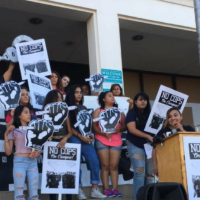
The Crusher’s Club and Youth Organizing Project have each engaged youth of color and helped cultivate their leadership skills, enabling them to have access to better opportunities and outcomes in the future.
Last week, werecappedmany of NCRP’s activities and accomplishments from 2018. One thing we didn’t mention: In 2018, we added 96 posts to NCRP’sblog.
And, if you follow NCRP onFacebook,LinkedInorTwitter, you’ve probably noticed that in late December we counted down our Top 10 most-viewed blog posts of the year.
If you missed any or all of those posts, here is the entire list of the 10 most-viewed posts of the year:
As more and more grantmakers embark on or deepen journeys to embed values of equity, diversity and inclusion into their work, how can we incorporate a power-building frame to measure meaningful progress on equity?
NCRP president and CEO Aaron Dorfman delivered the closing keynote at the Yale Philanthropy Conference on February 23, 2018:
“You are all here, we are all here, because we want to use our philanthropy to make the world a better place.
“If we’re going to be successful in doing that, we have got to ask ourselves the right questions. These are challenging times in which we live. By asking ourselves the right questions, the hard questions, we can make a real difference with our philanthropy on issues that truly matter. I’m going to put forward five questions today that I think will help us be effective in these challenging times.”
Photo courtesy of Funders’ Collaborative on Youth Organizing.
We must invest in organized youth efforts to cultivate lasting change. To get to scale and sustain their work, they need the support of philanthropy. The moment is now. Resources must follow.
Leverage your power to deepen your analysis and educate others about the connection between anti-Semitism and anti-Black racism.
Instead of excluding groups who are mostly values aligned, but may be ignorant about this connection, make space to wrestle with hard history towards joint action. It is our hope that with these terrible massacres, we are motivated to search our blind spots and expose them to the light.
To “lead by example” is a fundamental principle within philanthropy. However, the power dynamic inherent to the funder-grantee relationship can sometimes lead to a lack of self-reflection or self-discipline among funders. A funder wishing to advance a best practice may require the practice from its grantees but forgo the difficult work of implementing the practice for itself.
What does power have to do with equity? How can grantmakers better leverage power to help drive lasting, positive change in our communities?
As the philanthropic sector’s interest in racial equity has grown, there has been limited explicit discussion of the role of power and privilege, which funders must grapple with to truly change inequitable systems.
At NCRP, we joke that we’ve been biting the hand that feeds us for more than 40 years. Yet racial and social justice organizations remain reluctant to apply the same tactics they use with public officials and corporate titans to philanthropy.
Within Our Lifetime (WOL) and Old Money New System Community of Practice (OMNS) are trying to change that with their bold new campaign, #DisruptPhilanthropyNOW.
In philanthropy, everyone knows that foundation leaders and staff have power. But consultants are another group that can have an outsized impact – often unseen, behind closed doors. In advising grantmaker clients, the best and most influential consultants bring to bear deep expertise and rich experience as community change agents, nonprofit leaders or foundation staff to help funders hone organizational strategies, culture, practices and more.
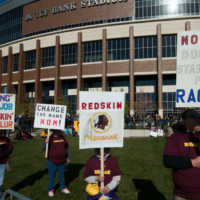
In a May 7op-ed in USA Today, Dr. Richard Besser, president and CEO of the Robert Wood Johnson Foundation (RWJF), publicly acknowledged changes to the foundation’s annual Sports Award. This annual competitive award is intended to recognize “sports teams, athletes and community-based organizations that use sports to catalyze and sustain changes to make communities healthier places to live, learn, work and play.”
Besser said the foundation would no longer consider award applications from sports teams that denigrate American Indian people. He humbly noted that the foundation – whose mission targets health equity – never considered “the fact that the team names, mascots and misappropriation and mocking of sacred symbols like headdresses do real damage to the health of people across the country.”
Four years ago, the Saint Paul Federation of Teachers (SPFT), along with parents and community members, committed ourselves to ensuring that students in Saint Paul, particularly students of color, receive a quality education.
While we’ve made great strides to improve public education in Saint Paul, there is much more that still needs to be done. Class sizes are still too big; there are not enough nurses, counselors or social workers; and we need to include more schools in programs that have proven effective in disrupting the school-to-prison pipeline, such as restorative practices and teacher home visits.
Peter Haldis is NCRP’s communications manager. Follow@NCRPon Twitter.
We recently announced NCRP’s newSelections Committeeand call forAmbassadorsfor the 2019 Impact Awards, which was a great way to close out a stellar year.
To share more highlights from 2018, I invited summaries of accomplishments from colleagues, featured below!
Evolution of Philamplify and high praise for Power Moves Contributed by Lisa Ranghelli, senior director of assessment and special projects
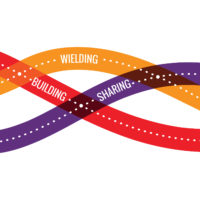
In May, NCRP releasedPower Moves: Your essential philanthropy assessment guide for equity and justice. The guide provides a framework and comprehensive set of resources for funders to reflect on the extent to which they build, share and wield power mindfully, with attention to issues of privilege in order to advance racial equity.
Since the release, sector response has been overwhelmingly positive. More than 2,000 people have downloaded the guide, including 855 grantmakers. We’ve kept busy promoting Power Moves and offering opportunities to engage with the project, including:
Launching 2 peer learning groups forfundersandconsultants– a new experiment for NCRP – to support each other as they dig into the guide, test out different ways to use it and provide advice and insights to staff.
Hosting 4 webinars, includingan overviewof the toolkit and deeper dives intobuilding,sharingandwieldingpower, averaging 265 registrants per webinar.
Curating powerful stories from leaders such as Vanessa Daniel of Groundswell Fund, who authored an extremely popular journal article and urgent call to action for NCRP on thegentrification of movements. The article has had an astonishing 7,900 page views in the 3 months since publication.
Partnering with Stanford Social Innovation Review to feature 8 distinguished authors in a series of articles onPower in Philanthropy.
Partnering with other sector groups on in-person presentations on Power Moves themes, including sessions at conferences hosted by PEAK Grantmaking, Equity in the Center and Race Forward.
New milestones for As the South Grows Contributed by Ben Barge, senior associate for learning and engagement
In June, NCRP launched the capstone report in our joint As the South Grows initiative with Grantmakers for Southern Progress (GSP),So Grows the Nation.
The report includes grantmaking dollars on social justice giving for the region and each Southern state, and grassroots recommendations to philanthropy from over 120 interviews. It’s a can’t-miss read for any Southern or national foundation.
But we did not let these learnings sit on a shelf. Over the past 2 years we’ve had hundreds of 1-on-1 calls and 24 presentations with funders and organizers to change the way philanthropy works in the South, culminating in a presentation with GSP this November at the Southeastern Council on Foundations.
We’ve heard from some major national foundations that As the South Grows has changed the way they think about investing in the South.
And some of our key partners in the work were involved in historic voter education and turnout efforts across the region whose transformative impact we are only beginning to understand.
Stay tuned for a survey capturing the impact of this initiative thus far!
Bold thought leadership Contributed by Aaron Dorfman, president and CEO
As usual, NCRP sounded the alarm when we saw philanthropy failing to do what it should to help the most marginalized.
I partnered with other sector leaders to write an op-ed calling on foundations to do more in Puerto Rico. The piece was first published in theWashington Postand later in theMiami Herald, and came after a moving trip to the island for the CHANGE Philanthropy retreat andlearning tour.
Our team also wrote compelling and timely thought pieces on:
NCRP attends 40-50 sector conferences per year, and I was honored to give keynotes for important gatherings like the YalePhilanthropy Conferenceand the Southern California GrantmakersFamily Philanthropy Conference.
Dramatic transformations in Human Resources and Administration Contributed by Beverley Samuda-Wylder, senior director of human resources and administration
A successful 1st year using the new Bamboo human resource information system software at NCRP helped automate and streamline requesting time off, conducting quarterly assessments to replace annual reviews, tracking work goals, and hiring and onboarding staff.
Our department trained new supervisors and collaborated with senior staff to hire 3 consultants and 7 new team members, includingTimi Gersonwho joined us in May as vice president and chief content officer and a record 5 interns. We now have 22 team members.
Not always evident is the important role of the executive assistant, a new addition to our executive office.Garnetta Lewishas quietly supported the management of the day-to-day office operations, human resources and accounting. She successfully scheduled more than 600 important high-stakes fundraising and other in-the-field meetings for the CEO and internal staff meetings.
Great strides in fundraising and fiscal growth Contributed by Kevin Faria, senior director of foundation engagement
NCRP has had several successes in fundraising for our operations this year. We raised more than $2.8 million, the most in NCRP’s 42-year history.
This was almost a 20% jump from our 2017 fiscal year, and more than double what we raised 10 years ago. Part of this growth was due to the receipt of NCRP’s largest grant ever from Borealis Philanthropy’s Racial Equity in Philanthropy Fund, currently supported by the W.K. Kellogg and Ford foundations.
Along with nonprofits and individuals, we’re pleased to be sustained financially by more than 125 grantmakers of all types and sizes. Also, 100% of NCRP’s board made a personal donation to NCRP, another sign of their commitment to the organization.
We’re making enormous strides towards our goal of having a $4 million budget by 2026, and with your help we’ll continue our growth.
What did you appreciate the most from NCRP in 2018?
What does it mean for funders to wield power equitably with all the assets at their disposal? Tough conversations and incremental changes.
In the 4th webinar in NCRP’s Power Moves series, funders and nonprofit leaders shared insights and stories on exercising public leadership to advance social change.
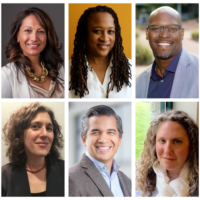
Edie Blakeslee, vice president of grantmaking & community leadership at Coastal Community Foundation of South Carolina (CCFSC).
Bina M. Patel, founder of Saathi Impact Consulting.
Kevin Walker, president and CEO of the Northwest Area Foundation (NWAF).
Zalalem Adefris, resilience director at Catalyst Miami, steering committee member of the Miami Climate Alliance and a philanthropic trustee of the Solutions Project.
What are best practices for wielding power in philanthropy?
Wielding power covers a broad array of best practice in ourPower Movesassessment guide compared to the other 2 dimensions in our framework.
To provide context for the conversation, NCRP’s senior director of assessment and special projects, Lisa Ranghelli, shared an overview of our research. Through our Philamplify project, which provided the basis for Power Moves, we found that funders who effectively wield power:
Convene grant partners and community stakeholders while also playing a supportive participant role at other convening tables.
Organize and collaborate with peers that share common concerns, and with other sectors such as government.
Inform, raise awareness and advocate by using reputation and expertise to bring visibility to critical issues and amplify the voices of the most marginalized.
Deploy non-grant financial assets creatively to advance foundation and grantee goals and shift power to underinvested communities, such as mission investing.
Highlights from the panel
Rodney set the stage for the conversation, drawing on hisvision of restorative investingto combat a legacy of structural racism in our global economy: 82% of all wealth created in 2017 went to the richest 1%, and the world’s billionaires saw their wealth increase by $762 billion while the poorest 50% saw no increase in wealth.
Edie discussed the potential of slow and incremental changes that lead to larger transformation, with a focus on tapping community wisdom rather than just traditional institutional partners. She shared how CCFSC hosted “Community Conversations” and heard from 750 residents from 9 counties in the area they serve – many of whom were not familiar with the foundation. They used learning to inform their new Civic Engagement Agenda, including a new focus on policy advocacy, and closed feedback loops by sharing updates via in-person and virtual town halls.
Staff @CCFofSC went into community + offered intimate listening sessions across 9 counties in rural + urban areas. More than 80% of attendees didn't know the foundation/staff. Aggregated "community wisdom" to inform 5 year strategic plan. #PowerMovesEquity
Bina challenged funders to ask uncomfortable questions, and to unveil the white culture that is embedded in our sector and institutions. She emphasized that there cannot be progress without challenging the normalized way of thinking about this work, creating a different analysis and enabling those who have suffered from oppression to heal from that trauma.
A form of wielding power is giving space to healing. Once we do that, we start to see much more momentum in action. Healing itself is an important part of our work. "What are we withholding, and why?" @saathiimpact#PowerMovesEquity
Kevin exemplified Bina’s call to ask the tough questions by opening with a story about the source of the wealth that created the NWAF and how it relates to their commitment to funding in Native American communities. He encouraged foundations to foster accountability by leading by example and inspiring peers, as the foundation does through its high levels support for Native American causes and leaders. Today 40% of the foundation’s grant dollars go to Native-led organizations, and NWAF isincreasingly recognizedfor its leadership in Twin Cities philanthropy.
Philanthropy networks have been really good for mobilizing us, but the struggle is actually in how we can hold eachother accountable. It's more about being an inspiration for our peers by actually "walking the talk." @WalkerKevinf@NWAFound#PowerMovesEquity
Zelalem shared how The Kresge Foundation wielded power effectively by convening social justice organizations, including Catalyst Miami, through its multi-yearClimate Resilience and Urban Opportunityinitiative. The cohort came together for 4 in-person peer learning events to explore best practices for climate resilience funding, from which the foundation has sharedvaluable materials. Based on her other experiences with grantmakers, she cautioned funders to align their power with the goals of grant partners to wield their power responsively.
Be careful how wielding power + whose agenda using it in service of. One funder asked @CatalystMiami to honor a specific politician at a community event, but they were the target of a campaign. Come w/ listening ear + honor grant partners' goals. @myzelalem #PowerMovesEquity
We’re eager to be in relationship with you as you delve into your own conversations about power, privilege and “risk” in philanthropy. Reach us atpowermoves@ncrp.organd stay tuned for other Power Moves programs in 2019!
Reed Young is events and webinars intern at NCRP. Follow@NCRPon Twitter and join the conversation using#PowerMovesEquity.
In philanthropy, power shows up in many ways, from the board room to conversations with grant partners and community members. Yet, many funders don’t acknowledge the reality of power. Why? And why does it matter?
In “How Grantmakers Can Use Power Mindfully to Advance Equity,” Lisa Ranghelli, senior director of foundation assessment and special projects at NCRP, identifies the 3 most comment reasons why funders don’t directly wrestle with power as: Insufficient institutional buy-in; ongoing or pending diversity, equity and inclusion efforts; and fear of taking risks.
She notes why it’s important for funders to leverage their power – instead of run away from it – to advancing equity and justice.
“We all engage in power dynamics all the time, whether or not we are aware or acknowledge it. We may unconsciously enable power for some and disable power for others, causing harm or missing opportunities to use power for good. It’s time for us to meditate on power so that we can be more conscious about how each of us manifests it – to notice who benefits and toward what end. In doing so, the obstacles to using it effectively will become surmountable and inspire mindful action.”
Contributors from NCRP and nonprofit and philanthropic leaders explore popular concepts in philanthropy – such as risk, capacity building and public leadership – through the lens of power and equitable outcomes.
Yna C. Moore is senior director of communications of NCRP. Follow@ynamoore and @ncrp on Twitter. Join the conversation on#PowerMovesEquity.
Many leaders working on the front lines of efforts to secure a thriving future for marginalized communities see first-hand the disconnect between grantmakers’ desire to help these causes and how these funders effectively (or ineffectively) leverage their power.
In “Wielding Power with Community: Creating pathways for change and transformation,” Linda S. Campbell, director of Detroit People’s Platform and founding member of Building Movement Project, writes about the need to reconfigure the relationships between those who hold power over communities and the people most impacted by how those in control utilize their power.
“Public officials, grantmakers, and others in power may tap constituents for their ‘input’ at a neighborhood charrette or community meeting, but they often ultimately ignore community ideas and insights. As a result, many communities have plenty of experience with people in power telling them what is really good for them, rather than being able to speak for themselves and act on their own behalf.”
Or stay tuned onNCRP’s blogfor links to the latest articles in the series.
Yna C. Moore is senior director of communications of NCRP. Follow@ynamoore and @ncrp on Twitter. Join the conversation on #PowerMovesEquity.
There’s no way around it, and it’s futile to deny it. Grantmakers have power.
In “Wielding Philanthropic Power with Accountability,” Judy Belk, president and CEO of The California Wellness Foundation, writes about the importance of speaking up about power and money, and of acknowledging the many choices at the disposal each grantmaker to effectively achieve its mission.
“We get to choose the issues we want to spotlight, the groups we want to fund, how much they get, when they get it and when they don’t, how we want to use our voice, who manages our investments, who we collaborate with, and who calls the shots in our board rooms and executive suites. We also have significant money, power, and influence with little accountability. … So I worry. Even though most days I agree I have one of the best gigs in California, I worry about how we can most effectively leverage all the assets we have at our disposal given so many choices and so little oversight.”
“Wielding Philanthropic Power with Accountability” is part of thenew Power in Philanthropy serieson the Stanford Social Innovation Review (SSIR) blog in collaboration with NCRP. Contributors from NCRP and nonprofit and philanthropic leaders explore popular concepts in philanthropy – such as risk, capacity building and public leadership – through the lens of power and equitable outcomes.
Or stay tuned onNCRP’s blogfor links to the latest articles in the series.
Yna C. Moore is senior director of communications of NCRP. Follow@ynamoore and @ncrp on Twitter. Join the conversation on #PowerMovesEquity.
Over the past several months, NCRP has engaged more than 1,600 people through downloads, learning groups, webinars and blog posts regarding our new self-assessment toolkit,Power Moves.
Now that the weather is changing and leaves are starting to fall, we’re sharing another set of resources that are invaluable as you continue, or just begin, your Power Moves journey.
As we’ve brought Power Moves into the philanthropic community, we have also lifted up other resources in the field that relate to sharing, wielding and building power.
We were not the first ones to conceive that leveraging power is essential for social change, and we believe it is an important value to acknowledge other work in the field that came before and after us as we strive to collectively shift philanthropic practices.
Hereyou can find an array of tools that are relevant to Power Moves, including some of my favorite new entries:
“Deciding Together: Shifting Power and Resources through Participatory Grantmaking” by Jen Bokoff and Cynthia Gibson is designed for funders looking at how to engage the communities they serve. This guide covers why it is import to share decision making power and how to practice inclusive grantmaking.
“Awake to Woke to Work: Building a Race Equity Culture” is a new toolkit produced by Equity in the Center that is a great complement to Power Moves. The guide outlines 7 levers of power to move organizations to be more racially equitable, including managers, communities, board of directors, learning environment, organizational culture, data and senior leaders. “Awake to Woke to Work” gives foundations and nonprofits a roadmap to identify where they are and where they need to go to create a more equitable workplace.
“Unicorns Unite” is a colorful book by Jessamyn Shams-Lau, Jane Leu and Vu Le that captures the pitfalls and potential for relationships between nonprofits and foundations. The book uncovers the roots of a lot of the dysfunction in the social sector and gives concrete ways that nonprofits and foundations can create healthier relationships.
“The Path to Liberation – how to walk the talk of equity rather than white supremacy in philanthropy” by Jennifer Near is part of “Liberate Philanthropy,” a blog series curated by Justice Funders. The blog series promotes philanthropic practices that redistribute wealth, democratize power and shift economic control to marginalized communities. Near discusses her own story, shares a Just Transition framework for philanthropy and gives readers 4 tangible strategies to liberate philanthropy.
If you know of a resource that supports funders to build, share and wield power that we should add, email me at ryoung@ncrp.org.
Reed Young is events and webinars intern at NCRP. He supports the Power Moves team, including its webinars, peer learning groups and outreach. Follow@NCRPon Twitter.
For many family foundations, bringing in non-family members into the board may seem unnecessary. But for Nathan Cummings Foundation, it has proven to be to be essential ingredient in the foundation’s effectiveness and continuing impact on issues and communities it cares about.
In “Diversifying Perspectives and Sharing Power at a Family Foundation,” Ruth Cummings, who has been a trustee since the foundation began in 1988, and Sharon Alpert, its chief executive, share how non-family members on the board and advisors have been instrumental in navigating family dynamics, risk-taking and bolder action towards the foundation’s mission.
“Having voices from outside the family as independent trustees and advisors has proven a vital step toward sharing power, bringing us closer to the issues and communities we care about, and pushing us to have the most positive impact possible.”
“Diversifying Perspectives and Sharing Power at a Family Foundation” is part of thenew Power in Philanthropy serieson the Stanford Social Innovation Review (SSIR) blog in collaboration with NCRP. Contributors from NCRP and nonprofit and philanthropic leaders explore popular concepts in philanthropy – such as risk, capacity building and public leadership – through the lens of power and equitable outcomes.
Don’t miss forthcoming posts by Judy Belk of The California Wellness Foundation, Linda Campbell of Building Movement Project and NCRP’s own Lisa Ranghelli.