I was born in the U.S. to Jamaican immigrants and raised in Brooklyn, New York, in one of the largest West Indian immigrant communities outside of the Caribbean. 

I was fortunate to attend public schools that reflected my cultural background and that of the diverse community I lived in. I was taught to embrace my dual heritage without fear or shame, and to embrace the diversity of my classmates, my community and my country. 

Only 37 years ago, the U.S. Supreme Court ruled in Plyler v. Doe that a public education could not be denied on the basis of immigration status. They cited education as a primary means of instilling “the values on which our society rests.” I agree. 

But what are those values now when hostile immigration policies derail learning for K-12 students, reinforce barriers to higher education and threaten the progress of immigrant families?

For millions of immigrants in mixed status households the ruling is an empty promise. 

It seems there’s an implicit understanding in education philanthropy that education justice cannot be divested from its intersections with language, culture, race and immigration status. 

A recent survey suggests education philanthropy has shifted focus from K-12 academics to strategies that support the social, emotional and cultural needs of all students. 

But according to NCRP’s Movement Investment Project report on the State of Foundation Grantmaking for the Pro-Immigrant Movement data show that most of the support for the pro-immigrant movement went to policy advocacy and litigation organizations, and that total funding for the movement is less than that for leisure sports.

Funding for immigrants and refugees represent barely 1% of total funding from 1,000 of the largest U.S. foundations between 2011 and 2015, and 11 funders provided half of all pro-immigration movement funding between 2014 and 2016. 

As anti-immigrant rhetoric spurs violent attacks on immigrant communities and families are torn apart, it’s imperative that philanthropy see that investing in the needs of whole learners means recognizing the needs of immigrant students. 

Immigrant justice is an education issue.

One in 4 children attending U.S. public schools live in immigrant households. Seventy-two percent of U.S. born and naturalized children live with at least 1 undocumented parent. 

One million children in the U.S. are undocumented, and nearly 100,000 undocumented students graduate from the U.S. high schools annually.

Education funders undoubtedly serve immigrant communities even if they do not necessarily consider themselves immigrant justice funders. 

Immigration and Customs Enforcement (ICE) has stoked fear within immigrant communities for the dehumanizing treatment of undocumented people held in detention centers and family separations at the border.

Immigrant students regardless of legal status have reported fearing that they or a loved one may be detained by ICE agents. 

Fears of deportation have contributed to: poor academic performance; anxiety and behavioral issues; and fluctuations in student attendance. 

Perhaps the most devastating blow dealt to immigrant justice and public education was the rescission of Deferred Action for Childhood Arrivals (DACA), the Obama-era pro-immigrant policy that offered deportation protection, driver’s and occupational licenses, work permits and higher education opportunities for more than 700,000 immigrants including 20,000 educators across the country. 

Costs of college tuition places higher education virtually out of reach for the 30% of immigrant families living below the federal poverty line. 

Few states offer in-state tuition or state funding to undocumented immigrants, and, when they do, it is an extension of pro-immigrant policies such as DACA. Undocumented students do not qualify for federal aid.

These barriers to education equity are antithetical to the promise of justice and opportunity for immigrant children upon which Plyler v. Doe was decided. Lifting these barriers should be a high priority for education funders committed to an education system that serves all students.

How education funders can support undocumented immigrant students 

The variables affecting educational outcomes of immigrant communities should directly inform grantmaking strategies that are intended to support the whole learner. 

Here are 3 steps funders can take to be more responsive to the needs of immigrant students and communities:

1. Support the efforts of schools to protect undocumented students.

In response to ICE’s law enforcement practices school leaders have partnered with local nonprofit organizations such as Immschools to be more responsive to the challenges posed to immigrant communities and the students they serve.

Find out how you, as a funder, can collaborate with organizations on the ground who are empowering these schools to safeguard the education of all their students. It’s imperative that these schools have the resources they need to legally support and advocate for their immigrant students.

2. Give long-term flexible and capacity building support to frontline groups.

Grassroots organizations and advocacy groups are the first line of defense for immigrant communities at risk but they are largely underfunded. 

Invest in capacity building and immigrant-led organizing in the most at-risk areas so these groups have the resources to mobilize communities navigating the volatile landscape of immigration status.

3. Invest in the pro-immigrant movement beyond grantmaking.

The pro-immigrant and -refugee movement need voices as much as they need funding. Leverage your organizational resources to make space at the table for immigrant movement leaders. 

Speak out against deportations that dismantle families, make sure your investments do not support immigrant detention centers and surveillance, and call on your peers to do the same. 

Support the pro-immigrant movement groups in accessing 501(c)4 funds

The future of immigration reform in the U.S. depends on informed voter decisions. Even with limited capacity and resources pro-immigrant organizations have shown they can make great strides in promoting pro-immigrant candidates for elected office. 

With access to 501(c)4 funding the organizations will have greater flexibility to lobby for and against legislation, distribute voter guides that compare candidates based on their immigrant stances and organize voter registration drives. 

The Jamaican national motto says “Out of many, one people” in celebration of Jamaica’s multicultural roots. 

The U.S.’ de facto national motto is the Latin “E pluribus Unum,” which translates to “Out of many, one.”

My heritage is a reminder that there is strength in diversity, and what threatens the stability of immigrant communities threatens all of us. 

I challenge education philanthropy to consider the needs of our most vulnerable immigrant communities and support movements led by and for those on the frontlines. 

Nichia McFarlane is NCRP’s events intern. Follow @NCRP on Twitter.

Image by Molly Adams. Used under Creative Commons license.

The president of the United States, one of the country’s major political parties and its most-watched news network have stoked a long-simmering anti-immigrant white nationalist movement, one of whose pledged adherents murdered 22 people at a grocery store this weekend in an attack explicitly meant to maim and kill immigrants and their families.  

Anti-immigrant hatred is not new to this country. But the way the president, his political party and their cable news enablers have used it to gin up fear of immigrants based on malignant lies is unprecedented. 

Anti-immigrant hatred is dangerous for all Americans, not just immigrants. The ongoing campaign of white nationalist violence and threatening rhetoric negatively impacts us all.  

The body count increased dramatically with this weekend’s tragedy, making clear that the target on immigrants will always result in collateral damage. 

Immigrants are part of every community, big and small. When immigrants are threatened, our schools are less enriching, our communities are less healthy and our economy suffers.  

Immigrants are our family members, neighbors, teachers, doctors, nurses, entrepreneurs and community leaders.  

The rhetoric used by white nationalist leaders, including the president, is meant to intimidate and discourage. 

Only a grassroots, nationwide movement that is unabashedly pro-immigrant can keep our communities safe from the growing threat of white nationalist violence.  

And yet, foundation funding for a pro-immigrant movement has not even come close to matching the threat.  

Between 2011 and 2016, just 1.3% of grantmaking by U.S. foundations was for pro-immigrant work. In 2016 – the most recent year of data available – foundations gave more to leisure sports like badminton, sailing and golf than they did to support immigrant communities.  

And, while NCRP has seen preliminary evidence that foundation support for the pro-immigrant movement has increased since 2016 when Donald Trump ran a successful anti-immigrant campaign for president, it is exceedingly unlikely the level of funding has increased enough to be commensurate with the threat. 

The obstruction in Washington is meant to make the vast majority of Americans who are pro-immigrant feel powerless. Remember, foundation CEO’s and trustees, you have power and you can choose to use it.  

The threat this coordinated assault on immigrants poses to all Americans requires an unprecedented response by foundation leaders.  

“Next grant cycle” won’t be soon enough to keep our communities safe. We cannot afford the luxury of test grants or exploratory research. Five or 6% payout may be justifiable in ordinary times, but this is no ordinary time. 

Here are some actions you can take: 

1. Examine your current docket of grantees. Where and how can grantees be encouraged to collaborate with pro-immigrant groups in their communities? How can you help current grantees follow pro-immigrant movement groups’ lead?  

2. Make an investment in the long-term safety and health of our communities by exceeding ordinary payout ceilings. Your endowment can weather an emergency response to urgent needs. Move that money to pro-immigrant movement groups as soon as possible. Expedite grant application and review processes; lean on your staff and board to think creatively about how to take bold action with integrity to your institution’s values and mission. 

3. Look to field leaders for advice on how and where to move more pro-immigrant resources. FIRM, We Are All America, the Four Freedoms Fund, United We Dream, the Security and Rights Collaborative, the Black Alliance for Just Immigration, Grantmakers Concerned with Immigrants and Refugees, the Rise Together Fund and NCRP’s many pro-immigrant nonprofit member organizations are good people with whom to start a conversation. 

4. Talk to your peers about their role in changing the conversation. Foundation CEOs and trustees respond to each other’s example and take seriously their peers’ advice. Work your network. Help them understand the extraordinary circumstances the country finds itself in and how they can use all the resources and influence at their disposal to fight for what’s right. 

Foundation CEOs and trustees are entrusted with resources meant for the public good. Their positions of authority at grantmaking institutions make them civic and community leaders whose voice carries far.  

In a time of escalating rhetoric that has led to real violence, CEOs and trustees owe it to their communities to ask themselves a few fundamental questions:  

1. What good is a multi-million-dollar endowment if it can’t be put to use in times of emergency?  

2. How can you leverage your role as community leader, convener and conscience-keeper to advance a pro-immigrant message that will ensure we are all safer and healthier in the long run?  

3. What do you hope history will say about your tenure as guardian of your institution’s values when it looks back on this uniquely perilous time in America? 

You have the power to begin answering those questions for yourself, for your institution and for your community. Don’t let that power go to waste. 

Ryan Schlegel is NCRP’s director of research. Follow @r_j_schlegel and @NCRP on Twitter. 

With World Refugee Day last month, and May being National Foster Care Month, now is the perfect time to bring more awareness to the increasing number of migrant children entering the foster care system within the U.S.

Of the 10,000s of referrals the Office of Refugee Resettlement receives every year for migrant children to be placed in foster care, almost 5,000 enter the system, in addition to the almost 500,000 U.S.-born children in foster care.

While the reasons these children are entering the system vary, 1 thing is certain: The risks associated with aging out of the system are even higher for migrant children, especially those of color.

According to the Office of Refugee Resettlement, on average, more than 68% of migrant children without parents or guardians who came to the U.S. from 2014 and 2018 were between the ages of 15 to 17 years old.

In most states, once a child turns 18, they are no longer considered a ward of the state, and depending on a child’s immigration or asylum status, a child may be more likely to experience a lack of educational opportunities, homelessness and unemployment.

In addition, racial and ethnic discrimination in America continues to run rampant. There are political, economic and social barriers that exist for people of color in this country, and the development opportunities for migrant children of color are left unprotected. Children below the age of 18 have the least power and wealth.

Discrimination may occur at the institutional level because children of color are less likely to receive mental health services, have fewer visits with their parents or siblings whom they have been separated from and are less likely to receive services designed to reunite them with relatives.

On an individual level, migrant children may face verbal ridicule, harassment and physical assault from their peers, whether that be in school, foster family placement or a group-home setting.

Studies have shown that a child’s perception of direct discrimination can have a plethora of negative psychological, physical, academic and social consequences.

Thus, it is disappointing that less than 1% of funding for aging out of foster care was specifically designated to children of color since 2014, with a bulk of that grantmaking occurring in 2016.

Without taking a strong stance on supporting racial equity within the foster care system, funders continue to add to the disenfranchisement of children of color. 

Funders have the power to change the lives of these children facing such complex issues, enlarged by their legal status and racial background, by:

  • Funding advocacy efforts. Increasing funds to efforts such as rallies and workshops not only helps educate the public about the challenges faced by migrant children of color aging out of the foster care system, but it can also inspire more individuals to engage in the movement.
  • Promoting youth-led organizing. Funders can help amplify their voices by investing in youth leadership programs that train young people to engage in collective action and make substantive contributions to their communities, such as knowledge of their rights within the U.S. foster care system.
  • Designate more funding towards migrant children of color. Because migrant children of color may experience the same challenges as other migrants and children of color within the foster care system, it is important to recognize that they need additional support. Funders should review their grant portfolios to see how to support this group within current grantmaking practices.

Funders can take action against this inequity and push for a more diverse and inclusive society by backing those who not only provide resources to migrant children of color, but also raises their own voices.

Sabrina Laverty is NCRP’s research intern. Follow @NCRP on Twitter.

Grantmakers and donors need to support frontline immigrant and refugee justice efforts now because lives are at stake.

As a Jewish American, one of the most haunting experiences I’ve ever had was looking at the display of hundreds of children’s shoes at the U.S. Holocaust museum. They represent the 1.5 million children who were detained and murdered by the Nazis. Some died in the gas chambers, some from infectious disease born of camp conditions, some of starvation.

A poster saying "Never Again Means Now. Jews Say Close the Camps."

Jews and allies at the Cannon House Office Building’s Rotunda on July 9, 2019, to say #NeverAgainIsNow. Photo by Timi Gerson.

I don’t know the names of the first 7 Jewish children who died in Hitler’s Germany. I do know the names of the first 7 migrant children who died in Trump’s American concentration camps: 1-year old Mariee Juarez, 2-year-old Wilmer Josué Ramírez Vásquez, 7-year-old Jakelin Caal Maquín, 8-year old Felipe Gomez Alonzo, 10-year old Darrlyn Cristabel Cordova-Valle, 15-year old Carlos Gregorio Hernández Vasquez and 16-year old Juan de León Gutiérrez.

Philanthropy: What are we doing today to stop another child from dying tomorrow?

It’s not a new story.

Black and Native American communities have faced family separation, state-sponsored violence and genocidal policies since this country’s founding. The Obama Administration deported between 3-5 million immigrants and helped create the infrastructure that the Trump administration has weaponized.

Black immigrants are 7-9% of the migrant population, but make up 25% of those in detention who face deportation. A large percentage of the migrants and refugees from Central America are non-Spanish speaking indigenous peoples.

Excuses are not acceptable.

In our interviews for the Movement Investment Project, movement leaders told us that funders often tell grantseekers that they “don’t have an immigration portfolio.”

This excuse rings hollow in the face of a national armed enforcement infrastructure that detains and imprisons our immigrant neighbors and asylum seekers fleeing violence. In the words of rabbi and civil rights activist Abraham Joshua Heschel, “Indifference to evil is worse than evil itself, that in a free society, some are guilty, but all are responsible.”

Some local funders may feel that this is a “federal issue” for Congress to fix, and that, while terrible and sad, immigration “doesn’t fit” with their local grantmaking goals and priorities.

But there are detention centers in every state, including yours. The Trump administration continues to push for a citizenship questions to the 2020 U.S. census. Republican efforts to undercount marginalized people (embodied by, but not limited to the citizenship question) will have an impact on your community from health care to education to transportation and beyond.

You have resources and power now is the time to use them.

My grandmother Sophie was 11 years old when she arrived in the United States, after a year spent walking across Europe as a refugee. She, her mother Esther and little brother Moishe arrived in a migrant caravan by sea, part of an exodus of Jews fleeing brutal pogroms in Eastern Europe. Her journey was possible because of financial support from the Hebrew Immigrant Aid Society (HIAS).

Years later, during the McCarthy era, the U.S. government tried to strip her of her naturalized citizenship and deport her. She fought back through organizing and with the solidarity of neighbors and allies. She won.

I named my daughter after my grandmother because I want her to grow up knowing that our immigrant neighbors those that arrived here 30 years ago and those that arrived here yesterday deserve our support and solidarity just as her namesake did. That families belong together. That our own family exists because people with power used it to support my grandmother as a child migrant and as a mother fighting to stay with her children.

U.S. foundations spend more than $60 billion in annual grantmaking. Historically, barely 1% of it has gone to support immigrants and refugees. Philanthropic support for immigrant and refugee justice is lowest in the regions of our country the Southeast and the Southwest – where ICE detentions and deportations are highest.

While more funding is flowing in light of current crises, it is not enough especially when Congress recently gave billions more to border enforcement and detention agencies. Frontline grassroots organizations need flexible, long-term support to meet immediate challenges and to build power not only for today’s fight, but also to build tomorrow’s future.

Funders have more than dollars to give. There are at least 3 concrete additional ways we can support immigrant and refugee communities under attack:

1. Connect nonprofits working for immigrant and refugee justice to new sources of funding and decision-makers in your city, state or region.

2. Amplify movement advocacy demands including the demand to #closethecamps on social media, in your newsletters and publications and in the press.

3. Divest from corporations that run detention centers and prisons, following the example of funder peers such as the Edward W. Hazen Foundation.

If you are still wondering what can you do, the answers are simple: Hundreds of immigrant justice movement leaders have told us exactly what they need from us. NCRP has many additional resources that can help grantmakers and donors effectively support the immigrant and refugee justice efforts across the country.

The question is not what to do, but if we will do it.

Timi Gerson is vice president and chief content officer of NCRP. Follow @NCRP and @timigerson on Twitter.

Header image: On July 9, 2019, Jews and allies at the Cannon House Office Building say #NeverAgainIsNow. Photo by Timi Gerson.

Around the table were a mother, her daughters, the attorney and myself. Tearfully, the mother shared how their lives had been threatened by gangs who were controlling their neighborhood in Honduras.

One of the gang members wanted to force a relationship with one of her daughters. Her daughter’s “best friend” had refused similar advances and was killed a few days later. Terrified, the mother grabbed her daughters and fled.

They trekked nearly 2,000 miles through Guatemala and Mexico, finally getting to the U.S.-Mexico border, where, as the mom put it, they thought they had finally arrived into the arms of a compassionate nation.

We were sitting inside a trailer that had originally been set up as an influx facility to accommodate the massive hiring of U.S. Border Patrol agents after 9/11 at the Federal Law Enforcement Training Center in Artesia, New Mexico.

On that day, armed officers were sitting a few feet away from us in the brightly lit room filled with other women and children, sitting at small tables or on the floor.

It was the summer of 2014 and, like now, we were seeing a large number of Central American families from Honduras, El Salvador and Guatemala fleeing from insufferable conditions and seeking safety at our southern border.

The Obama administration responded by converting these make-shift barracks into a family detention center that could hold up to 800 women and children.

I was there helping interpret for civil rights attorneys who were taking declarations from Honduran, Guatemalan and Salvadoran women who had experienced abuse and due process violations at the hands of Border Patrol agents.

Instead of welcoming arms, Border Patrol agents arrested her family and then shoved them into a cold holding cell, telling them they were going to be deported back right away.

They were forced to sleep on concrete floors, drawing as much warmth as they could from a thin mylar sheet.

The lights were on 24/7 and there was little to no privacy when they needed to use the bathroom behind a short wall in the same holding cell.

At no time had they been asked by agents why they had come to the U.S. or whether or not they feared returning to Honduras.

Some of the questions we asked included whether or not she had sought police protection in Honduras, which prompted the mother to talk about how the police was ineffective in dealing with the gangs and were often in cahoots with them.

She then reached across and held her daughter’s hand, paused and said that even if police were willing to help, they probably wouldn’t because her daughter was a lesbian and they had failed to respond to the murder of her “best friend.”

It didn’t take long to note the intersectionality of our social justice movements.

For nearly 2 decades, I have been an activist for immigrant, border and LGBTQ rights, but this was the 1st time I came face-to-face with the courage and profound hope of a young family seeking a better life and whose story stood at an intersection of oppression.

Since that time, I have seen many examples of this courage. And, through this work, I have also seen the intersections of oppression that rob people, including children, of their dignity, well-being and, sometimes, their lives.

Just as the LGBTQ community has been criminalized to rob us of our rights, freedom and dignity, so have immigrant and refugee communities.

In spite of the fact that humans have migrated since the beginning of time, we have treated refugees seeking safety at our southern border – many of whom are members of the LGBTQ community – poorly.

Under this administration, anti-immigrant policies have gotten exponentially worse. They’ve been denied entry, locked up in overcrowded and unsanitary cells for days, provided inadequate or untimely medical attention, which has resulted in 6 child deaths since last November, and sent back to Mexican northern cities to await their immigration hearings for months if not years.

Another despicable practice has been “metering,” which forces thousands of people to put their name on a list and wait in Mexico before they can even apply for asylum at our ports of entry.

In desperation, many attempt to cross at places that put their lives at risk, as witnessed recently with the deaths of Óscar Alberto Martínez Ramírez, 25, and his 23-month-old daughter, Valeria.

For the LGBTQ community, waiting in Mexico exposes them to violence and larger threats to their lives, because there are few welcoming services and shelters.

When I worked for a civil rights group in New Mexico, we met regularly with immigrants at the Otero County Processing Center near Chaparral, New Mexico, to assess whether detainees were treated humanely and not held indefinitely.

We would also file complaints with Immigration and Customs Enforcement because transgender women were placed in isolation cells for their so-called “protection.”

This is the same facility where Johana Medina Leon, a transgender woman, recently did not receive adequate medical care, resulting in her death.

Under this administration, we experience daily assaults on the LGBTQ, immigrant, people of color, people with disabilities, Muslim and Jewish communities.

The assaults have been normalized by a president who uses discriminatory rhetoric and criminalizes people to make it more acceptable to bring harm and abuse against us. Let’s not forget what he said about Mexicans during his campaign.

As a woman, immigrant, lesbian, Mexican-U.S. dual national and border community member, I understand these intersections well.

My hope is that one day our border communities are recognized for what they are: a place of encounter, hope and opportunity.

In short, we need a New Border Vision that demands good border governance that expands public safety for all, considers human life and human rights paramount, and is welcoming to border residents and newcomers.

How philanthropy can help

Funders can support the New Border Vision by:

  • Funding organizations advocating for Congress to stop funding Trump’s anti-immigrant and anti-LGBTQ agenda and to put forth policies that become a model for good border governance.
  • Supporting Southern Border Communities Coalition’s efforts to bring the voices of border communities to Washington, D.C., to put a human face on the effects of hyper-militarization of our home and to demand a whole-of-society and whole-of-government response to the humanitarian crisis we are witnessing at our border.

At the end of the day, our communities must firmly stand against all the intersections of oppression. We are stronger when we are together.

Vicki B. Gaubeca, who lives in Tucson, Arizona, is the director of the Southern Border Communities Coalition, which brings together rights organizations from San Diego to Brownsville, Texas, to promote policies and solutions that improve the quality of life of border communities and newcomers. Follow @SBCCoalition and @NCRP on Twitter.

Social justice movement organizations across the country continue their critical work of securing equity and justice in our communities. But the lack of philanthropic support for these efforts shows that many grantmakers and donors are missing the opportunity for real impact.

“We all have our blind spots,” wrote Timi Gerson, vice president and chief content officer of the National Committee for Responsive Philanthropy (NCRP) in a letter to the philanthropic community. “In philanthropy, this shows up in many ways, including the lack of support for grassroots social movement organizations led by people of color women and girls, LGBTQI people and other marginalized communities working the front lines.”

The new special edition of NCRP’s journal Responsive Philanthropy features articles that examine some of these blind spots in immigrant and refugee justice philanthropy and ways to overcome them.

Confronting the anti-Blackness in immigrant justice philanthropy

Daranee Petsod, chief executive of Grantmakers Concerned with Immigrants and Refugees, notes that funders oftentimes overlook organizations that serve and are led by Black immigrants. She identifies concrete ways that grantmakers can address anti-Blackness in their strategies and practices.

How philanthropy can help stop the invisibilization of Indigenous migrants in the U.S.

Migrant justice activists Odilia Romero and Xiomara Corpeño highlight philanthropy’s neglect and lack of understanding of Indigenous migrants as an example of continuing “systemic erasure” of Native people in the U.S. They ask funders to fund Indigenous-led migrant organizations, build their capacity and support Indigenous language interpretation efforts.

Divest/invest at the intersections: Immigrant justice and criminal justice reform

Lorraine Ramirez, senior program manager of Neighborhood Funders Group’s Funders for Justice, reminds funders of the connections between immigrant justice and other issue areas, particularly criminal justice reform. She invites grantmakers and donors to use the divest/invest approach as a way to end policies and practices that criminalize and marginalize immigrants, refugees and all people of color.

Funders and donors can build, share and wield power to bolster the pro-immigrant movement

NCRP’s Lisa Ranghelli, senior director of assessment and special projects, provides tips and discussion questions based on the Power Moves assessment guide for funders ready to start or boost their support for immigrant and refugee justice movements.

What’s the one thing you want funders to do differently to support the pro-immigrant and -refugee movement?

NCRP members’ actionable advice to funders will help foundations and donors identify specific ways they can help under-resourced movement groups succeed.

Updated 6/6/19.

“Why would we ever leave?” That was a sentiment I heard over and over from my cousins and friends when I returned to Venezuela every summer as I was growing up.

There was a sense that Venezuela had everything you would ever want. Maybe, back then, it did.

Unlike most people of my generation, I did leave Venezuela, back in 1985 when my family moved. We didn’t think we’d be gone long, just a couple of years in the U.S., where we’d learn English and then come back. We left with our return very much in our minds.

For many years, my sisters and I would spend summers back in Barquisimeto, where I was born and where my grandmother, cousins and friends still live.

I even spent a semester of college there, right around the time that Hugo Chávez was first elected president. Barquisimeto was a thriving place then, the 4th largest city in Venezuela, 225 miles west of Caracas.

It was an important industrial and commercial center, surrounded by productive farmlands, including the small corn and pineapple farm where I was born.

From then to now: A great decline

A great deal has changed over the years. Although I remember Barquisimeto as a booming industrial city, a number of pervasive factors, including corruption, economic instability and widespread crime, has left Barquisimeto, like the rest of the country, in ruins.

Venezuelans today live in crisis. The economy has collapsed, precipitated in part by falling oil prices and sanctions and the flight of foreign investment.

People often find themselves without basic necessities, like drinking water, food, medicine, sanitation and electricity.

The average Venezuelan has lost 24 pounds since 2017. Extreme hyperinflation – estimated at 80,000% in 2018 – has curtailed Venezuelans’ abilities to purchase anything.

What’s more, President Trump’s sanctions contribute to this dire situation, decreasing food access along with increased displacement, disease and death.

I’ve witnessed this disaster from afar, as portrayed in the news, and also from the WhatsApp messages and phone calls from my family.

My grandmother is now 91, and my cousins struggle to meet her medical needs. They tell me about power outages, living without running water for days.

They ate only arepas for several days, because there was nothing else. My family in the U.S. has sent money and tried to ship goods through private couriers, but almost nothing gets through now.

As a result, family and friends in Venezuela have started to wrestle with difficult choices. Several have already left the country, which is often an extremely difficult bureaucratic process and often dangerous, arduous journey. But they have no other choice.

It is estimated that 3.4 million Venezuelans have fled the country since 2014 – almost 10% of the population.

Many make their trek by foot with little or no money in hand, and face discrimination or even violence from the communities where they seek to find a job and start over.

Although Venezuela was once the receiving country for many of the region’s refugees, a reverse flow of approximately 5,000 migrants and asylum seekers per day now flee to neighboring Colombia, as well as to Brazil, Ecuador and Peru.

Nonprofits and local governments are doing their best to provide shelter, food and other basic necessities, but, in many places, migrants are straining resources. In places like Peru, xenophobia and fear have led some municipalities to shut their doors to new Venezuelan arrivals.

The philanthropic response isn’t meeting the need.

The philanthropic response1 to this crisis has been insufficient, compared to other recent global refugee crises. Venezuela is second only to Syria in terms of numbers of displaced persons living outside their country of origin (6.3 million, versus 3.4 million).

The global philanthropic response to the Syrian refugee crisis (including foreign aid and private grants/donations) has been much larger: $34.6 billion, versus $163 million for Venezuela.

Even using generous estimates for donations in 2019, all of this translates to more than $5,000 in aid per Syrian refugee compared to less than $300 per Venezuelan refugee, according to the Organization of American (OAR) States Report, 2019.

And the OAS predicts that the number of displaced Venezuelans could reach as high as 8 million by 2020.

The philanthropic community – including institutional and individual donors – can do better. That’s 1 of the reasons that Hispanics in Philanthropy (HIP) is collaborating with funders to explore how the sector can better support the migrants fleeing Venezuela.

HIP has a strong history of work on migrant and refugee issues. HIP works across the Americas to support migrant communities, by leading strategic grantmaking initiatives and educating funders and the wider public about the needs and realities of migrants.

Our work in recent years has primarily focused on humanitarian and legal support for migrants fleeing violence and extreme poverty in the Northern Triangle (Guatemala, Honduras and El Salvador).

In the summer of 2018, HIP took leadership of the Central America and Mexico Migration Alliance (CAMMINA), a former donor collaborative that has granted $15 million to nonprofits addressing migration issues.

CAMMINA is now a HIP program that seeks to address the root causes of forced migration throughout Central America and support the nonprofits addressing migrant needs.

Last summer, HIP also initiated a rapid response campaign to the family separation crisis unfolding in the U.S., establishing a Family Unity Fund to support the short- and long-term needs of affected children and families.

Currently, HIP is mobilizing a funders’ working group with foundation partners interested in supporting the millions of Venezuelans who have fled the country.

There is much the philanthropic community can do to support organizations and efforts that seek to address the Venezuelan refugee crisis.

NCRP’s Movement Investment Project has made some useful, evidence-based recommendations for advancing the pro-immigrant movement:

  • In order to adequately respond to the fast-moving crisis, foundations should move away from the traditional grantmaking process and adapt quicker, more agile giving.
  • Provide multi-year, general operating support that can be used flexibly by organizations responding to shifting conditions on the front lines.
  • Refocus philanthropic giving to influence state and local immigrant policymaking, where victories are easier, instead of funding efforts to change federal policy.
  • Support the creation of livable salaries and health benefits for those working on the front lines, where burnout is a common side effect of the constant crisis response.

From the political to the personal

While I haven’t been back to Venezuela for 14 years, as an immigration and refugee lawyer, I have helped other Venezuelans resettle in the U.S.

And like many of my clients, I cannot go back. It’s not safe. With almost no state or police protection, kidnappings and violence occur with impunity.

Of course, I’m terribly worried about my family and friends still living in Venezuela. I try not to imagine how much worse it can still get. I’m heartbroken about what has happened to my country.

I look forward to a time, soon to come, when Venezuela can rebuild and its people can live in safety and health. Until then, I will continue to advocate for those still living in Venezuela and for the millions who have left and are still struggling to survive.

I know that the global philanthropic community can make a tremendous impact on their lives by supporting the organizations that are working on the front lines to help. I live in hope for those better days.

Amalia Brindis Delgado, Esq., is director of programs and strategy at Hispanics in Philanthropy. If you’re interested in partnering with HIP to respond to the crisis of migrants fleeing Venezuela, please reach out to her at amalia@hiponline.org. You can also join their upcoming HIPGive.org crowdfunding and giving circle campaigns to support organizations leading the response for Venezuelan migrants! Follow the link to get updates.

Photo by Policía Nacional de los colombianos. Used under Creative Commons license.


1. For the purposes of this article, the philanthropic responses includes documented aid from governments and international institutions. Collective private philanthropic funding has not been confirmed yet.

In April, NCRP launched the Movement Investment Project, a new initiative to help foundations and donors better connect their resources with grassroots movements for social justice.

This year the Movement Investment Project is focusing on the pro-immigrant movement at a time when the safety and prosperity of new Americans is under significant threat.

As the child of immigrants, the movement is personal to me. There are many kinds of migration stories – many families have one – but this is mine.

My parents came to the U.S. from Taiwan in the early 1980s, newly married and ready to take on a new country, language and culture.

They settled in a small, predominantly white town in rural New Jersey to raise their children, away from a town with a tight-knit Chinese community and surrounded by the American culture that they were still trying to understand.

When my brother was in elementary and middle school, he was the town’s Asian population. When I went through the school system several years later, I was still only one among a handful.  

Some of my teachers didn’t know where Taiwan is, and more than a few teachers were disappointed that math and science were not my strengths.

Our story is not unlike many other Asian immigrants and their American-born children who immigrated to the U.S. after 1965.

But to start the Asian American immigration story at that point in American history is an injustice to the much longer story of the Asian American Pacific Islander (AAPI) community in the country.  

The first immigration legislation passed by the U.S. Congress (in 1882) was the Chinese Exclusion Act. And from 1924 until 1965 – when Congress passed the Immigration and Nationality Act of 1965 – all immigrants from Asian counties were banned from migrating to the U.S.

Fast forward through many migration stories like my parents’ to 2016, when only 4% of the $129 million U.S. foundations gave to support immigrant rights work was for AAPI communities, which make up 27% of the immigrant population.

This AAPI Heritage Month, it’s time to recognize that philanthropy has an Asian American exclusion problem.

As foundations and donors begin to think about how better to support the pro-immigrant movement, philanthropists should be especially mindful of how better to recognize the complexity of the AAPI community and support its leaders.

They can start by recognizing the long history of Asian immigration in the U.S., the diversity of AAPI communities and the powerful potential for movement leadership we bring to the table.

The AAPI community is not a monolith.

The AAPI community is remarkably diverse – 94% of the AAPI population in the U.S. comes from 19 different origin groups.

But the broader AAPI community has origins in Sri Lanka, the Marshall Islands and everywhere in between with countless languages, cultures and histories.

The diversity is often hidden and lumped together by media, researchers and philanthropy. Throughout history, people with AAPI identities have been laborers, refugees, business owners, enemies and the “model minority,” often all of the above simultaneously.

Aggregated statistics point to the AAPI community as one of the most prosperous minority groups in the country with higher median incomes and higher education attainment than the national average.

Disaggregated data shows that certain subgroups of AAPI people are also among the lowest-educated and lowest on the income brackets.

Treating the AAPI community as one community with the same needs and solutions only perpetuates the history of racism, discrimination and erasure against us.

Philanthropy can support AAPI leaders so that we are no longer excluded.

My parents and the immigrants that came before and after them all seek a better future and an opportunity to be happy and prosperous.

Any many of us – whether recently arrived immigrants or descendants of immigrants – are still figuring out how to navigate American society while honoring the cultures and histories of our families.

Whether we arrived yesterday or 40 years ago, we are changing our communities and the makeup of the country.

My high school now has a Mandarin program, and there is a growing community of Chinese people in my town – a sign that the AAPI community is projected to become the largest minority group in the U.S.

Philanthropy can invest in a future that celebrates the diversity of the AAPI population.

Here are some ways to start:

  • Understand how the racism and exclusion of the AAPI community has occurred throughout American history. Learn how that history has affected how the AAPI community is represented today and how it connects to your own funding priorities.
  • Disaggregate the data. What are the disparities among the different AAPI communities where you fund? What disparities exist between states with different AAPI populations?
  • Support AAPI-led pro-immigrant, advocacy and grassroots organizations. They are the ones who know the experiences of their communities the best, and increasing support for these organizations can be a powerful start of long-term change for the whole movement. 
  • Include AAPI voices at the table. Make sure that the AAPI community and the diversity of their experiences is included in conversations about strategic priorities or grantmaking decisions.

In this critical time of increasing attacks and threats against all immigrant populations, philanthropy can support the AAPI leaders who are trying to make our voices heard and make sure that we – and all other immigrants – are no longer excluded from being part of America’s story.

Stephanie Peng is a research and policy associate at NCRP. Follow @NCRP on Twitter.

Babies being separated from their families and put in cages at the southern border. Small children tear-gassed as they seek refuge in the U.S.

Those of us who have been haunted by the images can feel the urgency to fix it. Yet it is imperative that we remind ourselves that the family separations crisis doesn’t stop at the border. The sight of children going to any airport to say goodbye to their father is no less painful.

Immigrant parents across the U.S. have been preparing their families for the possibility of deportations since President Trump took office – giving friends powers of attorneys over their children.

They prepare like they would for a natural disaster, with safety plans and emergency numbers in a secure place. Every neighborhood where immigrant families live feels the impact of these federal policies.

Advocates are witnessing the dramatic rise in detention and deportation rates across the country.

Immigration arrests aren’t limited to border states

We assume the issue is in border states, but New Jersey, where I live and work, has seen Immigration and Customs Enforcement (ICE) arrests increase by 42%, and houses the 9th highest immigrant detainee population in the U.S.

While the country is horrified by child detention along our Southern border, ICE is also taking parents from their homes and arresting people at immigration adjustment interviews.

Police officers have taken immigration law into their own hands, calling ICE when they interact with immigrants in their communities. Some families lose their loved ones to deportation before anyone is any the wiser.

The simple solution is Comprehensive Immigration Reform (CIR), which would provide a pathway to citizenship to all undocumented immigrants in this country, a proposal that has been in the works for more than 2 decades.

I’ve been fighting for CIR for most of my life and have seen every possible solution at the federal level dwindle from a comprehensive plan to temporary piecemeal bargaining chips.

Action at the state and local levels

What happens in Congress has real consequences in the lives of people: Not having lawful immigration status means they can’t drive, can’t go to college, don’t have health insurance and are afraid of the police.

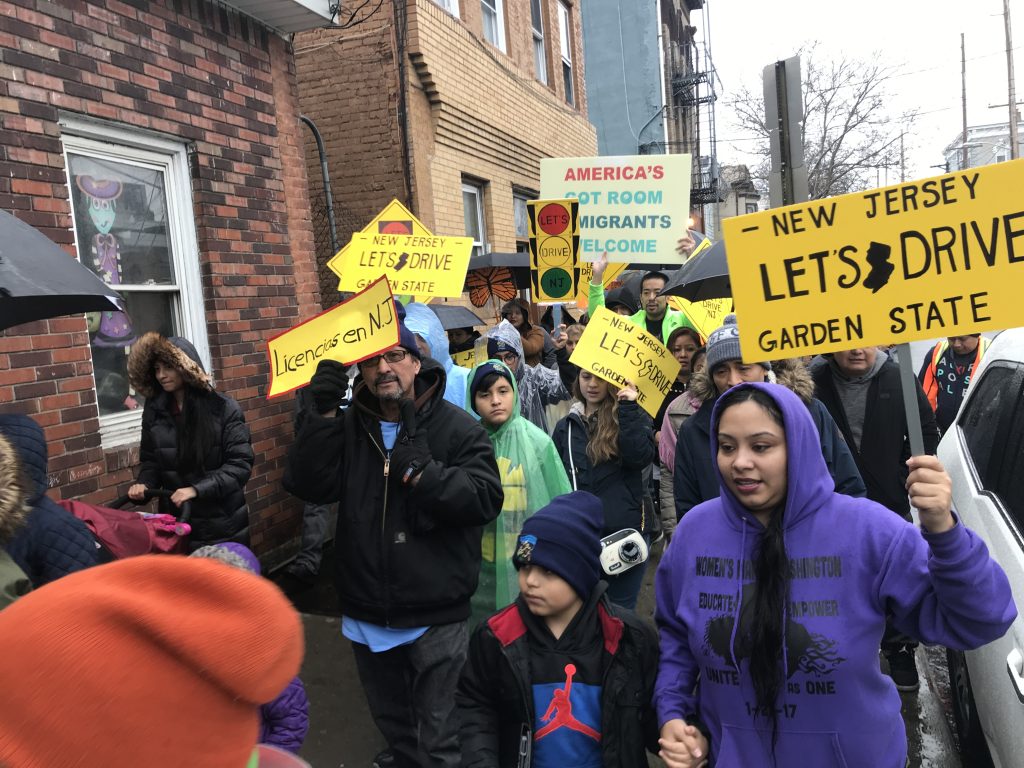
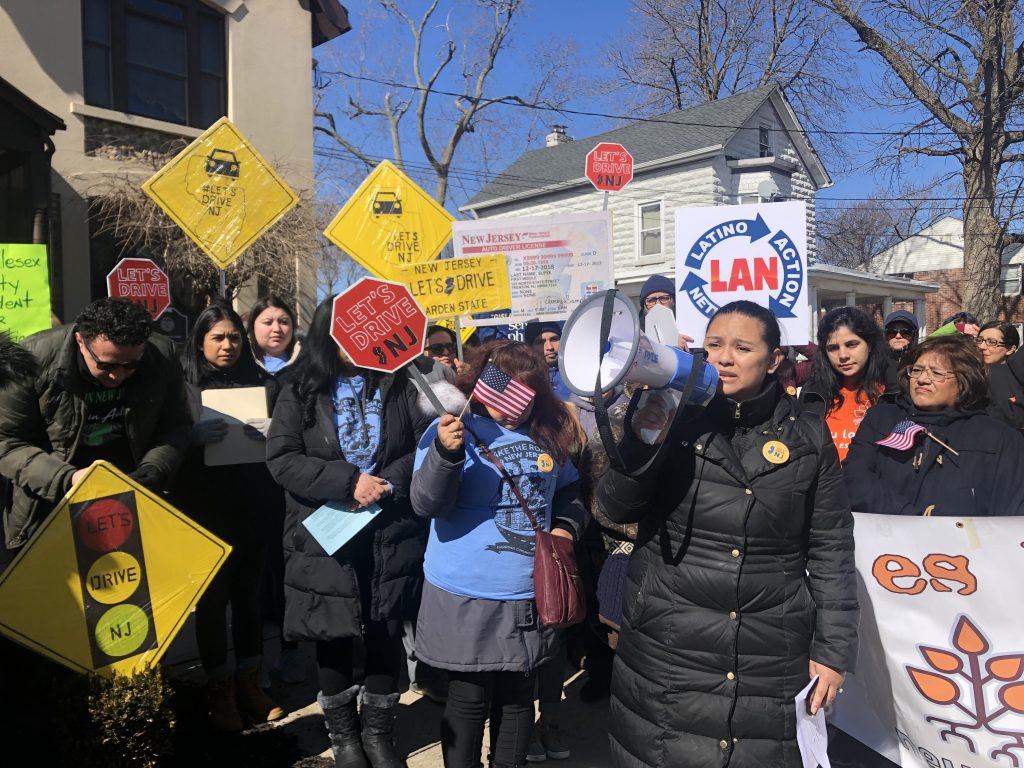
Let's Drive NJ Rally in Passaic, New Jersey, calling for expanding access to driver's licenses for more residents in February 2018.

Let’s Drive NJ Rally in Passaic, New Jersey, calling for expanding access to driver’s licenses for more residents in February 2018.

Many local and state governments have recognized the harm to our communities and stepped in to lessen the burden on our families.

Immigrant communities across the nation are advocating for several policies to help lessen the impact of Congress’s inability to pass CIR:

  • Expanding access to driver’s licenses, including in New Jersey through our Let’s Drive NJ campaign, to allow all who can be tested and insured, to drive safely regardless of immigration status.
  • Ensuring that local and state law enforcement stop using resources to do ICE’s work. In New Jersey, we are seeing the impacts of our advocacy efforts following the announcement of Attorney General Gurbir Grewal’s Immigrant Trust Directive. This directive is 1 step towards ensuring that law enforcement prioritize community policing that builds trust with immigrant communities.
  • Expanding health care access to all, including immigrants.

This is the real-life impact of advocacy work: Families are less scared, and fewer families are separated and deported with the help of state and local law enforcement.

Providing services won’t change the fact that without these policies, immigrant families will still live in the shadows.

Yet despite the human impact of advocacy, New Jersey still has a culture of philanthropy that focuses on service provision.

Service providers often see the limits to their work and are facing challenges in their ability to serve communities because immigration laws are broken and leave many people out of the systems that would protect them.

Area funders who seek to benefit immigrants and refugees also largely focus on neighboring communities and Southern states, leaving New Jersey’s advocates sorely under-resourced.

According to NCRP, per immigrant capita, Texas received double the philanthropic funding for immigrant rights as New Jersey from 2014-2016.

In more stark contrast, Arizona received 13 times more in grant dollars, though New Jersey’s immigrant population was more than double that of the border state.

And compared to New York and Pennsylvania, New Jersey received 2% of funding for immigrant rights in the tristate area, despite being home to more than a quarter of the region’s immigrant population.

Johanna Calle speaks at a petition delivery at New Jersey Assembly Speaker Craig Coughlin's office in Woodbridge in February of this year. Advocates delivered over 15,000 petition signatures to Speaker Coughlin, Senate President Stephen M. Sweeney and Governor Phil Murphy's offices urging them to expand access to driver's licenses to all residents regardless of immigration status.

Johanna Calle speaks at a petition delivery at New Jersey Assembly Speaker Craig Coughlin’s office in Woodbridge in February of this year. Advocates delivered over 15,000 petition signatures to Speaker Coughlin, Senate President Stephen M. Sweeney and Gov. Phil Murphy’s offices urging them to expand access to driver’s licenses to all residents regardless of immigration status.

Funders should support advocacy at all levels of government

Many still believe that immigration is a federal issue that should be addressed by Congress; that advocacy is a political tool that should be left to political action committees.

However, fighting for immigrants’ rights isn’t a choice of one or the other, and New Jersey is seeing exciting progress.

That is why we are a part of the Winning in the States Campaign with the National Immigration Law Center.

The level of support from new advocates has increased greatly, and many have realized that sitting out the legislative process isn’t an option.

The way to change what is happening in our country is through advocacy. Funders should make this adjustment.

To combat those who want to hurt immigrant communities, take away health care or limit access to education, we need to invest in our communities’ power to organize and advocate at every level of government. Immigrant families can’t afford to not do the same.

We must follow the lead of those impacted. If immigrants can organize, rally, protest, advocate and fight for their rights in this environment, then funders can leave hesitation aside and fight alongside of them.

Funders and donors can learn more about how to best support the pro-immigrant movement with new data, stories and best practice recommendations from NCRP’s Movement Investment Project.

Johanna Calle is the director of the New Jersey Alliance for Immigrant Justice (NJAIJ). Follow @NJAIJ on Twitter and visit www.njimmigrantjustice.org to learn more.

Lent is one of my favorite times of the year. For many people, it’s about giving up something they like, but the purpose of going without is to give more to those in need. It is an opportunity to practice better philanthropy, or “love of humanity.”

As a Roman Catholic who has visited Paris many times, I was sad to learn that Notre Dame Cathedral was burning. But I became angry when I saw how quickly “lovers of humanity” mobilized money for rebuilding a building in contrast to the sluggish pace at which institutional philanthropy moves money to human beings.

While Notre Dame was on fire, Al-Aqsa Mosque in Jerusalem also experienced a fire. Last week, 3 Black Louisiana churches were set on fire in an alleged hate crime.

The fires in these holy spaces echo a Lenten refrain, when Jesus said, “Destroy this temple and in three days I will raise it up.”

Jesus’s comment was a scandal to his contemporaries. He was promising the rebuilding of people, community and relationship, not the rebuilding of a building. But his critics missed his point, like we are missing the call to action from these fires now.

The speed of the philanthropic response to support Notre Dame’s repair exposed the hypocrisy of a sector that too often claims an inability to move quickly. This incident shows that philanthropy has the resources and the ability to support urgent social justice and movement-building work, but chooses not to.

The destruction of Notre Dame, and any sacred site, is painful, because such places help us to remember people and events that inspire and motivate us to be our best selves. Notre Dame, which means “Our Lady,” invites us to reflect on the life of Mary, mother of Jesus.

I remember that Our Lady was a poor, young mother who was forced to immigrate to another country because of threat of state violence against her son.

I believe that she would be appalled at the number of poor, young mothers who flee violence with their children today and are met with hostility or apathy.  

I remember that Our Lady watched her innocent son die at the hands of a mob and a corrupt government. She would weep at the numbers of people who are incarcerated and who die in our systems for crimes they didn’t commit.

Our Lady would be shocked that in 2016 more grant dollars were given to support leisure sports than to support the urgent work of the pro-immigrant and refugee movement.

And Our Lady would be ashamed that a combination of wealthy individuals, companies and foundations pledged more than $300 million within 24 hours to rebuild a symbol of her love, but foundations in the U.S. gave less than half of that in 2016 to support fighting for the people who most closely share her experiences.

Our Lady would be underwhelmed at the outcry of support for the idea of her and the lack of support for the reflection of her in other human beings.

So let’s stop missing the point, philanthropy. If donors and foundations can move this quickly to rebuild a damaged temple, then the broader philanthropic sector can certainly act more swiftly to support people in rebuilding the systems that have damaged their lives.

Start by learning what today’s immigrants and refugees need and how funders can take up the urgent opportunity to support them.

Jeanné L. Lewis Isler is the vice president and chief engagement office at NCRP. She is a lifelong practicing Catholic, loves grand old buildings, and knows that empowered people are the key to a better society.