Philanthropy possesses a checkered history. It is simultaneously responsible for developing some of our country’s greatest public resources while also leaving marginalized communities in the dark.

At its worst, philanthropy has supported causes that poison our public interest. This mixed tradition continues today as some of the same philanthropies that fund vital American institutions, such as the Boy Scouts and the American Red Cross, also fuel some our country’s most anti-human, anti-social political and cultural agendas such as Islamophobia, religious intolerance and white supremacy. 

Given that as an ideal, philanthropy is rooted in a love for humanity, the findings of a series of recent reports documenting the subversion of this public good should be a bitter pill for the philanthropic community to swallow.

Using philanthropy to fund hate

Alex Kotch at Sludge exposed the way donor-advised funds (DAFs) are used to funnel money toward alt-right hate groups.

Our own recent study, “Hijacked by Hate: American Philanthropy and the Islamophobia Network,” uncovers another, deeper layer in this phenomenon.

We tracked 1,096 foundations and charities that granted $125 million to anti-Muslim special interest groups between 2014 and 2016.

These groups, understood as the Islamophobia Network, are a close-knit family of organizations that share an ideology of extreme anti-Muslim animus and work with one another to negatively influence public opinion and government policy about Muslims and Islam.

Once on the fringe of media, they now help shape federal policy and influence local municipalities. Their ability to do so comes from their seemingly unshakeable financial security.

Unfortunately, the very foundations and charitable groups that fund causes that promote the public good are also responsible for funding virulent anti-Muslim hate groups.

These include household names such as Fidelity and Schwab, as well as faith-based funders such as Jewish Communal Fund and the National Christian Charitable Foundation, and community-centered funders such as the California Community Foundation.

They also include lesser-known and more opaque private family foundations such as the Mirowski Family Foundation, which has virtually no public imprint but nonetheless contributes millions of dollars to support anti-Muslim activity.

Together, the expansive funding network revealed in the report demonstrates that the Islamophobia Network cannot be considered a marginal or passing phenomenon in American society.

Rather, it is a consistent and shameful institutional feature of American philanthropy.

Avoiding responsibility under the guise of neutrality

Of course, the question of culpability can and should be asked: Are these charities funding hate or simply doing their job on behalf of their clients, the donors whose money they are managing?

Many DAFs actively eschew responsibility, arguing that they do not take positions on such issues, and instead, simply and blindly follow the IRS designations on which groups are registered as nonprofits.

Such were the responses of Schwab and Fidelity when NPR’s Leila Fadel confronted them with the findings of our report.

The truth is that hate groups and food pantries both qualify as nonprofits. Is it acceptable or conscionable that community and commercial foundations turn a blind eye to this difference?

We cannot expect much from ideologically committed foundations, such as the Adelson and Mirowski groups, whose political legacies define them.

But we can and should expect better of facially “neutral” funders. Moreover, we should not allow groups such as the Colcom Foundation, which actively funds xenophobic and anti-immigrant groups while simultaneously supporting environmental and sustainability initiatives, to mask their deeply paradoxical giving strategies through the cover of charity.

It is imperative that commercial and community foundations develop standards and guidelines to ensure that they are contributing to, rather than subverting, the public interest.

Ultimately, these questions are the same as the ones posed to Facebook, Instagram, Twitter and internet service providers: Are they simply a platform, or are they responsible for the promotion of hate?

Hate is not Charitable

Thankfully, the answers have come by way of concerted and innovative action. Social media giants are working with experts and stakeholders, through campaigns such as Change the Terms and the Christchurch Call, to take the right steps to mitigate the harm caused by hate groups on their platforms.

Similarly, there are signs that the philanthropic community is also ready to ensure that their institutions are not “Hijacked by Hate.”

The Hate is not Charitable Campaign, spearheaded by the Amalgamated Foundation, is leading the way to enlist partners committed to clearing their rosters of hate groups.  

Leading figures in philanthropy, such as Sharon Alpert, CEO of the Nathan Cummings Foundation, are providing a much-needed voice in a sector that seems to have been caught off-guard and exploited by insidious actors.

Anti-Muslim special interest groups are, of course, only one part of a larger, more systemic problem of the way the U.S. tax code and charitable vehicles, such as DAFs, are used by the wealthy to promote the narrow interests of corporations and political elites.

However, given the audacity and impact of the Trump administration’s Islamophobic agenda and its tacit approval of the rise of the alt-right, the time is ripe to challenge the sources of bigotry and hate that have led to so much social and political polarization in our country.

What can funders do?

Philanthropy cannot stay on the sidelines. It can and should play a significant role in healing our nation’s wounds.

Funders can start by:

  • Working with stakeholders, scholars and community members to identify best practices and develop a mechanism of accountability.
  • Sharing resources to advance the public good and collectively push hate and toxic politics to the margins of society and out of the mainstream.
  • Signing on to the Hate is not Charitable campaign and helping to build momentum for this growing initiative.
  • Convening stakeholders in advocacy, university research centers and philanthropic consultancy to develop long-term industry standards to ensure that hate speech and extremism are not supported by their institutions.

Regarding the role of the Islamophobia Network in philanthropy, charities and foundations should begin screening their grantee lists and simultaneously reaching out to American Muslim advocacy organizations like ours to help them navigate the troubled web of actors responsible for so much of the anti-Muslim toxicity we see publicly. 

Working with American Muslim groups will also help to develop long-term relationships in the interfaith community and strengthen the foundations of local civil society networks.

The promising tradition of philanthropy must take back the public square not simply by preventing its subversion by narrow-interested elites, but by supporting causes that advance the public interest.

Just as philanthropy begins to “divest” from hate, it must reinvest in areas of civil rights, public education and independent journalism, which have suffered the most under the profound rise of corporate and private interests in the last few decades.

Ultimately, philanthropy must be used exclusively to advance, as the very word implies, a love of humanity. Groups like ours are willing and ready to work with them along the way.

Dr. Abbas Barzegar is director of research and advocacy and Zainab Arain is national research and advocacy manager at CAIR. Follow @CAIRNational on Twitter.
In April, NCRP launched the Movement Investment Project, a new initiative to help foundations and donors better connect their resources with grassroots movements for social justice.

This year the Movement Investment Project is focusing on the pro-immigrant movement at a time when the safety and prosperity of new Americans is under significant threat.

As the child of immigrants, the movement is personal to me. There are many kinds of migration stories – many families have one – but this is mine.

My parents came to the U.S. from Taiwan in the early 1980s, newly married and ready to take on a new country, language and culture.

They settled in a small, predominantly white town in rural New Jersey to raise their children, away from a town with a tight-knit Chinese community and surrounded by the American culture that they were still trying to understand.

When my brother was in elementary and middle school, he was the town’s Asian population. When I went through the school system several years later, I was still only one among a handful.  

Some of my teachers didn’t know where Taiwan is, and more than a few teachers were disappointed that math and science were not my strengths.

Our story is not unlike many other Asian immigrants and their American-born children who immigrated to the U.S. after 1965.

But to start the Asian American immigration story at that point in American history is an injustice to the much longer story of the Asian American Pacific Islander (AAPI) community in the country.  

The first immigration legislation passed by the U.S. Congress (in 1882) was the Chinese Exclusion Act. And from 1924 until 1965 – when Congress passed the Immigration and Nationality Act of 1965 – all immigrants from Asian counties were banned from migrating to the U.S.

Fast forward through many migration stories like my parents’ to 2016, when only 4% of the $129 million U.S. foundations gave to support immigrant rights work was for AAPI communities, which make up 27% of the immigrant population.

This AAPI Heritage Month, it’s time to recognize that philanthropy has an Asian American exclusion problem.

As foundations and donors begin to think about how better to support the pro-immigrant movement, philanthropists should be especially mindful of how better to recognize the complexity of the AAPI community and support its leaders.

They can start by recognizing the long history of Asian immigration in the U.S., the diversity of AAPI communities and the powerful potential for movement leadership we bring to the table.

The AAPI community is not a monolith.

The AAPI community is remarkably diverse – 94% of the AAPI population in the U.S. comes from 19 different origin groups.

But the broader AAPI community has origins in Sri Lanka, the Marshall Islands and everywhere in between with countless languages, cultures and histories.

The diversity is often hidden and lumped together by media, researchers and philanthropy. Throughout history, people with AAPI identities have been laborers, refugees, business owners, enemies and the “model minority,” often all of the above simultaneously.

Aggregated statistics point to the AAPI community as one of the most prosperous minority groups in the country with higher median incomes and higher education attainment than the national average.

Disaggregated data shows that certain subgroups of AAPI people are also among the lowest-educated and lowest on the income brackets.

Treating the AAPI community as one community with the same needs and solutions only perpetuates the history of racism, discrimination and erasure against us.

Philanthropy can support AAPI leaders so that we are no longer excluded.

My parents and the immigrants that came before and after them all seek a better future and an opportunity to be happy and prosperous.

Any many of us – whether recently arrived immigrants or descendants of immigrants – are still figuring out how to navigate American society while honoring the cultures and histories of our families.

Whether we arrived yesterday or 40 years ago, we are changing our communities and the makeup of the country.

My high school now has a Mandarin program, and there is a growing community of Chinese people in my town – a sign that the AAPI community is projected to become the largest minority group in the U.S.

Philanthropy can invest in a future that celebrates the diversity of the AAPI population.

Here are some ways to start:

  • Understand how the racism and exclusion of the AAPI community has occurred throughout American history. Learn how that history has affected how the AAPI community is represented today and how it connects to your own funding priorities.
  • Disaggregate the data. What are the disparities among the different AAPI communities where you fund? What disparities exist between states with different AAPI populations?
  • Support AAPI-led pro-immigrant, advocacy and grassroots organizations. They are the ones who know the experiences of their communities the best, and increasing support for these organizations can be a powerful start of long-term change for the whole movement. 
  • Include AAPI voices at the table. Make sure that the AAPI community and the diversity of their experiences is included in conversations about strategic priorities or grantmaking decisions.

In this critical time of increasing attacks and threats against all immigrant populations, philanthropy can support the AAPI leaders who are trying to make our voices heard and make sure that we – and all other immigrants – are no longer excluded from being part of America’s story.

Stephanie Peng is a research and policy associate at NCRP. Follow @NCRP on Twitter.

Babies being separated from their families and put in cages at the southern border. Small children tear-gassed as they seek refuge in the U.S.

Those of us who have been haunted by the images can feel the urgency to fix it. Yet it is imperative that we remind ourselves that the family separations crisis doesn’t stop at the border. The sight of children going to any airport to say goodbye to their father is no less painful.

Immigrant parents across the U.S. have been preparing their families for the possibility of deportations since President Trump took office – giving friends powers of attorneys over their children.

They prepare like they would for a natural disaster, with safety plans and emergency numbers in a secure place. Every neighborhood where immigrant families live feels the impact of these federal policies.

Advocates are witnessing the dramatic rise in detention and deportation rates across the country.

Immigration arrests aren’t limited to border states

We assume the issue is in border states, but New Jersey, where I live and work, has seen Immigration and Customs Enforcement (ICE) arrests increase by 42%, and houses the 9th highest immigrant detainee population in the U.S.

While the country is horrified by child detention along our Southern border, ICE is also taking parents from their homes and arresting people at immigration adjustment interviews.

Police officers have taken immigration law into their own hands, calling ICE when they interact with immigrants in their communities. Some families lose their loved ones to deportation before anyone is any the wiser.

The simple solution is Comprehensive Immigration Reform (CIR), which would provide a pathway to citizenship to all undocumented immigrants in this country, a proposal that has been in the works for more than 2 decades.

I’ve been fighting for CIR for most of my life and have seen every possible solution at the federal level dwindle from a comprehensive plan to temporary piecemeal bargaining chips.

Action at the state and local levels

What happens in Congress has real consequences in the lives of people: Not having lawful immigration status means they can’t drive, can’t go to college, don’t have health insurance and are afraid of the police.

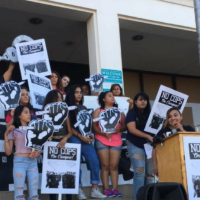
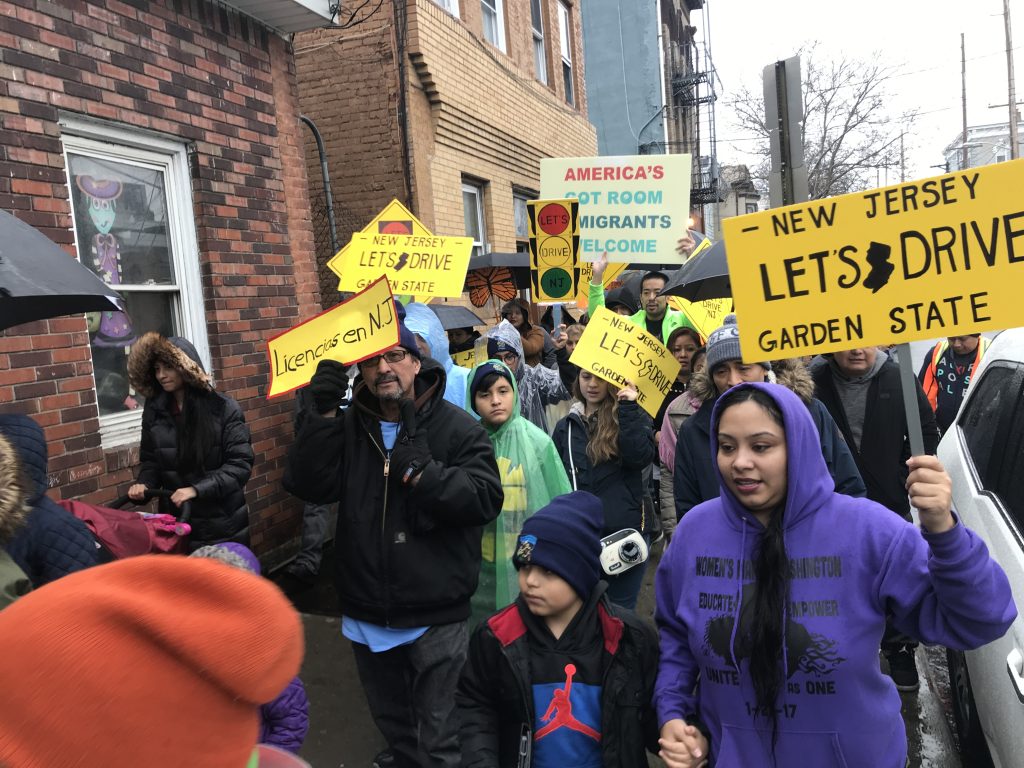
Let's Drive NJ Rally in Passaic, New Jersey, calling for expanding access to driver's licenses for more residents in February 2018.

Let’s Drive NJ Rally in Passaic, New Jersey, calling for expanding access to driver’s licenses for more residents in February 2018.

Many local and state governments have recognized the harm to our communities and stepped in to lessen the burden on our families.

Immigrant communities across the nation are advocating for several policies to help lessen the impact of Congress’s inability to pass CIR:

  • Expanding access to driver’s licenses, including in New Jersey through our Let’s Drive NJ campaign, to allow all who can be tested and insured, to drive safely regardless of immigration status.
  • Ensuring that local and state law enforcement stop using resources to do ICE’s work. In New Jersey, we are seeing the impacts of our advocacy efforts following the announcement of Attorney General Gurbir Grewal’s Immigrant Trust Directive. This directive is 1 step towards ensuring that law enforcement prioritize community policing that builds trust with immigrant communities.
  • Expanding health care access to all, including immigrants.

This is the real-life impact of advocacy work: Families are less scared, and fewer families are separated and deported with the help of state and local law enforcement.

Providing services won’t change the fact that without these policies, immigrant families will still live in the shadows.

Yet despite the human impact of advocacy, New Jersey still has a culture of philanthropy that focuses on service provision.

Service providers often see the limits to their work and are facing challenges in their ability to serve communities because immigration laws are broken and leave many people out of the systems that would protect them.

Area funders who seek to benefit immigrants and refugees also largely focus on neighboring communities and Southern states, leaving New Jersey’s advocates sorely under-resourced.

According to NCRP, per immigrant capita, Texas received double the philanthropic funding for immigrant rights as New Jersey from 2014-2016.

In more stark contrast, Arizona received 13 times more in grant dollars, though New Jersey’s immigrant population was more than double that of the border state.

And compared to New York and Pennsylvania, New Jersey received 2% of funding for immigrant rights in the tristate area, despite being home to more than a quarter of the region’s immigrant population.

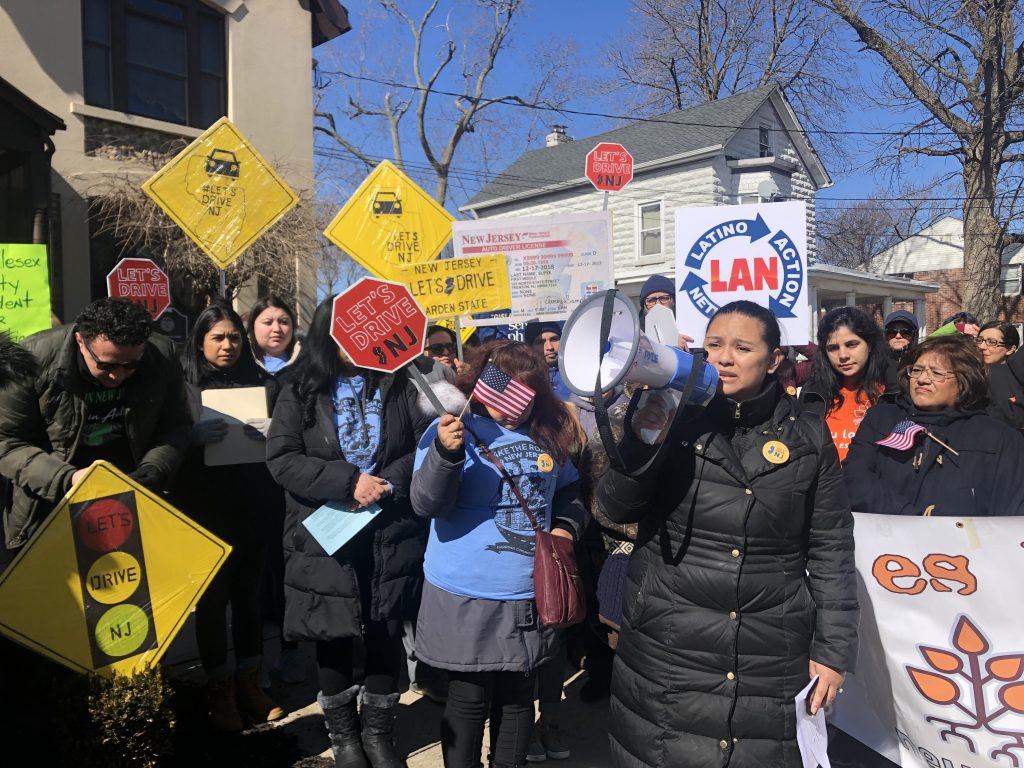
Johanna Calle speaks at a petition delivery at New Jersey Assembly Speaker Craig Coughlin's office in Woodbridge in February of this year. Advocates delivered over 15,000 petition signatures to Speaker Coughlin, Senate President Stephen M. Sweeney and Governor Phil Murphy's offices urging them to expand access to driver's licenses to all residents regardless of immigration status.

Johanna Calle speaks at a petition delivery at New Jersey Assembly Speaker Craig Coughlin’s office in Woodbridge in February of this year. Advocates delivered over 15,000 petition signatures to Speaker Coughlin, Senate President Stephen M. Sweeney and Gov. Phil Murphy’s offices urging them to expand access to driver’s licenses to all residents regardless of immigration status.

Funders should support advocacy at all levels of government

Many still believe that immigration is a federal issue that should be addressed by Congress; that advocacy is a political tool that should be left to political action committees.

However, fighting for immigrants’ rights isn’t a choice of one or the other, and New Jersey is seeing exciting progress.

That is why we are a part of the Winning in the States Campaign with the National Immigration Law Center.

The level of support from new advocates has increased greatly, and many have realized that sitting out the legislative process isn’t an option.

The way to change what is happening in our country is through advocacy. Funders should make this adjustment.

To combat those who want to hurt immigrant communities, take away health care or limit access to education, we need to invest in our communities’ power to organize and advocate at every level of government. Immigrant families can’t afford to not do the same.

We must follow the lead of those impacted. If immigrants can organize, rally, protest, advocate and fight for their rights in this environment, then funders can leave hesitation aside and fight alongside of them.

Funders and donors can learn more about how to best support the pro-immigrant movement with new data, stories and best practice recommendations from NCRP’s Movement Investment Project.

Johanna Calle is the director of the New Jersey Alliance for Immigrant Justice (NJAIJ). Follow @NJAIJ on Twitter and visit www.njimmigrantjustice.org to learn more.

Two recent philanthropic sector news items have attracted the attention of philanthro-folks on social media. Both channel current debates about whose voices are heard in public discourse, and both hint at opportunities for foundations to embrace sharing their power with the communities they serve.

On Jan. 9, The Chronicle of Philanthropy reported that a group of extended Andrus family members who object to the Surdna Foundation’s current racial equity grantmaking strategy had sent letters to the Surdna board of directors expressing their displeasure.

Now their objections have been aired in a prominent industry publication.

The next day, Hewlett Foundation CEO Larry Kramer published an open letter in which he announced that, in order to “hear our opponents and make them feel heard,” the foundation’s staff would, over several months, spend time listening to the foundation’s opponents and deliberate the merits of their opinions. 

The implied identity of “opponents” in the letter seems to be those who would, like the Andrus family members, take issue with the Hewlett Foundation’s systems-change approach to their grantmaking.

What connects these stories is what is conspicuously missing: The voices of grantees and the often-marginalized communities they serve.

Both assert that foundation staff have a responsibility to engage meaningfully with those who would question their grantmaking strategies, but appear to presuppose that that category includes other philanthropists or ideological opponents.

In other words: People with similar levels of power and privilege as the foundation leadership and staff themselves.  

Neither speaks to the value of grantee community voices in that conversation, and that’s a missed opportunity that, luckily, can be easily remedied.

It’s no surprise that foundations, like the rest of us, have begun to wrestle publicly with hot-button issues in the past few years: Whose voice is worth listening to? Who has power and privilege in a changing country and world? Who should?

Whose voice is worth listening to?

“Foundations depend on their boards for wisdom, perspective, and sense-making. Board members who bring authentic relationships, experiences, and an understanding of the communities the foundation aims to serve are more likely to help shape strategies that are responsive to real needs.” – Jim Canales and Barbara Hostetter, Barr Foundation

Our capacity to listen empathetically should expand in light of the deep divisions recently exposed in our civic life. But we shouldn’t listen as if power and privilege do not exist.

The descendants of a mega-wealthy donor whose ideological viewpoint is echoed in the halls of the Senate, the White House and on the country’s most-watched TV network are not under-represented in the public discourse.

Those who would deny facts to defend the status quo – people who deny the facts of our changing climate, for example – are not those whose perspective is sorely missing from philanthropy.

It may feel broad-minded to give hearing to voices of dissent when they come from other people with power. But inviting conversation with other wealthy, privileged and, often, white people about what good grantmaking looks like is not a shift in the status quo. It’s what most foundations do by default every day.

In 2014, the D5 Coalition’s research showed that 92% of foundation CEOs and 87% of their board members were white. Just 38% of foundation board members were women, 2% identified as LGBTQ and just 1% identified as disabled.

No data exist on the socio-economic status of foundation CEOs and board members, but it’s not going out on a limb to conclude the overwhelming majority are people with high incomes, high wealth or both.

This begs the question: In a sector that is still overwhelmingly staffed by well-heeled white people, what would a shift in empathetic listening look like? Grantee organizations and the communities they serve hold part of the answer.  

Who has power?

“Public officials, grantmakers, and others in power may tap constituents for their ‘input’ at a neighborhood charrette or community meeting, but they often ultimately ignore community ideas and insights. As a result, many communities have plenty of experience with people in power telling them what is really good for them, rather than being able to speak for themselves and act on their own behalf.” – Linda S. Campbell, Detroit People’s Platform and Building Movement Project

Listening with empathy is necessary, but insufficient. The most effective foundations go beyond listening to actively sharing power in order to co-determine the best interventions with their grantees and the communities they are part of, which are closest to the sticky problems foundations are working to address.

These ideas are being put into practice by innovative institutions in the sector. In 2014, the Brooklyn Community Foundation launched a community engagement initiative that brought foundation staff and leadership into conversation with nearly 1,000 Brooklyn residents through 30 neighborhood roundtables.

The results: The foundation created a 17-member community advisory council, invested $100,000 in community-identified priorities and decided to implement the resident-driven process every year.

A wealth of knowledge, experience and innovation are left out of the grantmaking process when foundations make decisions in a vacuum without grantee and community input.

There are paths for institutions to take to begin listening with empathy to the unheard voices of philanthropy and sharing power through accountability.

NCRP’s Power Moves guide provides a host of different options for foundations interested in embarking on that journey.

And NCRP’s staff is ready to be a thought partner to those who decide they’re ready to take the leap toward accountability.  

It’s for each foundation to chart its course through this era when questions of power and privilege are inescapable, especially for a sector that is largely built on both.

Philanthropic leaders have incredible opportunities in this challenging time. Foundations that embrace sharing their power with their grantees and the communities they serve can unlock innovative new solutions to our pressing problems and begin to transform their grantmaking practices to become more effective, more authentic and more mission-aligned. 

Ryan Schlegel is NCRP’s director of research. Follow @NCRP on Twitter.

We recently announced NCRP’s new Selections Committee and call for Ambassadors for the 2019 Impact Awards, which was a great way to close out a stellar year.

To share more highlights from 2018, I invited summaries of accomplishments from colleagues, featured below!

Evolution of Philamplify and high praise for Power Moves
Contributed by Lisa Ranghelli, senior director of assessment and special projects

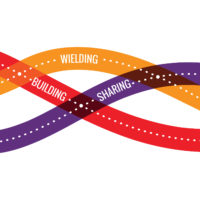
In May, NCRP released Power Moves: Your essential philanthropy assessment guide for equity and justice. The guide provides a framework and comprehensive set of resources for funders to reflect on the extent to which they build, share and wield power mindfully, with attention to issues of privilege in order to advance racial equity.

Since the release, sector response has been overwhelmingly positive. More than 2,000 people have downloaded the guide, including 855 grantmakers. We’ve kept busy promoting Power Moves and offering opportunities to engage with the project, including:

  • Launching 2 peer learning groups for funders and consultants – a new experiment for NCRP – to support each other as they dig into the guide, test out different ways to use it and provide advice and insights to staff.
  • Hosting 4 webinars, including an overview of the toolkit and deeper dives into building, sharing and wielding power, averaging 265 registrants per webinar.
  • Curating powerful stories from leaders such as Vanessa Daniel of Groundswell Fund, who authored an extremely popular journal article and urgent call to action for NCRP on the gentrification of movements. The article has had an astonishing 7,900 page views in the 3 months since publication.
  • Partnering with Stanford Social Innovation Review to feature 8 distinguished authors in a series of articles on Power in Philanthropy.
  • Partnering with other sector groups on in-person presentations on Power Moves themes, including sessions at conferences hosted by PEAK Grantmaking, Equity in the Center and Race Forward.

New milestones for As the South Grows
Contributed by Ben Barge, senior associate for learning and engagement

In June, NCRP launched the capstone report in our joint As the South Grows initiative with Grantmakers for Southern Progress (GSP), So Grows the Nation.

The report includes grantmaking dollars on social justice giving for the region and each Southern state, and grassroots recommendations to philanthropy from over 120 interviews. It’s a can’t-miss read for any Southern or national foundation.

But we did not let these learnings sit on a shelf. Over the past 2 years we’ve had hundreds of 1-on-1 calls and 24 presentations with funders and organizers to change the way philanthropy works in the South, culminating in a presentation with GSP this November at the Southeastern Council on Foundations.

We’ve heard from some major national foundations that As the South Grows has changed the way they think about investing in the South.

And some of our key partners in the work were involved in historic voter education and turnout efforts across the region whose transformative impact we are only beginning to understand.

Stay tuned for a survey capturing the impact of this initiative thus far!

Bold thought leadership
Contributed by Aaron Dorfman, president and CEO

As usual, NCRP sounded the alarm when we saw philanthropy failing to do what it should to help the most marginalized.

I partnered with other sector leaders to write an op-ed calling on foundations to do more in Puerto Rico. The piece was first published in the Washington Post and later in the Miami Herald, and came after a moving trip to the island for the CHANGE Philanthropy retreat and learning tour.

Our team also wrote compelling and timely thought pieces on:

NCRP attends 40-50 sector conferences per year, and I was honored to give keynotes for important gatherings like the Yale Philanthropy Conference and the Southern California Grantmakers Family Philanthropy Conference.

Dramatic transformations in Human Resources and Administration
Contributed by Beverley Samuda-Wylder, senior director of human resources and administration

A successful 1st year using the new Bamboo human resource information system software at NCRP helped automate and streamline requesting time off, conducting quarterly assessments to replace annual reviews, tracking work goals, and hiring and onboarding staff.

Our department trained new supervisors and collaborated with senior staff to hire 3 consultants and 7 new team members, including Timi Gerson who joined us in May as vice president and chief content officer and a record 5 interns. We now have 22 team members.

Not always evident is the important role of the executive assistant, a new addition to our executive office. Garnetta Lewis has quietly supported the management of the day-to-day office operations, human resources and accounting. She successfully scheduled more than 600 important high-stakes fundraising and other in-the-field meetings for the CEO and internal staff meetings.

Great strides in fundraising and fiscal growth
Contributed by Kevin Faria, senior director of foundation engagement

NCRP has had several successes in fundraising for our operations this year. We raised more than $2.8 million, the most in NCRP’s 42-year history.

This was almost a 20% jump from our 2017 fiscal year, and more than double what we raised 10 years ago. Part of this growth was due to the receipt of NCRP’s largest grant ever from Borealis Philanthropy’s Racial Equity in Philanthropy Fund, currently supported by the W.K. Kellogg and Ford foundations.

Along with nonprofits and individuals, we’re pleased to be sustained financially by more than 125 grantmakers of all types and sizes. Also, 100% of NCRP’s board made a personal donation to NCRP, another sign of their commitment to the organization.

We’re making enormous strides towards our goal of having a $4 million budget by 2026, and with your help we’ll continue our growth.

What did you appreciate the most from NCRP in 2018?

Caitlin Duffy is senior associate for learning and engagement at the National Committee for Responsive Philanthropy (NCRP). Follow @NCRP and @DuffyInDC on Twitter.

It’s been more than two weeks since I returned from Resource Generation’s Making Money Make Change conference in Minnesota, and although it may have been rainy outside the conference room, a fire was stoked inside me.

For its annual retreat, Resource Generation brought together community organizers, social justice funders and young people with wealth and class privilege to engage in dialogue about the roots of the racial wealth divide, to explore personal class stories and to create action plans to leverage power and privilege.

The opening plenary featured a sobering conversation about the racial wealth divide in America. It cited a 2014 study by Prosperity Now and the Institute for Policy Studies, which showed that about 80% of Americans own 7% of the money and white households had a median net wealth of $116,800, while Black households had $1,700 and Latinx families had $2,000.

(The study didn’t include median net wealth stats for Asian-Americans or Indigenous people due to a lack of good data.)

These wealth disparities are the results of years of systemic barriers that have kept people of color from developing wealth.

While these groups were historically shut-out of opportunity, white identifying individuals have received disproportionate boosts to building wealth from land grants to colonists, open doors to European immigration, the New Deal and tax cuts to asset owners.

I come from a family in Washington, D.C., that has benefited from governmental favoritism of whites at the expense of systemic oppression of people of color.

During a white caucus group, I had the chance to unpack and confront my fear and anxiety about my privilege and wealth.

Through sharing my “money story” with others, I identified the systemic boosts that have specifically helped my family accumulate wealth, such as the public disinvestment in urban areas and public-private housing partnerships that have benefited developers.

It was difficult to recognize that my family benefitted while others did not.

But I was also encouraged at the conference to envision a new relationship with money that places the collective first, links my money stories to others and allows me to transform my guilt and shame into love in order to act in solidarity across race and class differences.

Next steps: Here are some practices the Making Money Make Change conference highlighted:

  • Learn financial literacy: Impact investor Rachel Robasciotti explained how the language of economics and philanthropy are often a barrier to discussing money. By learning about investments, stocks and bonds, and philanthropic giving, we can develop tools to understand wealth and leverage it strategically.
  • Fund all parts of the social movement ecosystem, including the vision setters: Aaron Tanaka of the Boston Ujima project shared his work to build alternative economies. Investors can help transition economies by placing resources into community-based organizations that distribute ownership and democratize decision-making. The Ujima Project’s model allows members to decide what they need most in a community, provides businesses that have been historically marginalized access to capital to launch – both of which are exemplified in the Cero Coop, a worker owned composting business that the Ujima Project supports.
  • Don’t just invest, be sure to divest: This is a popular framework included in The Movement for Black Lives policy platform. Chordata Capital founder Tiffany Brown reiterated this idea in a workshop and highlighted the need to align investments with philanthropic giving by divesting from extractive businesses and investing in socially responsible ones. By pulling money out of businesses like big banks and putting it in local banks like Village Financial in Minneapolis, funders can support banks that provide capital to those who may not otherwise be able to, rather than banks that have a history predatory loans and redlining.
  • Commit to the journey: In an evening plenary, Thenjiwe Harris from Blackbird energized the room by asserting the most important thing young people can do is to commit to the journey of learning and supporting movement work.

Through exploring my story, building relationships across class and race differences, and aligning my resources with social movements, I can step into my class privilege with integrity and help, not harm.

For me, the conversation continues now that I’m back home.

I recently switched my money to a local bank that predominantly gives community development loans. I became a monthly sustainer to a few new organizations that focus on the root causes of economic, racial and social injustice. And, this holiday season, I hope to have a discussion with my family not only about where resources are given, but also where they come from.

I encourage other people who carry class, white or male privilege to start identifying where in their own communities there is power and start organizing it.

Reed Young is events and webinars intern at NCRP. Follow @NCRP on Twitter.

Last month, our communities came under physical attack again.

The president sent more than 5,000 troops threatening state-sponsored violence against a caravan of Central American refugees seeking political asylum.

Two Black senior citizens, Maurice Stallard and Vickie Jones, were murdered in cold blood in a grocery store in Kentucky.

A shooter screaming “all Jews must die” killed 11 elderly Jewish congregants at a synagogue in Pittsburgh.

The men who perpetrated this violence are very clear on the connection between these acts. The question progressive movements and funders need to ask ourselves moving forward is: Are we?

White supremacists have a twisted worldview, deftly laid out by Eric Ward of NCRP member group Western States Center in an article last year, in which “anti-Semitism forms the theoretical core of white nationalism.”

Racism, xenophobia and anti-Semitism are not separate strands of hatred for these ethno-nationalists, but rather deeply intertwined and mutually reinforcing. So too must be our strategies for combating it.

Some in our communities have always understood that our safety lies in solidarity. Ancient rabbis in the Babylonian Talmud (Gittin 61a) taught: “We sustain the non-Jewish poor with the Jewish poor, visit the non-Jewish sick with the Jewish sick, and bury the non-Jewish dead with the Jewish dead, for the sake of peace.”

Thousands of years later, Black civil rights leader Fannie Lou Hamer put it more succinctly: “Nobody’s free until everybody’s free.”

Our practice, however, too often fails to act on this communal knowledge.

It is vanishingly rare to find a mention of anti-Semitism, much less a discussion of the intersection of it with anti-Black racism and xenophobia, in progressive philanthropic spaces (Kudos to the Women Donors Network for hosting a sadly prescient session on this topic last week at their conference in Seattle).

Anti-Semitism does not fit neatly into American narratives around oppression. And very little has been done by most people who would otherwise consider themselves social justice-minded activists or funders to understand it.

Part of the complexity is the small gain towards attaining “whiteness” that the majority of the U.S. Jewish community has been able to make in the last few decades.

The fact that state-sponsored protection in the form of extra police was extended to Jewish synagogues and schools contrasts markedly with the response to attacks on Black churches.

Regardless of whether you believe police protection is useful or desirable, it bears noting that Black churches were not offered it despite the historic and present trend of white supremacist violence where African-Americans gather to worship.

This kind of disparity perpetuates nominal divides between two communities that are facing threats connected at the root.

So too do scandals that seek to obfuscate the difference between the real violent threat of white supremacists compared to the ignorance reflected in anti-Semitic and anti-Black comments that occasionally rears its ugly head in both communities.

We do not believe that this happens by oversight or accident. Rather these divisive tactics are expressly designed to strengthen white supremacy by distracting us from our shared values and goals, and obscuring the clear and present danger represented by the white nationalist movement.

Philanthropy has a role to play in navigating this dynamic. Don’t use your power to re-entrench divisions.

Instead leverage your power to deepen your analysis and educate others about the connection between anti-Semitism and anti-Black racism.

Instead of excluding groups who are mostly values aligned, but may be ignorant about this connection, make space to wrestle with hard history towards joint action. It is our hope that with these terrible massacres, we are motivated to search our blind spots and expose them to the light.

To learn (through resources such as this Jews for Racial and Economic Justice toolkit or National Coalition Building Institute), to dialogue and, more than anything else, to act in ways that reflect a newfound understanding of what this moment in our history demands of us.

Photo by Governor Tom Wolf. Used under Creative Commons license.

Editor’s note: This post is part of an ongoing series of posts featuring NCRP nonprofit members.

Cities are congested places, packed with people, cars and, yes, philanthropy. If funders stepped out of the urban grind for some fresh air countryside, they’d find organizations like Family & Youth Counseling Agency in Southwest Louisiana are as professionally run and ready to scale as their allies in the concrete jungle.

Philanthropy needs to get up, stretch its legs and explore regions outside major cities to address its near invisibility in rural communities.

Family & Youth offers integrated counseling services for children and families in southwest Louisiana, while also advocating on their behalf in the state legislature and training nearby nonprofit staff in the basics of running an organization. 

The organization’s work runs from counseling and support services for children with autism to children who were sexually or severely abused to couples and families to local businesses. Housing all of these under one roof makes for a streamlined, holistic case management process that saves a not inconsequential amount of money.

And yet, like so many other rural-serving nonprofits, Family & Youth manages to pack even more programming into its $2 million budget.

It operates a Court Appointed Special Advocates program, which is comprised of volunteers who speak in court for a child’s best interests after they’ve been removed from homes where they’ve been abused or neglected.

Family & Youth trains and supports these volunteers, providing 1,100 hours of training for 82 volunteers in 2016 alone.

The Human Services Response Institute (HSRI) supports people in crisis due to a natural disaster or emergency. From Hurricane Rita onward, HSRI has led the way for immediate disaster response and long-term recovery and resource coordination.

Family & Youth not only works on the front lines ensuring the wellbeing of the southwest Louisiana community, but at the systems level too.

The organization has built an advocacy network to ramp up civic engagement and participation among local nonprofits and volunteers.

Through the network, Family & Youth shares information on local, state and national issues related to children and families; trainings to help organizations build mission-based advocacy teams; networking opportunities; and tools necessary to shape public policy around child abuse prevention, education, coastal restoration and health care access.

A separate initiative works with 1,000 high schoolers every year on leadership development, career exploration and civic engagement opportunities.  

Nonprofits and funders alike know the importance of collaboration in driving public policy wins; Family & Youth is no different. What’s missing are allies with which they can collaborate.

The nonprofit sector in southwest Louisiana is small and not fully professionalized. Family & Youth, in addition to all its regular services, has to pull double duty as a network organizer and a trainer for its nonprofit neighbors, complete with lessons on basics like fund development and grant writing 101.

And neither local nor national foundations have any real presence in Family & Youth’s native Lake Charles.

Located in between Houston and New Orleans, the three-hour drive from either location sees philanthropic investment dry up faster than gas in the tank.

For every $1 per person philanthropy invests in southern Louisiana, it invests $58 in Orleans Parish.

It should thus come as little surprise that Family & Youth currently receives zero foundation funding, instead relying on individual and corporate donations and fee-for-service contract work.

That sounds sufficient, except individual and corporate donors want their dollars to go exclusively towards the families and children Family & Youth serves, leaving little room for critical back office infrastructure.

Foundations (purportedly) better understand the importance of supporting the administrative side, but none seem to be paying any attention.

They need to straighten up. Recent breakthroughs in oil and natural gas extraction have swelled economic investment and demands for labor in the region. Current estimates forecast more than $100 billion in construction projects within the next decade.

But we know the economic gains from fossil fuels will bring little benefit to anyone other than a powerful few, while extracting even more from the most vulnerable communities. Southwest Louisiana’s underdeveloped nonprofit sector will be strained to adequately serve them.

Funders, especially national ones, should see in Family & Youth a special opportunity to back an organization fighting for marginalized communities with an integrated, scalable model at a time when greater scale is essential.

Family & Youth has already begun forming a statewide network drawn from the five corners of Louisiana to meet and share best practices a few times a year. Imagine how many more childhood survivors of sexual assault or abuse could be taken care of, and how much better that care would be, if nonprofits across Louisiana adopted a model informed by Family & Youth’s experience. Philanthropy could accelerate getting there.

There’s no shortage of exemplary nonprofits outside of major U.S. cities. Philanthropy just has to put the work in to find and support them.

Troy Price is NCRP’s membership and fundraising intern. Follow @NCRP on Twitter.