Contact us
  • About us
  • Our Work
  • Resource Center
  • News & Insights
  • Donate
About us
About us
  • Our Mission & History
  • Strategic Approach
  • Our Supporters
  • Our Team
  • Careers & Internships
Our Work
  • Supporting Movements
    • Movement Investment Project
    • Reproductive Access and Gendered Violence Movement Investment Project
    • Movement Investment: FAQs & Resources
  • Setting Standards
    • Power Moves
    • NCRP Impact Awards
    • Data Advocacy
  • Responding to the Moment
    • The Regressive Philanthropy Initiative
    • Philanthropy & Reparations
    • Resisting Billionaire Climate Solutions
Our Work
Resource Center
Resource Center
  • Full Resource Library
News & Insights
News & Insights
  • Blog
  • NCRP in the News
  • Press Release
Donate
Donate

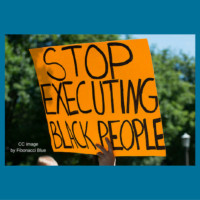
5 ways foundations and wealthy donors can combat the Trump agenda

This commentary was originally published on The Huffington Post.

Donald Trump’s election as U.S. president represents the victory of a reactionary, hard-right agenda that threatens to overturn decades of progress on important social and environmental issues. But groups and individuals are beginning to organize against the most damaging aspects of Trump’s politics. A resistance is forming, and it needs and deserves the support of our nation’s foundations and wealthy donors.

Here are five ways people who control substantial financial resources can be partners in combating the Trump agenda.

1. Invest in a broad-based resistance.

Donors need to make sure that the ecosystem of organizations making up the resistance have the resources to win. These groups range from scrappy grassroots organizations, including those that don’t have 501(c)3 status, to larger, more sophisticated groups.

An effective resistance will require strong, healthy nonprofit organizations of varying sizes across the country, not just in a few targeted states. To be effective, these groups will most certainly use a variety of strategies and tactics. Some will protest, others will press their case in the courts, and still others will push for change through local and state legislative bodies.

These investments can’t wait. Donors need to get money out the door quickly so groups can push back strongly even before President Trump takes office.

Donors also shouldn’t tie the hands of these organizations by putting unnecessary conditions on grants and gifts. Instead, the smarter approach is to give flexible support that will help the resistance be nimble and responsive to opportunities and changing circumstances.

George Soros and his Open Society Foundations is leading the way with a $10 million pledge to fight hate crimes. Other donors need to step up, too.

2. Use reputational capital to protect and defend the most vulnerable.

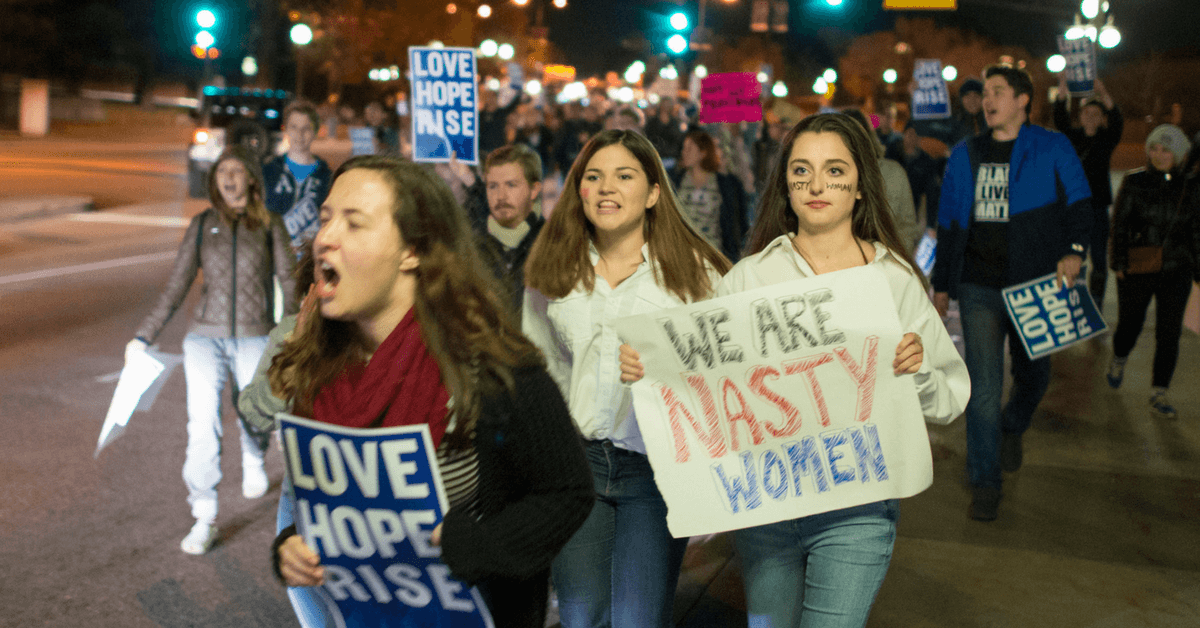
Hate crimes and openly racist, xenophobic and misogynistic rhetoric are on the rise. Those who have great wealth and privilege need to stand up and send a strong message that they won’t tolerate discrimination or violence – not from individuals and not when backed by the power of the state.

Community foundations and other local funders can play an especially important role. When the Minneapolis Foundation recently joined with Somali organizations for “Sambusa Sunday,” it made it clear that it values all members of the community and won’t tolerate racism and Islamophobia. Other community foundations could take similar actions to support those who are likely targets of oppression.

3. Fortify our nation’s civic engagement infrastructure.

Nonprofit organizations play a vitally important role in our nation. Nearly 175 years ago, French sociologist and philosopher Alexis de Tocqueville noted a uniquely American tendency towards banding together with fellow citizens and forming associations. Foundations and wealthy donors must invest consistently and robustly in this nonprofit civic infrastructure.

We need vibrant organizing groups in every community across the nation – groups that bring diverse residents together to find common ground and to hold officials accountable. We need swarms of nonprofit staff and volunteers that are registering voters, educating them on important issues, and increasing turnout among populations least likely to show up at the polls. We need strong organizations training new candidates to run for local and state office, especially from historically underrepresented populations.

These groups need steady funding year in and year out, not just an influx of cash during elections.

4. Collaborate with other donors who share your values.

No donor, no matter how wealthy, can do this alone. We’ll go farther when we support and encourage each other, and hold one another accountable.

Donors and foundations can look to the Democracy Alliance, Solidaire, Women Donors Network, Neighborhood Funders Group, Grantmakers in Health, Funders Committee for Civic Participation, Resource Generation and many other groups for the thought leadership and community-building that will be needed to sustain us.

5. Lead with love

As the Rev. Dr. Martin Luther King, Jr. noted: “Darkness cannot drive out darkness; only light can do that. Hate cannot drive out hate; only love can do that.”

The way forward is through love of humankind – the bedrock definition of philanthropy. Our nation needs foundations and wealthy individuals to be part of the resistance. It’s time to get busy.

Aaron Dorfman is president and CEO of the National Committee for Responsive Philanthropy (NCRP). Follow @NCRP on Twitter.

Image by Fibonacci Blue, used under Creative Commons license. 

When I learned that this week is #SugarAwarenessWeek I immediately recalled The Bigger Picture, a collaboration of Youth Speaks and UCSF Center for Vulnerable Populations that engages teens in storytelling to end Type 2 diabetes in young people. I saw a presentation about this groundbreaking effort at the 2016 Grantmakers in Health conference. Here are some of the startling facts shared by The Bigger Picture:

  • Fifty years ago, the average American consumed about 20 pounds of sugar and corn sweetener in a year. That number has risen to almost 130 pounds.
  • The food and beverage industry spends almost $12 billion a year ($1 million every hour of everyday) targeting young people to buy unhealthy food and drinks.
  • One in three youth overall are projected to contract Type 2 diabetes in their lifetime – unless we do something about it.

The Bigger Picture’s youth activist videographers offer dark humor and serious reflection around the role of sugar and unhealthy food in their homes and communities, and those who peddle such products. One that has stayed with me is Pushin’ Weight, which draws a bold analogy between sugar and other addictive powdery white substances.

As our society grapples with the crisis of addiction to illegal substances, we rarely acknowledge that legal “foods” containing unhealthy sugars and fats are being marketed heavily to young people every day.

Check out the some of the other imaginative videos, then see the Take Action page for inspiration.

I also take inspiration locally from Recovery Theater. It helps rural and small town youth experiencing addiction, depression or other challenges to build resilience and community through theater arts. The program is supported by foundations, businesses and individual donors.

If you are a grantmaker or donor who cares about the wellbeing of children and youth, how do you engage youth in promoting wellness? What role can spoken word, theater, video and other arts play in community education and youth leadership development?

Join the conversation in the comments section below and on Twitter!

Lisa Ranghelli is senior director of assessment and special projects at the National Committee for Responsive Philanthropy. She promotes grantmaking that advances health equity. You can find her on Twitter @lisa_rang.

In 2016, we added 80 new posts to NCRP’s blog. Below are the 10 most popular posts during the past 12 months. Thank you to all of our excellent contributors and our readers for helping us keep a close eye on philanthropy! Stay tuned for more exciting posts from staff and guest contributors in 2017!

10. Local foundation provides surprising support for right-wing campaign

Whiskers isn’t the only one who was surprised to learn about the unexpected contributions to the radical right-wing agenda by the M. J. Murdock Charitable Trust, which NCRP Senior Fellow and Director of Public Policy Dan Petegorsky detailed in this post from March.

9. Farewell to Niki Jagpal

In May, NCRP President & CEO Aaron Dorfman authored this tribute to Niki Jagpal, former NCRP senior director of research and policy, who moved on from NCRP in 2016.

8. Community foundations as catalysts for community-led change

PT Partners Program Director Kate Kelly, M.S.W., explained how Fairfield County’s Community Foundation is fostering change that is more responsive to the needs of its residents in this popular post from March.

7. “The Self-Help Myth” tells an important story about philanthropy

In this post from January, Craig McGarvey, a former foundation program officer, reviewed The Self-Help Myth: How Philanthropy Fails to Alleviate Poverty by Erica Kohl-Arenas, assistant professor of nonprofit management at The New School.

6. Let’s talk about race, baby

NCRP Senior Associate for Learning and Engagement Caitlin Duffy called on foundations to use explicit racial equity language in their work in this post from mid-May.

5. Rethinking the funding equation: Can general operating support become the new normal?

In this February repost from the National Center for Family Philanthropy’s blog, Jennifer Teunon, executive director of the Medina Foundation, asked this question to encourage philanthropy to increase unrestricted grants.

4. Three steps foundations should take to address racial equity

After foundation leaders expressed outrage over the police shooting deaths of Philando Castile and Alton Sterling in July, NCRP Senior Associate for Learning and Engagement Ben Barge detailed how grantmakers can back up their words with action.

3. Dear white folks in philanthropy: My “Miley, what’s good?” moment

NCRP Senior Associate for Learning and Engagement Caitlin Duffy makes her second appearance on the list with this post from September, describing her learning journey after experiencing discomfort with Black rage.

2. Place-based philanthropy is people-powered

In one of our first posts of 2016 (and the most popular post of the first six months of the year), Laura Zabel, executive director of Minnesota nonprofit Springboard for the Arts, provided five tips for how foundations can build leadership and relationship capacity in the communities they serve.

1. The email that changed everything

In September, Alissa Hauser, executive director of The Pollination Project, told the story of how her foundation developed an Applicant Bill of Rights after receiving a critical email from a grant applicant.

Peter Haldis is NCRP’s senior associate for communications. Follow @NCRP on Twitter.

Images by labusa, Michelle Tribe, Kevin Jump, Marc Wathleu, Fibonacci Blue and eflon. Used under Creative Commons license.
Forty people sit in a circle. Most are residents of Crown Heights, a dynamic, culturally rich neighborhood in the heart of Brooklyn that is too often defined by one fateful week in 1992 when racial tensions exploded and the community erupted into three days of violence.

On that Sunday afternoon in September, the spectrum of people who came together included a young Jewish man who had moved to the neighborhood just a month before and an African American woman who has lived there for sixty years. All were there to answer the key question, “What is our shared vision for Crown Heights?”

Over the next three hours, they built community, talked about moments that made them proud to live in in their neighborhood and named the challenges they saw preventing everyone who lives in Crown Heights from thriving. Last, suspending skepticism, they imagined new solutions.

This is Brooklyn Community Foundation’s new Neighborhood Strength model at work.

Neighborhood Strength is a resident-led investment program that brings community members together at the neighborhood-level to identify, and direct funding to, solutions that target significant local challenges.

We chose to start this work in Crown Heights, where we moved our offices in 2014. Crown Heights is one of Brooklyn’s largest communities of color, home to Weeksville, the first free Black community in New York State, and to thousands of immigrants from every corner of the Caribbean. It’s also home to the central headquarters of the Chabad-Lubavitch Hasidic movement. More recently, with rapid real estate development surging throughout the neighborhood, Crown Heights has become ground-zero for Brooklyn’s struggles with gentrification and displacement.

As a neighborhood undergoing rapid change in the face of long-standing structural issues and a unique demographic landscape, Crown Heights presented us with an opportunity to build our resident-led investment work in a place that could lead to a new model for communities across Brooklyn.

Neighborhood Strength began in 2015, steered by a small advisory council of local residents, nonprofit leaders and small business owners who collectively identified four challenges – tenants’ rights, policing, youth opportunities and cross-cultural relations – and structured an RFP to support projects led by residents and local nonprofits. The council distributed $100,000 through 12 grants ranging from $5000 to $15,000.

As the foundation contemplated the next phase of Neighborhood Strength, we pushed ourselves to think beyond the limits of traditional grantmaking and ways we could create a much larger, lasting impact. In 2016, we changed our approach to focus on including the voices of many more residents to dramatically affect one key challenge.

The new model is built around a creative inquiry approach grounded in the pedagogical principles of “design thinking.” Design thinking challenges participants to reframe problems as open-ended questions for exploration. The process includes three stages of engagement:

Neighborhood Landscape Analysis: Demographic data, current/future trends and interviews with key community stakeholders

Neighborhood Visioning Sessions: A three-hour process that includes community building, identifying key challenges and a rapid ideation session in small groups to generate solutions to those challenges.

Advisory Council Working Sessions: The final stage presents the ideas generated at the visioning sessions to an expanded Advisory Council of long time community leaders, residents, business owners, community organizers and block association members.

The Neighborhood Visioning Sessions have been the cornerstone of this strategy. Over the course of this fall, we hosted three sessions open to all Crown Heights residents and people who work in Crown Heights. Each visioning session was held in the neighborhood at a community nonprofit and was thoughtfully constructed to minimize power dynamics and create authentic community and conversation.

We intentionally hosted the visioning sessions in different locations within the community, instead than hosting them at the foundation offices, to strengthen a sense of community ownership. Also, staff did not attend the sessions to allow for the most honest conversations amongst participants, knowing that a foundation presence can silt or sometimes silence more candid conversation.

One of the things that we did not anticipate was the way that the neighborhood visioning sessions would inspire people to form their own groups and develop new projects. After attending the first visioning session and working in a small group around solutions to public space, a participant decided to develop an online network for sharing resources and now she’s a member of our advisory council. Another participant decided to begin hosting monthly dialogues in her café.

Over the course of the three sessions, each attended by an average of 30-35 people, a number of themes came up again and again:

  • A need for more effective communication funnel ensuring that more people know when community events are happening.
  • A way to acculturate new residents to the social norms of the neighborhood. There was an emphasis on things like saying hello to your neighbors and learning the history of the community. This seem to be tied to a desire to preserve cultural heritage in the neighborhood.
  • A sense that much of the new development in the neighborhood did not reflect the culture and history of the community, which created a sense that people were not welcome and did not belong in the new eateries and shops.
  • A desire for shared public space that is welcoming to everyone, aesthetically in tune with the history and culture of the community. A space that could be used for a range of purposes like resource exchanges, a marketplace for small businesses and artisans, workshops and community health services.

Three “big solutions” emerged from these sessions (public health, public space and small business development) that is underpinned by the need for cooperation and self-determination.

This month and next, we enter the final phase of this work: intense discussions among members of the Advisory Council about the dominant themes and the ideas.

In two months, we expect to present a plan to Brooklyn Community Foundation’s board of directors to initiative a new funding commitment in one of these areas that will hopefully spark even greater community engagement and leadership opportunities as we move to make a vision for a stronger Crown Heights a reality.

Kaberi Banerjee Murthy is vice president of programs at Brooklyn Community Foundation. Piper Anderson is the founder and chief creative strategist at Create Forward and designed and leads the Neighborhood Strength initiative. Follow @BklynFoundation and @PiperAnderson1 on Twitter.

Is philanthropy finally getting serious about racial equity and racial justice? I don’t know. But I’m pleased with some of the sustained conversation that has been happening, and we are delighted to keep fanning the flames with the summer issue of Responsive Philanthropy.

In “Tackling racial justice: Why, how and so what?”, Tamara Copeland, president and CEO of the Washington Regional Association of Grantmakers, writes about association’s journey in confronting the issue of race and racial justice among its members. Others in the sector who want to address structural racism in their own institutions can learn much from WRAG’s “Putting Racism on the Table.”

Next, check out “For Surdna Foundation, communities define their futures,” by William Cordery, a program officer for Surdna’s Strong Local Economies program. He shares how the foundation is supporting efforts to grow locally owned businesses, create quality jobs and improve jobs held by low-wage workers to boost economic opportunities for low-income communities, people of color, women and immigrants.

Most foundations want to know the impact of their grantmaking on causes and communities they care about. In “Building a community-centered evaluation program,” Robert Sturm and Lee Francis IV of Indigenous Methods takes us through the development of an evaluation framework for Notah Begay III Foundation’s initiative to reduce obesity and Type 2 diabetes among Native American children. They highlight why it’s important that evaluation frameworks and processes are informed by the context and culture of communities where the work is taking place.

Finally, our Member Spotlight features Public Welfare Foundation, a D.C.-based national grantmaker that seeks to advance justice and opportunity for people in need through programs on criminal justice, juvenile justice, workers’ rights and civil legal aid.

We’d love to hear your thoughts about these and articles from previous editions of Responsive Philanthropy. Send your comments to community@ncrp.org or connect with us on Twitter (@ncrp) and Facebook (/NCRPCommunity).

Aaron Dorfman is executive director of the National Committee for Responsive Philanthropy (NCRP). Follow @NCRP on Twitter.

One of the more persistent dilemmas facing funders and nonprofits is how to achieve the right balance between funding intended to achieve specific objectives and funding to build, sustain and grow organizations. The California Civic Participation Funders collaborative (CCPF) has found that balance.

Mission-driven organizations are built for a purpose, and attract both people and money devoted to specific objectives aligned with that purpose. High profile campaigns can attract more people and resources, but they can also drain a group’s resources, leaving it poorly positioned to launch future campaigns. That’s why over and above strong campaigns, dynamic nonprofits also pay close attention to recruiting and training new staff and leaders; continually assessing their ever-changing economic, social and political environment; learning how to use new technologies, etc.

CCPF’s recent report, Bolder Together2: Building Grassroots Movement for Change, describes how this collaborative funding initiative arrived at its both/and approach. It’s especially timely as we enter the final stages of the 2016 presidential election, where so much focus is on near-term outcomes – outcomes that are vital, and that can be pursued in ways that help to achieve longer-term goals as well.

As the report explains, “Civic participation funders often focus exclusively on supporting the day-to-day work of organizing, voter mobilization and outreach – and sometimes only in the months and weeks leading up to the election. Predictably, the focus is on supporting organizations to get results, and the sooner the better. CCPF, however, evolved in its approach and now supports core civic participation activities while also investing to strengthen the capacity of leaders, organizations and movements to do this work over the long haul.”

Dr. Hahrie Han, who has studied how organizations successfully develop activists and leaders over time, recommends a similar approach in a recent paper presented to the Ford Foundation. She calls it the Profits+Assets framework: figuring out “how to fight for immediate wins (profits) in a way that simultaneously builds longer-term capacity (assets).”

That longer-term capacity is vital for preserving the wins that campaigns achieve. As Han explains, organizations need the capacity to mobilize their constituencies not on a one-off basis, but consistently – to “develop what scholars call a ‘recurrent reputation’ for consistently being able to move a constituency.” This reputation earns them the political capital they need not only to win the changes they seek through their campaigns, but to defend and preserve those changes in the face of inevitable backlash.

“So often,” Han notes, “success is measured in transactional terms that focus only on whether voters turn out, candidates win, or policies pass. Long-term success depends not only on if those outcomes are achieved, but how those outcomes are achieved. Are votes gained, elections won, and policies passed in ways that build the strategic capacity of organizational leaders, that strengthen the relationship between the organization and its constituency, and that translate those relationships into elite lobbying power?”

The director of an organization in a perennial electoral swing state, and whose funding often resembles more a contract than a grant, recently described to me how the intense pressure to meet targets during a scaled-up campaign was overwhelming for the organization: it left burned out staff and leaders, and badly frayed relationships that took years to mend. What’s more, if local groups are perceived to be disproportionately tied to externally driven agendas, this can undermine rather than bolster local support: they risk being perceived simply as contractors – especially in states where people are inherently suspicious of outsiders.

By contrast, a CCPF grantee spoke of the synergy between funders and nonprofits that has developed through a highly collaborative, both/and approach: The unique partnership with CCPF has enabled the grantee organization both to set higher campaign targets and to build the organization so it can achieve those targets in ways that build and strengthen rather than deplete organizational assets.

As Connie Galambos Malloy of the James Irvine Foundation, one of the CCPF collaborative’s members, explains: “We have made organizational development and leadership development important priorities … We are supporting groups to integrate civic engagement into their entire organization and build their leadership and organizational strengths in ways that contribute directly to better outcomes in organizing and electoral and advocacy work.”

Here are some of CCPF’s key lessons learned:

  • Encourage Collaboration over Competition.
    Funder practices too often force groups to compete for scarce dollars. CCPF has settled on a different approach — facilitating and incentivizing collaboration — that is delivering promising results.
  • Cover More Bases to Get to Scale.
    Instead of identifying one or two groups to lead local efforts, CCPF supports individual organizations to do their work more effectively while creating the table where they can collaborate, coordinate and “cut turf.”
  • Let Local Groups Lead with Their Issues, Not Yours.
    CCPF has found success in allowing priorities and strategies to emerge from local groups, with funders at the table to co- design solutions.
  • Invest in Long-Term Movement Leadership.
    Over time, CCPF has made an increased commitment to supporting local groups to strengthen their capacity to lead in a movement context — and it has paid off in stronger collaboratives and real wins.

Dan Petegorsky is senior fellow at the National Committee for Responsive Philanthropy (NCRP). Follow @ncrp on Twitter.

In the first half of 2016, we added 49 new posts to NCRP’s blog. Below are the 10 most popular posts during the past six months. Thank you to all of our excellent contributors and our readers for helping us keep a close eye on philanthropy! Stay tuned for more exciting posts from staff and guest contributors during the rest of 2016!

10. Bridging the Rural and Urban Divide to End Mass Incarceration

Nick Szuberla, executive director and co-founder of Working Narratives, discussed how mass incarceration and other criminal justice issues present an opportunity to unite rural and urban communities to drive for change. 

9. Why Funders Shouldn’t Overlook Place-Based Grantmaking

Tahirih Ziegler, executive director of Detroit LISC, wrote about how foundation investment in communities is a prime strategy for long-term success.

8. Philanthropy’s Young Leaders Working Toward the Future

Hill-Snowdon Foundation Executive Director Nat Chioke Williams, Ph.D., explored the future for young philanthropic leaders, like those on The Chronicle of Philanthropy‘s 40 Under 40 list.

7. Community Foundations as Catalysts for Community-Led Change

PT Partners Program Director Kate Kelly, M.S.W., explained how Fairfield County’s Community Foundation is fostering change that is more responsive to the needs of its residents.

6. Local Foundation Provides Surprising Support for Right-Wing Campaign

NCRP Senior Fellow Dan Petegorsky looked at the M. J. Murdock Charitable Trust, an unexpected contributor to radical right-wing groups.

5. Let’s Talk About Race, Baby

NCRP Project Associate Caitlin Duffy called on foundations to use explicit racial equity language in their work.

4. Farewell to Niki Jagpal

NCRP Executive Director Aaron Dorfman authored a tribute to Niki Jagpal, former NCRP senior director of research and policy.

3. “The Self-Help Myth” Tells an Important Story About Philanthropy

Craig McGarvey, a former foundation program officer, reviewed Erica Kohl-Arenas’s book The Self-Help Myth: How Philanthropy Fails to Alleviate Poverty.

2. Rethinking the Funding Equation: Can General Operating Support Become the New Normal?

Jennifer Teunon, executive director of the Medina Foundation, asked this question to encourage philanthropy to increase unrestricted grants.

1. Place-Based Philanthropy Is People-Powered

Laura Zabel, executive director of Minnesota nonprofit Springboard for the Arts, provided five tips for how foundations can build leadership and relationship capacity in the communities they serve.

Do you have a favorite blog post from 2016? Share in comments or send us a tweet @NCRP.

Peter Haldis is a communications associate at NCRP.

Image by Sam Churchill, modified under Creative Commons license.

Editor’s note: NCRP Senior Research and Policy Associate Ryan Schlegel and Field Associate Ben Barge recently visited the Alabama Black Belt as part of a listening tour hosted by Grantmakers for Southern Progress and the Black Belt Community Foundation. This is the third in a series of blog posts from activists, organizers and community leaders they met during their trip. NCRP strives to elevate the voices of grantees and potential grantees in conversations about philanthropy. This blog series will address topics relevant to the work underway for social, economic, racial and environmental justice in the Black Belt from the perspective of the people doing that work.

While  the  1965  Voting  Rights  Movement  has  finally  received  some  national  prominence, following visits by President Clinton, President Obama, Oprah Winfrey and the cast of the movie, “Selma,” the history of slavery is a fading memory of a past that most Americans prefer to forget.

Last year, a Canadian couple entered the Ancient African Enslavement & Civil War Museum in Selma, Alabama, with visible concern and anticipation. We were told by a white southerner that slavery wasn’t so bad in the South, the young white woman said. We came to the museum to learn more about what is referred to as a peculiar institution, she continued.

They, like most African Americans of all ages and races, were not aware of Frederick Douglass’s description of slavery in America. Douglass described slavery in America as “crimes which would disgrace a nation of savages. There is not a nation on earth guilty of practices more shocking and bloody than the people of the United States at this very hour.”

The museum experience begins in ancient Africa, with the builders of pyramids, remarkable structures and cultural treasures. It does not tell this remarkable story of violence and survival, it places the visitors in the story through song, visuals and interactive engagement. Totally unfunded, the museum relies on the creativity of local artists, storytellers and musicians to place the visitor in the heart of the story.

A makeshift slave ship, Door of No Return, auction blocks, and plantation and rebellion scenes incite the imagination and move the human spirit to find the truth without the bitter pill of hate and retribution.

The latest exhibit, KKK, Kids Killing Kids, challenges that same spirit to connect the dots to ponder the reasons for the escalating youth violence in the African American community. Five people were killed in five weeks in this small historic city of 19,000 people. In spite of Selma’s national prominence, it remains traumatized with poverty and miseducation.

The stories in the Hall of Resistance at the museum are captured in the “Resistance” song that is a creative reminder to youth to resist drugs, alcohol, violence and other vices that can limit the human potential. The song is one of the many songs in our self-published book, “There’s A River Flowing.” We partnered with the Perry County School System to bring the history of resistance into the classroom through music and the arts. The songbook was written with the help of students to guide the infusion of that history into the classroom. More than 50 years after the U.S. Supreme Court considered in Brown v. Board of Education the white doll/black doll experience’s adverse impact on Black children in segregated schools, no one thinks the black doll is pretty or smart, not even the Black children.

Our history song book allows the museum to go beyond its walls on Water Avenue in view of the Edmund Pettus Bridge. The bridge reached international attention when peaceful marchers were brutally attacked in 1965 on the bridge named to honor Edmund Pettus, a Grand Dragon of the Ku Klux Klan. On the east side of the bridge, our sister museum, the National Voting Rights Museum, with stories of people who resisted violence and a century of disenfranchisement to march until victory is won.

The longevity of the Museum depends on our ability to generate a stable flow of revenue through a marketing plan that attracts an increased flow of tourists, along with other revenue sources, such as the mass distribution and sale of “There’s A River Flowing.” Although we own the building free and clear, we need funds for staff and building repairs.

The needs of the museum are very basic at this time. We struggle to pay utilities and the $1,000 a month stipend to our extraordinarily committed director, Yomi Goodall. Under her leadership, the museum has attracted more tours, but the low admission cost does not provide fees to cover basics. The heating and air system was vandalized and there is insufficient resources to repair or replace the system and to make other needed repairs. We also need additional staff, including a bookkeeper and a marketing person.

Annie Pearl Avery, an original member of the Student Nonviolent Coordinating Committee who worked with Dr. Martin Luther King, Bob Moses, James Foreman and other Civil Rights legends, is a special attraction at the museum. She works under a senior citizens program that pays her the minimum wage. Funds are needed to pay Ms. Avery and Ms. Goodall a decent salary. A plan and space are available to create the Underground Railroad, which will parallel the historical railroad with the railroad needed for our youth to escape from crime and mediocracy.

The museum could not exist without the extraordinary commitment of its volunteers and underpaid staff. We plan, not to just exist, but to grow and prosper. It is the only museum of its kind in the South. We must survive. We must prosper for our children and generations to come. From the stories of the past, lessons can be learned to build a better future.

We own our boldness, our creativity and our determination to use the museum to tell stories that can help address the low self-esteem of so many youth who do not know their powers to change their lives and the conditions of their families and communities. “There’s a river and it’s telling me, I’m somebody.” That’s the song we want them to sing every day of their lives.

The Canadian couple left the museum with a new truth and a renewed spirit. We invite the world into our world, a world that can help transform lives and the human spirit.

Faya Rose Touré is an attorney and civil rights activist in Selma. Follow @NCRP on Twitter.

Image by Mike Norton, modified under Creative Commons license.

Traditionally, community foundations work to create change by making grants to local nonprofits, advocacy groups and other organizations. This fulfills the valuable but limited role of purveying monetary support. Seldom, if ever, do they work directly with the communities they serve to create change.

A new breed of funders is showing how, by serving in yet another role, they can foster change that is more comprehensive, more responsive to residents’ needs and, hopefully, more enduring. This involves reaching into the very roots of the community they serve and empowering its people.

That’s the approach that Fairfield County’s Community Foundation, based in southwest Connecticut, is taking with the PT Partners initiative, a model for engaging and training public housing residents to lead change in their neighborhoods.

PT Partners is housed at PT Barnum Apartments, a 360-unit public housing development in Bridgeport, Conn., surrounded by a notorious brownfield site and, incongruously, a yacht club. Long known for crime and poverty, PT Barnum is home to more than 1,100 children and adults. The goal of PT Partners is to make PT Barnum a safer, healthier and overall better home for its residents – to transform it into a community defined by equity, opportunity and empowerment.

Residents are the majority stakeholder owners of the PT Partners initiative and are responsible for driving community change. After all, they are the experts on their community and its needs and desires. But they need support to harness their own power.

With a Partners in Progress grant from The Citi Foundation and The Low Income Investment Fund, PT Partners provided civic engagement training to about a dozen of our residents, all women and mostly single mothers. The Bridgeport Child Advocacy Coalition also conducted a three-part training, a sort of “Civic Engagement 101” that covered creating an advocacy statement and using it to get the attention of elected officials, meeting with elected officials and giving testimony.

It was amazing to see how these women found their voices – and used them. For example, at a meeting with the mayor about a proposal to replace the nearby brownfield with a hydroponic greenhouse, a resident asked if he could help make recycling bins available to residents. Newly empowered residents are also learning how to work as a team. Together they’re growing their group of advocates, bringing in more women who previously were fence-sitters.

Education is an important issue for the group. Bridgeport Child Advocacy Coalition has a grant from the Bridgeport Board of Education to provide social and emotional wellness training for parents and school faculty members, as well as support through our Partners in Progress/Citi Foundation grant to extend the civic engagement trainings to include a “train the trainer” workshop for PT resident participants.

In addition, PT residents have been organizing to inform the creation of a new magnet academy that will serve PT Barnum elementary and middle school children. Since the Parent Education Organizing initiative launched last summer, the number of parents engaged with planning the new school has doubled compared to earlier levels of parental involvement. With parent support and direction, the Geraldine Claytor Magnet Academy will be a critical asset to the community, built on student-driven learning and a Science-Technology, Engineering, Arts and Math (STEAM) curriculum.

With support from Fairfield County’s Community Foundation, residents are also working to rid their community of the noxious brownfield next door and replace it with a state-of-the-art hydroponic greenhouse. If the greenhouse project goes through, it will bring both fresh produce and good jobs to the community, both of which are currently scarce, and eliminate a toxic blight.

The way we see it, this is just the beginning of a community transformation led by the community itself. Too many programs are done to communities and not for them. Grantmakers must hold themselves accountable to the residents of those communities if they want their work to benefit them sustainably.

Community-led change represents a new paradigm for community foundations. It requires us to think and work differently. With this in mind, Fairfield County’s Community Foundation has become more than a grantmaker; it’s now a catalyst for community-led change. I urge all foundations that want to create equity and opportunity in their communities to step into this very exciting and rewarding role.

Kate Kelly, M.S.W., is project director of PT Partners, an initiative housed at Fairfield County’s Community Foundation in Connecticut.

Image by Kevin Jump adapted under CC license.

The Latino population of the United States has skyrocketed in the last four decades, from under 10 million to over 50 million. Latino voter registration, unfortunately, has not, as noted by Pew Research Center. The historic gap in electoral participation among Latinos in the U.S. has proved a very sticky problem to solve. And according to experts including Latino Decisions, it amounts to a missed opportunity for progressive candidates and issues at the ballot box.

Organizations with 501(c)(4) status can engage in unlimited lobbying, and their investments in electoral advocacy and partisan voter mobilization efforts are crucial to progressive victories on Election Day. As the 2016 national elections draws near, political organizations, especially those that represent the interests of historically underrepresented minorities like Latinos, may fight for the limited 501(c)(4) funding available to them. But it is just as crucial, especially during a feverish election season, that foundations remember the importance of non-electoral infrastructure-building investments in civic and electoral participation. While there are some restrictions on lobbying, 501(c)(3) organizations have many avenues to support advocacy and civic engagement. Linking immigrants to citizenship, linking citizens to the electoral process and conducting issue education campaigns are all lawful 501(c)(3) activities, and without 501(c)(3) support for power-building efforts in marginalized communities, the impact of headline-grabbing 501(c)(4) money will always be limited.

Foundations have an important role to play in building the grassroots mechanisms that will secure lasting power for marginalized communities, and many leading progressive foundations have recognized this. According to Foundation Center data, since 2006, U.S. foundations have given just over $50 million to build civic and electoral participation among Latinos. (See chart below.)

LatinoCivicParticipation

Because of limits in data gathering, these numbers represent just a slice of the funding for civic and electoral participation among Latinos. However, a few troubling trends stand out. Notably, this amount comprises just 6 percent of the total amount these foundations gave toward civic and electoral participation. Given that many Latinos face structural barriers to full democratic participation, and that people who are Hispanic or Latino make up over 17 percent of the country’s population, this amount is disappointing. (The breakdown is just as paltry for civic and electoral participation funding among African Americans.)                                                                        (Click to enlarge.)

The Latino civic participation funding ecosystem is also worryingly top-heavy: the Ford Foundation was responsible for 40 percent of the total given since 2006. Ford’s efforts in this area have been herculean, but they won’t be able to increase funding to an appropriate level (given the need and the population size) on their own. Even if every other funder listed had doubled their investments in this time period, only 9 percent of the total funding for civic participation would have been for work among Latinos.

These foundations’ work is commendable, but to really advance structural power for Latino voters, more foundations need to be involved. Election-season headlines about huge investments by 501(c)(4) organizations ought to send a clear message to 501(c)(3) organizations: Foundation influence is needed to balance the scales against regressive campaigns that hurt already marginalized communities and to build long-term support for progressive work to empower those communities. The scramble for 501(c)(4) money is part of a cyclical process that will no doubt lead to important electoral outcomes for marginalized communities – and the nation – but 501(c)(3) foundations need to keep their eyes on the ball, so to speak. Their role in the democratic process is just as important.

Foundations committed to long-term systemic change need to bear in mind four things as they consider investing in civic and electoral participation.

  1. Understand your impact – Step back and take a long-term, systemic look at the issues you care about. How realistic are your goals without the backstop of electoral power? How sustainable? Understand the limits of justice without power.
  2. Learn from your peers – Begin conversations with funders already working in the space. Ask them to share their successes and their failures, and incorporate their knowledge into your work.
  3. Be bold – Accept the risk that comes with civic and electoral work. Molding behavior is different than delivering a service. It follows that the outcomes and progress indicators you measure need to be different, and your tolerance for risk needs to be different too. Know that boldness with humility is the best approach.
  4. Know the law – Understand what IRS regulations empower you to do when it comes to the democratic process. Know the limits to 501(c)(3) behavior, and fund right up to those limits in order to be most effective. The regulations do allow for impactful work if you work to the fullest extent allowed.

For more information about how philanthropy can help build a healthy democracy, especially to benefit underserved communities, check out the new, civic-engagement focused issue of Responsive Philanthropy.

Ryan Schlegel is research and policy associate at the National Committee for Responsive Philanthropy (NCRP). Follow @NCRP on Twitter. He thanks NCRP Senior Fellow Dan Petegorsky for his help on this post.

CC image by Freakotography.


Always stay up-to-date.

Sign up for

our Newsletter

Name(Required)

Follow Us
  • Travel Policy
  • Whistleblower Policy
  • Sign-on Letters
  • Financials
  • Privacy Policy
  • Terms of Use
  • Conflict of Interest Policy
Headquartered In:
Washington, D.C.
Contact us
info@ncrp.org 202-387-9177
Donate
© 2026 NCRP
Nonprofit marketing agency by Elevation Web