Contact us
  • About us
  • Our Work
  • Resource Center
  • News & Insights
  • Donate
About us
About us
  • Our Mission & History
  • Strategic Approach
  • Our Supporters
  • Our Team
  • Careers & Internships
Our Work
  • Supporting Movements
    • Movement Investment Project
    • Reproductive Access and Gendered Violence Movement Investment Project
    • Movement Investment: FAQs & Resources
  • Setting Standards
    • Power Moves
    • NCRP Impact Awards
    • Data Advocacy
  • Responding to the Moment
    • The Regressive Philanthropy Initiative
    • Philanthropy & Reparations
    • Resisting Billionaire Climate Solutions
Our Work
Resource Center
Resource Center
  • Full Resource Library
News & Insights
News & Insights
  • Blog
  • NCRP in the News
  • Press Release
Donate
Donate

Asking the right questions: How philanthropy can make a difference in challenging times

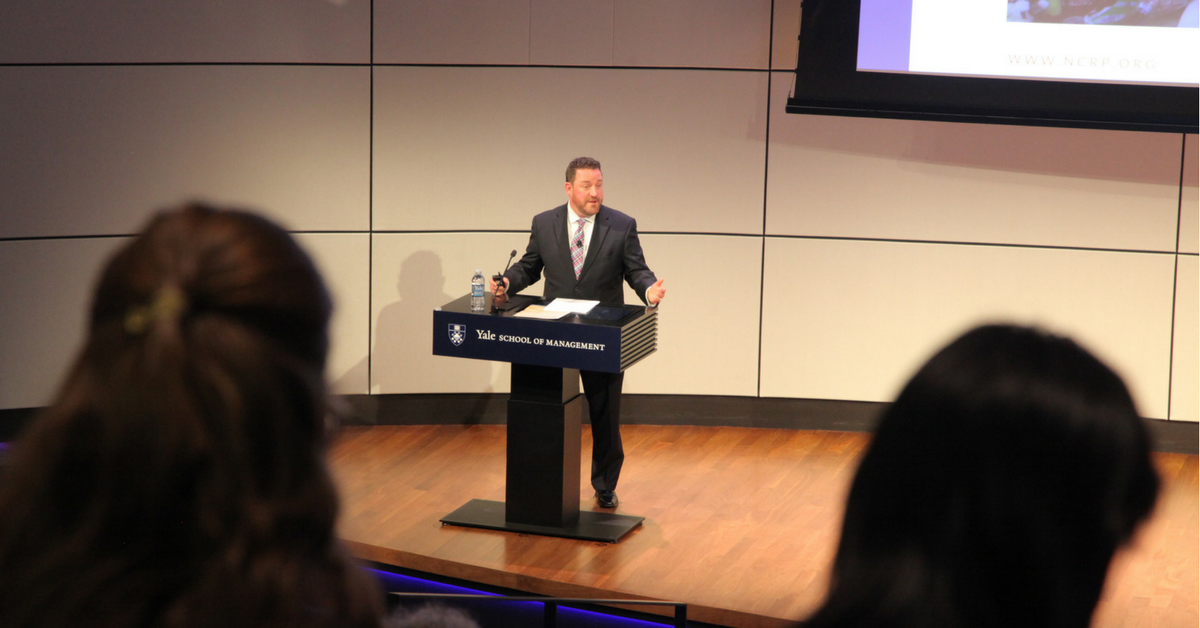
NCRP president and CEO Aaron Dorfman delivered the closing keynote at the Yale Philanthropy Conference on February 23, 2018. Brief excerpts from his remarks are below. Text of the full speech can be found here. The slides are available here.

You are all here, we are all here, because we want to use our philanthropy to make the world a better place.

If we’re going to be successful in doing that, we have got to ask ourselves the right questions. These are challenging times in which we live. By asking ourselves the right questions, the hard questions, we can make a real difference with our philanthropy on issues that truly matter. I’m going to put forward five questions today that I think will help us be effective in these challenging times.

1. Are we dreaming big enough?

In his famous speech at the March on Washington, Rev. Dr. Martin Luther King, Jr. did not come forward and say, “I have a realistic plan with measurable outcomes and clear benchmarks.” No! He shared his dream.

The truth is: There are no limits to what philanthropy can accomplish in this world if we dream big and take risks.

“That’s ridiculous,” some of you may be thinking right now. “Philanthropic dollars are a drop in the bucket. The best we can hope to do is to fund effective programs and improve as many lives as we can.”

Let me tell you, that kind of small-ball thinking is horsepucky, and we need to abandon it if we want to truly transform and improve our nation and the world.

2. Are we doing enough to intentionally benefit and empower vulnerable and marginalized communities?

There is a moral reason to ask yourself this question and also a pragmatic one.

The moral argument is pretty obvious. Those who are fortunate have an obligation to give back, to help those who are not as fortunate. Every faith tradition has some version of this principle.

The pragmatic argument is that it works. With most ambitious philanthropic visions, you won’t be able to succeed in accomplishing your goals if you don’t intentionally benefit and empower underserved communities.
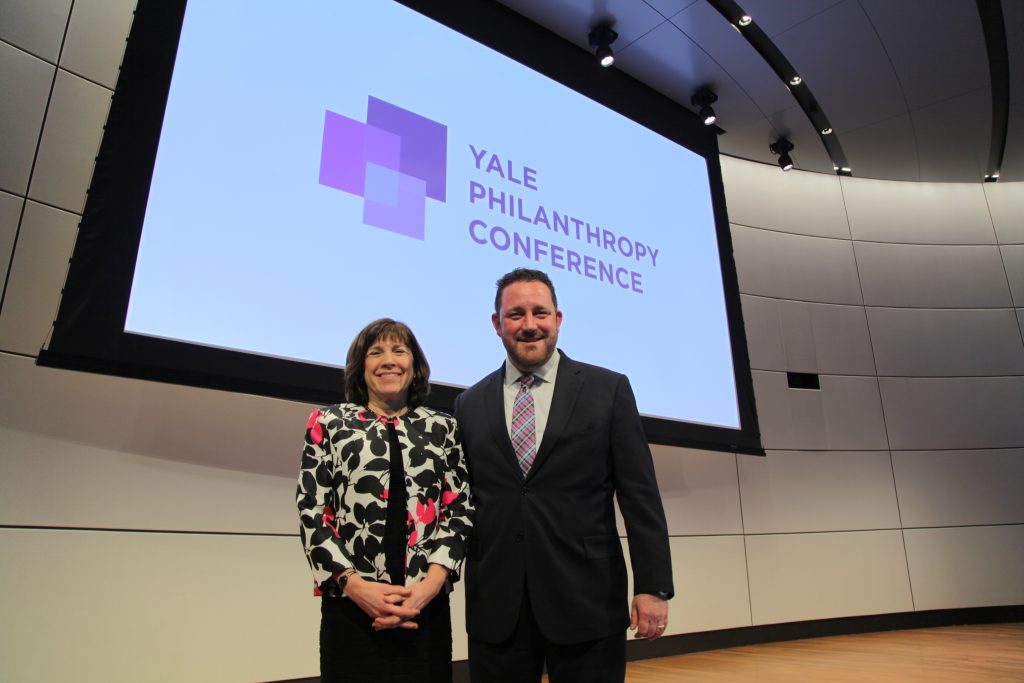
NCRP President and CEO Aaron Dorfman and Prosperity Now President Andrea Levere at Yale Philanthropy Conference 2018.

Prosperity Now President Andrea Levere and NCRP President and CEO Aaron Dorfman at Yale Philanthropy Conference 2018.

3. Is our privilege making us overly cautious?

Being privileged isn’t always an advantage in philanthropy. Your privilege can create blind spots, make you unnecessarily cautious and make it harder for you to achieve your goals.

Implicit bias, born of privilege, might make you not hire the best program officer. It might make you miss out on someone who would be a great new board member for your foundation. It might make you invest in the “proven, reliable” organization rather than in the smaller group led by people of color that you decide “doesn’t have the capacity” to do the work.

We see this all the time in our research at NCRP. Foundations aren’t investing the South, or in rural communities, or in communities of color, because they don’t think there is capacity there. But the truth is, there is a ton of capacity – but nonprofit capacity looks different in the South than it does here in the Acela corridor. Our privilege and our bias don’t let us see the full potential.

The good news is you can learn to compensate for your blind spots. Some of the most effective foundations do it successfully.

4. Are we giving in ways that promote the health, growth and effectiveness of our grantee partners and those they serve?

There are two essential things your grantees must have if they are going to maximize their effectiveness and impact. They have got to have sufficient unrestricted revenue, and they have to have long-term commitments.

Unrestricted general operating support allows grantees the flexibility to adapt to changing circumstances, or to invest in their own capacity.

Multi-year funding allows them to plan and to attract the best staff.

5. Are we wielding our power and all the tools at our disposal to build the world we envision?

Good philanthropy is about more than making grants. You must wield your power, too.

Yes, philanthropic funding is critically important to organizations. Yes, bold grants can catalyze transformative change. But, too many funders rely only on their grants to achieve impact, missing the opportunity to leverage the other tools at their disposal to advance their mission, values and goals.

Nonfinancial capital represents institutional and individual power that can be effectively used to influence others in order to achieve equitable, long-term change. Yet the idea of wielding power and influence can be difficult for foundations that pride themselves on being a “neutral convener.” Having a point of view that is well grounded and has moral integrity will enhance your institution’s credibility rather than tarnish it.

There are many ways foundations can exercise public leadership and wield their power responsibly and effectively.

Conclusion

These are urgent times we’re living in. It’s not hyperbole to say the future of our democracy and the planet are at stake. There is no time to waste.

We must never forget that there is no limit to what we can accomplish with good philanthropy.

And it’s going to take every one of us in this room doing our part to ensure that philanthropy plays a meaningful role in building a more fair, just and democratic society.

Aaron Dorfman is president and CEO of NCRP. Follow @NCRP on Twitter.

Photos courtesy of the Yale School of Management.

In late 2007, I was a youth organizer at the SouthWest Organizing Project in Albuquerque, New Mexico, sitting in the third row of a cold school board room anxiously awaiting my turn to speak. A few years earlier, we blocked efforts to allow school police to carry guns in schools. But in the wake of a deadly shooting on the campus of Virginia Tech just a few months earlier, the odds that we could stop a similar effort seemed stacked against us.

We did everything right, the right power mapping, the right messaging and the right messengers: students, parents and teachers. We packed the house to make sure board members understood that guns in schools might feel like the easy, quick fix, but they pose a threat to low-income students of color who need schools to be safe havens rather than places where they were increasingly in danger of being swept into a pipeline to prison.

As I watched the disengaged Albuquerque Public School Board members not even look up from their computers as students, teachers and parents passionately spoke about their concerns, I knew we were about to lose. Several of the school board members had just been elected on a platform that promised solutions other than guns on our campuses and yet they flipped their votes without batting an eye.

The pressure of the moment, post tragic school shooting, was too much to overcome. The votes came down against us. We never even had a chance. That evening as I watched the news coverage sitting next to the young people who led the campaign, my heart broke and tears ran down my face as I heard hopelessness in their voices, asking me what else they could have done. I vowed to never let young people feel so disempowered.

Ten years later, here we are again. This time a tragic event in Parkland, Florida, has led to young people capturing the heart of the nation. Their demand that the violence end has placed a national debate about gun control front and center, while young organizers fear many of the solutions offered will only further racist policies that militarize their schools and criminalize communities of color.  

For generations, youth of color have sparked movements igniting a fight for safe, healthy and just schools and communities. Often they’ve waged long-term campaigns against great odds as they watch their schools become more like prisons than environments that foster growth and learning.

As the current debate swirls around arming teachers, more armed school resource officers and more cops policing schools and communities, young organizers like those at the Power U Center for Social Change and Dream Defenders in Florida are seizing the moment. They’re meeting with Parkland students and building intersectional alliances and visionary solutions that transcend the false, quick fix of more guns.

Youth-led organizations across the country are demanding to be heard and student leaders from Marjory Stoneman Douglas High School are inspired, working toward a platform that is shared across race, class, gender and geography.

It is philanthropy’s turn to grab hold of the opportunity before us and advance the movement for a multiracial, cross-class alliance of young people standing up to demand a society free from all forms of violence. The Funders’ Collaborative on Youth Organizing calls on funders and donors to step up and into the moment. The kind of movement and leadership from young people needed now will not happen without sustained resources.

Let us not be here again in another 10 years, fighting the same bad policies and saying never again. Those of us in philanthropy must take seriously the role we have been given and find the resources to support the movement in front of us so young organizers can focus on the paramount task of transforming society.

To that end, the Funders’ Collaborative on Youth Organizing has launched The Youth for Safety and Justice Fund to help support young people of color taking action. The focus is on efforts that employ a racial justice lens and connect gun violence to other forms of systemic injustice.

Youth of color have long called to be taken seriously in social change efforts and, if the last two weeks have taught us anything, it is that young people have the strategic ability to build lasting power and create solutions that ensure safety for all.

As students walk out tomorrow we cannot let them walk alone and allow this to only be one moment. We must invest in organized youth efforts to cultivate lasting change. To get to scale and sustain their work, they need the support of philanthropy. The moment is now. Resources must follow.

Mónica Córdova is deputy director of the Funders’ Collaborative on Youth Organizing. For more information on how to get involved or give to The Youth for Safety and Justice Fund, contact her at monica@fcyo.org. Follow @THE_FCYO on Twitter.

Photo courtesy of Funders’ Collaborative on Youth Organizing.

“The story of women’s struggle for equality belongs to no single feminist nor to any one organization but to the collective efforts of all who care about human rights.” – Gloria Steinem, American feminist, journalist and social political activist

The theme for this year’s International Women’s Day is #PressforProgress, words that symbolize the hope and resilience needed more than ever in our country. On March 8, this internationally recognized day will commemorate “the social, economic, cultural and political achievements of women,” a celebration predicated on a rallying call to support gender equality.

Women are the change makers in history. Studies have shown time and again that more women in the workforce is tied to a well-faring economy, a higher GDP and an overall wealthier society. Money invested in women is reflected in lower mortality rates, higher literacy rates and healthier families. Data also show that countries that have 30 percent or more female political participation are more fair and democratic nations.

Yet, women around the world continue to face discrimination and challenges that bar them from achieving their full potential. Indeed, 51 percent of the American population faces systemic gender discrimination in the most basic forms. It is important to note that women of color face the deepest and widest barriers, as systemic racism exacerbates these issues. 

Women fight every day for control over our bodies. We’re underrepresented in political office. We face social stigmas and stereotypes that cost us money, time and potential. We still earn an average of 78.3 cents to the average male’s $1. At the current speed of U.S. gender equality reform, women will finally earn equal pay in 2058. While it is unthinkable and disheartening to imagine another 40 years of such poignant gender inequality, this International Women’s Day, take a moment to celebrate the global achievements made by women in 2017.

This past year seems like a montage of inspiring women’s rights activism. Millions came together to protest sexual violence, gender discrimination and justice in the creation of a new social discourse on what it means to be a woman today.

Many of the most inspiring moments happened in the U.S. From the unprecedented #metoo movement in Hollywood, which struck a global nerve, to the collective roar of the intersectionality of women at the first annual Women’s March – the largest single-day protest in history. The She Should Run Campaign is knocking down the political boys club by encouraging more women to run for office. Still, the fight is not even close to being over.

While we stand in awe at the strength and resilience of the voices who speak out, organize and push for gender equality, are we giving enough attention to our local, quiet heroines championing gender equality?

This International Women’s Day, don’t forget about the capability and power of women with less political or celebrity sway working in small communities in our backyard. As women around the world are fighting for and, finally, gaining the spotlight to speak and challenge harmful social frameworks, the quiet voice can be the loudest.

The smallest gesture can have the biggest impact. You do not have to be a celebrity or a political figure to join in the sweeping movement. By investing in women-led grassroots organizations in the U.S, you are investing in a ripple effect that improves local communities, the region and our country.

Funders: 

  • Invest in organizations that are women-led and have grassroots initiatives.
  • Push for gender inclusiveness on your staff and board.
  • Embed a gender equality lens in your funding framework: Collect data that disaggregates different intersections of gender and racial groups to understand where your money is really going.
  • Support organizations that: influence others beliefs and actions; challenge stereotypes and biases; and forge positive visibility of women.
  • Fund policy work and community engagement, which NCRP research has found produces a $115 to $1 return-on-investment.

Beyond investing, there are many ways to get involved and leave your footprint.

Activists:

  • Challenge your community, peers and family to view their actions through a gender inclusivity framework.
  • Volunteer with a local women’s organization.
  • Educate yourself on the systemic barriers women face using resources like the American Association of University Women, U.S. Department of Labor data and Status of Women in the States.
  • Join the movement, pledge to #PressforProgress.
  • Learn what has worked to support women and the organizations that serve them.

Do not underestimate the work of a single woman. Women are mobilized, empowered and ready. The time is NOW to invest in positive social change in your community, our nation and the world!

Sophia Cole is NCRP’s learning and engagement intern. Follow @NCRP on Twitter.

Photo by Molly Adams. Used under Creative Commons license.

Many working for a fair, equitable and just future for our communities are bracing for a tough year ahead. Divisive rhetoric will continue, as will attempts to rollback progress on critical social, economic and environmental issues.

“But there’s room for hope,” says Aaron Dorfman, chief executive of the National Committee for Responsive Philanthropy (NCRP) in a letter published in the latest edition of the organization’s journal. “Hope that, with unity, hard work and passion for what is good and just, tides will turn. And hope that [donors] will step up as essential partners of that work.”

The January 2018 edition of “Responsive Philanthropy” features new articles on some of the various ways that funders can use their resources to protect democracy and help those who are underserved and marginalized.

Amplifying the impact of outrage giving

Jason Franklin, co-founder and co-chair of the Solidaire Donor Network and chair of the Proteus Fund, writes about the tremendous wave of small donations and activism in support of progressive social movements and resistance efforts. He offers five concrete ways for major donors and grantmakers to build on this momentum in the year ahead.

Learning from Emerson Collective’s ‘philanthropic recipe’ for these times

Andrea Levere, chief executive of Prosperity Now, lifts up Emerson Collective’s approach to supporting its grantees beyond the grant. She encourages other funders to provide “the right kind of capital with high-quality training and services designed to strengthen the leadership and the organization’s ability to meet its goals on its own terms.”

Confronting the evidence: Addressing racial disparity in environmental grantmaking

In 2014, a landmark report forced the mainstream environmental movement to recognize how it has been marginalizing men and women of color. Michael Roberts, program manager at Schmidt Family Foundation’s 11th Hour Project, shares three important lessons from the fund’s own racial equity journey spurred by the report’s findings.

Equitable participatory grantmaking in trans communities: A Q&A with Gabriel Foster

There’s a growing interest among funders in community-led grantmaking. NCRP’s Caitlin Duffy interviewed Gabriel Foster, co-founder and executive director of the Trans Justice Funding Project, to discuss how the fund is putting members of trans communities across the country at the center of its grantmaking processes.

This edition of the journal also highlights NCRP supporter The California Wellness Foundation. Cal Wellness asked its grantees what they needed as a result of the 2016 elections. Learn how the foundation responded and what it’s asking other funders to do.

Let us know what you think of these stories in the comments or on Twitter @NCRP. Photo by Janay Richmond.

Faith in Florida logoEditor’s note: This post is part of an ongoing series of posts featuring NCRP nonprofit members.

As discussed in our recent post on PICO National, there is a movement of congregations uniting people of faith to confront racism and decry economic exclusion. Faith in Florida is finding its footing in one of the most dynamic states in the union, striving daily to redefine the way Floridians of all creeds interact with their communities and transform their compassion into civic action.

Philanthropy could be a tremendous asset to their development, so long as funders are willing to forge partnerships with Faith in Florida that are open, dynamic and empowering.

The foremost challenge slowing religious organizing in Florida is the racial segregation of its congregations. Few relationships exist between white, black and brown institutions of faith. As such, stereotypes and assumptions have proliferated among these disparate groups, and they persist unchallenged because the communities are so isolated.

A primary goal driving Faith in Florida’s work has been to create a space in which people, especially black and brown people of faith, can see their issues and potential campaigns as part of a larger story. This remains a work in progress, but Faith in Florida is making its way there.

The organization has collected more than 7,000 signatures in favor of putting the restoration of voting rights for returning citizens on the ballot statewide in 2018. If the initiative is successful, it would dismantle a policy that disenfranchises 1.5 million Floridians – a disproportionate number of whom are persons of color.

Another fundamental challenge in organizing faith communities arises when combatting dominant, but disingenuous, media voices who filter all discussion through a Christian-nationalist lens.

Instead of their divisive and exclusionary rhetoric, Faith in Florida promotes a vision that’s predicated upon unity and inclusion. Clergy members are uniquely qualified to spread this message and can use their practiced storytelling skills to lift up the values driving this movement.

Their leadership in contesting the moral contradictions infecting much of the discussion around religion’s role in public life could shift the paradigm dramatically, breaking through to those who have been misled by the counterfeit.

Here’s where philanthropy comes in: Building out the capacity to change the message around faith will take time, and some trial and error. Organizations like Faith in Florida need general operating support to take risks and find creative ways to bring their values to the public, and that funding needs to cover multiple years so their efforts can gain traction.

This doesn’t mean that accountability has to be thrown out the window, but the metrics used to evaluate Faith in Florida’s success should be mutually agreed upon and finely-tailored to the organization’s mission and goals. Communication is critical.

Wes Lathrop, Faith in Florida’s executive director, relayed a story about a funder who abruptly stopped backing his organization without warning. He never received any feedback from the grantmaker as to why they cut Faith in Florida off, and wishes they had had some form of regular check-ins prior to their decision so Wes could have understood how the funder saw his organization and engaged them accordingly.

In-state philanthropy has been hesitant to invest in social justice work, but Florida funders should see Faith in Florida as an opportunity to evolve beyond direct services and community development by partnering with an organization that wants to tackle injustice at the system level.

And for funders outside the Sunshine State, Wes encourages them to visit the communities Faith in Florida serves so they can understand the norms that govern this constituency firsthand. Funders who have already bought into Faith in Florida’s vision could help mobilize these prospects to invest in racial and economic justice work.

Faith in Florida is dreaming big. If it had all the resources it needs, it would build a chapter in every county in the state across all lines of division, and build a network committed to radical inclusion and interconnectedness.

Given how broad the religious community in Florida is, Faith in Florida could transform how state legislators think about their voters and to whom they feel accountable. This could lead to the end of Stand Your Ground laws, an increase in the minimum wage, the reversal of excess prison spending, and an investment in schools and social services.

So it’s time for philanthropy to dream big too. Partner with faith-based organizations who want to eradicate social injustice from this country and watch them soar.     

Troy Price is NCRP’s membership and fundraising intern. Follow @NCRP on Twitter.

Religious buildings, often at the center of communities, are in danger. Deferred and expensive maintenance along with membership decline has put them in a precarious position. Economic disparity and gentrification in major cities are common threats to congregational membership and overall justice work.

However, like malls that have disappeared into boutique or online shopping, or banks that no longer need tellers, religious buildings are ripe for adaptive reuses.

In this complex crisis for religious institutions, there is an extraordinary philanthropic opportunity. Grantmakers would be wise to see the asset in the crisis of buildings going out of business, city by city. Imagine a town or city without an anchoring building on every corner – and then see the opportunities in adaptive reuses.

Many congregations have elected to sideline themselves in their own buildings, which have become shared working spaces or theaters or restaurants.

Some seminaries and congregations have resorted to adaptive reuse, such as Union Seminary in New York City — which has been recreated as luxury housing in Harlem — so that it can repair its campus and continue its mission of educating religious leaders.

Partners for Sacred Places in Philadelphia actively recruits artists who can use low-cost or free space (or even market-rate space) to perform, rehearse and more. It also produced the Arts Market Study, a state-of-the-art adaptive reuse, and the “halo report,” showing how much cultural and economic value will be gone if religious buildings disappear.

The Newport Rhode Island Congregational church is removing its 1200 pews and enticing a half dozen arts organizations to adaptively reuse its large and artistically important space. Funded by local foundations, the project is a win-win. The congregation gets to stay alive to pray another day. The arts organizations find large, beautiful and public space.

Movements of all kinds use religious space to gather, organize, train and lead. Occupy in New York City made its home in multiple congregations, who gladly saw the alignment of some of Occupy’s goals with their own.

Other congregations are teaming up. Mine has four other congregations worshipping within its space.

Keeping public space alive, even before adaptive reuses appear, is a public virtue. It takes communal infrastructure seriously and understands the threats to all philanthropic purposes if more space is privatized or gentrified.

But developers are already approaching many congregations. They would love to put in luxury housing, restaurants or galleries in prime real estate and on prime land with prime location and convenient parking.

Foundations could provide the training that beleaguered religious leaders need to plan a halo kind of future instead of a hollow one. Congregations need planning help in what to do with their assets.  Their governance is often another casualty of their lost membership and broken infrastructure. It is often weak and in need of the kind of smarts foundations can provide.

In addition to helping with capital needs so that public (and parochial) space is not lost, foundations can be very useful in helping congregations transition to stronger governance systems.

Many foundations will say that they don’t want to fund “religion” or “parochialism.” And separation of church and state is an important value. But many foundations don’t see the public, non-parochial benefits that religious institutions provide to communities.

Philanthropists and religious bag-holders have at least these things in common: desperation for public space, love of beauty and a sense of the center – and not just the center of town but the kind of moral center that holds great diversity together.

Foundations could begin by seeing the asset in the deficit religious institutions face. Grants to help people remove pews would be strategic. Such removals open space. They also empty space. They create room for the imagination to soar.

I and many other religious leaders often feel like somebody’s dead butterfly in a collection that mightily needs dusting: Pinned. Wings spread. Beautiful but useless.

I often tell the story of opposing one of my members’ gifts in Riverhead New York. She wanted to put a carillon in the steeple. I wanted to feed the 150 people who came for a free lunch every day. She prevailed. The first night the carillon rang, the head of the methadone clinic next door approached me in tears. “Thank you for the music.” “Now,” she said, “I can get through another day.”

If religious buildings can get through another day, they may be able to help many people do the same.

Donna Schaper is senior minister at Judson Memorial Church in New York City.

Image by David Merrett, used under Creative Commons license.

If you follow NCRP on Facebook and Twitter (and, if you don’t, now is a great time to start), you probably noticed that we’ve been counting down our top 10 blog posts of 2017. These posts have touched on some of the prominent events of the year, such as President Trump’s executive orders on immigrants and refugees, the recent special election in Alabama and the terrorist attack at a white nationalist rally in Charlottesville, Virginia.

But NCRP readers’ interests go beyond how philanthropy should respond to current events. Other popular topics included whether foundations should put local residents in charge of grantmaking, how foundations can more creatively support frontline advocacy and organizing, and the role philanthropy plays in liberating boys and men of color.

Below is a recap of the 10 most popular posts on NCRP’s blog in 2017:

A young African American boy plays in his yard.10. Philanthropy, we have nothing to lose but our chains by Jeanné Isler

In this piece, published in November, Isler, NCRP’s vice president and chief engagement officer, discussed Executives’ Alliance for Boys and Men of Color’s convening of foundation CEOs and other stakeholders “to explore the idea that boys and men of color (BMOC) are the architects of their own liberation.” The post provides seven calls-to-action for philanthropy.

9. Philanthropy: Silence is not an acceptable response to Trump’s orders on immigrants and refugees by Ben Barge

In this post from February, Barge, NCRP senior associate for learning and engagement, calls on funders to take a stand against Trump’s executive orders regarding immigrants and refugees. “We believe we’re stronger when we put love before fear and when philanthropy devotes its resources to make that vision a reality,” Barge wrote. “This is also personal for us. These orders target our families, our friends, our board members, our colleagues and our next door neighbors.”

8. Community-led grantmaking: Collective wisdom for social change by Caitlin Duffy

In September, Duffy, NCRP senior associate for learning and engagement, authored this post summarizing Pass the Reins: Shifting Decision-Making Power in Philanthropy, a webinar NCRP co-hosted with Indie Philanthropy Initiative, Grassroots Grantmakers and GrantCraft, a service of Foundation Center.

7. The 2017 NCRP Impact Awards winners are… by Jeanné Isler

For its fifth anniversary, NCRP revamped our annual Impact Awards with four new categories:

  • The “Mover and Shaker” Award for bold peer organizing
  • The “Smashing Silos” Award for intersectional grantmaking
  • The “Changing Course” Award for incorporating feedback
  • The “Get Up, Stand Up” Award for rapid-response grantmaking

Find out who took home the awards at our September ceremony.

6. Creatively funding social movements by Caitlin Duffy

NCRP’s webinars proved popular in 2017, and at this February event, we tried to answer: How can philanthropy creatively fund social movements?

Read the post for seven suggestions of how to creatively resource activism.

Brooklyn Community Foundation (2)

Photo courtesy of the Brooklyn Community Foundation.

5. What happens when a foundation puts residents in charge of local grantmaking? by Liane Stegmaier

This post by Stegmaier, vice president of communications and strategy at former NCRP Impact Award winner Brooklyn Community Foundation, explains why community voices and impacted communities are “central to our approach.”

4. Finally, a foundation-commissioned study that actually helps its grantees by Aaron Dorfman

When a foundation commissions a study, its grantees are usually filled with dread. “You have to say yes and agree to participate, of course, or risk alienating that funder,” NCRP President and CEO Dorfman wrote. “But most of the time, if we’re being honest, the study that was commissioned has little or no relevance to how you do your work.”

Learn why a field scan commissioned by the William and Flora Hewlett Foundation is an exception that turned out to be tremendously helpful to NCRP.

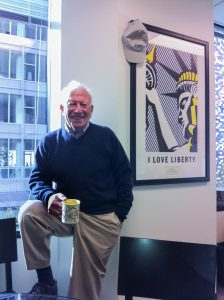
Alan Rabinowitz

Alan Rabinowitz

3. Remembering Alan Rabinowitz 

NCRP was saddened to learn about the November passing of our former board member and social change philanthropy pioneer Alan Rabinowitz. Friends and colleagues left their thoughts and memories of Alan in the comments.

LaTosha Brown and Shun Sheffield on election day in Alabama.

LaTosha Brown and Shun Sheffield on election day in Alabama. Used with permission of LaTosha Brown.

2. Grassroots organizations in Alabama saved the day despite lack of foundation support by Ryan Schlegel

The last blog post we published in 2017 turned out to be one of the most widely read of the year. Schlegel, NCRP’s senior research and policy associate, explained how grassroots organizations led by Black women worked to overcome Alabama’s voting barriers in the recent special election for U.S. senator despite a lack of foundation funding for their work.

1. Wealthy donors and grantmakers: You can no longer hide behind neutrality after the terrorist attack in Charlottesville by Aaron Dorfman

After the deadly violence at an August white nationalist demonstration in Charlottesville, Virginia, Dorfman called on philanthropy to respond decisively.

“The lesson in Charlottesville is clear: The nation’s philanthropic sector must deploy all the resources at its disposal to counter the rising tide of neo-Nazism and white nationalist violence,” Dorfman wrote. “That means deploying a foundation’s public leadership role, its convening power, its invested assets and its grantmaking dollars to protect threatened communities – and to do so on those communities’ terms.”

Peter Haldis is NCRP’s senior associate for communications. Follow @NCRP on Twitter.

Tuesday night Alabama voters accomplished something many political observers thought impossible. The historic outcome of this year’s special election for Alabama senator is a victory for progressive causes – the current Congress will have a harder time eviscerating the social safety net.

LaTosha Brown and Shun Sheffield on election day in Alabama. Used with permission of LaTosha Brown.

LaTosha Brown and Shun Sheffield on election day in Alabama. Used with permission of LaTosha Brown.

But it is also a victory for the Black women-led voter registration and mobilization movement in Alabama that has been working against stiff headwinds for months – decades, really – to ensure democracy prevails in a state with some of the most onerous barriers to voting in the country, as noted in The New York Times and The Atlantic. And it is worth reflecting on, in the afterglow of an encouraging victory, why that movement and others like it across the South have struggled for decades to secure the philanthropic resources they need to thrive.

The results of the election warrant more analysis in the days and weeks to come, but one take-away that ought to dominate headlines is: Early data suggest that Black voter turnout for the Dec. 12 election may have exceeded that of the most recent presidential elections in Alabama, including in 2012 when a Black presidential candidate was on the ballot. This is despite well-documented, brazen, coordinated efforts by Alabama legislators to suppress Black electoral participation.

As eyes turn toward mid-term elections in 2018, and as reactionary politicians across the country continue to threaten universal franchise by assaulting the integrity of our democratic process, the philanthropic sector needs to wake up to the building momentum behind pro-democracy civic participation work across the country, especially those efforts led by communities of color and in the South. The time to invest in democracy is now, and Southern leadership is showing us the way.

A network of formal and informal organizations drove this trend at the grassroots level in Alabama – delivering historic electoral participation in their state and shifting the balance of power in very real ways at the national level. A mix of 501(c)3 and (c)4 organizations, these networks comprise a landscape of a pro-democracy civic participation movement that is unique to the South, as ABC News and AL.com reported.

Their collaboration is built on decades-old relationships between individual leaders and organizations alongside an array of new and emerging players. The network is built, in many places, on faith infrastructure. The network draws explicitly on tactics and messaging from the Civil Rights Movement that was born in the same communities 75 years ago. And the network is led predominantly by Black women leaders who are from Alabama.

Some of the key actors:

  • Alabama Coalition on Immigrant Justice
  • Alabama NAACP
  • Alabama New South Coalition
  • Alabama Organizing Project
  • Bama Kids
  • Black Belt Citizens Fighting for Health and Justice
  • Black Voters Matter Fund
  • Black Women’s Roundtable
  • Black Youth Vote!
  • Faith in Action Alabama
  • Federation of Southern Cooperatives
  • Greater Birmingham Ministries
  • Mobile Center for Fair Housing
  • National Voting Rights Museum
  • The Ordinary People’s Society
  • Perry County Civic League
  • Save OurSelves Movement
  • Selma Center for Nonviolence, Truth and Reconciliation
  • Southern Elections Fund

This network proved again the viability of its strategies and its leadership in this month’s election. And yet NCRP analysis of Foundation Center data suggests that these organizations and their peers across rural Alabama and the broader South receive pennies on every grantmaking dollar nationally.

Between 2010 and 2014, the Alabama Black Belt received $29 per capita in grantmaking dollars, compared to $451 per capita for the country at large. For every dollar per person foundations gave to benefit communities in New York City, they gave just over a penny per person for the Black Belt. And of the $29 per capita of funding that did make it to rural Alabama, just 17 cents, or 0.6 percent, of it was for work to expand democracy – that includes all 501(c)3 work to advance civic participation and voter registration.

Qualitative data collected as part of NCRP and Grantmakers for Southern Progress’s As the South Grows initiative indicate that foundations believe Southern communities lack infrastructure to build power – that they lack the capacity to succeed.

Southern leaders have long known that to be false. They have insisted it was false for years, they have demonstrated it is false by beating back regressive policies and politicians in their communities, but meager philanthropic investment in grassroots power-building and civic engagement in marginalized Southern communities has not changed. Why not?

As foundation leaders take heart in this week’s historic results in Alabama, they had better start taking a hard look at their own institutions to ask and answer that question.

Click here for information on Southern grassroots organizations who participated in the As the South Grows initiative.

Did we miss an organization who played a key role in this election? Comment and let us know!

Ryan Schlegel is NCRP’s senior research and policy associate. Follow @r_j_schlegel ‏ and @NCRP on Twitter.

To showcase our nonprofit members, NCRP invited them to submit their mission and a story of impact to be presented as a poster at last month’s 2017 Impact Awards reception in New Orleans. We received more stories than we had time to craft in poster format. So here we present all of them, in alphabetical order. From job creation to youth civic engagement to health equity organizing, NCRP’s members are making the world a better place!

1. Active Living By Design (ALBD) advances community-led action and proven, place-based strategies to ensure health and well-being for all. When New York communities were striving to improve food justice, ALBD facilitated collaborative learning and networking to showcase promising solutions. This motivated residents in Syracuse to become ambassadors for a local healthy eating campaign and improved food options. As part of the New York State Health Foundation and The New York Community Trust’s Healthy Neighborhoods Program, a multi-year initiative, ALBD guided these communities and seven others to advance equity, health and well-being. Since 2001, they’ve partnered with more than two dozen philanthropies to spark transformative changes like these in more than 200 diverse communities across the country.

2. Appalshop enlists the power of education, media, theater, music and other arts to document, disseminate and revitalize the lasting traditions and contemporary creativity of Appalachia. Appalshop creates art, music and media, by, for and with the too often unheard voices of the people of Appalachia, demonstrating the power of culture to advance meaningful social and economic change. The Letcher County Culture Hub, a recent addition to its programming, addresses issues of poverty and unemployment by networking more than 20 grassroots partner organizations. Appalshop’s investments in culture hub partners, totaling more than $50,000 since 2015, as well as continuing on the ground support, helped them create more than 20 new jobs in the face of an intimidating post-coal economy.

3. Caring Across Generations is a national movement of families, caregivers, people with disabilities and aging Americans working to transform the way we care in this country. Caring Across Generations has advocated for state and federal policies to support family caregivers. In July 2017, it achieved a major breakthrough with the signing of the Kupuna Caregiver Assistance Act in Hawai’i. This law, the first of its kind in the nation, provides up to $70 per day to working family caregivers, most of whom are women, to secure care for their aging loved ones without compromising their own jobs or retirement security. While congressional attacks on Medicaid currently threaten older Americans’ ability to age at home, Hawai’i is revolutionizing care solutions to reflect what today’s families need.

4. Family Youth Counseling Agency provides affordable and professional support through programs and services dedicated to advocacy, counseling and education for the people of Southwest Louisiana. FYCA and its divisions, the Children and Families Action Network (CFAN) and The Leadership Center for Youth (TLC), engage high-school youth in the democratic process, helping them understand how they can influence their legislators and create systematic change in their communities. In 2016, 168 youth in Southwest Louisiana became voices for issues in their communities, and, in 2015, seven youth discussed their concerns related to the Juvenile Justice and Delinquency Prevention Act and the Victims of Child Abuse Act to Louisiana congress members in Washington D.C., advocating on behalf of youth in Louisiana.

5. The mission of Georgia Appleseed is to increase justice in Georgia through law and policy reform and community engagement. Georgia Appleseed’s “Keeping Kids in Class Toolkit” and its associated “Find My School’s Suspension Rate” database, including data from the past 10 years – easily disaggregated by race, gender and disability – has become an extremely popular resource in the state. Advocates (parents, members of the education community, juvenile judges) can use the data to start a discussion addressing disproportionality in school discipline. Consistent with Georgia Appleseed’s efforts to reduce out-of-school suspensions (OSS) in public schools, and since the Toolkit’s inception, state OSS rates have steadily decreased annually. The 2006 state average was 9.5 percent. The 2015 rate has dropped to 6.5 percent.

6. Justice in Aging is a national organization that uses the power of law to fight senior poverty by securing access to affordable health care, economic security and the courts for older adults with limited resources. Economically vulnerable seniors need assistance connecting to programs and services that can deliver quality health care and basic income supports. Within these programs, we work to bridge gaps and fight discrimination, connecting the low-income older adults most in need to the programs, services and supports they rely on. Since 1972 they’ve focused our efforts primarily on populations that have traditionally lacked legal protection such as women, people of color, LGBTQ individuals and people with limited English proficiency. Through our three-prong strategy of advocacy, education and high-impact litigation, Justice in Aging has returned more than $2.5 billion in benefits for low-income seniors over the last 10 years alone.

7. Midwest Academy builds capacity for the progressive movement through training and consulting, including with the Kansas Health Foundation, which seeks to improve the health of all Kansans. Midwest Academy and the Kansas Health Foundation partnered over the past three years to develop the capacity of KHF grantees and partners to engage in effective advocacy to build the social safety net in Kansas. Many agencies believed they could not fight back against drastic legislative cuts to social service and health programs. Midwest Academy conducted nearly a dozen training sessions across the state, with leaders from over 70 organizations attending. As a result, the grassroots organizing capacity of Kansas nonprofits has been built and strengthened, leading to policy changes and a dramatic increase in the presence of grassroots voices in Kansas.

8. The Mississippi Low-Income Child Care Initiative (MLICCI) works with childcare providers, parents and community leaders to aid low-income working single moms who need affordable childcare and support the providers serving them. Since 1998, MLICCI has fought to increase investment in our state’s childcare assistance program so more eligible children can be served and more low-income working single moms can afford to work. Last year, they concentrated our advocacy efforts towards pressing for more Temporary Assistance for Needy Families (TANF) funds. They met with state agency officials. They rallied parents, child care providers and lawmakers. They released a special report on TANF detailing dismal spending trends and offered recommendations for improvement. These efforts resulted in the state moving $8 million more TANF dollars into child care assistance.

9. MN350 organizes to make Minnesota a leader in the movement to a clean energy economy and to be a model of an inclusive volunteer-led climate justice organization. They work to keep fossil fuels in the ground, and help create a just transition to 100 percent renewable energy for all. In April 2017, U.S. Bank became the first major bank in the United States to formally exclude gas and oil pipelines from their project financing. This groundbreaking change came after ongoing pressure on U.S. Bank locally from MN350 and from the Minnesotans for a Fair Economy coalition, and on banks nationally from indigenous, climate and labor groups. Local actions included letter-writing, account closures, marches, protests, testimony at shareholders meetings and social media campaigns. This new policy is an important step in protecting the environment and indigenous rights, sending a strong message to the fossil fuel industry and moving towards a clean energy economy.

10. PASOs is a community-based organization of community health workers that are addressing the needs of the growing Latino population in South Carolina. Its mission is to help build a stronger South Carolina by supporting Latino communities with education, advocacy and leadership development. They accomplish this by approaching community health as a holistic state of complete physical, mental and social well-being which, more than medicine, requires prevention, advocacy and support. PASOs understands that achieving the greatest positive impact must come at the systemic level. Through innovative partnerships with universities, researchers and partner organizations, PASOs aims for change on multiple levels. Recently, PASOs community health workers served as bridge building assets to conduct research concerning contraceptive use and access in their communities. Recruiting community members, conducting focus groups, interviews and analyzing data will provide useful and pertinent information. This allows for the lived experiences of individuals to inform the solutions directly affecting their livelihoods. This partnership allows for the voices of community members to move upward into decision-making arenas.

11. The mission of the South Carolina Community Loan Fund is to advance equitable access to capital by providing loans, technical assistance and advocacy for affordable housing, healthy food, community facilities and community business enterprises. The fund works to transform underserved communities by providing capital and technical assistance for healthy food enterprises. Germaine Jenkins of Fresh Future Farm (FFF) won its Feeding Innovation challenge with her plan to increase food access in a North Charleston community that had been without a grocery store for more than 11 years. Germaine says Feeding Innovation was about more than the seed capital award; the program helped her solidify her business plan and attract additional funding for the project. Just three years later, FFF is a bustling urban farm and market that provides fresh produce, jobs and education to neighborhood residents.

Follow @ALBDorg, @Appalshop, @CaringAcrossGen, @GaAppleseed, @justiceinaging, @MidwestAcad, @MLICCI1, @MN_350, @SCPASOs and @SCCLF on Twitter.

Header photo courtesy of SEIU: Justice in Aging Senior Staff Attorney Amber Christ at an Emergency Health Care Town Hall for Seniors in San Diego.

“This here: It cannot be work. It is community. It is remembering. It is the reminder that we deserve better.” 

–    Mwende “FreeQuency” Katwiwa,
Activist, Poet and Performer

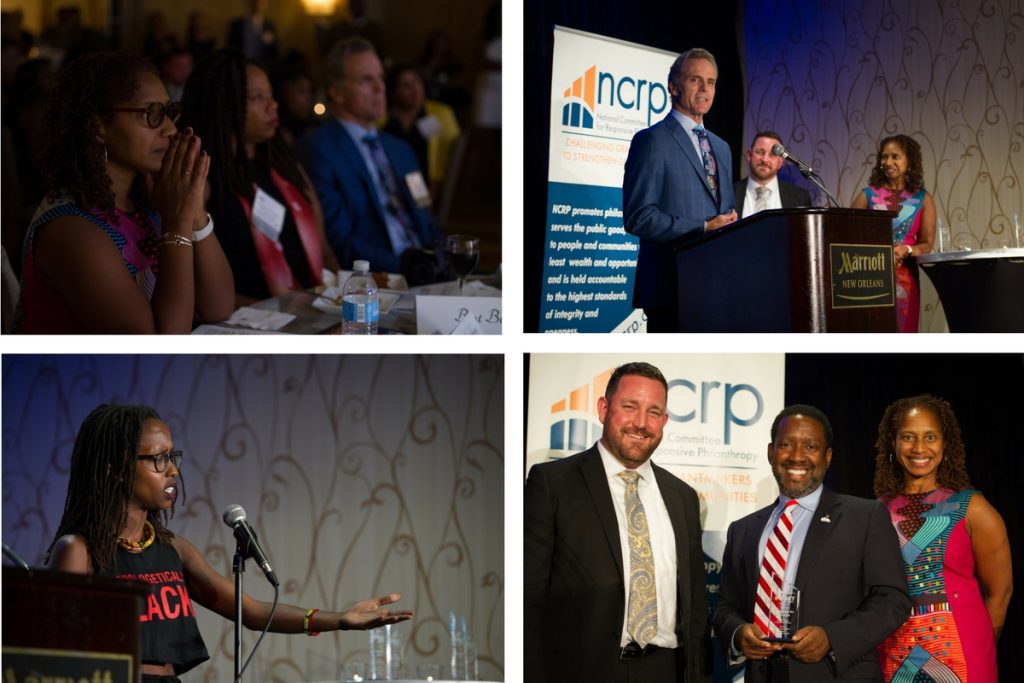
There were many goosebump-inducing moments at last night’s 2017 NCRP Impact Awards. Hearing Mwende say the words quoted above was one of them.

The entire night was about being inspired by the amazing work of the 2017 awardees and their grantees working the frontlines to make our country better for all, especially the underserved and marginalized.

And it was about you and me, too – an opportunity to celebrate as a community the kind of impact we all want to see on the issues and communities we care about by being thoughtful, strategic and grounded in what is just, equitable and sustainable.

Impact Awards Reception (1)

Congratulations to the 2017 NCRP Impact Awardees: Foundation for Louisiana, Groundswell Fund, Meyer Memorial Trust and Solutions Project!

Photos, tweets and a special message …

Here are the first batch of photos from last night on our Facebook page … View, tag and share!

Impact Awards Reception

We’ll add to the album in the days ahead.

Thanks to all who shared and celebrated our awardees on social media over the past few weeks. Here are some tweets from last night.

Impact Awards Tweets

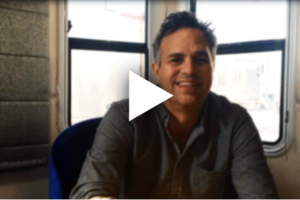
Lastly, actor-activist Mark Ruffalo, who co-founded Solutions Project, had a special message for attendees. In a recorded video message, he said:

“The idea of a philanthropy that is immediate, responsive and ends up doing the most amount of good in the quickest amount of time seems like a reasonable thing to want but really radical at its core. … I really appreciate you giving us the award and shining the spotlight on the good work that we’ve been able to accomplish. … We’ve all seen the results of it. It’s profound. It honors our most precious commodity … human life.”

Mark Ruffalo

Mark Ruffalo, actor, activist and co-founder of Solutions Project, offers a brief message about the organization’s “Get Up, Stand Up” award.

From warm to hot

I’m still feeling fired up and inspired by the awards, but we didn’t gather only to celebrate. All of us need to add fuel to this fire through transformational grantmaking and practices. 

THREE WAYS TO TURN YOUR INSPIRATION INTO ACTION 

Congratulations to the 2017 NCRP Impact Awardees Foundation for Louisiana, Groundswell Fund, Meyer Memorial Trust and Solutions Project!  

And thanks to all of you for helping us recognize and inspire high-impact philanthropy. 

Always stay up-to-date.

Sign up for

our Newsletter

Name(Required)

Follow Us
  • Travel Policy
  • Whistleblower Policy
  • Sign-on Letters
  • Financials
  • Privacy Policy
  • Terms of Use
  • Conflict of Interest Policy
Headquartered In:
Washington, D.C.
Contact us
info@ncrp.org 202-387-9177
Donate
© 2026 NCRP
Nonprofit marketing agency by Elevation Web