This is the logo site This is the logo site
Contact us
  • About us
  • Our Work
  • Resource Center
  • News & Insights
  • Donate
About us
About us
  • Our Mission & History
  • Strategic Framework
  • Our Supporters
  • Our Team
  • Careers & Internships
Our Work
  •  
  • Supporting Movements
    • Movement Investment Project
    • Movement Investment: FAQs & Resources
  • Setting Standards
    • Power Moves
    • NCRP Impact Awards
    • Data Advocacy
  • Responding to the Moment
    • The Regressive Philanthropy Initiative
    • Philanthropy & Reparations
    • Resisting Billionaire Climate Solutions
Our Work
Resource Center
Resource Center
  • Full Resource Library
News & Insights
News & Insights
  • Blog
  • NCRP in the News
  • Press Release
Donate
Donate

Press Release

CONTACT(S):  Russell Roybal rroybal@ncrp.org 
                              Elbert Garcia, egarcia@ncrp.org

NCRP: The Cost to Protect Democracy Has Skyrocketed –  
So Why Haven’t Grants Kept Up?

NCRP’s latest analysis urges funders to urgently address the unreasonably skyrocketing costs of
current voter registration and civic engagement efforts  to ensure a just and equitable multiracial democracy.
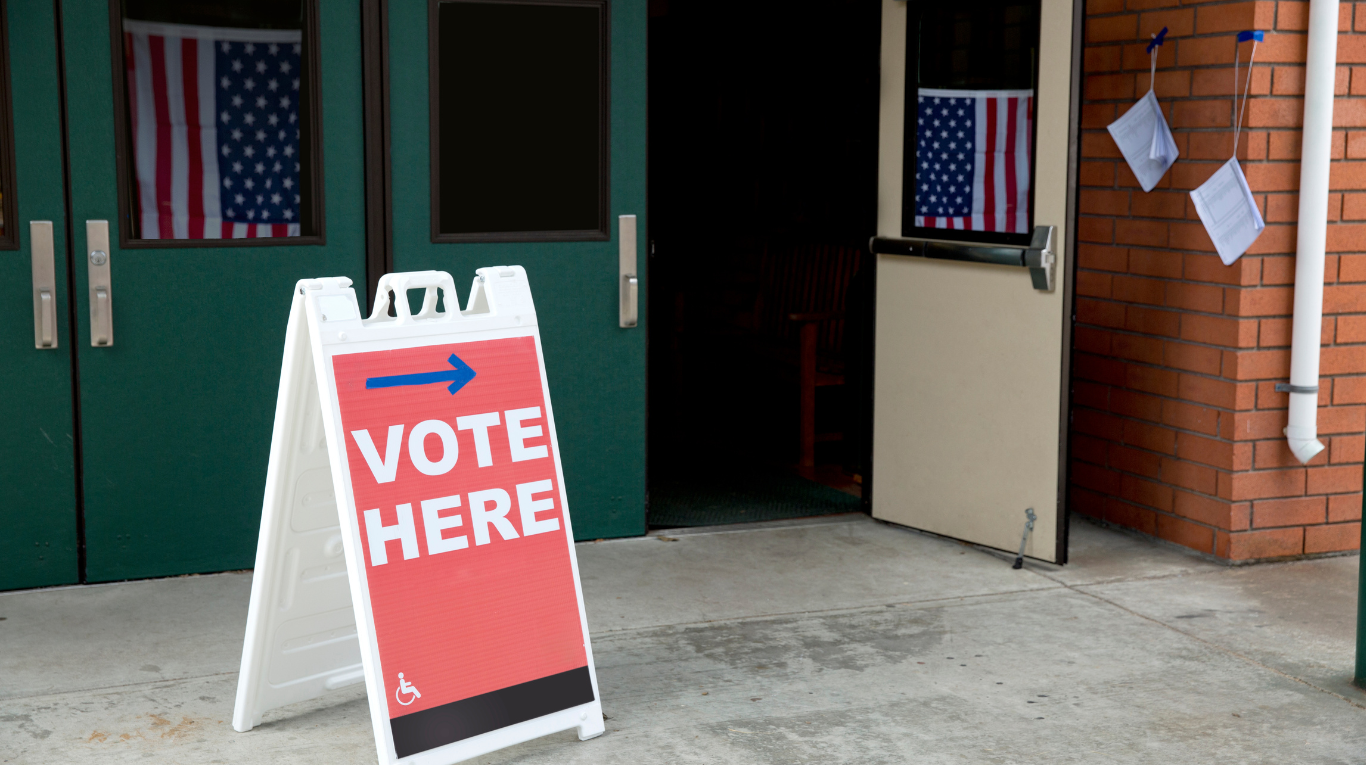
picture of a voting polling place on Election Day. credit: Jason Doiy from Getty Images Signature via Canvo Pro license
Click here for the brief report,
“The Cost to Protect Democracy Has Skyrocketed –
So Why Haven’t Grants Kept Up?”

As we race towards the end of another election cycle, it’s important for philanthropy to remember that under resourced grassroots groups across the country have been working to overcome costly new obstacles that threaten to disenfranchise voters and drive down political participation this year and beyond.

The latest research brief by the National Committee for Responsive Philanthropy, “The Cost to Protect Democracy Has Skyrocketed – So Why Haven’t Grants Kept Up?” details how current voter registration and civic engagement costs have unreasonably shot up and why funders dedicated to strengthening democratic institutions and systems must boldly expand their investments to meet the moment.

“A just and equitable multiracial democracy depends on a strong and resourced civic infrastructure carried out by community organizations and centered on local needs,” says NCRP’s President and CEO Aaron Dorfman. “However, how can we expect our civic institutions to function – let alone thrive – if democratic participation is challenged and restricted at every turn?”

The brief includes summaries of the latest public data from groups like the Democracy Fund and the Brennan Center and qualitative data from conversations with organizations like the Advancement Project. Florida Rising, the Florida Immigrant Coalition (FLIC), and Southeast Immigrant Rights Network (SEIRN). Among the points that report makes:

  • Nationally, a whopping 57% of the US population live in states across the political spectrum that have passed restrictive voter registration laws to inhibit the work of local civic engagement organizations.
  • According to the Brennan Center for Justice, 14 states in 2023, had enacted 17 laws making it harder for eligible Americans to register, stay on the voter rolls, or vote (including by restricting third party voter registration organization – 3PVRO – efforts), while six states had enacted seven election interference laws. Between January and May, 2024, six states enacted seven new restrictive voting laws and one state enacted a new election interference law.
  • According to NPR reporting, after Florida’s new law restricting voter registration efforts went into effect, incoming registrations through drives fell by 95% compared to the same period four years ago.
  • Among the 12 most prominent democracy funders, only 6 percent of their democracy funding was for voter education and engagement.
  • As a result of inflation, the dollar that was given to civic engagement organizations five years ago only covers 81 cents of those expenses in 2024.

The report also looks at how new right wing–crafted regulations in states like Florida are impacting democracy groups on the ground by increasing or imposing new penalties on volunteers or workers who assist voters during an election. Laws like Alabama’s S.B.1 are even putting some actions in the same felony category as first-degree manslaughter and second-degree rape.

The cost to run a voter registration operation has increased substantially,” says Moné Holder, Senior Director of Advocacy & Programs at Florida Rising. “[We’re] able to bring costs down a little bit because we are statewide and operate in multiple counties. But smaller organizations incur a bigger overhead.”

A Time for Philanthropy to Step Up – Today and After the Election

The report urges grantmakers and wealthy donors to trust the expertise of grassroots leaders and provide larger and more flexible grants that enable grantees to build and run effective programs.

“Restrictive laws that make civic engagement incredibly difficult pose a substantial barrier to democracy,” says FLIC Deputy Director Renata Bozzetto. “It’s morally wrong to have people out of the voter roster simply because they are afraid of completing a voter registration card alone. It is really problematic to keep people waiting for a vote-by-mail ballot that will never come because we now have a law that has canceled their vote-by-mail request without their knowledge. It isn’t democratic that people choose not to vote because they are intimidated by anti-immigrant rhetoric.”

“There are no off years for vote suppressors,” says Advancement Project Executive Director Judith Browne Dianis. “The bottom line is that they want power, and they see this shifting demographic of America as a threat to their power. They don’t take off-years, right? There are no off years. So what that means is for funders is that we need to be funded for transformation not transaction.”

“Philanthropy has an opportunity to address these obstacles and eliminate the increasing administrative strain that exists on civic participation throughout the year and across all election cycles,” says Dorfman. “Deeper and bolder multi-year investments can not only help groups manage the current moment of crisis, but also create the kind of long-term stability that helps protect democracy and grow opportunities for all.”

ABOUT NCRP

The National Committee for Responsive Philanthropy (NCRP) has served as philanthropy’s critical friend and independent watchdog since 1976. We work with foundations, non-profits, social justice movements and other leaders to ensure that the sector is transparent with, and accountable to, those with the least wealth, power and opportunity in American society.

Our storytelling, advocacy, and research efforts, in partnership with grantees, help funders fulfill their moral and practical duty to build, share, and wield economic resources and power to serve public purposes in pursuit of justice.

The good news: We treated the immediate symptom. As we approach 500,000 deaths from coronavirus, we seem to have survived 4 years of attacks on our democratic norms and voted in a new administration that promises to restore fair, equal and honest representation and justice.   

The bad news: The disease is still thriving. We avoided the complete dismantling of our democracy, but only for the short-term. Several well-regarded global democracy indexes show an erosion of American democracy since 2016, ranking the U.S. outside the top 50 most democratic countries.

Furthermore, people are still working hard to weaken and worsen our democratic institutions to pull us into a fascist state. Voting, arguably the cornerstone of our democracy, is facing a mound of new attacks. Already this year, more than 100 bills to restrict voting access have been advanced in state legislatures.

Two years ago, Voqal decided to focus its funding on 501(c)(3) and 501(c)(4) organizations led by people of color working to strengthen and protect democracy. The 2016 presidential election illuminated our broken democracy and just how deep the need is for funding to strengthen institutions and build power.

Voqal had a long history of addressing social equity; however, we had limited resources, and we knew we needed to focus.

We reviewed our grantmaking history, talked with grantees about the issues and needs, and studied democratic theory, indices for democratic strength and democratic frameworks.

We settled on a grantmaking strategy that funded what we identified as 5 pillars of an equitable, multiracial democracy. We view these pillars as an ecosystem, all contributing to the health of a vibrant democracy as explained below:  

1. Representative Government: We fund groups working to make sure that every vote is counted, every voice is heard, every person is represented and every policymaker reflects the identities and ideology of the people they serve. This work includes fighting for fair redistricting, enacting campaign finance reform, ensuring voting rights and modernizing the voting process.

2. Fundamental Rights: We fund groups working to grant, guarantee, secure, defend, protect and preserve civil rights, civil liberties and basic freedoms for all people. This work includes fighting for economic justice, education justice, environmental justice, health justice, housing justice, gender justice and racial justice.

3. Accurate and Trusted Communications: We fund groups working to make sure information is representative, accurate and trustworthy and that it enables people to hold policymakers accountable. This work includes fighting to protect net neutrality, expand broadband, cultivate progressive narratives, and support alternative and local media.

4. Fair Processes: We fund groups working to make sure the way the laws are written, interpreted, and enforced are fair, impartial, non-discriminatory and transparent, and that those laws uphold fundamental rights. This work includes fighting to protect judicial independence and advocating for more diverse and progressive players in the criminal justice system, such as prosecutors and sheriffs.

5. Participatory Engagement: We fund groups working to ensure there are more opportunities for people to shape their representative’s decisions at all levels of government. This work includes encouraging people to attend public actions, communicate with policymakers, join community organizations, participate in leadership trainings and vote.

Even prior to 2016, our democracy was hobbling along, failing to meet the needs of most Americans. The electoral college, gerrymandering and voter suppression left many people – mostly people of color — out of and victims of the political process. While we did treat the symptom, we must stay the course if we are to eradicate the disease once and for all.

Brenda Sears is the director of grantmaking at Voqal. She, along with her colleagues Mary Coleman and Michele Christiansen, worked for the past 2 years to clarify the work that Voqal had done to strengthen and protect democracy and execute the framework described above.

For the panelists assembled for NCRP’s latest webinar, philanthropy’s role in helping communities steer through the current coronavirus pandemic is clear. There is a responsibility to go beyond grantmaking and use their influence to make possible the dreams of a better world.

That means not just funding organizers and movements, but also getting involved in policy debates, even if it means directly challenging political leaders to do better.

“Advocacy is important,” said Congressional Progressive Caucus Co-Chair Rep. Pramila Jayapal. “It is chairing committees, of course, but it’s also writing op-eds; it’s calling your members of Congress who pay attention to the wealth of philanthropy to address these deep inequities that are built into our system … [to] pay less attention to what is politically possible because ultimately, I believe what’s politically possible is what we make possible.”

Jayapal was one of the 4 leaders who joined NCRP President & CEO Aaron Dorfman for a funder strategy conversation that explored how foundations could not just provide immediate relief, but also long-term support that empowers communities beyond the current moment.

“We need to name why people have gotten sick. Why they have lacked access to quality care and why they died, and specifically why Black, Indigenous, immigrant communities of color have died at horrifying rates,” said Marguerite Casey Foundation incoming President Carmen Rojas. “We need to say clearly that our family members aren’t [just] dying. They are being killed. Killed by bad policies, killed by corporate responsibility and killed by those who profit and keep power because racism exists.”

“This is a time to wield the power that we have and be the influencers,” said Colorado Health Foundation President and CEO Karen McNeil-Miller. “This is the time to say to the governor’s office or [your state’s] Department of Human Services or whatever department of government that is in our wheelhouse: ‘Yes, I’ll lead that committee for you. Let me take that off your hands.”

“This is a movement moment where we need to do more and it is also a generational battle to instantiate a different set of ideas about what America should be and can be,” said Hilary Pennington, executive vice president of the Ford Foundation. “Let’s stop talking and start acting more – and hold ourselves accountable for doing that.”

Increasing Payouts

Each of the funders on the panel expressed their institution’s desire to spend more than their traditional payouts in providing long-term support for vulnerable communities. It is spending that should also come with it, a long-term shift with how philanthropy operates with grantees.

“We in progressive philanthropy have tended to steer grantees towards our projects, our priorities, rather than giving them the support and freedom to lead where they say see fit,” said Pennington. “At a time when the nonprofit sector is in free fall and organizations are themselves in crisis, we should not expect grantees to ask us to fundamentally change the relationship that they have with us. We have to do it. We have to make the offer and the invitation to them, and we have to step up and do it individually and much more strategically together.”

“I would just urge us to think boldly about what the answers are,” said Jayapal. “Politics is the art of the possible, and we should be in the business of pushing the limits of what is seen as possible because that is not the same as what is actually possible. Foundations can help us not only through your grantees, but through your own advocacy. Say ‘This is the solution. These are the kinds of solutions that we should be pushing.’”

More than 100 leaders from nonprofits and foundations participated in hour-long mid-week discussion. Speakers touched upon a number of points and issues, including:

  • How the PayCheck Recovery Act would help workers, immigrants and other vulnerable communities.
  • The importance of funding and participating in public policy advocacy.
  • What philanthropy can do to better support immigrant and refugee communities, as well as push back against efforts to limit reproductive access.
  • The absurdity of using “risk” to judge nonprofits fitness for funding and the importance of listening to community needs in the grantmaking process.

Originally intended as a behind-the-scenes, off-the-record conversation for funders and nonprofits, Dorfman said that by the end of the webinar, it was clear that participants wanted to forward the discussion to colleagues who not only couldn’t attend, but who needed to hear what was said.

“Our panelists were clear. This is the moment to dream big, to be bold,” said Dorfman afterwards. “We know that conservative funders increased their spending during the Great Recession while most liberal and centrist funders cut back. Let us not just wonder why some people and their issues made gains. Let’s act to avoid those same mistakes during this crisis and provide the support that leaders of color on the ground need so that we can all move forward together.

We have known for a long time that low-income families are powerful political actors regardless of election cycles.

That’s why since 2012, Marguerite Casey Foundation (MCF) has invested more than $15 million in integrated voter engagement (IVE) across the country, including $5 million over the next year in 50 community organizations.

Civic engagement is one way that low-income families gain power – an integral strategy for building a movement led by communities.

It is easy to think civic engagement is simply casting a ballot. It is also easy to offer opinions instead of constructive actions.

But democracy relies on robust participation by everyone, regardless of income or political party.

When people can put aside their differences and come together to support progress and solutions, they can create positive change, particularly for families, children and communities.

Philanthropy has supported democratic engagement for generations. But imagine if philanthropy expanded its investment.

With support from philanthropy, nonprofits and neighbors, families around the country could increase their civic participation.

They and their communities could gain more power to drive solutions to the challenges of poverty – solutions and challenges they understand better than anyone. And our democracy would be much richer.

This investment in democracy is not partisan. When people can engage with their democracy communities and families can grow stronger, poverty can be alleviated, and the nation can move closer to becoming a just and equitable society.

It’s clear that we need more voter engagement, so how can foundations support IVE work?

1. Provide unrestricted funds well in advance of election cycles.

After our first grant cycle in 2012, grantees told us that the lack of early funding was one of their biggest challenges.

They said foundations typically provide funding for voter engagement in the same year as the election, and sometimes only weeks before.

Grantees are left scrambling to attract volunteers and strategize, unable to experiment with tactics or secure the staff needed to canvass at full capacity.

This approach essentially requires grantees to shift the electorate with one hand tied behind their backs.

MCF’s approach is to ask grantees what they need, listen and then act. This process changed our grantmaking timing, and we now get funds to grantees a year before elections.

We also provide general operating support because we believe grantees know best how to allocate funds between voter education, mobilization, registration and protection.

2. Fund cornerstone organizations already anchored in communities.

Educating and mobilizing voters is easiest for organizations that are already there – organizations that have already done the hard work of building relationships and training leaders in communities.

Integrated voter engagement builds power for individuals between elections by ensuring people recognize that their personal agency in democracy extends beyond their vote.

In contrast, traditional get-out-the-vote (GOTV) programs during election years leave no voter engagement infrastructure behind and often appear to be little more than mass-communication efforts.

After votes are cast and counted, GOTV organizations move to the next fight and community.

Integrated voter engagement programs connect voters to issue-based organizing, build power and sustain impact year-round and over multiple election cycles.

3. Successful voter engagement requires wins that are real for low-income families.

Encouraging voting is difficult when working with people who are worried about having enough food for their family, eviction, immigration raids or incarceration.

Our grantees approach this challenge by making Election Day relevant to those who live in these states of emergency.

At the same time, our grantees engage families in advocacy to fix the systems undergirding these states.

As staff at the People’s Action Institute put it: “When issue campaigns are inextricably linked to voter engagement, each strengthens the other.”

We fund organizations engaged in deep canvassing that train leaders within communities, such as Florida Immigrant Coalition and New Florida Majority Education Fund.

Many of our grantees support each other in campaigns: Florida Immigrant Coalition and New Florida Majority Education Fund supported the work of Florida Rights Restoration Coalition, another grantee, in an effort to restore voting rights to 1.4 million Floridians. 

4. It’s not enough to fund voter registration and voter mobilization.

Native Voice Network, a network of more than 40 Native-American organizations, partnered with other Native groups in 2018 to organize a campaign in North Dakota.

Together, they encouraged Native voters to get new tribal identifications in response to voter suppression attempts (one of many structural barriers voters of color face).

Through voter engagement, grantees are fighting against voter suppression, voter intimidation and precinct challenges across the country.

Disenfranchisement laws and restrictive voter ID laws have kept millions of Americans from voting.

Research shows voters of color are 6 times more likely than whites to wait longer than an hour to vote.

Additionally, voters of color are significantly more likely to report experiencing racial discrimination when trying to vote or engage in political advocacy, with Black voters reporting the highest rates of discrimination.

Integrated voter engagement falls short if it does not fully engage a community’s full range of constituents regardless of voter registration status, citizenship status, language of origin, age, race or ability.

5. Together, grassroots groups can change the narrative.

An election year can provide organizations with a megaphone for testing messages for low-income communities.

By combining forces and utilizing networks, organizations aggregate their knowledge of what messages will – and won’t – move their communities to vote in large numbers.

In 2018 the Fair Economy Illinois Table (FEI) found that many potential voters felt powerless and hopeless about creating change in their state, which was struggling to pass a budget.

That sense of futility led FEI to conduct a teach-in to dispel myths and mobilize people to act.

Communication is key to grantees’ ability to change policy, turning complicated ballot measures into unifying calls to action.

By facilitating narrative change and shifting discourse both nationally and within local communities, organizations can reclaim the conversation and replace divisive, racist themes with positive and unifying messages.

Foundation-funded Equal Voice networks have worked together to develop shared messaging across platforms, ensuring that their voices are unified and elevated.

Moving Forward

Marguerite Casey Foundation remains committed to non-partisan IVE. In November, we made grants to 50 organizations that will educate communities about issues and engage them in solutions.

With the foundation’s support, grantees are reaching millions of voters and training thousands of leaders in voter-engagement practices.

Cornerstone organizations need more funding to engage communities and families often neglected by typical civic engagement.

Funding for nonpartisan voter engagement is limited and often funneled to large organizations that prioritize research or litigation.

The benefits of providing IVE grants to grassroots organizations are clear: Investing in these groups builds community power, connection and ultimately a movement of low-income families.

Luz Vega-Marquis is president and CEO of Marguerite Casey Foundation, which received the “Smashing Silos” award for intersectional grantmaking at the 2019 NCRP Impact Awards last month. Follow @LuzVegaMarquis and @caseygrants on Twitter.

Image by Cristinapilataxi. Used under Creative Commons license.

The most important upcoming policy moment that will affect rural communities is the 2020 census.

An overreliance on on-line respondents, a shortage of dedicated staff focused on hard to count populations and a lack of previously planned testing in rural communities could jeopardize accurate funding for critical programs like U.S. Department of Agriculture rural grant and loan programs, Medicaid and the Supplemental Nutrition Assistance Program.

Even when just considering 6 federal housing and infrastructure programs, up to $25 billion in federal rural support is in play.

Unfortunately, very few of the funders organized under the Funder’s Committee for Civic Participation’s Funders Census Initiative have explicit rural strategies to support accurate census counts.

However, the Blandin Foundation, a nearly 80-year-old private foundation based in Grand Rapids, Minnesota, is heavily engaged in the rural community census count.

Blandin is focused on healthy, inclusive rural Minnesota communities, and Blandin trustees have recently challenged staff to increase their work around diversity, equity and inclusion.

This led Blandin to get involved in the 2020 census. The foundation sees a full and fair census as a systemic opportunity, one with multiple impacts.

Many rural people are hidden from the census

Rural peoples can’t afford to be invisible, but too many of them — such as immigrants, homeless or those who are just too busy or mistrusting — are. 

It costs families and communities voice, economic opportunity and public resources.

Overall, Minnesotans do well in civic participation, including voting, community engagement, Census participation, etc.

And, they can and must do better. Minnesota has some of the greatest economic and educational disparities in the nation. 

Blandin Foundation is engaged in 3 main ways:

1. Coalition building. The foundation has has pooled its resources with other philanthropies to form the Minnesota Census Mobilization Partnership. Facilitated and led by the state’s Council on Foundations, the partnership is co-creating mobilization communications and strategies with those traditionally under-represented in the census. 

2. Standing alongside local leaders. An internal team has been coordinating the foundation’s engagement and building an advocacy campaign for months. Their goal is increased response rates among the state’s rural residents, including among the 11 local Native American tribes. The foundation is leaning on its relationships, its voice and its financial and staff resources.

3. Lending leadership and voice. From its remote rural perch, Blandin Foundation staff hold key supportive positions in statewide efforts. For example, CEO Dr. Kathleen Annette was chosen by the governor to co-chair the first-ever statewide Complete Count Committee, which is facilitated by the Minnesota Demographer’s Office.

As the Rural Philanthropic Analysis project at Campbell University reported, Blandin Foundation is one of only a few private foundations in the country focused exclusively on the health and vibrancy of rural communities.

Census data drives where hospitals are sited, availability of business resources such as loans, and where investments are made in water and wastewater infrastructure. 

Philanthropy, small- and large-scale, is in a perfect position to provide census support

As suggested in a recent publication of The Census Project and the Center for Poverty and Inequality at Georgetown Law School, we can raise hard questions, patiently pursue solutions and stand alongside under-represented populations with our voices and our resources.

Some tactical ways to help:

1. Join the Funder’s Committee for Civic Participation’s Funders Census Initiative (FCI 2020).

2. Fund organizations that can do outreach in rural America like 4H Clubs, local radio stations, Head Start programs and farm bureaus.

3. Participate in Complete Count Committees, which are forming in many states.

4. Stay informed and linked with key census policy and operational developments through groups like The Leadership Conference on Civil and Human Rights and the National Congress of American Indians.

The Return on Investment on any type of rural census advocacy and support is likely to be significant given the federal funding in jeopardy.

Think also of the impact on local government, business, schools and the very future of communities dependent on transportation access and broadband for their future.

ROI is often viewed as a reason for funders to shy away from rural America. In this case, census support may be the best investment possible.

Allen Smart is project director at Campbell University’s Office of Rural Philanthropic Analysis. Allison Ahcan is director of communications at Blandin Foundation. Follow @allensmart6 and @BFdn_Allison on Twitter.

Last week, we recapped many of NCRP’s activities and accomplishments from 2018. One thing we didn’t mention: In 2018, we added 96 posts to NCRP’s blog.

And, if you follow NCRP on Facebook, LinkedIn or Twitter, you’ve probably noticed that in late December we counted down our Top 10 most-viewed blog posts of the year. 

If you missed any or all of those posts, here is the entire list of the 10 most-viewed posts of the year:

Building Power10. Building community power: A philanthropic strategy and an end goal by Caitlin Duffy

What does it mean for funders to build power?

As more and more grantmakers embark on or deepen journeys to embed values of equity, diversity and inclusion into their work, how can we incorporate a power-building frame to measure meaningful progress on equity?

9. Asking the right questions: How philanthropy can make a difference in challenging times by Aaron Dorfman

NCRP president and CEO Aaron Dorfman delivered the closing keynote at the Yale Philanthropy Conference on February 23, 2018:

“You are all here, we are all here, because we want to use our philanthropy to make the world a better place.

“If we’re going to be successful in doing that, we have got to ask ourselves the right questions. These are challenging times in which we live. By asking ourselves the right questions, the hard questions, we can make a real difference with our philanthropy on issues that truly matter. I’m going to put forward five questions today that I think will help us be effective in these challenging times.”

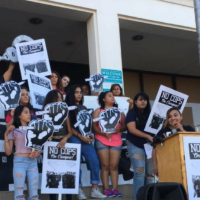
Students hold an events protesting police officers on their campus.

Photo courtesy of Funders’ Collaborative on Youth Organizing.

8. Beyond the walkout: A call to philanthropy to invest in youth-led social change by Mónica Córdova

We must invest in organized youth efforts to cultivate lasting change. To get to scale and sustain their work, they need the support of philanthropy. The moment is now. Resources must follow.

The words "Stronger Together" with a Star of David and a heart replacing the two Os.7. Anti-Semitism and Anti-Black racism both advance white supremacy by Jeanné Isler and Timi Gerson

Leverage your power to deepen your analysis and educate others about the connection between anti-Semitism and anti-Black racism.

Instead of excluding groups who are mostly values aligned, but may be ignorant about this connection, make space to wrestle with hard history towards joint action. It is our hope that with these terrible massacres, we are motivated to search our blind spots and expose them to the light.

A mother duck leads her ducklings.6. Leading by example: Addressing racial equity through incremental change by Nathan Boon

To “lead by example” is a fundamental principle within philanthropy. However, the power dynamic inherent to the funder-grantee relationship can sometimes lead to a lack of self-reflection or self-discipline among funders. A funder wishing to advance a best practice may require the practice from its grantees but forgo the difficult work of implementing the practice for itself.

Three roads5. Why examining power and privilege is critical to shifting culture in philanthropy by Lisa Ranghelli

What does power have to do with equity? How can grantmakers better leverage power to help drive lasting, positive change in our communities?

As the philanthropic sector’s interest in racial equity has grown, there has been limited explicit discussion of the role of power and privilege, which funders must grapple with to truly change inequitable systems.

#DisruptPhilanthropyNow4. Why we need to #DisruptPhilanthropyNOW by Lisa Ranghelli

At NCRP, we joke that we’ve been biting the hand that feeds us for more than 40 years. Yet racial and social justice organizations remain reluctant to apply the same tactics they use with public officials and corporate titans to philanthropy.

Within Our Lifetime (WOL) and Old Money New System Community of Practice (OMNS) are trying to change that with their bold new campaign, #DisruptPhilanthropyNOW.

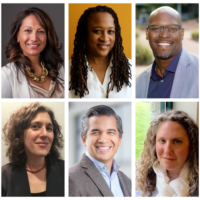
Photos of the 14 consultants who are participating in the Power Moves pilot program.3. Announcing Power Moves for consultants! by Caitlin Duffy

In philanthropy, everyone knows that foundation leaders and staff have power. But consultants are another group that can have an outsized impact – often unseen, behind closed doors. In advising grantmaker clients, the best and most influential consultants bring to bear deep expertise and rich experience as community change agents, nonprofit leaders or foundation staff to help funders hone organizational strategies, culture, practices and more.

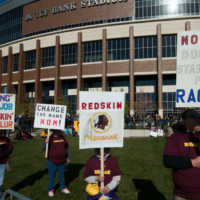
Native Americans protest the Washington Redskins professional football team.2. A humbling (foundation) admission about Indian mascots … and a glimmer of hope for the future by Raymond Foxworth

In a May 7 op-ed in USA Today, Dr. Richard Besser, president and CEO of the Robert Wood Johnson Foundation (RWJF), publicly acknowledged changes to the foundation’s annual Sports Award. This annual competitive award is intended to recognize “sports teams, athletes and community-based organizations that use sports to catalyze and sustain changes to make communities healthier places to live, learn, work and play.”

Besser said the foundation would no longer consider award applications from sports teams that denigrate American Indian people. He humbly noted that the foundation – whose mission targets health equity – never considered “the fact that the team names, mascots and misappropriation and mocking of sacred symbols like headdresses do real damage to the health of people across the country.”

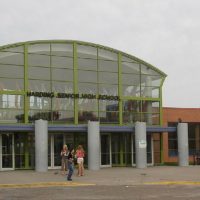
The entrance to Harding Senior High School in St. Paul, Minnesota.1. Corporate donations to public schools are a poor substitute for government funding by Nick Faber

Four years ago, the Saint Paul Federation of Teachers (SPFT), along with parents and community members, committed ourselves to ensuring that students in Saint Paul, particularly students of color, receive a quality education. 

While we’ve made great strides to improve public education in Saint Paul, there is much more that still needs to be done. Class sizes are still too big; there are not enough nurses, counselors or social workers; and we need to include more schools in programs that have proven effective in disrupting the school-to-prison pipeline, such as restorative practices and teacher home visits.     

Peter Haldis is NCRP’s communications manager. Follow @NCRP on Twitter.

Images by Fibonacci Blue, Pedro Ribeiro Simões and Governor Tom Wolf. Used under Creative Commons license.

Updated 11/19/2018 to clarify that The Nathan Cummings Foundation increased its payout rate from 5.75% to 6.75% in 2017 and 2018, and has committed to maintaining an elevated payout rate for the next 3 years. The post previously stated that the foundation was committed to maintaining a rate of 6.75% through 2021.

Small dollar donors nationwide gave more than $1 billion to support progressive candidates in the midterms. Latino youth voter registration in Texas increased by 500 percent.

Georgia voters turned out in record-breaking numbers, reaching near presidential election-year levels. Florida voters passed a measure to restore voting rights to 1.4 million ex-felons.

The most diverse class of newly-elected representatives in Congressional history will take office in January.

One thing is clear from the midterm elections: Grassroots groups and ordinary people are going all out to defend democracy. Big Philanthropy should do the same.

The final weeks of the 2018 midterms offered us a dual vision of the future.

On the one hand, we got a chilling glimpse of just how high the stakes have become for American democracy under a Trump presidency, with the massacre of 11 Jews at prayer in Pittsburgh and of two African Americans at a grocery store in Louisville, bombs sent to political opponents of the administration, and militia forces heading to the border to enforce Trump’s xenophobic policies.

On the other hand, we got a remarkably inspiring view of ordinary people mobilizing in extraordinary ways to meet the challenge. We saw historic turnout and major victories to expand Medicaid, restore voting rights, fight gerrymandering and move towards a truly reflective democracy.

Across the country, grassroots groups led by people of color (historically ignored by most funders) did amazing things.

Using new funding from small donors as well as from a handful of emerging major donor partnerships, dynamic local organizations made tremendous strides working in some of the most difficult parts of the country, and with constituencies generally written off as “low-propensity voters” by political campaigns.

These groups parlayed their local networks and community knowledge into a massive influx of midterm voters and progressive ballot victories, overcoming ever more devious forms of voter suppression to expand the electorate.

Tuesday’s results do not mean the danger to democracy that Trump represents is gone. In fact, that danger is escalating, since the president is convinced that his overt appeals to white nationalism turned back the anticipated “blue wave,” expanded his margins in the Senate and staved off powerful challenges in key governors’ races.

Following the lead of those everyday people who’ve put everything on the line, philanthropy will need to take on more risk and commit to dramatically expanding the resources available for the fight.

For at least the next 4 years (taking us through the critical 2022 redistricting process), foundations that care about saving American democracy and staving off the very real threat of American fascism can demonstrate that commitment in 3 ways.

1. Move money to movements

Local, grassroots organizing is intensive, long-term work. It involves not only building and leveraging strong and trusting relationships in communities, but challenging and changing the systems that have kept whole classes of citizens disenfranchised day in and day out, not just on election day.

Most state and local groups still function on budgets that are too small and too unpredictable. What would our country look like in 4 years if groups that had so much impact on the 2018 midterms had the kind of multi-year, flexible, adequate funding they need to sustain and expand?

The NoVo Foundation recently gave $34 million to these kinds of groups. More funders should follow their lead.

2. Increase payout

It doesn’t make sense to save dollars for some future rainy day when Trump and his white supremacist allies are bearing down on the nation like a Category 5 hurricane.

The Wallace Global Fund has been a leader on this, pledging to double its payout in 2018. The Nathan Cummings Foundation committed to increase its payout rate from 5.75% to 6.75% in 2017 and 2018 and continue an elevated spending rate for the next 3 years.

In these urgent times, every foundation and ultra-wealthy donor should ask: How much more can I give?

3. Leverage c(4) funding

There are real constraints on private foundations, but the challenges we face require creativity. Some of what is needed to save democracy can’t be accomplished with 501(c)(3) dollars.

Foundations and donors in a position to mobilize c(4) dollars should do so to complement their c(3) giving. (To understand the difference between c(3) and c(4) entities, see this simple primer from Nonprofit Hub.)

Many progressive public foundations now also have affiliated c(4) arms, providing donors with more options to support progressive ballot measures and candidates.

Ms. Foundation for Women recently launched their c(4) arm, joining longstanding leaders such as Proteus Fund, NEO Philanthropy and others.

The new crop of high-tech ultra-high-net-worth individuals are increasingly funding through LLCs, which also provide them far more flexibility than private foundations, including the ability to support candidates and c(4) organizations.

And collaborative and pooled funds like Movement Voter Project, Way to Win, Black Voters Matter Fund, etc., have emerged to help donors identify and support vital grassroots work across the country.

Imagine the world we could create if foundations and wealthy donors matched the $1 billion given by ordinary Americans and dedicated it to community organizing led by grassroots leaders, especially people of color, across the country in red states, blue states and in-between states.

Better yet, let’s make it a two-to-one match and raise an extra $2 billion. If we don’t spend until it hurts, the alternative will be far more painful.

Aaron Dorfman is president and CEO of the National Committee for Responsive Philanthropy. Follow @NCRP on Twitter.

If anything can give us hope in the face of the inhumane and unjust policies of the Trump Administration, it’s the visible dissent from millions of everyday people in the United States.

The Women’s March brought millions out to the streets. Thousands flooded airports as sites of resistance to protest the separation of Muslim families through the Muslim and refugee ban.

Water protectors bravely put their bodies on the line to fight corporate greed and protect indigenous lands. DREAMERS occupied Senate offices to let those in power know we belong here and that immigrant families belong together.

The Movement for Black Lives has continuously mobilized to protest the killings and targeting of Black communities.

Most recently, chants of “we do not consent” and “no more rapists in power” from survivors of sexual violence reverberated in the Capitol in protest of Brett Kavanaugh’s confirmation.

We have seen some of the most powerful forms of direct action and resistance led by impacted communities in the past 2 years.

Because of the power of these confrontations and the inconvenience it creates for those who go about business as usual, we are witnessing an unprecedented attack on the people’s right to protest. At least 20 states have introduced laws that criminalize dissent.

Now just this week, the Trump Administration, in coordination with the National Park Service (NPS), stealthily introduced new regulations to curtail public demonstrations in Washington, D.C., and effectively silence protesters.

These changes would have a devastating impact on grassroots groups organizing for equity and justice.

In a time when courts and government agencies are upholding violent policies at a larger scale against Black, brown, Indigenous, immigrant and refugee, Muslim, women and LGBTQIA communities, protest is a tactic that allows for us to instill hope and build power.

For example, when the Supreme Court upheld the Muslim Ban this year, my organization – in collaboration with Muslim Advocates and the No Muslim Ban Ever Campaign, and through support from the Proteus Fund – held a rapid response rally outside the court to demonstrate our outrage.

The rally was a way for us to communicate to the broader public and our communities that no court determines the purview of our humanity, and more importantly, that we are here and will continue to fight.

Powerful remarks from so many groups and leaders today outside #scotus.

The energy in this crowd is inspiring. We hope it will drive you to fight, too. #nomuslimbanever #wewillnotbebanned pic.twitter.com/LqbJdPa2gC

— Dulles Justice (@DullesJustice) June 26, 2018

However, with the new rules that the NPS has introduced, rapid response actions like ours will face steep barriers. According to the ACLU and Partnership for Civil Justice Fund, proposed changes to laws around protest in Washington, D.C., include: 

  • Charging burdensome fees for holding a demonstration, including paying for police barricades and overtime costs for park rangers.
  • Prioritizing the well-being of grass over people, as protesters will have to pay for the harm caused to turf during events.
  • Allowing police to shut down vigils and protests for any minor issue, including counter-protests.
  • Severely restricting emergency vigils and actions that occur in D.C. after a breaking news incident.
  • Implementing restrictions on banners and signs, which is an important mode of communication for effectively share messaging and framing for actions.

These dangerous, undemocratic regulations would impact public spaces where people peacefully assemble in D.C., including sites of some of our country’s most historic marches and direct actions:

  • Freedom Plaza
  • The sidewalk in front of the Trump Hotel
  • The National Mall
  • Lafayette Park
  • The sidewalk in front of the White House
  • Lincoln Memorial
  • The Ellipse
  • The sidewalks and park land along Pennsylvania Avenue

An emerging Muslim women-led grassroots organization based in D.C., Justice for Muslims Collective has used many of these public spaces for years to host community-building events, healing spaces and speak-outs where we make demands of those in local and national government without any support.

While national, well-funded organizations with multi-million dollar budgets and mainstream support will be able to afford these new expenses, it would effectively curtail the ability of small grassroots groups and individuals to mobilize and publicly hold those in power accountable.

Moreover, it would give the Trump Administration and its supporters the space to organize hateful events and rallies.

Some of these regulations are meant to prevent counter-protests, which can be an important display of resistance to shut down hate in D.C., such as when white supremacists and neo-Nazis planned to convene in D.C. this past August on the anniversary of the violent Unite the Right rally in Charlottesville, Virginia.

In addition to investing in important power-building work such as advocacy and community organizing, it’s urgent that funders and nonprofits take action and push back against the Trump Administration and the National Park Service’s attempts at curbing protest in Washington, D.C.

We only have until this Monday, Oct. 15, to submit comments to oppose the NPS regulations.

If we allow these changes to take place, we will permit the Trump Administration to destroy dissent in the capital, erode our rights to peaceful assembly and freedom of speech even further, and drive the rise of fascism.

Darakshan Raja is the founder and co-director of Justice for Muslims Collective. Follow @DarakshanRaja and @dcmuslimjustice on Twitter.

Proteus Fund will submit a letter to Secretary of the Interior Ryan Zinke on Oct. 15 detailing foundation and individual donor opposition to the proposed rules. You can view and sign-on to the letter here. The deadline to sign-on is noon EDT on Monday, Oct. 15.

While the events of the past year-and-a-half have left many frustrated, angry and disappointed, they’ve also moved many people to take action with their dollars and voices.

“From #BlackLivesMatter to #MeToo and #NeverAgain, we’re seeing a spike in civic engagement that makes me hopeful for the future of our country,” wrote Aaron Dorfman, chief executive of the National Committee for Responsive Philanthropy (NCRP). “We must capitalize on this moment and turn increased activism into lasting change.”

Foundations and other donors will find actionable insights on how funders can take advantage of this moment in the May 2018 edition of “Responsive Philanthropy” published by NCRP.

From whispers to roars: The conversation movement

“People care about issues like gender and racial equity, and they think more needs to be done,” notes Michael Perry, co-founder, and Kathleen Perry, senior analyst, of PerryUndem, in an article that highlights findings from their recent public opinion research. They offer four key takeaways for funders to take advantage of what they call the “conversation movement” to make progress on these and other issues that majority of the public thinks are important.

Funders can help secure the next generation of activists, voters and grassroots movement leaders

For Austin Belali, director of the Youth Engagement Fund, the youth-led #NeverAgain movement is a reminder of the urgent need to build the capacity of youth civic participation especially among youth of color, those from rural areas and other underserved communities. He offers important considerations for financial and non-financial supporters to ensure that they are helping long-term engagement of young people that leads to lasting positive change.

Helping grantmakers navigate civic engagement funding

Eric Marshall, executive director of Funders’ Committee for Civic Participation, and Kristen Cambell, executive director of Philanthropy for Active Civic Engagement, are seeing the growing interest in civic engagement among grantmakers firsthand. They share the most common concerns they hear from members and the various ways their respective organizations are helping funders navigate the complexities of funding civic participation.

Strength in numbers: Rethinking the power of funder collaboration

Melinda Fine, Molly Schultz Hafid and Steven Lawrence of TCC Group identifies the six common questions that funders have been asking themselves in response to our current political and social moment. They highlight the three ways that affinity groups, regional associations and other philanthropy serving organizations are helping grantmakers wrestle with these questions.

This edition of the journal highlights NCRP supporter The Colorado Health Foundation in the Member Spotlight. Learn how this largest health foundation in the state has embraced community engagement and input in efforts to advance good health and health equity for all in the state.

Let us know what you think of these stories in the comments or on Twitter @NCRP. Photo by Flickr.com/Phil Roeder, used under Creative Commons license.

Editor’s note: This post is part of an ongoing series of posts featuring NCRP nonprofit members.

Hispanic Interest Coalition of Alabama (¡HICA!) logoNational funders who care about civic engagement in the South need to increasingly focus on power-building in communities of color. The Hispanic Interest Coalition of Alabama (¡HICA!) is a great place to start.

This Birmingham-based organization has spent the last 19 years steadily building power in the state’s Latinx community through a comprehensive community engagement and education program. This includes essentials like voter registration or regular “Know Your Rights & Responsibilities” workshops for the Latinx community to foster civic education.

Community members who show a particular knack for leadership are encouraged to join the Amigos program, where they’re taught how to converse with elected officials and hold community meetings, among other skills.

There’s certainly no shortage of opportunities for practice. Alabama’s 2011 HB 56 law was one of the harshest anti-immigrant pieces of legislation in the country, and though many of its most pernicious elements were struck down in court – thanks to the federal case HICA v. Bentley – others remain on the books.

Taking cues from the White House, Alabama law enforcement has in some places revived dormant policies encouraging them to verify an individual’s immigration status during stops or arrests. ¡HICA! was the lead plaintiff on the initial case to fight HB 56, and it’s in the fray to counter it once again. It pushed Birmingham to become a “welcoming city” regardless of immigration status, and it continues to educate local elected officials on the needs of its constituency.

As Alabama’s largest organization that provides legal immigration assistance without an attorney, ¡HICA! plays a vital role in the first steps of an individual’s entry into American society. The organization takes on DACA applications for eligible youth and humanitarian visa applications for victims of abuse and other crimes so they can transition to Lawful Permanent Resident status, in addition to helping Lawful Permanent Residents become U.S. citizens.

To fully integrate immigrants into civic matters, ¡HICA! helps with the naturalization process too. All told, ¡HICA! assisted last year with 171 DACA renewals and 15 humanitarian visas, and shepherded 16 new Americans through the citizenship process. These are prospective organizers, marchers and voters who have taken varying steps toward greater participation in American society.

¡HICA! wants to ensure the Latinx community in Alabama not only survives, but thrives. Therefore, it also helps small business owners flourish through increased access to capital, something it assisted 10 businesses with in the last year. Everything from hair salons to bakeries to ornamental ironwork to construction companies have sprung from ¡HICA!’s relationships with the community and their ability to advocate with governmental offices.

The community is building power through home and land ownership – and doing so collectively.

¡HICA!’s other activities include:

  • Convening business owners to learn about and discuss topics like social media marketing and accounting.
  • Providing services like women’s leadership programs to cultivate community advocates around healthy relationships and domestic violence, and college readiness workshops for families sending their first generation of children to school.
  • Its Growing Communities Program, which interfaces with the broader Birmingham and Alabama communities about who Latinxs are, demonstrating how they’re not one monolithic culture.
  • The day in, day out work of teaching the Alabama Latinx community how the system works and how its members can be a part of change.

The Latinx community comprises a small percentage of the state’s population, and voter turnout among the group has been lackluster. However, as more and more learn the strength of their own voices and actions, this could change. After all, Latinx people have repeatedly pushed forward in spite of dedicated, wanton efforts to exclude them.

Every year in Alabama, 4,000 immigrants become eligible for citizenship, but ¡HICA! doesn’t have the resources to assist them in moving through the process or to engage in the legal work of doing so. What if they did? 4,000 new citizens each year will not have an immediately noticeable impact statewide, but they could be real difference-makers in determining who sits on schools boards and neighborhood organizations.

With time, even small investments in ¡HICA!’s civic engagement work could yield a huge payoff down the line. A dollar spent in this evolving state can go much further than those with more static demographics.

But people shouldn’t get bogged down in the numbers. What matters is whether this marginalized group of people who are trying to make an impact in their communities has more power than they did before. With ¡HICA!’s support, they certainly do.

Troy Price is NCRP’s membership and fundraising intern. Follow @NCRP on Twitter.

Photo by André Natta. Used under Creative Commons license.

Always stay up-to-date.

Sign up for

our Newsletter

Name(Required)

Follow Us
  • Travel Policy
  • Whistleblower Policy
  • Sign-on Letters
  • Financials
  • Privacy Policy
  • Terms of Use
  • Conflict of Interest Policy
Headquartered In:
Washington, D.C.
Contact us
info@ncrp.org 202-387-9177
Donate
© 2025 NCRP
Nonprofit marketing agency by Elevation Web