For 5 decades, the National Committee for Responsive Philanthropy (NCRP) has been a beacon of accountability, courage and principled challenge in the philanthropic sector, urging foundations and donors to put power, equity and community responsiveness at the heart of their giving. In celebrating NCRP’s 50th anniversary, I find myself reflecting not only on the organization’s structural achievements, but also on the generative spirit it has contributed to a broader movement for democratic, inclusive and justice-oriented philanthropy – a spirit that motivated me in my mid-20s and that still propels the field forward today in a tough and regressive period, just as it did around its founding in 1976. I will always be grateful for NCRP’s exemplary boldness, availability, activism and strategic leadership.
A Personal Reflection on NCRP’s Early Impact
NCRP’s first Executive Director Bob Bothwell was a leader who understood that philanthropy could and should do more than simply write checks – it could help transform power structures that kept entire communities disenfranchised.
As a young 29-year-old from New York – but now in the Bay Area for over 53 years – my introduction to NCRP was during the first few years of the National Network of Grantmakers conference. It was a progressive network of foundations, representatives and donors that operated over time with some 400 members from 1980–2003 with a national convening. It also had many field-changing projects I was part of for more than 15 years. Bob stood out for his advocacy and encouragement. I was seeking mentors, and it was clear Bob and NCRP had a lot to teach me.
The Ford Foundation had come out with a study in the late 1970s that said that foundations only gave 1% of all their dollars granted to women and girls, and I sought to work to change that. It seemed unbelievable to me, a donor activist inheritor on the way to give away all my inheritance (about $7 million in today’s dollars) between ages 21 and 35. I was a young feminist in my 20s when I began funding women and social change. I wanted more people to do so, and for there to be more funder education on what was needed.
Bob was welcoming and encouraging, and he showed up with tons of ideas for how to make change happen. He was not just a good observer and listener, but, with NCRP, always providing great research and evidence. He seemed to have a fearless critique of entrenched philanthropic practices. He was, and NCRP still is 50 years later, a steadfast advocate for accountability and fairness to the disenfranchised, including women.
Sparking the Women’s Funding Network in 1985
I helped start the Women’s Foundation of California in San Francisco in 1979, which wanted to offer itself as a model that could be replicated. The goal was to spark over 100 women’s funds by the year 2000. Astraea Foundation, Ms. Foundation and Women’s Way existed in the mid 1970s, but there were no replicated funds.
Bob and NCRP were working on workplace funds as democratized and accessible models of giving in workplaces. These funds showed that philanthropy was not just for wealthy people to give or for them to decide where the money was granted. Activist and community members could be equal decision makers alongside donors. Several of the workplace-giving funds served women and girls. Around the same time, Dana Alston founded the Black United Fund and was encouraging African American women to get involved. Soon Hispanics in Philanthropy was born in 1981 and Asians in Philanthropy in 1990. Along with Kathy Acey and the late Michael Seltzer, I helped seed and propel Funders for Gay and Lesbian Funding (now LGBTQ Funders) in 1982.
In 1982, I was asked to join the board of one of the first national networks of women in philanthropy called the Women and Foundation’s Corporate Philanthropy. We were busy training women trustees to speak out about funding nonprofits for women and girls. Bob wrote me a note saying “Tracy, tell the trustees about the federations and about social change funds too.” So, I did – in every room I stepped into for decades afterward.
It was natural for a network for women’s funding to exist. Astraea, the Ms. Foundation, and NCRP’s workplace member funds decided to meet in 1983. Initial meetings were hosted by NCRP and the Women’s Foundation of California. Bob helped us by doing outreach to Dana Alston and WOMEN’S WAY and the “workplace” federations that were geared toward serving and supporting women and girls. Women and Foundations helped house and raise funds with us, and we hired Carol Mollner who came to the job after her work getting the Women’s Foundation of Minnesota going. Carol was the steady builder of the soon-to-be-named Women’s Funding Network (WFN) and its founding conference in 1985. Carol remained as executive director, building the movement of women’s funds for 14 more years until 1999. By the year 2000 – 15 years after that first convening – we had 119 women’s funds across the United States, surpassing our goal of 100. After, Chris Grumm then Cynthia Schmae Nimmo and their teams built it to its membership of 180 women’s fund. Since then, the vision has continued to spread internationally: Today there are dozens more funds connected through what is now the International Network of Women’s Funds, called Prospera, rooted in the same democratic giving values that Bob, Dana and NCRP championed.
We planned a convening of at least 12 women’s funds and federations in 1985, including both the emerging and established foundations and workplace federations. Though the funds used different approaches, women and girls, equity, justice and diversity were our shared commitments. As so much of philanthropy was and still is headed by white people, we decided that in order to attend the convening, at least 25% of attendees had to be women of color. Bob cheered us on. There was resistance as many of the funders felt imposing diversity criteria was not “organic.” But we persisted. Some of the now-180 funds are very diverse, but others are not. It is a process, and geography and leadership matters.
In 1985, the WFN joined identity-based philanthropic networks that were emerging and diversifying philanthropy while growing leadership. Several were seeded in 1980 and have evolved to be true forces in philanthropy, such as Neighborhood Funders, and Native Americans in Philanthropy in 1989.
NCRP leaders’ voices have been of moral clarity. In the early years, traditional philanthropy operated with little scrutiny. Critique was rare and often unwelcome. NCRP’s directors – Bob, Michael and Aaron – their teams, and their research helped change that. They insisted that philanthropy had to reflect the needs of those with the least wealth, the least power and the least opportunity – and that foundations should be held to standards that go beyond tax compliance and ethical impact. Bob’s initial advocacy helped set the tone for NCRP’s mission: not to oppose philanthropy, but to make philanthropy more responsive, more equitable and more aligned with community aspirations.
Our aim was to grow a network dedicated to women’s funding that reflected diverse voices committed to shared power and social justice.
To my surprise after dedicating 15 years to movement building and then a 20-year hiatus from attending the WFN meetings, I was invited in fall 2025 to Washington by WFN’s Director of Philanthropy Chantal Bonitto to share the founding story from my perspective due to my efforts to grow leadership and more women donors. What brought tears to my eyes and hope to my heart was seeing the conference main hall, in which 75% of the 300 women’s fund leaders were women of color, and where a majority of all attendees reflected the diversity that we had dreamed of and worked toward years ago! This was a moment of immense, generational fulfillment, rooted in movements that NCRP helped keep alive and accountable.
In 2007, Aaron Dorfman joined NCRP as executive director and is now its president and CEO, marking nearly 2 decades of leadership. I recently interviewed Aaron for a book I am writing with others on redesigning nonprofits” and feel fortunate that he came to NCRP with deep experience in community organizing and a vision for research that could motivate action. How impressive is it that it has grown from a $1 million to multi-million-dollar force for change. New partnerships and funders are a necessity now as the pressure to pull in and not fund DEI programs, immigrants’ rights or advocacy can destroy all that has been built. It is not an overstatement to say that new partnerships and funders are more crucial now than ever – to help fund the advocacy avenues that have been built over the past 50 years.
Given what is happening now because of the administration’s policies and practices, NCRP’s 50th should raise an extra $5 million to promote courage, boldness and a recommitment of what matters to so many to make lasting change. NCRP’s leadership is essential especially now, and we cannot just depend on foundations that have stripped their DEI commitments or that are earnestly afraid of losing their 501(c)(3) status.
May NCRP keep building new tools and advocate for better funding, fewer federal cuts, and new and better taxation. Having NCRP survive as a beacon for justice for 50 years is no small feat.
Throughout his tenure, Aaron has reinforced a theme that has become central to NCRP’s identity: Communities most impacted by inequity must be central to defining philanthropic strategy. Far from being abstract notions, this idea has shaped advocacy in various ways: urging foundations to prioritize general operating support, exposing underinvestment in communities of color, and critiquing philanthropic approaches that repeat systemic inequities.
At its core, NCRP is known as the philanthropic sector’s “critical friend” – rigorous, principled and unafraid to name where the sector falls short while offering evidence-based guidance for doing better. Its legacy is not only in research reports or critiques, but in helping shift philanthropy from a mindset of charity to one of justice, shared power and accountability.
NCRP’s voice helped start critical conversations on how philanthropy relates to democracy, equity, race, gender and community power, long before these concerns were widely recognized as central to effective social change. In that sense, NCRP did not follow trends: It helped create space for those trends to become visible, actionable and measurable.
Looking Ahead
Now 50 years on, NCRP still insists that philanthropy be more than transactional – it must be transformational. It calls on foundations and donors not just to give more, but to give differently: Support movements for justice, share power with communities and believe that philanthropy can help bend the arc toward equity. NCRP is not merely part of the philanthropic ecosystem, it helped shape the very questions we now ask about power, equity and impact.
As changemakers, dreamers and doers, we celebrate NCRP not only for what it has achieved, but for the questions it continues to pose: Who benefits from philanthropy? Who sets the agenda? Which voices are centered? Can government, business and funders do more? These are questions that have guided my own work, and I am deeply grateful for the ways NCRP has kept them alive, urgent and meaningful for 5 decades.
If you want the foundation and donor sector to evolve, fund and bring new supporters to NCRP. I commit to it. Join me! Here’s to 50 more years of accountability, boldness and systemic change!
About the Author
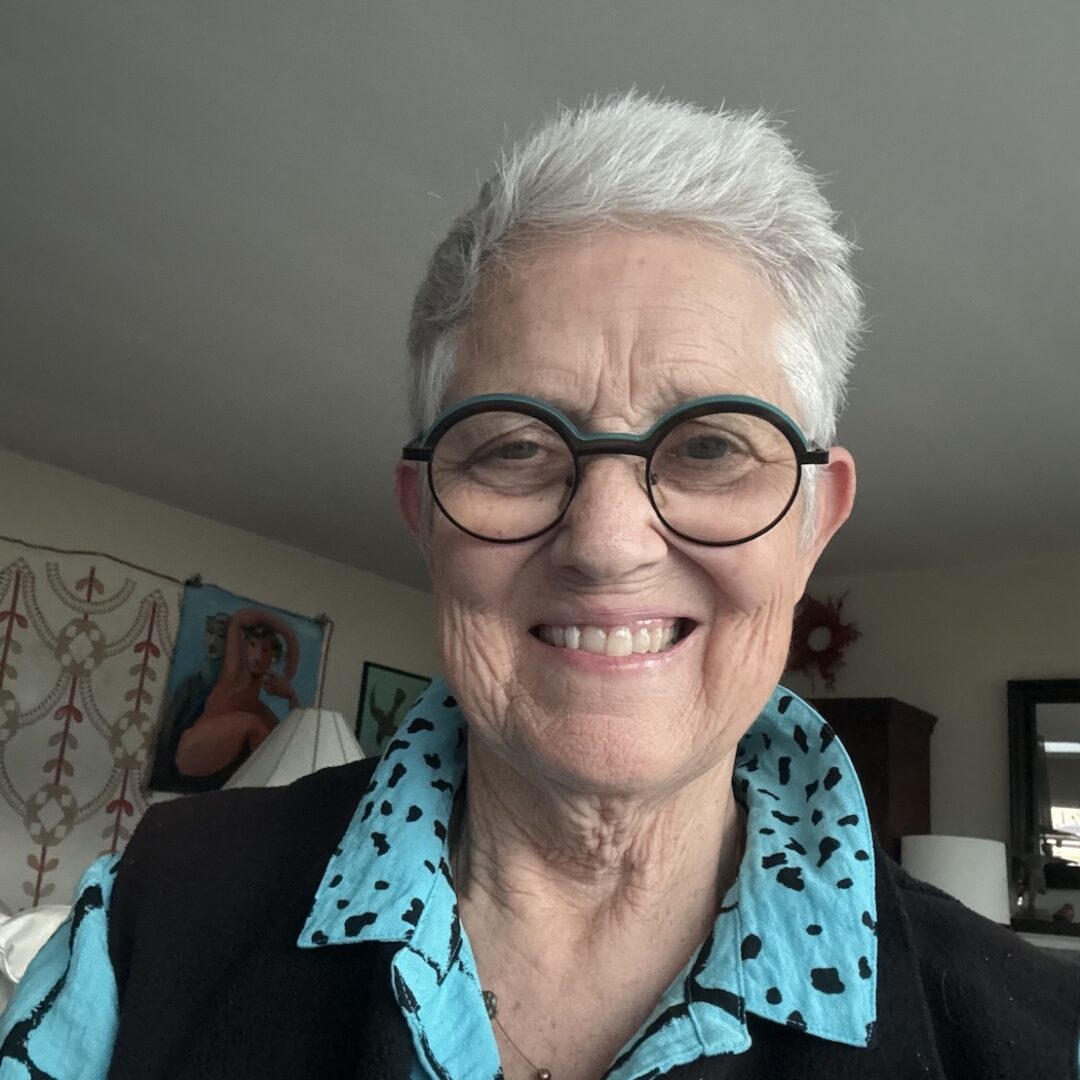
Tracy Gary has been a catalyst shaped by the community, its partners, networks, leaders and donors for over fifty years. She was a co-founder of The Women’s Funding Network.
Tracy is the author of Inspired Philanthropy: Creating a Giving and Legacy Plan, and is writing a book, Redesigning Nonprofits, (Wiley Publishers, Nov. 2026). She has worked in fifty states and twenty-five countries promoting social justice giving and women’s leadership. She helped start twenty-six nonprofits and has been on thirty boards. She engages multiple cultural generations for gifts made through giving from the heart with intention and strong advocacy for justice, equity and equality.