During my 8 years as a senior leader at NCRP, I was part of countless conversations about diversity, equity and inclusion; intersectionality; and the disparate funding that goes to legacy institutions instead of marginalized communities. Thanks to NCRP’s 50 years of leadership and the thought leadership of the members of CHANGE Philanthropy, GEO and United Philanthropy Forum, among others, the philanthropic sector has made strides in the 21st century to leverage funding for power building and reparations for communities that have long been ignored or scapegoated.
Despite some progress, there is still a long way to go.
Organizations led by or focused on gender, youth, communities of color and other vulnerable populations still struggle to receive equitable funding compared to their white counterparts, prior to the Trump administration’s attacks on diversity-related causes and freezing $10 billion in funding to “Democratic-led” states and social programs.
Further, a rapidly changing media, cultural and political landscape is shifting the centers of power in our failing democracy. The K-shaped economy is widening the gap between the haves and have-nots across all sectors. The problems are complex, enormous and interconnected, and there’s no one-size-fits-all approach to meet the demand.
One funding gap that is seldom discussed is the decrease and lack of funding going from left-leaning funders to faith-based organizations. As the CEO of a faith-based non-profit during these tumultuous times, I am clear that this major funding blind spot must be addressed to make effective social change at this moment, or we risk generational loss. Progressive philanthropy has a strategic opportunity for growth. Funders must understand the role that faith and religious identity plays in our intersectional analysis of marginalized communities. For those looking to support civic engagement, rebuild our democracy and create an equitable society, faith-based work is a necessary strategy.
There is a paradox in left-leaning philanthropy when it comes to faith. There is a pervasive belief that faith-based groups are not strategic investments, yet many philanthropic professionals are people of faith. During my time at NCRP, many foundation staff, fundraising consultants and other industry professionals confided that their faiths and spiritual beliefs motivated them to work in philanthropy. However, they often did not feel comfortable explicitly discussing that aspect of their identity with their colleagues. The last 3 years have exacerbated interfaith tensions that already existed and made it more difficult for people to share their faiths. Despite these ongoing challenges, faith groups and leaders are core strategic partners for effective change.
If philanthropic professionals draw on their spirituality to apply strategic thinking to funding, it follows that faith leaders driving social change do the same. Faith groups – often misunderstood by modern philanthropy – are established in communities across America and quietly shape policy, culture and democracy at scale. They are already established and actively serving their communities. Across political divides, racial lines and income brackets, faith leaders remain some of the most trusted messengers in American life.
For funders serious about long-term impact, power-building and systemic change, that matters. It’s time to fund faith, now more than ever.
Faith Leaders Are the New Policy Influencers
NCRP has successfully motivated philanthropy to fund policy shops, advocacy and think tanks. Funding faith-led advocacy is not a departure from that strategy – it is an expansion of it.
When policymakers want to understand what their constituents believe, they often look to faith leaders first. Gallup reports that clergy rank among the top most trusted professions in the United States, well above journalists, politicians and business leaders.
That influence emerges not only in sermons, but in city councils, state houses and congressional hearings. Elected officials don’t want to risk the ire of a faith leader with a large following.
To our collective detriment, fringe, right-wing clergy have been the most vocal and best funded. Historically, they’ve distorted and weaponized faith for their political gain to justify oppression and violence against marginalized people. Meanwhile, left-leaning funders have not consistently invested in faith leaders who adhere to the core tenets of religious traditions unless circumstances prompt action.
The disparities are vast and continue today.
IRS filings from 2024 show nearly $260 million invested in right-leaning nonprofits at the intersection of media, policy and culture. Turning Point USA and Prager University Foundation, 2 nonprofits with unapologetically white Christian nationalist perspectives and pastoral networks, received $84 million and $66 million, respectively.
In contrast, a pro-democracy funder collaborative invited grantees to envision an “ambitious idea” with a “lottery ticket” investment of $10 million.
Faith in Public Life, and our frequent collaborators, Hindus for Human Rights and Bend the Arc, have a pending proposal to expand our faith speakers’ bureaus. With hundreds of millions of dollars, we could not only recruit and train faith leaders but also build platforms, content teams and leadership profiles through organic content, paid partnerships and multimedia advertising.
Faith leaders already have political influence. Philanthropy must invest in faith strategies that promote equity, inclusion and liberation at scale.
Faith Shapes Media and Public Opinion
NCRP’s research has proven the return on investment when philanthropy funds marginalized leaders without stigma and trusts them to communicate effectively. Faith leaders should also be included in this approach.
According to the Pew Research Center, nearly 47% of Americans say religious leaders should speak out on political and social issues. Public opinion is not just shaped by headlines and social media algorithms. It’s also shaped in sermons, study groups, prayer circles, religious schools and community gatherings – cultural spaces that reach millions weekly and operate largely outside traditional philanthropy.
Faith leaders consistently show up as credible voices during moments of crisis and change. During the Civil Rights Movement, Black faith leaders were spiritual guides and media strategists who exposed the immorality of racial oppression. They framed civil rights as a moral issue that demanded public attention and documented the violent responses to peaceful demonstrations for rights and dignity.
Reverend Dr. Martin Luther King Jr.’s “Letter from Birmingham Jail” remains one of the most influential media interventions in American history, precisely because it fused faith, ethics and public sentiment. Organized people of faith in Selma, Alabama leveraged the media to contrast their peaceful protests against the violent tactics of Jim Crow.
From Charlottesville, Virginia in 2017 to Minneapolis now, faith leaders across traditions are still on the front lines of modern resistance movements and making headlines that convey moral messages to the public. Two of Faith in Public Life’s board members, an imam and a rabbi, spoke and participated in peaceful rallies in Minnesota. Faith in Minnesota, a 501(c)4 organization, organized a direct action and civil disobedience where 100 clergy of different faiths were arrested in protest of ICE. Jamal Bryant, an activist, author, and pastor from the New Birth Missionary Baptist Church in Georgia, amplified and recruited people of faith into a boycott against Target and other corporations for retracting their DEI pledges. The #boycottTarget effort resulted in a 30% drop in stock prices, which amounted to over $12 billion in losses, and a CEO resignation. Bishop Mariann Edgar Budde, the first woman to preside over the Episcopal Diocese of Washington, has directly called out President Donald Trump from the pulpit. Notably, she asked him to “have mercy” on vulnerable and scared people, particularly immigrants and LGBTQ+ individuals, at the 2025 National Prayer Service.
Faith leaders also model the power of redemption and create a permission structure in which the general public can change their opinions and beliefs. Minister Rob Schenck, an activist and evangelical minister who spent 3 decades lobbying for the religious right, recently attended anti-ICE protests in Minneapolis. His conscience drove him to right his wrongs and repair damage done to communities. In all of these examples, faith leaders didn’t act alone, but partnered with secular, public and private groups to enact these initiatives.
Today’s faith leaders are doing similar work around climate change, reproductive justice, gun violence, combating misinformation and democracy itself. This is why Faith in Public Life launched an Interfaith Speakers Bureau to train, equip and elevate faith leaders across traditions to respond to major media moments.
Funding faith-led communications is not about proselytizing – it is about amplifying trusted messengers who can reach communities that philanthropic organizations and organizers often struggle to reach on their own.
Whether on cable news, local radio or social media, when faith leaders speak, people listen.
Faith and Values Are the Lens Through Which People Vote
The philanthropic sector often values quantitative data over the lived experiences of marginalized people. Yet, NCRP’s research has shown how long-term change is best sustained when identity and experience drive solutions. Faith is a core aspect of identity that drives systemic solutions, voting decisions and civic engagement.
Nearly 82% of Americans identify as religious, spiritual or both. This means people of faith are everywhere, and those who are most directly targeted and affected by systemic oppression have faith identities that intersect with their race, immigration status and gender. The more we shy away from incorporating faith and values into everyday conversations, including democracy, the more we disconnect from a core aspect of voters’ identities.
We often talk about voters as demographic categories – age, race or income. But values matter just as much. According to Pew, about 64% of Americans say religion plays at least some role in how they think about political issues, and nearly half say it plays a major role.
Faith shapes how people understand right and wrong, responsibility and care, and freedom and obligation. Faith-based stories are often shared widely online because they are value based and connect with people on a deep level.
Those frameworks influence whether people vote, who they vote for, and how they engage beyond the ballot box. Ignoring faith in democracy work leaves a massive gap in understanding voter behavior.
In the Muslim tradition, for example, the principle of amanah – trust and stewardship – has inspired civic engagement efforts focused on ethical leadership and accountability. Muslim-led voter education groups like EmgageUSA have successfully increased turnout by framing participation as a moral responsibility rather than just a civic duty.
For philanthropy concerned about democratic backsliding, disinformation and disengagement, faith-led democracy work is not peripheral – it is essential. Faith organizations are often the only ones able to engage people who feel alienated from politics but deeply connected to their faith or identity communities.
Faith Offers Models Community Building and Leadership Development
In the “Smashing Silos” series of reports, NCRP explored the benefits of investing directly in leaders. Beyond policy and politics, faith traditions offer something philanthropy often seeks but struggles to build: a durable community and leadership sustainability.
Faith-led organizations are experts in leadership development, volunteer engagement and long-term sustainability. They know how to cultivate leaders over decades, not grant cycles. They know how to care for people through conflict, burnout and transition. For example, El-Hibri Foundation invests in dozens of Muslim-American leaders and allies each year, providing organizing training, capacity building and narrative development.
The U.S. Baha’i Office of Public Affairs regularly convenes interfaith dialogue and engagement activities to explore how to live out their core religious principles of unity, peace and equality in society. In indigenous spiritual traditions and Sikhism, leadership is often collective and intergenerational, emphasizing balance and responsibility to future generations. These are not just spiritual practices – they are governance models.
Clergy, gurus, imams, rabbis, pastors and lay faith leaders regularly engage with issues that philanthropy cares deeply about: immigration, housing, public health, education, climate adaptation, criminal justice, and foreign policy. They use moral language inspired by their lived experience. When faith leaders frame climate change as stewardship, healthcare as human dignity, or immigration as hospitality, they are translating policy into values that mobilize action.
For philanthropy, this means investments in faith-led leaders and organizations often have outsized returns. These groups already have infrastructure, relationships, and moral credibility. With flexible funding and partnership – not control – they can scale impact without losing their roots.
A Call to Fund What Already Works
For the last 50 years, NCRP has redefined strategic philanthropy. Philanthropy does not need to abandon strategic thinking to fund faith-led work. It needs to recognize that funding faith-based work is an extension of successful investment practices.
Some faith-inspired philanthropy like the Unitarian Universalist Program at Veatch and Trinity Church Wall Street have long recognized the impact of faith-based organizations. The Schusterman Foundation references the Jewish concept of tikkun olam– repairing the world – as a motivation for their work. This principle has animated decades of faith-driven policy advocacy in Jewish communities, including civil rights and refugee resettlement. But too often, faith leaders work with minimal resources and little recognition while shaping policy, influencing media, strengthening democracy and modeling sustainable leadership.
The question is not whether faith will shape our future. It already does. The question is whether philanthropy will invest in trusted messengers and moral frameworks that move people from belief to action.
Faith-based work enhances strategies that focus on policy, media influence, democracy and leadership, yet remains underfunded because of a belief gap within philanthropy about its strategic effectiveness. The range of influence of faith-based strategies is precisely why funding faith matters.
If philanthropy is serious about systems change, democratic resilience and social transformation, then funding interfaith work is not optional – it is strategic infrastructure. It is one of the smartest investments philanthropists can make to sustain society for the next 50 years.
About the Author
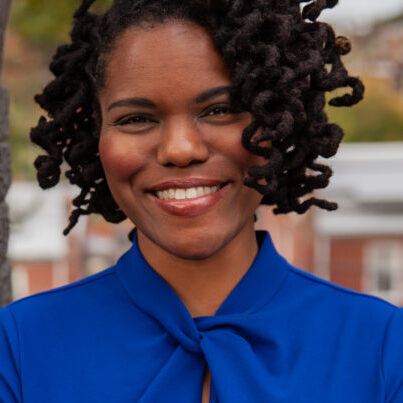
Jeanné Lewis is a nonprofit executive, faith-based organizer and CEO of Faith in Public Life, a national interfaith coalition of faith leaders advancing society through narrative, culture and belonging. Previously, she served at the National Committee for Responsive Philanthropy, expanding funding for social justice organizations and as director of U.S. programs at Search for Common Ground. She’s organized military and faith communities across the country. Jeanné attends St. Augustine Catholic Parish in Washington and is a former political candidate. She holds a BA from Washington University and MA in Conflict Resolution from Antioch University Midwest.