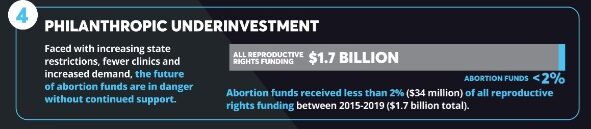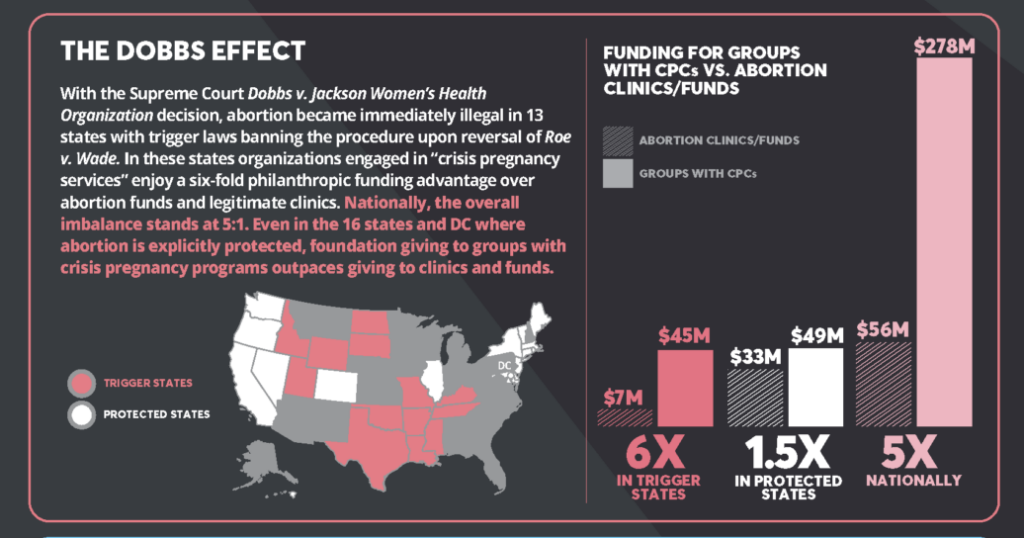
Overview of NCRP’s Reproductive Access and Gendered Violence Movement Investment Project

At NCRP, our approach to reproductive liberation and freedom from violence is shaped in partnership with sector partners and grassroots organizations across the Reproductive Access and Gendered Violence (RAGV) Movement. Together, we are building a shared framework grounded in a rigorous analysis and guided by the leadership of those most impacted by the harms we’re challenging.

I remain committed to the reproductive justice framework for what it makes possible and for the way it held me while I held others through moments of uncertainty and hope.

It’s a framework that has never been abstract or untethered; it has only been a place of refuge, clarity, and collective breath. It’s the throughline that connects reproductive access to freedom from gendered violence by insisting that bodily autonomy and safety are inseparable.

This is my love letter to reproductive access and gendered violence work, not as an idea, but as a living practice carried by people who show up repeatedly. I write with deep appreciation for the providers, organizers, healers, funders, and strategists who have committed their lives to this work. You have built systems of care where none were guaranteed, and you have done so with safety, autonomy and dignity at the core.

I am grateful for what this movement has already made possible. For the clinics kept open against the odds and the networks of care that have moved people across imaginary lines, away from fear and isolation and toward safety and autonomy. For the organizers who have built trust where systems failed and the frontlines that have refused to accept half-assed solutions as the ceiling of our collective imagination.

This movement has given us language and vision as offerings to name harm without being consumed by it and ways to dream beyond survival. It has held space for complexity, honoring that people arrive with many truths at once, as caregivers, as survivors, as providers, as funders, and as people shaped by love, loss and responsibility. The reproductive access and gendered violence movements have taught us that reproductive liberation is not a single outcome, but a practice that insists on dignity, safety and agency across a lifetime.

I hold deep appreciation for the grassroots folks out of the South who carry this work with care and precision, often under extraordinary pressure. And I am equally grateful for those in philanthropy who choose to stand in authentic partnerships with this movement on the front lines, not behind them, who invest not just resources, but trust, patience and long-term commitment.

My relationship to this work is personal and enduring. It has held many parts of who I am across different seasons of my life, and it continues to shape how I understand justice, care and responsibility. I remain committed not just to honoring what has been built, but to supporting what is still becoming and the work ahead that will be carried by new leaders, new strategies, and the same fierce devotion to freedom.

This is an offering of gratitude to everyone who has labored, invested and believed. May our love for this work keep us present, keep us growing, and keep us building a world where safety, autonomy and care are realized, never deferred.

—Brandi Collins-Calhoun NCRP Movement Engagement Manager 

Recent Reproductive Access and Gendered Violence Projects:
Survivor-led Solutions, Sector Strategies

NCRP’s gendered violence work is rooted in the understanding that gendered violence is produced by systems, not isolated incidents. To help funders and field partners align strategies and language, we’ve asked our partners organizations that have long been holding this analysis to share their definitions and framing. These contributions are movement and intermediary-led, center survivor experiences, highlight systemic harms, and emphasize continuity and care over episodic responses. Together, they create a shared framework for philanthropy to move from siloed approaches toward integrated, well-resourced and survivor-centered strategies. This is a living resource, a call-in to the sector to follow, learn, and act in alignment with communities on the front lines.

Reproductive access, gendered violence and LGBTQ+ rights are not separate stories. They find each other at the margins and intersections of the work and the hurt. They are chapters of the same book, written on bodies that have been policed, punished and politicized for daring to exist outside of someone else’s control. They are held together by a shared truth: Bodily autonomy is sacred, and safety, dignity and joy are not privileges, but birthrights.

Gendered violence expands beyond physical harm; it is structural, systemic and institutional. It is produced and reinforced through policing, health care, economic policy, education and philanthropy itself. Gendered violence shows up wherever power fears freedom, including in the targeting of trans people, especially trans people of color, whose lives are treated as disposable – for bodies forced to birth and coerced into sterilization – and the moments where queerness itself is framed as a threat, punished by law, culture or silence.

Through it all, we see the way movements refuse to abandon one another. We see the way the reproductive justice framework teaches us that autonomy means nothing without the conditions to thrive. We see it in the way LGBTQ+ organizers have long understood that survival requires community, care and imagination. And, in the way survivors transform pain into power through storytelling and healing justice, insisting on not just an end to violence, but daring to imagine and create a future rich with pleasure, safety and self-determination.

Philanthropy can be a partner to it all … but not with control or distance. Nor with fear dressed up as strategy. Instead, philanthropy can be a partner through trust and agency.

Philanthropy must fund work that is led by those most impacted – not as a gesture, but as a commitment. It can resource the long game, cultural change, base building and healing work that doesn’t always fit neatly into a grant report but can change lives all the same. Movements do not grow in silos, and investments in one fight strengthen them all, if we understand the intersections.

Philanthropy has a role: Not as a savior, but as a partner willing to be transformed, sit with discomfort, move money at the speed of harm, and believe that queer and trans people, survivors and people who may become pregnant are not problems to be solved, but visionaries shaping a more liberated world.

Protecting bodily autonomy in all its forms is not just resisting oppression; it is practicing freedom. None of our freedoms are singular, and none of our wounds exist alone. Our liberation is bound together.

—Russell Roybal NCRP Executive VP and Chief Impact Officer 

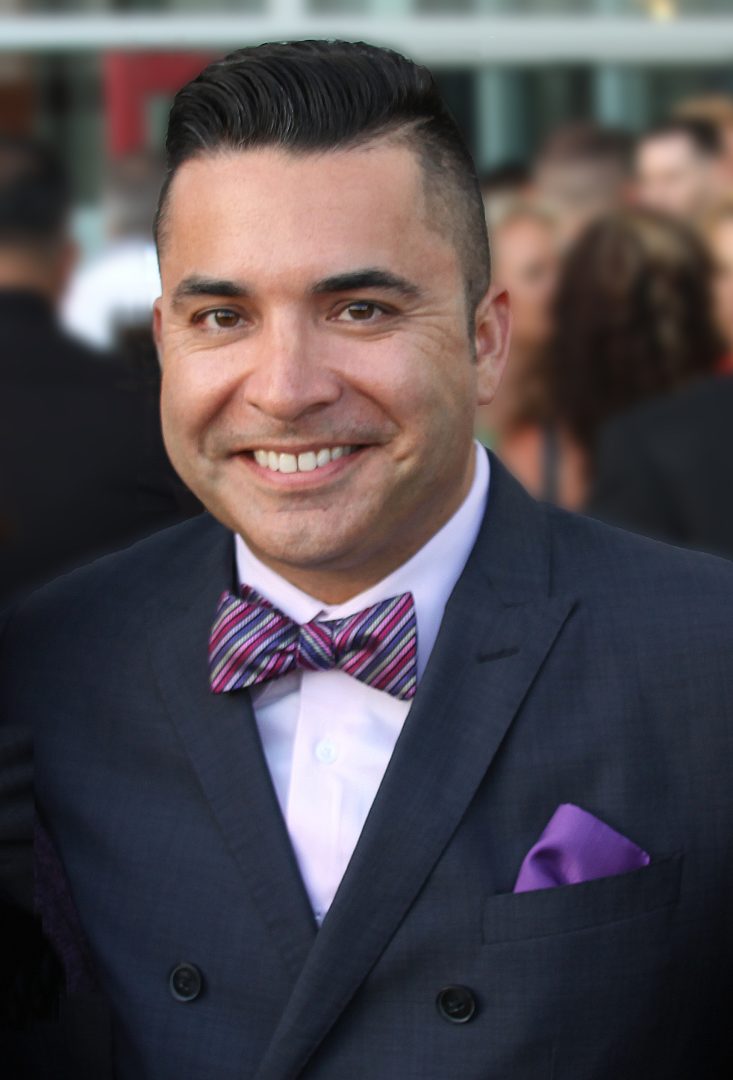
Headshot of newly hired NCRP Vice President and Chief External Affairs Officer Russell Roybal (he/they).
Abortion Access

NCRP’s abortion justice work is grounded in the understanding that attacks on abortion access are not isolated policy debates; they are part of broader systems that control bodies, families and futures. Abortion restrictions operate alongside criminalization, economic exclusion, family regulation and surveillance to maintain racialized and gendered hierarchies of power. Abortion seekers and storytellers sit at the center of this analysis, offering lived expertise and political leadership that exposes how these systems operate together.

I sit in deep gratitude for abortions. I honor those who dared to imagine a world that did not yet exist, who organized, risked and labored so that people could decide what happens to their own bodies and futures.

This current regime may have stripped choice away, but because of the reproductive justice framework, I know the truth that what has been created once can be created again – and transformed into something even more just, expansive and loving than before.

Nearly 50 years of Roe taught us that possibility is real. Reproductive justice further reminds us that legality alone is not liberation. It teaches us to envision a world where certainty replaces fear, where autonomy is not conditional and where care is rooted in dignity rather than punishment.

I honor the legacy of Black women and queer ancestors who birthed the reproductive justice framework. They understood that decisions about pregnancy do not exist in a vacuum, but are shaped by poverty, racism, environmental violence, state surveillance and systemic neglect. I honor those who fought beyond choice – for the right to have children, not have children, and parent children in safe and healthy environments. I honor the imagination that widened the lens – beyond abortion alone to contraception, fertility, prenatal care, lactation, parenting support and community care – recognizing that life does not simply begin or end at conception.

I pray for and uplift abortion providers. To the clinics that continue to offer care under impossible restrictions. To the nonprofits who fund, organize and listen deeply to communities they serve. To the doctors, nurses, physician assistants, midwives, doulas and telehealth providers who adapt as the landscape shifts beneath them. To the mutual aid networks that move mountains – coordinating travel, lodging, childcare, food, and safety – so people can access care with dignity and respect. May your work be protected, resourced and sustained.

To every person who has chosen to terminate a pregnancy: I celebrate and honor the joy, relief, grief, complexity and certainty that can live together in that decision. I honor you for trusting yourself, listening to your body and choosing your future.

I thank my own mother for sharing her fertility stories with me – for her honesty about how hard decisions can be and teaching me that the choice was never anyone’s but the person who made it. That lesson lives in my bones.

I applaud the artists who tell the truth when words fall short – who paint, sculpt, write and perform the emotions that surround abortion and reproductive justice. Those who show us how community holds us, how silence is broken, and how humanity is revealed through experiences of choice and care.

As I reflect on the NCRP Reproductive Access and Justice Teams past, present and future, I thank you for the roadmap, courage to imagine beyond what exists and continuing to build the road ahead.

—Suhasini Yeeda  NCRP Editorial Manager 

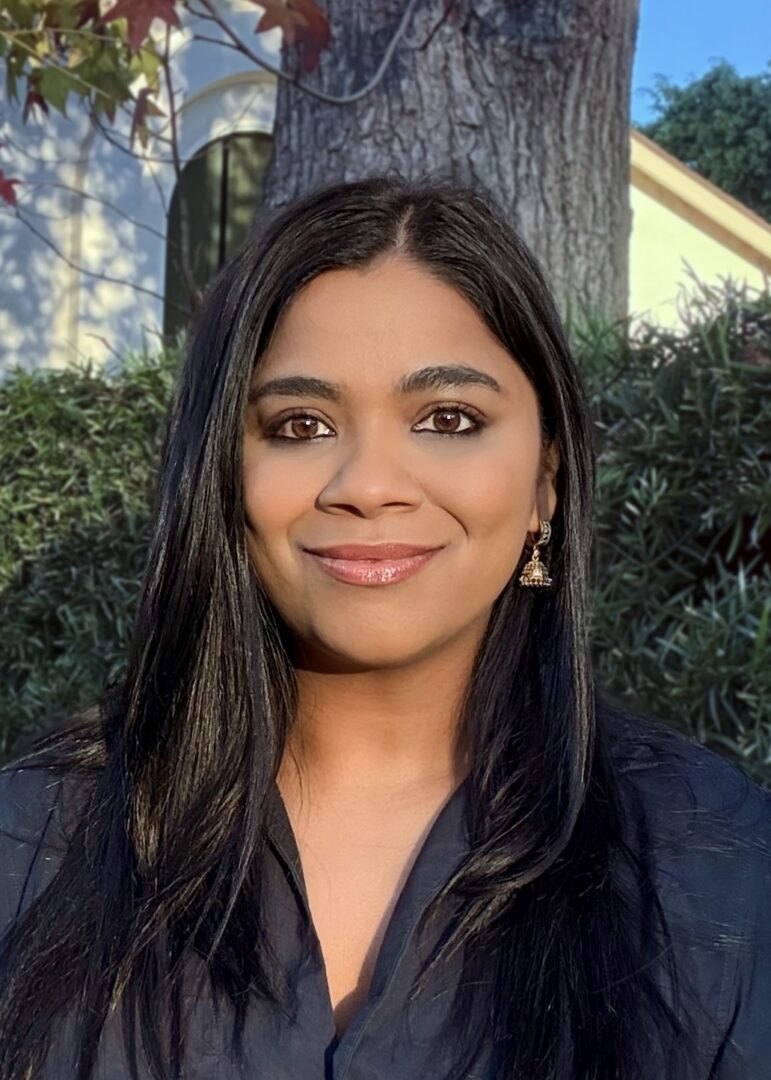
Suhasini Yeeda

This work is shaped by movement leaders who have demonstrated that storytelling is not just about shifting narratives; it is about building community, leadership, and power. We Testify’s Founder Renee Bracey Sherman said, “They’ve been closest to the pain, so they must be closest to the power. That can only happen if storytelling is invested in as a way of organizing and building the power of people who have abortions and then seats at the table are created for us to sit in and imagine a different world.” Influenced by this leadership, we recognize that abortion storytellers must be holistically supported : prepared to share safely, cared for throughout the process, connected in community and compensated for their labor. Storytellers are not communications tools; they are strategists and movement leaders.

Through this work, NCRP is helping philanthropy move beyond siloed, crisis-driven funding toward long-term, integrated strategies that are accountable to communities building power on the ground.

Birth Justice & Family Autonomy 

NCRP’s work on crisis pregnancy centers (CPC) is rooted in a birth justice analysis that recognizes reproductive control as a system of racialized surveillance over bodies, families and futures. Birth justice requires sustained investment in community and cultural care, including the mass mobilization, leadership development and training infrastructure built through HBCUs and Black-led community solutions that have long advanced care models rooted in trust, dignity and collective wellness. Listening to these leaders, particularly those building birth justice ecosystems in the South and through HBCU networks, helped surface how crisis pregnancy centers were expanding alongside this work. That same place-based listening, including our recent CPC analysis focused on Appalachia, revealed how CPC growth adapts to distinct regional conditions while advancing a shared national strategy. That listening is what led NCRP to deepen research into the scale, strategy and funding infrastructure behind CPC growth.

CPCs are not just a threat to abortion access; they are part of a broader opposition infrastructure targeting the full reproductive justice spectrum, particularly in Black, rural and other communities facing systemic disinvestment. As the sector elevated the Black maternal health crisis, CPCs simultaneously positioned themselves as community solutions, expanding gaps left by underinvestment while reinforcing stigma, misinformation and pregnancy outcome control. Addressing CPC harm is essential to protecting abortion access, birth justice and family autonomy and must be funded as core reproductive justice infrastructure.


Community-Based, Culturally Competent Solutions: 


About the Data

NCRP researchers obtained mission statement text from Part I, Line 1 of the IRS Form 990 for 1,107 organizations identified as crisis pregnancy centers.

Research leads Stephanie Peng and Tenaja Henson used a combination of manual text analysis and Python coding to identify clusters of keywords and sentiments within these mission statements. Each mission statement was then categorized based on the number of keyword matches within thematic clusters.


Three primary clusters emerged:
  • Anti-abortion and religious ideology – Keywords referencing faith-based missions and explicit anti-abortion ideology.
  • Medical framing and inaccurate depictions of abortion – Keywords suggesting medical services or promoting misleading narratives about abortion.
  • Hope, care and illusion of choice – Language emphasizing support, empowerment or choice while obscuring the organization’s anti-abortion agenda.

Approximately 3% of CPC mission statements did not clearly indicate their mission or used vague language such as “serving the community.”

And despite their role in the anti-abortion movement, only 17% of CPC mission statements explicitly used anti-abortion or religious language. Many CPCs are guided by evangelical Christian ideology, yet their public messaging often avoids explicit references to religion or opposition to abortion.

Instead, CPCs rely on strategic ambiguitypresenting themselves as neutral support organizations while advancing a clear goal: limiting the reproductive and parenting choices available to pregnant people.

This approach makes it far more likely that someone seeking pregnancy-related services will encounter a CPC that appears supportive and unbiased while actively working to discourage abortion.

Expanding Autonomy and Safety to Sex-Workers

NCRP’s Reproductive Access and Gendered Violence work recognizes that sex worker–led organizing is central to the fight for liberation, racial justice and reproductive freedom. Sex workers are not outside the movements they shape; they are program officers, organizers and movement leaders whose knowledge and experience drive strategies across labor rights, reproductive access, LGBTQ liberation and gender justice. Despite criminalization, stigma and systemic exclusion, sex worker–led spaces have consistently functioned as movement homes, sites of leadership development, community care and transformative strategy.

As Third Wave Fund’s Carlton V. Bell II articulated,“Sex worker-led organizing is routinely expected to sanitize, shrink and assimilate itself into frameworks that were never designed with us in mind. These frameworks often demand narratives of redemption, respectability, or reform that evoke pity rather than power. We’re told to tone it down, clean it up, make it make sense for people who’ve never had to trade their body, their gender expression, or their intimacy for survival.”

NCRP’s approach centers the expertise of sex workers, ensuring that funding, strategy and movement-building practices recognize the leadership, safety and agency of those most impacted. Through this work, NCRP calls on philanthropy to move beyond performative gestures and underinvestment. Supporting sex worker–led organizing strengthens cross-movement infrastructure, addresses systemic violence, and ensures that programs, policies and narratives are informed by the lived experience and leadership of those at the frontlines of reproductive justice, gender equity and liberation.


Lessons from the Frontlines: Understanding Sex Worker-led Movements:
  • From the Frontlines: Understanding Sex Worker–Led Movements
    The March 2022 issue of NCRP’s flagship Responsive Philanthropy journal lifts up the strategies, struggles and insights of sex worker–led movements, highlighting how funding and philanthropy shape the conditions for liberation, survival, and justice.
  • Funder Lessons from Four Years of Resourcing Sex Worker–Led Organizing and Grantmaking at the Sex Worker Giving Circle
    Third Wave Fund, NCRP’s 2021 “Smashing Silos” Impact Award winner, shares 4 key lessons for funders supporting sex worker–led organizations: provide unrestricted, multi-year grants; center trauma-informed, empathetic grantmaking; build multilingual structures emphasizing language justice; and stop demanding fiscal sponsors for effective grassroots groups. As Third Wave Fund writes, “Directly funding the well-being, bodily autonomy and organizing of sex workers most impacted by oppression is in itself a radical vision and our biggest impact.”
  • Survival and Liberation: Our Struggles as a Sex Worker Organization in Los Angeles
    Sex Worker Outreach Project Los Angeles demonstrates the importance of unrestricted, multi-year funding for day-to-day survival. Their all-volunteer, sex worker–led mutual aid work is constrained when time is lost to repeated grant applications that fail to address the growing gap in resources.
  • Trans and Sex Worker Justice Needs Steady Allyship
    The Kua’ana Project serves Pasifika trans women and sex workers in Honolulu, advancing public health, decriminalization and Indigenous rights. Project leader Maddalynn Sesepasara emphasizes that steady, flexible allyship ensures organizations can balance direct services with advocacy, which are both critical to sustaining transformative work.
  • Be Fund(ed) or Die: The Precarity of Sex Worker Organizing

    Support Ho(s)e contributors, led by Red Schulte, share the realities of working with funders in a space with limited support. When funders make mistakes, the lack of accountability compounds harm for organizers, underscoring the urgent need for responsible, informed and consistent investment in sex worker–led movements.

This issue offers funders a front row view of the leadership, strategies and resilience of sex worker organizers and a clear guide for how philanthropy can support them with respect, trust and long-term resources.

Advising Sex Worker-Centered Funds:

The RAGV project lead partnered with other sex workers that serve as philanthropic and movement leaders to advance peer-led funding models that shift power, strengthen movement infrastructure and align resources with community-defined priorities.

The project has served as an adviser for the Sex Worker Giving Circle [SWGC] Fellowship, reviewing applications, selecting fellows, sharing program work with networks and providing insights on applicants and their organizing. The SWGC Fellows have awarded over $550,000 in grants to U.S. sex worker–led movements and empowered people with current or past experience in the sex trade to make all high-level funding decisions, ensuring resources flow directly to those closest to the work. By pairing peer-led grantmaking with training and support, the program strengthened the leadership, resilience and sustainability of sex worker organizing.

Most recently, the project advised New Moon Fund’s Seed Funding initiative, launched with support from ViiV Healthcare’s AMP grant, by helping guide program design, selection processes and strategic insights on applicants and their work. The initiative provides $1,000 per month for 12 months to up to 15 U.S.-based sex worker–rights groups, prioritizing sex worker and survivor-led organizations focused on harm reduction and HIV/AIDS prevention and treatment. By pairing peer-led funding with strategic support and movement-informed guidance, this initiative ensures that resources reach the groups most positioned to advance health, safety and autonomy for sex workers.


Headshot of NCRP President and CEO, Aaron Dorfman in color

Dear Reader,

It seems like every news story brings a new reason to catastrophize about our democracy. The stakes have never been higher, some lawmakers are blocking every piece of legislation that would help build a stronger society, and once revered institutions are losing public trust.

Times like these feel discouraging until we look to movement groups on the ground. This summer’s Power Issue highlights movement groups building their community’s political power and challenges funders to wield their power well. At a time when American society seems to transform every week, movements remind us that change comes at the speed of trust. 

Karundi Williams and Kavita Khandekar Chopra of re:power (whose Board I serve on) powerfully describe this, saying that “civic engagement work can move beyond being transactional, to being transformational.”

Nonoko Sato from the Minnesota Council of Nonprofits writes that frontline groups doing civic engagement are hampered when funders don’t audaciously support the work.   

Dakota Hall from the Alliance for Youth Organizing agrees, challenging funders to boldly support 501(c)(4) organizations. Addressing foundations who fear being viewed as partisan, he says, “This isn’t about political parties. It’s about moving the political process closer to the people. It’s about investing in a more accurate and engaged electorate by allowing the groups on the ground to have the full, robust conversations our communities deserve.”  

In Puerto Rico, the directors of Mentes Puertorriqueñas en Acción describe their own ladder of civic engagement from volunteering to leadership, and map how marginalized young adults can become activist leaders when they are centered. They ask, who are we building power for?  

Asserting that a community-focused political process involves meeting needs, Tim Wallace pushes back against funders’ arbitrary categorization of direct service and advocacy organizations, arguing that the nonprofits advocating most effectively can do so because of deep relationships to communities through their direct service.   

Laleh Ispahani from Open Society Foundations shares the evolution in thinking that has occurred at the foundation in recent years. They no longer fund civic engagement around particular issues in siloes. Instead, she writes, they have learned “that the best way to advance reforms is by ensuring that impacted communities have enough power to shape the policies that shape their lives.” She shares about OSF’s “10-year strategy to build a pro-democracy, multi-racial majority in the U.S., an open society alliance fully committed to inclusive democracy, with enough political, economic, and cultural power to govern.”  

From youth engagement to voting rights to reproductive justice, frontline groups have been building communities and building lasting power in a hostile climate for years. These nonprofit groups show that the challenges the U.S. face are far from unprecedented – and that they can be overcome. More than that, they give philanthropy the unique opportunity to do more than just keep current systems from crumbling, showing that if we are bold, we can all be part of transforming our society for the better.   

Be bold,   

Aaron Dorfman 
NCRP President and CEO 


Dear Reader,

It is no secret that philanthropy was designed with little consideration of whether there would be space where I could find safety, community and agency.

A seat at a table where my philanthropic counterparts were not discussing their commitment to rescue some part of my identity through their giving and performative statements of solidarity. A room that has not found a reason to silence me because of its commitment to respectability, white supremacy or misogyny.

And while I have struggled to find that space that holds me in my entirety, I found refuge amongst familiar comrades: other current and former sex workers.

Sex worker–led spaces have consistently been what I have considered to be my movement homes. The frontlines across movements, from labor rights, racial justice, reproductive access, LGBTQ rights and gender equality, are being led and influenced by sex workers.

Our knowledge and experience have been vital in the work toward liberation and freedom from violence, and our presence continues to shift work in transformative ways. Despite the sector’s attempts to cast sex workers into the shadows, we are in fact your program officers, development coordinators and movement engagement managers.

Unfortunately, criminalization, violence and stigma have led to philanthropy silencing sex workers, erasing our contributions to the sector and leaving sex worker-led movements under-resourced.

From 2015–2019, sex workers received less than 1% of all human rights funding. This is a result of the sector treating sex workers and those in the sex industry as something parallel to the work that foundations have committed to, something far beyond the invisible funding lines that they have drawn. In actuality, there is not a single issue or movement that does not center or intersect with the oppressions that sex workers face.

National Committee for Responsive Philanthropy (NCRP) is proud to feature just a few of the sex worker–led funding and movement initiatives that help move society closer to doing more for those who are marginalized, underserved and disenfranchised.

“Funder Lessons from 4 Years of Resourcing Sex worker–led Organizing and Grantmaking at the Sex Worker Giving Circle” by Christian Giraldo, program officer at Sex Worker Giving Circle at Third Wave Fund, highlights the truths and realities of “who keeps us safe.”

The Sex Worker Outreach Project Los Angeles (SWOP LA) introduces its work that references “how a lack of funding impacts sex workers is in how it displaces us from coordinating our own research into our own lives and communities.”

In “Trans and Sex Worker Justice Needs Steady Allyship,” Maddalynn Sesepasara at the Kua’ana Project demands that “the absence of funding for trans-led and sex worker-led organizations who have decriminalization advocacy in their portfolio ensures that the battle for organizational survival will have to be simultaneously waged on multiple fronts.”

“Be Fund(ed) or Die: The Precarity of Sex Worker Organizing” by Red Schulte, with contributions and considerations from The Support Ho(s)e Collective, is about the importance of “accompliceship, not charity” and names the “potential for participatory programs led by communities directly impacted to shift the discourse away from voyeuristic donor-driven charity and into accompliceship and wealth redistribution.”

We hope you hear the storytellers from the frontlines of sex worker–led initiatives and use them as a resource and guide to allocate more funds to the work they are committed to.


In Solidarity,
Brandi Collins – Calhoun
NCRP Movement Engagement Manager

Dear Reader,

When I became pregnant with my first child, I had health insurance, financial stability and excellent prenatal care.

I had a home, nutritious food, a car, a hospital located nearby and someone to drive me there.

I hadn’t done anything to deserve these things. I had them largely because as a white, upper class woman there are multiple societal structures built to give me the right to make certain choices — and to rob others of the same opportunity.

I was able to choose to delay parenthood until my 30s because I had the right to access comprehensive sex education and contraception. I chose an OB/GYN that provided premium care because I had access to the right to health care. My parents and grandparents were not redlined or subjected to predatory lending, but instead had access to the right to housing that created the generational wealth I used to buy a home in the neighborhood of my choice.

“Choice” in mainstream, predominately white-led reproductive rights discourse typically refers to the individual right to make one specific choice: whether (or not) to have an abortion.

A reproductive justice lens looks at the society surrounding that individual — not just at one choice, but at the multiple of choices that people should be able to make about their bodies and lives and why some groups of people have the right to do so while others do not.

Who gets to make which choices — or gets a choice at all — is a structural issue. NCRP’s new focus on reproductive access and gendered violence in our Movement Investment Project continues our support for frontline groups combatting the structures that stand in the way of social justice.

We are proud to feature movement leaders who help connect the dots and urge us to think differently about the nexus of reproductive access, race, class and inclusion.

The power of personal stories to reflect and shift societal structures is the focus of We Testify, whose founder Renee Bracey Sherman contributed “Sharing abortion stories means investing in storytellers as leaders.”

In “Sex education funding: There has to be a better way,” Reproaction Deputy Director Shireen Rose Shakouri calls on philanthropy to support the right to comprehensive sex education in the face of a conservative movement that seeks to limit young people’s choices through shaming, stigma and misinformation.

Philanthropy must invest in Black-led organizations to improve maternal mortality,” a Q&A by NCRP staff of National Birth Equity Collaborative President Dr. Joia Crear-Perry, makes clear that systemic racism is at the root of inequity in maternal health and morbidity, and investing in Black women-led organizations and solutions are the only path forward to addressing it.

We hope you engage with the critical questions and calls to action from our authors and look forward to working collectively to support reproductive justice!


Abortion storytelling is labor. It’s time philanthropy invest in it. 

When I had my abortion in 2005, I was 19 years old, and I was sure I might be the 4th person ever to have an abortion — after my then-favorite rapper Lil’ Kim, a close cousin and an ex-best friend.  

Of course, that was not true, but that’s what it felt like as I walked up to the clinic unsure of what the future would hold.  

I felt so lonely in the clinic, even as the clinic workers’ smiles warmed every room I sat in for counseling and an ultrasound. I was certain in my decision, but that didn’t change the fact that I still felt the need to hide it from my pro-choice family.  

I was worried that they might judge me for becoming pregnant in the first place and begrudgingly support my decision to have an abortion. I wasn’t willing to take a risk that I might not get the exact unflinching support I needed at the moment, so I didn’t tell any loved ones that I was having an abortion.  

What I know now is that everything I was feeling stemmed from abortion stigma — defined as the shared understanding that abortion is morally wrong and socially unacceptable.  

Abortion stigma is everywhere; it’s the general messaging that abortion is bad, the decision should be kept a secret and it should be apologized for.  

It shows up in the way in which politicians use euphemisms to avoid saying the word, to labeling those of us who have abortions as “fast girls” or “loose women.”  

These signals are all over our society and tell those of us who have abortions that even if we decide to seek out care, we should do it in secret and never talk about it again.  

But this isolation leads to loneliness and the feeling that we’re among the only people in our community, or even the world, who have abortions — as I felt for so many years. 

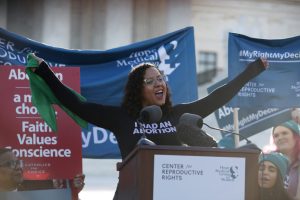
We Testify abortion storyteller Kenya Martin speaks at the oral arguments for the June Medical Services v. Russo case at the U.S. Supreme Court, March 4, 2020. Photo credit: Center for Reproductive Rights.

We Testify abortion storyteller Kenya Martin speaks at the oral arguments for the June Medical Services v. Russo case at the U.S. Supreme Court, March 4, 2020. Photo credit: Center for Reproductive Rights.

The importance of abortion storytelling 

During the next 6 years, I only told a few people that I’d had an abortion. The more I shared my story, the more I’d hear “I had one, too,” in response.  

As I met more people who’d had abortions, I realized how much commonality we had in our stories, yet they weren’t being shared widely nor were they represented in public discussions of abortion access.  

Moreover, when experiences were brought into the conversation, they focused almost exclusively on young, white cisgender women who sought abortions in order to finish college studies.   

While those women’s stories are vital, they only give us a glimpse into a narrow narrative that doesn’t necessarily reflect the experiences of most people who have abortions — the majority of whom are people of color, already parenting, living on low-incomes and navigating difficult financial, logistical and legal barriers to abortion care.  

Our narratives deserve to be told, not just so we can find one another, but also because the exclusion of our experiences means the full truth about abortion is not being told. 

Without our stories, the anti-abortion movement and those who want to restrict access to abortion care are able to fill the void with caricatures of us, usually based on racist, sexist and xenophobic stereotypes long ingrained in our nation’s memory.  

They talk of “taxpayer funding of abortions” to conjure the anti-Black “welfare queen” trope in hopes that the audience will forget that Medicaid insurance recipients also pay taxes and that no matter what, everyone deserves unfettered access to medical care.  

They have a vested interest in keeping us silent so they can tell a different story, one that erases our humanity and encourages people to ignore empathy in favor of more restrictions, criminalization and white supremacist control of our families.  

We cannot undo the harm of white supremacy without confronting the real experiences of the people it impacts. 

Abortion story tellers need support 

When I began sharing my abortion story, it was to counter the horrific messages that anti-abortion leaders were spreading about Black women like me who had abortions.  

I wanted to talk about the complexities of becoming pregnant when I wasn’t ready to parent and the ways that the lack of sexual health education and racist and sexist stereotypes about young Black women impacted me.  

But when I shared, I often found myself as the lone Black person sharing my story, which opened me to vicious threats and violent harassment. I questioned whether storytelling was a safe vehicle for change. 

The reproductive health, rights and justice movement had not invested in protecting abortion storytellers to ensure that when they spoke out, their voices would be met with love, support and care.  

Storytellers were asked to share their stories at public testimonies and left to handle the backlash on their own.  

We needed to see abortion storytellers as the leaders they are and invest in their future, health and well-being so that their storytelling experiences were good ones, not solely memories of harassment and threats.  

The more we can support abortion storytellers — in public, with love, encouragement and accolades — the more we’re modeling what the treatment of people who have abortions should look like and more people will be willing to step into the sunlight with their truths. We had to create a new theory of change. And we did it through We Testify. 

We Testify Executive Director Renee Bracey Sherman hypes up the crowd as the rally emcee at the oral arguments for the June Medical Services v. Russo case at the U.S. Supreme Court, March 4, 2020. Photo credit: Center for Reproductive Rights.

We Testify Executive Director Renee Bracey Sherman hypes up the crowd as the rally emcee at the oral arguments for the June Medical Services v. Russo case at the U.S. Supreme Court, March 4, 2020. Photo credit: Center for Reproductive Rights.

Elevating abortion storytelling through We Testify 

We Testify is a nonprofit organization dedicated to the leadership and representation of people who have abortions. We invest in abortion storytellers to elevate their voices and expertise, particularly: 

  • those of color. 
  • those from rural and conservative communities. 
  • those who are queer-identified. 
  • those with varying abilities and citizenship statuses. 
  • those who needed support when navigating barriers while accessing abortion care.  

Through We Testify, people who’ve had abortions meet one another to build fellowship and solidarity around their shared experiences and learn about the challenges that others experienced in obtaining care.  

The We Testify storytellers support each other as they speak out on abortion access issues, as well as other intersecting reproductive justice issues such as incarceration, immigration, sex work, disability justice and more.  

The bond of their cohorts creates the support and confidence they need to speak out and change the conversation about who has abortions and why.  

The pressure to keep our abortions a secret is a weighing one that can only be lifted by openly sharing, being validated and knowing that others who have similar experiences are waiting in the wings to share their stories, too. 

As part of We Testify, we deeply believe in reproductive justice, which is a human rights framework ensuring everyone is able to decide if, when and how to grow their family, and raise their families free from violence and coercion.  

To operationalize this, We Testify storytellers are encouraged to not only share their abortion experiences but the systemic issues that set in play the various barriers or privileges that affected their experience.  

The storytellers share our stories with a goal to let others know they’re not alone and identify the systemic changes that could make access easier for those who need abortions in the future. 

Through We Testify, abortion storytellers attend a retreat where they receive training to ensure they’re able to share their stories as they want and in a way that feels most empowering to them.  

They also receive training to protect themselves from targeted harassment, not perpetuate abortion stigma and communicate effectively with reporters and media.  

Philanthropy must support abortion storytelling 

Because storytelling is labor, the We Testify storytellers are compensated for their engagement in the program.  

Many are living on low-incomes, have experienced financial hardship as a result of sharing their abortion stories with loved ones, or are trying to break into the social justice movement. Compensating them for their labor is core to our economic justice values. 

But that can only continue if philanthropy values storytelling as a theory of change and storytellers as our next generation of leaders.  

Storytellers have long been seen as messengers for fundraising events and presentations, but if we are to create true change in our communities, we have to see that they are leaders who can create a new vision for abortion access.  

They’ve been closest to the pain, so they must be closest to the power. That can only happen if storytelling is invested in as a way of organizing and building the power of people who have abortions, and then seats at the table are created for us to sit in and imagine a different world. 

Abortion storytellers have been breaking the silence for decades and are leading the way to envision what the future of justice we seek to create will be.  

Their legacy is in the truths they tell about our nation’s healthcare system and how people are treated when we’re collectively told not to love out loud people who have abortions or honor them with the respectful care they deserve.  

We’d be wise to not only listen to their wisdom but deeply invest in their leadership. Storytellers are our messengers for the future and will always remind us that someone we love has had an abortion. We have the tools to create a better system. It’s time that we listen and invest. 

Renee Bracey Sherman is the founder and executive director of We Testify. 

A Q&A with National Birth Equity Collaborative’s Dr. Joia Crear-Perry 

NCRP’s Movement Investment Project initiative has been committed to hearing the experiences of Black, Indigenous people of color-led organizing in the reproductive access space.

And while NCRP has been vocal and responsive to the current threats against abortion access, we must remember that the reproductive justice framework is not simply a catalyst for abortion services. This work expands across sectors and movements like most topics, but is often reduced to 1 or 2 mainstream issues.

The reproductive justice framework consists of several pillars that hold up this work, and a major part is held by those committed to addressing the maternal mortality crisis through a birth justice lens.

NCRP Impact Award Winner Groundswell Fund describes birth justice as core to achieving reproductive justice and the disparities that birthing people of color experience that lead to their harmful experiences and their deaths are at the core.

This trend has caused an influx of distrust and unease within the movement amongst organizations and leaders. But we must address what systems are responsible for the turmoil.   

As much as philanthropy removes itself from movement politics and tensions, the sector can no longer recuse itself especially when its existence is harming both the narrative of the work and the Black leaders on the frontlines.  

A consistent pattern that the movement has raised suggests that philanthropy’s presence dehumanized the maternal mortality crisis and that current grantmaking practices aren’t saving us, just romanticizing our deaths and trauma. 

The data and numbers that the sector collects are more than learning tools or justification for grantmaking. They are the deaths and traumas of marginalized people, and it is philanthropy’s responsibility to ensure that their proximity to power does not overshadow or manipulate the messaging from the frontlines and those most impacted. 

National Birth Equity Collaborative logoDr. Joia Crear-Perry, founder and president of NCRP nonprofit member National Birth Equity Collaborative and contributor to Black Maternal Health Research Re-Envisioned: Best Practices for the Conduct of Research With For, and By Black Mamas in collaboration with other Black Women Scholars and the Research Working Group of the Black Mamas Matter Alliance, spoke with NCRP about what trends she has seen as someone leading national work focused on the maternal mortality crisis and the safety of Black birthing people. 

Editor’s note: Some of the responses were edited to fit the format of the article. 

How can the sector ensure the narrative around maternal mortality not be dehumanized and use their proximity and power as a catalyst for the voices of leaders like you to control the narrative? 

Improving maternal health — including maternal mortality — requires that we understand the root causes of the inequities observed in maternal health outcomes. Structural determinants of health including structural racism are the root causes of inequities in maternal mortality and maternal morbidity.  

Women and birthing people are most burdened by the maternal health crisis and thus should be centered in developing solutions to improve maternal health outcomes.  

Centering the voices of Black women and birthing people and partnering with Black-women-led community-based organizations allows us to identify not only the gaps in health care systems, but also community-level resources to optimize their pregnancy and birthing experiences.  

Relying on quantitative data and only centering clinical outcomes (e.g., maternal mortality and morbidity) and not maternal well-being is at a detriment to Black birthing populations. Black feminist thought requires that we center the narratives of Black women and birthing people to understand their experiences.  

To have the largest impact, philanthropic organizations may invest in Black-women-led community-based organizations, Black researchers, Black scientists and Black evaluators to examine the efficacy of models of care and interventions proposed by directly impacted populations.  

In what ways have you seen philanthropy center the realities of the maternal mortality crisis in their funding practices?  

Dr. Joia Crear-Perry

Dr. Joia Crear-Perry

We have not seen the sector address the realities of maternal mortality in their grantmaking. Foundations have failed to center those who are the most marginalized and refrain from following the leadership of Black-led reproductive justice organizations that are committed to maternal health.  

To effectively address the reality of the crisis, philanthropy would have to invest in Black women and provide them with the resources to lead, the sector would have to yield their power and remove themselves to avoid interfering with the work.  

Grantmakers have the tendency to group maternal mortality into reproductive health funding or create portfolios focused on maternal child health, with an emphasis on the child, neither allows for the work of Black-led maternal health leaders to base build truly sustainable efforts.   

What funding patterns is the sector currently committed to that leads them to neglect the many levels to the maternal mortality crisis? 

Now grantmakers are largely focused on high profile, white-led organizations that have not grounded their work in the reproductive justice framework.  

Philanthropy’s commitment to erasing Black-led organizations and the misuse of the reproductive justice lens has led the sector to advocating around provisions that are not Black-women-centered, such as optional extensions of Medicaid postpartum coverage.  

There has been a consistent pattern of the sector reinforcing and replicating systems of disadvantage by acting as gatekeepers and choosing who gets to hold the work regarding to maternal mortality. According to the Centers for Disease Control’s latest data, maternal mortality steadily increased between 2011 and 2014 with significant racial disparities.  

In 2011, funders designated only $2.5 million specifically to Black maternal health, and that was tapered by more than 50% in 2014. And while funding for Black maternal and perinatal health increased again and more than doubled between 2014 and 2018, the proportion of funding that was designated for Black people has remained at only 1.5% of total funding for maternal health in the same years. 

Is there other data pertaining to maternal mortality or birth disparities that you would urge the sector to add to their focus? What points are they and why? 

A recent study published in November 2020, suggested that physician-patient racial concordance is associated with infant mortality. The study found that Black infants cared for by Black doctors were more often to survive to their first birthday than Black infants cared for by white doctors. 

In fact, the infant mortality rate was also reduced for white infants when the attending physician was Black compared to when the attending physician was white. These data are compelling and support the need for diversifying the health care workforce and specifically supporting clinical training pipeline programs for Black trainees and other trainees of color.   

How can the sector ethically invest in maternal mortality without erasing the stories of those we lose and dehumanizing the work that leaders such as NBEC are holding? 

The following calls to action are simply a starting point to ethically investing in this work, it will take major shifts and accountability to truly fund this work without erasing the narrative of the lives lost to this crisis:

1. Allocate more funding to Black-led organizations and ensure the sector is following the leadership of Black women, they hold the solutions but are severely under-resourced.

2. Invest in community-based organizations to allow them to continue to do the work and build upon community by harnessing their power within the sector.

3. Center the voices of the most marginalized, specifically Black birthing people and birth workers.Solutions to the crisis should be driven by those closest to the crisis.

4. Create more funding streams for Black-led reproductive justice groups.Currently the few streams of funding available create competition among the organizations as each attempt to secure funds. The sector cannot continue to use funds to cause tension or distrust amongst leaders of the movement.

5. Recognize philanthropy’s anti-Black sentiment and the structural forces it creates.

We ask that the sector look to leaders like the National Birth Equity Collaborative and Groundswell Fund for examples of ethical, trauma-informed organizing and grantmaking that is grounded in birth justice.  

Foundations should be more proactive in this work, such as upcoming opportunities like the Black Mamas Matter Alliances and Black Maternal Health Virtual Conference, “the premiere assembly for Black women, clinicians, professionals, advocates, and other stakeholders working to improve maternal health using the birth justice, reproductive justice, and human rights frameworks.”  

Philanthropy can no longer wait on organizations to hold the emotional and intellectual labor to collect these stories and data points for their grantmaking practices, they must be intentionally present in spaces that focus on the issues.  

How can philanthropy step up to improve the quality of sex ed?

The U.S. has long been considered a leader in higher education systems worldwide, but every year we send young people to college with a dearth of knowledge about something that is often considered a hallmark of the college experience: sex. 

This isn’t just a blip that leads to awkward moments. It can cause real harm in the lives of young people. Miseducated and unaware adolescents cause harm to others, which in and of itself has individual and community costs.  

One or 2 examples of the ripple effect of miseducation would appear to strengthen the case for a systematic reimaging of how we educate young people to not just live to the best of their potential, but also maintain safe and healthy communities.    

Sex education varies widely by where someone went to school: not just geographically, but public versus private and city versus suburbs, too. We know that some states have different standards by county or district, or no standard at all, so education can differ widely based on grade, school or even individual teachers.  

Often though, these programs offer an abstinence-only approach, leaving young people poorly equipped for sexual decision-making, and often instead treating them to scare tactics, shaming and enforcement of strict gender roles and harmful sexual stereotypes.

The most recent data from trusted movement resource Guttmacher reportsthat only 30 states and Washington, D.C., mandate that, when provided, sex and HIV education programs meet certain general requirements: 

  • 17 states require program content to be medically accurate.  
  • 26 states and D.C. require instruction to be appropriate for the students’ age.  
  • 9 states require the program to provide instruction that is appropriate for a student’s cultural background and that is not biased against any race, sex or ethnicity.  
  • 3 states prohibit the program from promoting religion.  

At best, students in a comprehensive sex education program are taught the basic mechanics of sex, reproductive anatomy and a wide array of sexually transmitted infections along with other topics in their health education or similar class. However, comprehensive does not mean detached from stigma and humiliation.   

Sometimes, the same companies make materials for “non-judgmental” sex education programs as the shame-filled abstinence-only sex ed programs, but even the former have been known to offer incorrect, incomplete or stigmatizing materials for students to learn from.  

Would we accept this in any other category of education? 

Sexual education word concepts banner. Instruction and guidance on human sexuality. Infographics with linear icons on green background. Isolated typography. Vector outline RGB color illustration

A lot of the fault is in the funding.  

While many states have their own funding programs and there are federal dollars available as well, the nature of those programs is heavily dependent on who is in charge at the executive level.  

During the late 1990s and through the George W. Bush years, for example, more than $1.5 billion in federal dollars went to abstinence-only sex education programs.  

Some school districts simply don’t have sex education programming in their budgets, so they accept free or low-cost materials made available by hundreds of groups around the country that are opposed to comprehensive sex ed.  

These curricula, often faith-based, are notorious for promoting shame and misinformation through “sexual risk avoidance” trainings. Some of these programs are run through a local crisis pregnancy center – or anti-abortion fake clinic – and include harmful lies about abortion, contraception and other reproductive health decisions. 

Aside from simply not working, programs that stigmatize sexual activity have damaging, even traumatic, impact on young people who have been sexually active, or who have experienced abuse.  

Commonly, these programs teach young people – and particularly young women – that if they’ve had sex, they are like chewed gum, dirty sneakers, used toothbrushes or tape that’s been stuck to other people’s skin, picking up loose hair and skin and grime along the way.  

Telling young people that they’re unclean and unwanted for having experienced sex leaves emotional scars that could stay for life.  

What is philanthropy doing to support sex ed? 

While the sector cannot fill every gap that those elected to lead create, we know that philanthropic support for sex education exists. From 2015-2019, $195 million was allocated to sex education focused work, however only 22% of total funding was designated specifically for comprehensive sex education.   

Philanthropy can not only shift what funding access to comprehensive sex education looks like from foundations, this is an opportunity for philanthropy to develop a blueprint for federal and state funding to follow. The sector has been a system that sets the mold for government funding practices in the past and should use its power to encourage change.   

Sexual education concept icons set. Human sexuality and physiology idea thin line RGB color illustrations. Anatomy and reproductive health teaching. Vector isolated outline drawings. Editable stroke

There has to be a better way.  

Leaders of this work along with the funding support of the sector can create and sustain programs that promote truly comprehensive sexual health education, affirming that having sex is an individual decision that one should neither be shamed for choosing nor for holding off on.   

Investing in this work must be rooted in nuanced, honest conversations about consent in how we teach young people about sex, and model that boundary-setting is healthy, normal and will make their sexual lives better, not restrain them.  

We also need to support education on LGBTQ identities and relationships, so students can feel affirmed in their sexuality and prepared for what to expect, regardless of whether their sexual life takes heteronormative shape.  

This is a vital part of the sector’s larger responsibility to center reproductive health care as basic health care, including the full range of access to all methods of contraception and abortion. 

Philanthropy owes it to young people to respect their individuality and autonomy, to give them the tools to become experts of their own bodies and build better futures. 

Shireen Rose Shakouri is deputy director of Reproaction, a national organization leading bold actions to increase access to abortion and advance reproductive justice.