Nonoko Sato

A formerly incarcerated citizen is confused about their eligibility to vote. A rural-based citizen cannot reach their ballot box miles away from home because they do not have access to a reliable form of transportation. A new citizen whose primary language is not English is unsure if their mail-in ballot was counted.  

Roads towards meaningful, community-centered change all lead to the ballot box, and community-based nonprofits have played relatively silent, but significant roles in ensuring people most often marginalized can use their power and voices and participate in our democratic process. 

In 2020, Minnesota kept our eight Congressional seats by a very small margin in large part thanks to the community-trusted nonprofits who mobilized their communities to be counted in the census. Nonprofit workers knocked on doors, translated critical materials and resources, corrected misinformation, and emphasized the importance of civic engagement in addition to their day-to-day work, because they understood that stronger participation in our democracy contributes to our shared vision towards healthy, just, and equitable societies. While Minnesota boasts a high overall voter turnout rate, in large part due to same-day registration and our culture around voting and civic engagement, the disparities widen by race, ethnicity, age, geography, socio-economic status, among others, due to a history of voter disenfranchisement, unequal access to polling places, and language barriers (MNReformer & MinnPost). The lack of trust, engagement, and participation in our democratic process by our most marginalized communities compounds other disparities in policies, laws, and procedures that have long protected systems that only benefit those with wealth and resources. 

Minnesota Council of Nonprofits (MCN) celebrates the diverse work of Minnesota’s nonprofit sector, from volunteer led parent-teacher associations/organizations (PTA/PTO) to large nonprofit hospitals and colleges. Everywhere in between we have incredible theater, arts, and culture organizations; outdoor recreation programs; media companies; culturally and/or issue specific organizations that empower marginalized communities; capacity building and human services organizations; and associations all leading to a rich and robust sector of over 37,000 tax exempt groups (including 9,000 nonprofits that have at least one paid staff). 

As most nonprofits are 501(c)(3) and laws prevent us from engaging in partisan policy work, we are well-positioned to be agents of democracy. Many nonprofits have trust of the communities they serve and can support the communities to mobilize for positive changes they need to thrive. Nonprofits also have unique expertise in their specific area of focus, who better to testify about the need for affordable housing than a housing expert or even better, the person experiencing homelessness? Young people participating in academic support nonprofits have raised their voices in support of their teachers and advocated for meaningful investment into public schools. 75% of nonprofit workers in Minnesota identify as a woman, and we too have a unique voice in advocating for paid family leave and affordable childcare that will impact our current and future workforce. Our sector is strong, powerful, and well-connected, and yet our constant challenge continues to be lack of capacity. 
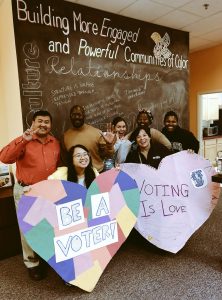
 

MCN meeting with Nexus Community Partners during Voting is Love tour.

Over the past two years, nonprofits have seen an increase in demand for services while funding sources remain unpredictable and unstable. Foundations that have promised change throughout the challenges of the dual pandemic of COVID and the racial uprising following the murder of George Floyd have rarely followed through on their promises to “center equity” by eliminating unnecessary barriers for under resourced organizations and trusting community by simply granting unrestricted dollars.  In fact, some may believe that this state of emergency we have experienced during the past two years is over, demonstrating the privilege they hold by not witnessing the constant and ongoing hardships and struggles of not just the nonprofits themselves, but the communities they serve. It is hard to let go of power, and funders eager to return to the “way things were” demonstrate that their statements and temporary changes to their granting processes were simply performative, and they continue to be unwilling to use this critical moment for actual systemic changes they have the influence to make. The tone is harsh because we see day-to-day the disparities of measurements of community health (rates of graduation, homeownership, generational wealth building, physical and mental health, among others) continue to worsen for people of color and other marginalized, intersectional identities. The adrenaline that nonprofit workers felt at the early onset of the pandemic has dissipated into bone tiredness, and tragically without our ability to compete in the job market, our workers are being enticed by other sectors with promises of better pay, benefits, and flexible work schedules. And we don’t blame them.  

We know that it is important for those serving community to reflect the demographics of that community, and yet we cannot expect community members to be activists and agents of democracy when they do not have safety and security for themselves and their families. Similarly, we cannot continue to expect community nonprofits and their staff to do more with less, when they have barely enough to keep up with basic but rising demands from the communities they serve. The inability to add more work, even for something as important as civic engagement is understandable when nonprofits do not have the time and resources they need. Yet the consequences of inaction are devastating, and philanthropy is poised to play a transformational role. 
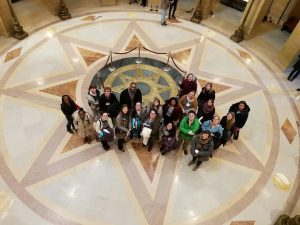
MCN’s VISTA cohort touring the Minnesota Capitol Rotunda.

Be part of the transformation that gives trusted nonprofits the ability to engage their communities in our democracy.  

  • Invest in democracy and public policy work. They may not always give you the sexy outcomes you want. Recognize that this work is critical to our missions and for our community 
  • Support organizations that have trust from communities who have historically low voting participation rates and if they ask, connect them to each other for resources and support 
  • Fund democracy work during mid-terms and off election years, not just during presidential election years. Local elections generally have extremely low turnout, and so each individual vote is particularly impactful. Local and state officials hold a great deal of power, and those elections influence our lives and our country just as much as the presidential elections. 
  • Help organizations build a strong foundation and support capacity building initiatives. Trust that your grantees know what they need, and give them as much flexibility in funding – ideally as unrestricted and multi-year – as much as possible 
  • Adjust for inflation for multi-year grants – that $10K you’ve been giving for 10 years is wonderful, and it will not meet the same needs in attracting strong talent and paying for materials in this current market 
  • If you have to give program-restricted grants, add on (or at least carve out) the administrative costs associated with running that specific program. Understand that those administrative costs as core program support.  
  • Eliminate unnecessary barriers & #FixTheForm: don’t ask for information that is already publicly accessible or you’ve asked before and you know the information hasn’t changed 
  • In times of crisis and critical moments (bonus if you do it all the time), consider the annual 5% pay-out of your assets as the floor and not the ceiling 
  • Be bold beyond performative actions and public statements. Use your own power to advocate on behalf of nonprofits who lack capacity and resources and the communities they serve. If there are legal limits to how much advocacy your foundation can conduct, find the line and go right up to it. 
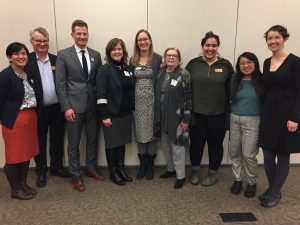
 

MCN staff with MN DEED Commissioner Steve Grove at Coffee with Commissioners event.

Public trust in the nonprofit sector is critical to sustain our work, and it feels like a constant battle having to educate the public and policy makers about the unique structure and role of nonprofits. Our financials and IRS filings are public information, and yet we are often scrutinized and criticized on how we are to spend our dollars, constantly pressured to do more with less. The past two years alone have demonstrated the devastating consequences when lawmakers lack understanding about the nonprofit sector. MCN’s research has shown that nonprofits were generally left behind on one-time relief funds due to nonprofits lacking capacity to identify and navigate complicated state and federal guidelines. Small nonprofits without pre-established banking partners could not access PPP loans and struggled to answer the question “who owns your business.” While large and well-resourced companies and organizations have their own in-house policy directors or the ability to hire expensive lobbyists, 99% of nonprofits would not be able to afford such an important luxury. As of this writing, MCN is advocating against a bill created without stakeholder input, which would force nonprofits to comply with duplicative and unnecessary government oversight as we continue to push for a dedicated Nonprofit Relief Fund, which would distribute much needed funding to some of the most vulnerable nonprofits in our state.  

As rare as they can seem, we do celebrate joy and small victories. There are strong coalitions of people, organizations, and companies working together on a wide range of issues and utilizing their collective wisdom, voice, and knowledge to push for systemic changes at the local, state, and national levels. We recognize the leadership of some of our largest and most well-established institutions and philanthropic organizations that are being courageous despite their typical aversion to change, and stumbling bravely through actions to forward initiatives that bolster anti-racism initiatives. Minnesota celebrates Give to The Max, our own charitable giving holiday and we raised a record breaking $34 million for Minnesota nonprofits in 2021. Ten “cultural treasurers” of Minnesota, organizations that are led by and serve communities of color, were awarded $500K each to ensure their sustainability during the pandemic. Twin Cities mutual aid programs flourished, especially during and after the racial justice uprising in the summer of 2020. Funds for Black-led and owned nonprofits and businesses like the Transformative Black-Led Movement Fund, were created and distributed. The few foundations that do give money for democracy work increased their giving this year for community – MCN is proud to partner this year with McKnight Foundation and other philanthropic partners to regrant critical dollars to small, rural, and/or culturally specific organizations to ensure communities that are too often under-counted have what they need to use their power and voice, and vote.  

Minnesota Council of Nonprofits (MCN) is the largest state association for nonprofits in the country, representing over 2300 nonprofit members in our state. We are proud of the strength and resiliency of our nonprofit sector and our communities. We are witnessing heartbreaking news around our inability to meet rising demands and unfortunate closures of critical programs due to reasons so often beyond our control; and yet we know we will persevere through this moment – we always have, and we always will – and we hope we can do so with continued and renewed collaboration with our philanthropic partners. 

We often hear that foundations’ missions and visions center around supporting the community. There is no better way to genuinely support communities’ self-determination than to actively invite community members into the democratic process, support all the ways nonprofits can use their own voices for positive change, and acknowledge that we need each other to meet our respective missions.  


Nonoko Sato is the Executive Director of the Minnesota Council of Nonprofits. 

This beautiful piece was created by Amira Lin and commissioned as a gift to our collective by M. Sabal. It is a brightly colored digital illustration of our core collective members set in an abstract under the sea scene. Each of our members is shown in portrait from the torso or shoulders up in stylized seashell or coral vignettes. Beautiful sea grasses and kelps swirl around the whole drawing.


The violence sex workers from all sectors of the trades already face can be difficult for those who have never traded or sold sex (acts) to fully comprehend. Being asked to recount these acts of violence for the privilege of receiving lifesaving and lifechanging funds to do the work we are already struggling to do to improve our lives, working conditions and world is one of the most intolerable harms. There exists very few funders and grant-making organizations that do not require sex-working organizers to regularly engage in this sort of reliving and retelling of trauma to prove we too deserve the ability to care for ourselves and our extended communities. Even so-called ally grantors can fall into the roles of judging the most deserving based upon how we perform poverty, trauma and survivorship for their consumption. Direct funds, financial literacy, budget-making resources, low-barrier interviews and creative application processes that embrace disabilities and acknowledge exhaustion, systemic oppression and unfettered access to decision making regarding funds allows survivors and sex working people to not to have to do this hellish reliving while undertaking the grant-seeking process.

I will detail positive and negative experiences with regards to funding throughout this piece.

I want to share an anecdote, vague enough to not jeopardize my safety or the safety of my fellow organizers. A small and intensely committed collective of sex workers and survivors of violence that I co-organize recently received a grant from one of the largest funders in the realm of sex worker grant giving. At every stage, our questions were met with disregard and our direct asks, when finally acknowledged, were not acted upon, which resulted in our grant being sent at the wrong time to the wrong fiscal sponsor. We had to snap into action to solve this incredibly destabilizing issue ourselves while the funder has yet to apologize or act with accountability or care in any way. This all took place over the week of December 17, International Day to End Violence Against Sex Workers. Make no mistake, jeopardizing sex worker organizers’ funding, which pays for mental health–care, rent and childcare as well as directly resources our organizing labor, is an act of violence. I believe this is a direct result of the paternalistic, strings-attached funding practices that necessitate emotional, care-informed distance from grantees and personify red tape.

Decriminalization, and bold police/prison abolitionist–informed decrim at that, exists as the greatest harm reduction we can fight for at present. Truly, this effort will protect sex working people and the communities from which we most regularly hail and those with which we interact –those who have major affective disorders and/or are disabled, neurodivergent, using drugs, queer, trans, youth of color, (im)migrants of all (un)documented statuses, criminalized survivors, cash poor rural white and Black folks. The work of promoting and fighting for decrim is not one reserved for policy-making circles alone. It emerges from our neighborhoods–when we block walk, clean up streets and educate our neighbors on why we should not call the cops on each other when we beautify the spaces in which we live, those where our city governments have abandoned us. This work in all sectors is costly, and it is work that needs to be fully resourced or we will never see measurable change. Organizers must be able to feed themselves and clothe their children while doing this work. Our comrades holding down policy meetings must have physical space, access to technologies to support these efforts, and the ability to pay people for their insights, time and labor. Our messaging and political education efforts must have money to commission infographics, art and easily dispersible materials that can reach the masses.

Some of the most exciting and uplifting community work I have seen with a decrim campaign was used during the early days of forming of Decrim NY and consisted of commissioning beautiful, radical art by queer, trans and artists of color to create engaging, educational and unapologetically sex work–forward pieces that could be used in community wheat pasting, door knocking/block walking and events. This community artwork was largely organized by Leila Raven—who helped hold down coordinating groups of supporters to wheat paste and engage in neighborhood conversations. Other sex worker organizations like Hacking//Hustling stepped up to fund this community artwork to support sex working artists and our efforts toward decrim. As incredibly supportive as the other sex working collectives were, they should not have had to use their own budget funds to support a fellow group while engaged in their own organizing efforts. Where were the robust philanthropic donors for decrim?

This is expensive work, and it is necessary work. To not fund this work means nothing short of the death and continued exploitation of sex working and trading people. To not fund work toward decrim means you have chosen the side of the carceral state and the morally corrupt who believe some people’s lives are worth disposing of. “Disposability” as a subject position is railed against by many funders, while “sustainability” and “accountability” are championed. However, what does this look like in practice? How are funders showing up for protecting the lives of sex-working people?

Being seen or treated as disposable often looks like not having a self to defend (see Mariame Kaba’s work discussing Black women and femmes in particular not having a self to defend and being criminalized for acts of survival in our white supremacist society) or being interpreted and ignored as being messy, dramatic, “not worth the effort or cost,” and ultimately not worth listening to, directly resourcing, respecting or protecting. This then translates into silencing, erasing, caging, deporting, and killing. These are not buzz words, these are life-and-death scenarios for folks in the sex trades.

But we cannot stop at the word “funded.” There is a difference between project and campaign-based or “contingent” funding and unrestricted funding as a designation. I am here to advocate for unrestricted funding, unapologetically. This method works. Unrestricted funds allow sex worker organizers – who know best how to get this work done – to support themselves and the waves and layers of our community who might not otherwise become engaged due to the lack of support and resources. Being creative with funding enables us to better respond to and meet the needs of those most impacted by state violence every day. Unrestricted funds recognize the violence of banking institutions, the discrimination of online platforms, and the racism and class antagonism inherent in the sanctioned economy. Unrestricted funds give sex workers the capacity to realize our goals outside of the paternalism of the non-profit industrial complex and recognizes sex worker organizers’ autonomy, responsibility and intelligence.

To further this, multi-year funding may directly ensure lifesaving and affirming work. Being able to rely on income is something that few sex workers have the ability to do.

With unrestricted, multi-year funds, our organizations and collective networks can project future budgets and realize our effort’s potential. As we all have felt, a year in crisis can fly by. Knowing that as soon as you obtain a grant you do not have to immediately begin looking again is an enormous relief. It allows organizers who are navigating criminalization and stigma to focus on their well-being and work as opposed to panic–grant applying.

Speaking personally, I have been organizing in an on-and-off funded capacity for almost 6 years now but organizing for 17 years total. In these past 6 years, I have felt most supported as a sex working organizer in the Support Ho(s)e Collective (SxHx) by the Sex Worker Giving Circle (SWGC ) – a formation that has embodied real listening, directives and active learning from sex working/trading community. SxHx has been able to directly resource currently and formerly incarcerated sex working people and criminalized survivor organizers – focusing on their immediate needs while inside and offering robust material support upon their return home. Before receiving grants from the SWGC, we relied entirely on our own grassroots fundraising efforts and paid for any organizing needs out of pocket. This remains typical for the majority of queer, trans and undocumented sex working–organizers in the United States.

To me, the SWGC draws upon deeply connected and reflective community resourcing – steeped in true feminism, womanism and communalism. The SWGC does this by forming a giving circle with former and current sex worker advocates and championing flexibility with report backs (audio recordings, interviews via video conferencing and/or written responses). Additionally, the SWGC has multi-lingual application processes, which are not redundant, but succinct, brief, and still allow for a comprehensive look at the work, and gives unrestricted funds, which is empowering, respectful and far too rare!

I can imagine a very near future in which large donors and grantmaking institutions commit to principles of real accountability, respect and unwavering support to those they purport to serve. This means turning more funding toward the efforts to decriminalize the sex trades, and by extension decriminalizing all survival, giving in an unrestricted capacity and ensuring funds are granted across multiple fiscal years. This future may be closer than even I can imagine. In truth, I hope and pray it is. This future, where our movements are championed, fully funded, and can sustain not just our labors toward another world, but our lives in the here and now – this future is dependent upon trauma-informed and radically self-critical action from funders. The future my comrades and I are dreaming of requires accomplices and co-conspirators, not just check writers. Be in this work with sex workers – be invested in our futures alongside us. A future like this one could see such transformation and revolutionary potential – dream and act toward this (w)horizon.


Red Schulte is a community organizer currently based in New York and is a member of the Support Ho(s)e Collective. 

Pablo Eisenberg

Pablo Eisenberg

Pablo Eisenberg 
Senior Fellow, Public Policy Institute, Georgetown University  
NCRP Board Chair, 1976-1990 

“NCRP began as a force to challenge philanthropy, and it actually broke, I think, the dominance of foundations and other giving institutions in terms of how they could act. And it forced many institutions to become more accountable and to provide more justice in their giving. … It’s been a challenge that even some of the stodgiest givers have had to abide by.   

“The fact that NCRP introduced accountability to the world of philanthropy is really something to be marked on the 45th anniversary. I remember when foundations never issued reports, and now that’s commonplace. … People know that there are folks looking over their shoulder as they give money.” 

John Echohawk  
Pawnee Nation of Oklahoma 
Executive Director, Native American Rights Fund 
NCRP Board Chair, 1991-1999 

John Echohawk

John Echohawk

“As executive director of Native American Rights Fund, one of my primary duties and responsibilities is fundraising to support our legal staff who provide legal advice and representation to Indian tribes, organizations and individuals on the most important national Indian legal issues. These issues include protecting the sovereignty of 574 tribal governments, their homelands, the human rights of their tribal citizens to practice their Native religions and culture, holding the government accountable to their trust responsibilities under the Indian treaties and laws of this country, and the development of Indian law. In doing the fundraising to support this work, the biggest problem I faced was the appalling lack of knowledge about Indians among the funders that I approached. 

“I joined NCRP in the late 1970s when it was just starting up because of its mission to promote social justice within the philanthropic sector. Joining the board of NCRP gave me a greater opportunity to educate philanthropy about Native American issues and needs. I think that NCRP’s most important accomplishment during my time as board chair was the visibility that it gave to Native American nonprofits like the Native American Rights Fund and the tremendous needs that we have. I was so honored by my fellow NCRP board members to understand and recognize the important work that we were doing for Native Americans and to elect me as NCRP board chair, giving our Native American legal issues even more visibility.” 

Paul Castro 
Senior Consultant, Applied Strategy Associates 
NCRP Board Chair, 1999-2003

Paul Castro

Paul Castro

“During my term, long-tenured Executive Director Bob Bothwell decided to leave NCRP. Bob had been the face of NCRP’s fierce advocacy in support of a growing alternative fund movement as well as its efforts to hold United Way and other philanthropic institutions more accountable around funding in marginalized communities. With Bob leaving, the board was confronted with a dual challenge: Define the character and qualities of the next leader while building a common vision for the organization’s future. After a nationwide search, the board selected Rick Cohen to lead NCRP.  

 “Despite a leadership transition, the work continued. NCRP continued its examination of how conservative philanthropy advanced its agenda. During this time, NCRP released a report, $1 Billion Dollars for Ideas: Conservative Think Tanks in the 1990s, authored by David Callahan. A second report, Axis of Ideology: Conservative Foundations and Public Policy, authored by Jeff Krehley, Meghan House and Emily Kerman, which remains one of our most popular reports, was released right after my term ended. 

“In addition, NCRP pushed for the passage of H.R. 7, legislation that would have increased foundation payout by excluding certain administrative expenses from the qualifying distributions. While the effort was unsuccessful, it raised the timely and important issue of assuring more dollars are directed to a foundation’s charitable purpose.” 

Terry Odendahl 
CEO, Global Greengrants Fund 
NCRP Board Chair, 2003-2005 

Terry Odendahl

Terry Odendahl

“I vividly remember the first time I attended an NCRP meeting. I was relatively new to Washington, D.C. It was 1977, less than a year after it had formed out of the Donee Group. I was 23 years old, ‘wet behind the ears’ and totally unaware that this gathering would lead me to an unimagined career as both a critic of and worker in the field. Really, at the time, I hardly knew what philanthropy was.   

“It was nearly 20 years before I was invited on the board, where I served for over a decade. Pablo Eisenberg was my mentor and other leaders, such as John Echohawk, trained me up in board facilitation. Rick Cohen and Aaron Dorfman showed me how exemplary executive directors operate.  

“NCRP has always been a beacon in holding foundations accountable. The publication list is a testament to our advocacy. Were I to pick one piece of research that made the most difference, it would be Sally Covington’s 1997 report Moving a Public Policy Agenda on how and why the conservative foundations had become so effective.   

“If I were to cite a campaign I know the most about, which was an accomplishment – but not a victory – it was our effort to raise the private foundation payout from the miserly 5% where it still remains.  

“The foundation field still needs NCRP as a watchdog. Let’s continue to support this outstanding work so there is no need for NCRP in another 45 years.” 

David R. Jones

David R. Jones

David R. Jones 
President and CEO, Community Service Society of New York 
NCRP Board Chair, 2005-2009 

“I served on the board of NCRP from 1999-2009 and acted as board chair from 2005-2009. My most significant role as chair was keeping the organization going during a long leadership transition and executive search, which lasted nearly a year. I brought in an interim director and personally acted to reassure funders and policy makers that the organization was both stable and productive even as we sought a new executive director.  

“After Aaron Dorfman was brought on as our new executive director in early 2007, I helped the staff in engaging the board in the development of the organizations first strategic plan. During this period, NCRP also released its groundbreaking Criteria for Philanthropy at Its Best assessment, the first effort of its kind to hold foundations to higher standards of efficacy and transparency.” 

Diane Feeney 
Former President, FACT Services for the French American Charitable Trust 
NCRP Board Chair, 2009-2013 

Diane Feeney

Diane Feeney

“During the time I was board chair, one of the best things NCRP did was determining the return on investment for foundations funding ‘change strategies’ like advocacy, community organizing and civic engagement. NCRP did this through a series of in-depth studies called the Grantmaking for Community Impact Project in 7 different parts of the country that showed how investing in these strategies yielded tangible benefits for families and communities.  

“The combined return on investment across all study sites – which included red states, blue states, urban areas and rural areas – was $115 to $1, meaning that for every dollar invested in organizing and advocacy, communities saw $115 in benefits. It was data that few had seen compiled in this way before and a great many foundations to this day still using our analysis to maintain or increase their support for funding advocacy, community organizing and civic engagement. 

“We also released reports detailing high impact funding strategies in philanthropy such as a report on arts funding. In this report, NCRP noted how arts funders can increase the equity and fairness of their grantmaking by prioritizing marginalized communities and investing in community organizing and civic engagement strategies within the arts and culture sector. In its environment report, NCRP concluded that environmental grantmakers need to shift their funding away from top-down strategies and invest in the grassroots communities that are disproportionately affected by environmental harms and climate change – a point that has become increasingly important as the impacts of climate change draw closer.” 

Sherece Y. West-Scantlebury 
CEO, Winthrop Rockefeller Foundation 
NCRP Board Chair, 2013-2017 

Sherece Y. West-Scantlebury

Sherece Y. West-Scantlebury

“I was introduced to NCRP by my colleague and mentor Garland Yates, retired senior associate, Annie E. Casey Foundation. I was nominated to the board by my friend and colleague Dave Beckwith, retired executive director, Needmor Fund. Both are notorious disruptors. I later learned that NCRP was founded by the Donee Group, which was initiated by John D. Rockefeller III (Winthrop Rockefeller’s older brother). NCRP was founded to disrupt.  

“Shortly after I joined the board, we released Criteria for Philanthropy at Its Best: Benchmarks to Assess and Enhance Grantmaker Impact. OMG were funders upset! How dare NCRP suggest criteria and try to impose targets on funders was the refrain! There was so much resistance to it, and it was all the buzz at conferences and in philanthropy related editorials for and against Philanthropy at Its Best. It was an exciting time to be part of NCRP.  

“When I was was board chair, NCRP launched Philamplify, which had funders on edge because no one wanted to be assessed on their effectiveness based on Philanthropy at Its Best criteria. The Winthrop Rockefeller Foundation piloted Philamplify. We re-examined our grantmaking and relationships with grantees based on the findings. Philamplify and Power Moves together are game changers for philanthropy. They are your essential assessment guide “to determine how well you are building, sharing and wielding power to identify ways to transform your programs and operations for lasting, equitable impact.” Why wouldn’t you want to do that? 

“I can only imagine how much more equitable our communities would be today if philanthropy dared to participate and not resist NCRP’s leadership. Disruption is my jam, and I am proud to be a part of NCRP’s movement.” 

Many of the nation’s most savvy grantmakers and donors who seek to make lasting structural change on important issues give to 501(c)4 organizations, in addition to their sizable investments in more traditional 501(c)3 nonprofits. In their own words, here’s why they do it and why it matters for the communities and causes they support.  
Editor’s note: This article was written before the murder of George Floyd by police in Minneapolis and the subsequent uprisings in more than 400 cities. Please see the dear colleague letter that accompanies this issue of Responsive Philanthropy for more context.

Open Society Foundations 

The Open Society Foundations supports advocacy organizations because good policy saves lives, advances equality and protects our democracy. When government budgets run into the billions of dollars and affect millions of people, effective and lasting change only happens when laws and policies are revised, approved or defeated.   

Through the Open Society Policy Center (OSPC), our 501(c)(4) arm, we back creative and courageous efforts to advance a more just, inclusive and democratic America. 

We are proud of our partnership with frontline organizations demanding better lives for all Americans and our neighbors around the world.  

Together, we have helped to reduce racially disparate sentencing laws, check executive war powers, humanize our immigration system, protect voting rights and anti-corruption rules, advance reforms of the pharmaceutical industry and Wall Street, and block countless efforts to enshrine hate, repression and division into federal, state and local law.  

Working to influence U.S. foreign policy,OSPCsupported the expansion of bans on funding foreign military units that have engaged in extrajudicial killing and kidnappings, and supported Sen. JohnMcCain’s successful effort to end the CIA’s detention and interrogation program. 

The powerful often have enough advocacy muscle and money to choke out the voices of the people, especially the marginalized. Open Society is proud to have increased our spending in the face of recent escalations of bigoted and anti-democratic policies, and hope other philanthropic institutions will do so as well. 

Tom Perriello, Executive Director 

Open Society-U.S. 

Civic Participation Action Fund 

The Civic Participation Action Fund (CPAF) is exclusively a c(4) grantmaker. When the Atlantic Advocacy Fund (AAF) created CPAF, it did so because it recognized that changes in public policy are often necessary to create the kind of change AAF was seeking.  

Because c(4) organizations can engage in much more direct advocacy than c(3) organizations, they are key players in achieving policy change. These groups can directly lobby elected officials, and they can ask their members and communities to lobby and engage in elections. 

Early on, CPAF focused on issue-based work but soon decided to adopt a civic engagement approach to the work.   

We recognized that the people and communities whose interests we sought to promote, mostly people of color and low-income communities, often participated in civic engagement activities at rates far lower than their representation in the general population and far lower than their white counterparts.  

If their voices were to be heard by the policymakers who were making decisions about issues that directly impacted their lives, they needed to be engaged, and policymakers needed to understand they would be held accountable for their policy positions.   

Some voter engagement efforts, such as voter registration and voter education, can be done with c(3)funding.  

However, the kinds of messages that directly link candidates to their policy positions, and work on direct issue advocacy like ballot measure campaigns, require c(4) funding.  

This type of work can then by translated into political power as the organizations doing the work demonstrate their ability to win elections by mobilizing their communities.  

For example, CPAF provided early support for a minimum wage/paid sick leave ballot measure in Arizona in 2016 by giving a grant to LUCHA, an emerging Latinx-led immigrant rights group in the state.  

The ballot initiative was overwhelmingly supported by the voters that year and because of LUCHA’s leadership role, the organization has grown in stature, membership and financial viability to become one of the leading powerhouse organizations in the state.  

Stephen McConnell and Katherine Peck 

Civic Participation Action Fund 

Ms. Foundation for Women 

After 46 years, the Ms. Foundation expanded out to develop a c(4) arm, and is venturing into supporting c(4)s through our newly formed Ms. Action Fund (MAF). The strategy of the MAF was constructed around the idea of building political power for women of color.   

Political power is not just about representation, but the ability to influence outcomes, to change the landscape – the ability to move transformational change on behalf of our communities. We believe that building a more reflective democracy moves us closer to a country where communities of color — women and girls of color, in particular — have political influence. 

It has been proven that the health of any nation depends on the support and existence of strong independent women-led structures. Simply put, women of color must have increased power to influence outcomes on the policies and institutions that affect their lives. 

We believe that shifting the makeup of U.S. political institutions is tied to increased power among organizations empowered to do 3 main things: hold institutions accountable; govern in partnership with elected officials; and ultimately leverage influence for systemic transformation.  

Therefore, while our analysis takes into account electoral opportunities, power for women of color must also include strengthened capacity, infrastructure and influence across the country. 

Ms. Action Fund is coming out of the box to put more money into the people closest to the solutions. To build political power for women of color that is truly transformational we have decided to focus on tackling challenges centered around funding, aligned training and infrastructure, and building accessible and culturally competent tools. 

Teresa C. Younger, President & CEO 

Ms. Foundation for Women 

Organizers from Alliance for Youth Action affiliate MOVE Texas distributed voter guides for the 2018 Midterm Elections.

Organizers from Alliance for Youth Action affiliate MOVE Texas distributed
voter guides for the 2018 Midterm Elections.

Ian Simmons 

Our smartest opponents have utilized the c(4) playbook for decades. With c(4) resources the Kochs built Americans for Prosperity, spending about $100 million per year persuading voters, writing laws and winning elections throughout the U.S. In states like Wisconsin, their c(4) infrastructure mobilized voters key to Trump’s surprising 2016 election. 

The Kochs chose to build their strongest organization with c(4) resources because c(4) resources enable clear and persuasive conversations with voters and lawmakers. Tax-deductible c(3) resources come not only with a tax-deduction but a gag order — restrictions that neuter public conversation. 

When we combat agendas fueled by hate or corruption, we must enable organizations to talk plainly with voters, empower the best candidates and win better laws. That usually means using c(4) dollars. If we don’t fight with c(4), we fight with our stronger arm tied behind our backs. When we use c(4), we win more fights.  
  
That’s how the best progressive organizations operate. For example, The Alliance for Youth Action deploys millions of voter guides around the country with c(4) resources, enabling organizers to engage voters directly, unencumbered. They talk openly about candidates who are awful on the issues and those who are awesome; young voters, like all citizens, respond better with clarity. Research shows organizing with such tools is more effective, helping progressives win more power.  
 
Whether we seek to strengthen climate standards, defeat a corrupt president’s re-election, recruit inspiring, diverse candidates or fight for fair elections, building an inclusive America requires the proven power and precision of c(4) fuel. 

Ian Simmons, Co-Founder & Principal

Blue Haven Initiative and Democracy Alliance Partner 

A major investment of 501(c)4 resources in groups like Florida Rights Restoration Coalition enabled the Voting Rights Restoration for Felons Initiative to be passed in Florida in 2018.

A major investment of 501(c)4 resources in groups like Florida Rights Restoration Coalition enabled the Voting Rights Restoration for Felons Initiative to be passed in Florida in 2018.

Jason Franklin 

Most of my personal giving and that of the donors I advise is c(3) giving supporting community organizing and advocacy to advance racial, social, economic and environmental justice. But I have increasingly layered in c(4) (and political) giving alongside that c(3) funding to help build a more robust ecosystem of work towards social change. 
 
Tax-deductible c(3) giving remains critical for so much work as it supports community building, research, issue education, communications and more. But all of that work gets a powerful boost when we also fund movements to expand into the c(4) realm with lobbying, ballot measure campaigns and electoral work from endorsements to independent expenditures. Growing our c(4) investments into social change movements yields bigger wins and that is worth far more than the tax deduction that we lose. 
 
Take for example Amendment 4 in Florida, the Voting Rights Restoration for Felons Initiative that passed in 2018 and stands to restore the right to vote to an estimated 1.4 million people. We have funded civic engagement efforts in Florida for years (and will continue to do so!), but it took a major investment ofc(4) resources into the Florida Rights Restoration Coalition, New Florida Majority and others to pass the biggest voting rights enfranchisement campaign in a generation. And we must continue to fund their work to implement this landmark law as conservatives attempt to undermine it with illegal modern-day poll taxes and other tactics.  
 
When I review my own giving or help a client develop their philanthropic strategy, a key question I ask is whether shifting types of giving could lead to greater change. Over and over, increasing c(4) and political giving is the answer.  
 
Jason Franklin, Co-Founder & Co-Chair

Solidaire Donor Network and President, Ktisis Capital 

As progressive philanthropy responds to rising authoritarianism in the United States and around the world, we cannot afford to ignore that anti-trans attacks have become the right’s power tool of choice.

Broadly speaking, progressive funders have treated trans issues as outside of their purviews. Despite how politically relevant trans rights have become, funding for trans issues does not yet reflect its strategic significance. It is not uncommon for progressive funders to avoid trans communities by treating us as a fringe political distraction.

But if we consider why the right has centered trans communities in prime-time speeches, funding and policy campaigns reveals many hard truths that should be of great concern to progressive funders. We start to see that trans communities are ground zero for how political power wins on the right despite shrinking margins, how cracks in our solidarity are easily exploited, and how progressive funders play into a highly funded right-wing strategy.

We cannot protect civil rights if we don’t recognize where the frontline of that legal and ideological battle is being waged.

Rye Young
How Anti-Trans Attacks Threaten Democracy and Civil Rights

Barbara Geddes, an American political scientist and leading scholar of authoritarianism, found that in previous generations, dictatorships were typically established through regime change or violent overthrows. In modern times, “Democratic backsliding orchestrated by a leader who was originally elected in a fair competitive election is now the most common way of establishing dictatorship.” In the United States, authoritarian tendencies have become part of the fabric of mainstream politics at an alarming rate.

It is not a coincidence that this rise in authoritarianism coincides with an exponential increase of political attacks against LGBTQ communities, the bulk of which are targeting trans people and trans youth in particular. In 2024, a new record for anti-trans bills was set, and it is the 5th consecutive record-breaking year. At the time of writing this article in late August 2024, the Trans Legislation Tracker is actively tracking 638 anti-trans bills across the country, 45 of which have been signed into law.

These laws are facing strong legal challenges thanks to the hard work of organizations including Transgender Law Center, the ACLU, TLDEF and Lambda Legal, but the social, legal and political repercussions are massive and broad in their scope.

Prior to 2018, the bulk of anti-trans legislation was focused on so-called “bathroom bills” that sought to limit trans access to public facilities, including restrooms. After 2019 and through to today, there has been a shift toward legislation that targets health care, education and sports – in other words, legislation that tests the roll-back of civil rights in more segments of society and public life.

Recent research from the Williams Institute finds that attacks on LGBTQ rights can be a precursor to democratic backsliding in the United States and globally, and attacks on gender and sexual minorities contribute to the weakening of democratic institutions. Pamela Shifman of the Democracy Alliance agrees, writing that the rise of the anti-gender movement and its threats to bodily autonomy “are the tip of the spear in a campaign against our democracy itself.”

Anti-trans Attacks, Rhetoric and Policy Embolden Far Right Nationalists

Over this last year, I’ve interviewed key democracy funders and heard several leaders express the challenge that progressive funders tend to want to stay out of messy “culture wars” as they treat them as distractions from the “real issues.” However, these “culture wars” are actually the frontlines of social and political power building that are currently dominated by the right and increasingly a site of populist-style messaging that demonizes trans people. As we try to roll back authoritarianism, we can’t ignore the role populism plays in democratic backsliding.

Whether anti-trans policy attacks pass and get adopted into law or not, they serve a number of roles that strengthen the right. They normalize the rollback of civil rights, make inroads with voters they otherwise lack a message for, and unite distinct factions of the far right, including white nationalists and Christian nationalists.

“We have to understand that the volume of the bills actually underscores where the momentum is,” Imara Jones, journalist and trans movement strategist, said. “Usually what I have seen from my reporting on this is that you’ll have certain years where it seems that there are less bills passing, but what’s actually happening is an experimentation about the types of bills that will become the models for the surge in subsequent years.”

Anti-trans attacks build the power and momentum that the right need to enact a broader agenda. They can also stump and confound progressives, exposing weaknesses that are regularly exploited.

Before conservatives united around an anti-trans strategy at the national level, they tested and honed it in state for years, if not decades. Time after time, they learned that progressive policies, even highly popular ones, could be defeated by turning them into a debate about trans people.

Case study – The HERO Act: How Transphobia Helps the Right Leverage Power

On May 28, 2014, The Houston Equal Rights Ordinance (HERO) Act passed in Houston’s City Council with an 11-6 vote. Introduced by popular lesbian Mayor Annise Parker, the HERO Act was a run-of-the-mill equal rights ordinance. Conservatives were determined to overrule the bill, and this opposition became referendum 1, which put the future of the HERO Act in the hands of the voters.

The LGBTQ community had a period of relative political strength in 2014. The Defense of Marriage Act had just passed the year prior, and national momentum was building that would lead to national marriage equality the following year. Twelve days after HERO Act passed, Laverne Cox graced the cover of TIME Magazine and declared 2014 “the Transgender Tipping Point.”

The HERO Act was popular when it passed. It protected all citizens from discrimination on the basis of 15 characteristics that applied to the vast majority of people, including women, veterans, people with disabilities, people of color and LGBTQ people. Houston’s City Council was keen to put itself on par with all other major cities that already had equal protection laws. In this context, the HERO Act seemed bound to survive the referendum.

The opposition cast the law as a devastating threat to the safety of women and children by claiming that gender identity protections would allow predators into bathrooms. This message was so effective, and the progressive side was so woefully unprepared for this to become a referendum on trans communities, that the referendum won in a 2-to-1 margin. The HERO Act failed to win support from most voters in 10 of the city’s 11 council districts. On top of that, the conservative campaign had far less funding than the progressive side: $400,000 vs. $1.9 million.

Conservatives even learned how to get registered Democrats to turn against civil rights in large numbers. It’s no wonder that after the HERO Act was overturned, conservatives invested billions to scale up their attacks on trans people. It is essential that the progressive movement and funders figure out how to talk about and defend trans rights and authentically harness the potential power of trans justice, feminism, reproductive justice and sexual liberation. The conservative movement is not afraid of wielding that power.

First Trans Rights, Then All Rights

In order for voters to embrace authoritarianism, enough people need to be convinced to vote against their own interests. According to Tarso Ramos, Executive Director of Political Research Associates, “Misogyny is a uniting force of a right-wing alliance between conservative subgroups.”

At the same time, no party can win an election without the support of women voters. How can a far-right alliance that embraces misogyny win over women voters? Trans attacks offer a blueprint for getting women to vote against their self-interests. Despite being the same movement that effectively shut down abortion access in much of the country, the bathroom argument has been salient with women voters.

Conservatives have been extremely strategic in choosing which anti-trans messages to embrace. The bathroom bill rhetoric that evolved into what we have now was directly lifted from the transphobic faction within the second wave feminist movement, which feared that men would “pose as women” and cause harm to women and their movement. Sound familiar?

The highly effective “bathroom playbook” that casts trans people as pedophiles and rapists is meant to speak directly to women who feel anxious and vulnerable. If transphobia can build alliances between radical feminists and the proudly misogynist extreme right, it can certainly make inroads with mainstream women voters. While there are many feminist institutions and foundations that embrace trans communities to varying degrees, the nature of our electoral system allows for a small minority to make drastic policy changes.

Conservatives don’t need to convince many people to win the power they need to carry forth their ambitious policy agenda as defined most recently in the Heritage Foundation’s Project 2025.

Movement Advancement Project’s report “Freedom Under Fire: The Far Right’s Battle to Control America” shows that the current political efforts of the right seek to restrict and control all aspects of a free and democratic society including:

  • health care and the right to make decisions about one’s body
  • the freedom of ideas and the ability to get a comprehensive education
  • the freedom of travel and the ability to be in public places
  • accurate legal recognition of people’s identities
  • freedom of the press and freedom of expression
  • the right to vote and participate in free, fair elections

This conservative vision is being tested on trans communities in every corner of the country and is gaining momentum. It is part of a broader policy agenda that seeks to curb the civil liberties and rights of immigrants, women, people with disabilities and people of color – essentially all groups that have fought for their current rights. It’s no coincidence the right tests radical policies on communities that are highly marginalized and whose institutions are deeply underfunded.

Funding for Anti-Genderism Eclipses Funding for Trans Rights

The anti-gender movement has benefited from investments of political, economic, social and financial capital over a long period of time. The movement is financially backed by a highly motivated network of individuals and organizations.

While precise figures are hard to obtain, the Global Philanthropy Project found that United States–based organizations associated with the anti-gender movement earned an aggregate revenue of $6.2 billion between 2008 and 2017, and the right has invested far more heavily since then.

The movement for trans rights has made enormous strides, but as of 2021, U.S.-based foundation support for transgender and gender nonconforming youth communities totaled just over $36 million and accounted for only 4 cents of every $100 awarded by philanthropy that year.

How can philanthropy respond?

The future of democracy disproportionately depends on whether we energetically and unequivocally stand with and invest in trans communities. How can philanthropy make moves to protect democracy and stand with trans communities?

Here are some ways philanthropy can help:

  • Get involved. This summer, Funders for LGBTQ Issues launched a new initiative to fill a gap at the intersection of trans justice and democracy. Funders United for Democracy and Trans Justice (DTJ) is a working group that brings together the collective knowledge, strength, and power of both democracy and LGBTQ-focused institutions. Funders Committee for Civic Participation is the DTJ co-chair and answers the call for new partners in this fight. Learn about DTJ and fill out this interest form to participate.
  • Celebrate and invest in visionary and principled women’s funds, women’s organizations and a reproductive justice ecosystem that is deeply and meaningfully trans inclusive.
  • Encourage your institution and colleagues to learn about these issues together. Consider providing trainings through Funders for LGBTQ Issues or consultants.
  • Encourage your institution and the philanthropic networks you’re in to develop a gender justice strategy if they don’t have one.

The trans movement is small but mighty. It has fought for visibility and accomplished incredible changes in a short period of time. But the trans movement and its funders are stretched thin and struggling against an all-out attack that weaponizes that hard-won visibility.

Philanthropy can do a lot, but it must work in coordination with and on behalf of our most important source of hope: our own trans communities. Will enough funders support and invest in trans communities as fiercely and as persistently as conservatives have in their anti-gender movement?

If we do, we can pull the plug on the most effective power tool the conservative movement has.

If we don’t, the risks are well established.


Drawing on fourteen years of experience in social justice philanthropy, Rye Young is the head of Rye Young Consulting, the Director of the Sprocket Foundation, a Trustee of the Freeman Foundation and a Board member of Unite for Reproductive and Gender Equity (URGE), and co-creator and co-leader of DIGG (Donor Intro to Grounded Giving), a donor-organizing and political education program for people with wealth to find their grounding in social justice philanthropy. Rye works with individual donors and philanthropic institutions to align their values with their practices and to invest boldly and strategically in social justice movements. He got schooled in social justice philanthropy at Third Wave Fund where he began as an abortion fund intern in 2008 and eventually served as the Executive Director from 2014-2018.

More Responsive Philanthropy

Fall 2024 Issue
Democracy: Before, During and After Election Years

Carolina:  

I was raised by a single mother with limited resources and a father who was absent because of drug addiction. I grew up in a poor neighborhood and went to public school. While I had good grades in High School and a fair PAA (SAT equivalent) score, my teachers and high school counselors told me that I should go to a 2-year college, despite wanting to attend the University of Puerto Rico. 

Carolina Mejías Rivera

My mother didn’t have (and to this day has never had) a car, so driving to get counsel from the admissions office was not an option. So one day I hopped on a “pisicorre” -a low-cost public van that takes a few passengers between counties in Puerto Rico- and arrived at the University. There I learned how to apply, which is how I eventually got accepted into the UPR.  

Once I started college, I learned that my level of education did not compare to others who came from private schools. I had to read and study twice as much as my peers, which limited my time to perform other daily tasks. To make ends meet, I had to work in the work-study program and teach at soccer clinics at multiple clubs in the metropolitan area.  

So, it was not surprising that by my last year of college I was on track to graduate to become a frontline employee. While I had always been interested in cooperativism, community organizing and recreation, and I took courses on those topics, I hadn’t really had the time to engage in any of those. Most of my peers who have ended up in leadership positions studied and worked hard, but they also joined student club boards, interned at places related to their field of study, and even helped out in political campaigns.  

When people ask me about building power, my first question is always, “Building power for whom?” 


Alejandro Silva Díaz

Alejandro: 

I had been active as the President of my university’s Puerto Rican Student Association, and I had joined a few of my friends to help coordinate their Cuban American Student Association conference. I knew that I wanted to be involved in social causes in Puerto Rico, but I wasn’t sure how.  

That’s when I learned about Mentes Puertorriqueñas en Acción, and joined a coordinating committee for our first summer program. About 20 peers would join over the summer to learn about social causes, and how we could engage to advance them. This was more than an exploratory project, though: we quickly learned that we were preparing the future leaders of all of the causes we supported.  

Three years in, I met Carolina at the University of Puerto Rico. I invited her to join the group and our summer internship program. And while she did, she was different from the rest of the group: her background, her perspective on topics we discussed and priorities were different.  

A few years later, Carolina and I went to a convening of organizations that worked with youth. The purpose was to establish strategies for youth to be considered on important issues because they were seen as a disregarded community. Somewhere in the middle of the conversation we brought up an observation: I didn’t feel that I was left out and unheard because I was young. Yet, we understood how someone like Carolina had to work three or four times harder than I did to be listened to: as a black woman from a poor neighborhood, certainly I had more influence than she did on power spaces. 

This conversation was very important to define our future strategies going forward from that point on. Because even if we were building power for youth, we still bear the important question: who were we building power for?  


An assessment of power building 

Civic engagement in itself is a way to build power. When people volunteer, organize and participate, they are learning, networking and entering circles that will eventually lead them to leadership and decision-making positions.  

Most people are interested in participating in social causes, but many don’t engage due to lack of information: 49% of Americans say they do not know enough about the issues to get involved in social causes or campaigns, and 42% of youth claim they don’t know where to start.   

In the process of building the next generation of leaders, structures must be created so that young people from poorly represented backgrounds can join organizing movements in the nonprofit, private and public sectors, unions, and boards of directors, among other spaces.  

In this process it’s inevitable that people who are on track to occupy leadership positions will do so. They will probably do so without any type of intervention. In such, the end goal is not to replace them, but it’s vital to train them to have an understanding of the importance of diversity, and becoming facilitators for the populations who aren’t represented in power structures.  

Our leadership development funnel has three stages:  

Insertion: We insert young people with a high level of social consciousness in projects to channel their aspirations to be change agents. 

Engagement: Keeping the community active at events, projects and working groups sharpens their skills and ensures they stay relevant to current important issues.  

Positioning: As participants develop into high-impact leaders they begin occupying decision-making positions, joining boards of directors, publishing new work, and founding social enterprises.  

To achieve this, at MPA we have defined three pillars in our change agents training: 

Awareness: To foster the ability to have a rational and deep understanding of the problems that afflict communities, as well as the opportunities that exist to solve the challenges faced. 

Empathy: Ability to bridge understandings from a human perspective of how social problems are affecting different groups of community stakeholders. 

Effectiveness: The leader’s ability to carry out the vision of change that they have to transform their cause towards a just, supportive and participatory society.  


What can philanthropy do? 

One big change philanthropy can make right away is organizing a civic engagement philanthropic sector. When a nonprofit organization seeks funding, there are high-level topics like education, environment, and health that are always present. In some cases, “community organizing” and “strengthening democracy” are the closest field of focus available.  

Organizing a civic engagement sector will allow for organizations to define strongly around that topic, as well as to build knowledge of where we’re at and what we need to advance. Nonprofits and communities will find support to mature their initiatives, and we’ll come closer to building a collaborative ecosystem of civic engagement initiatives.  

Philanthropy has been moving in the past few years towards becoming more inclusive and embracing diversity. We must say this has made a huge difference, but it’s still in diapers. It is important that funders take into account the systemic challenges social cause leaders face that may not be part of today’s evaluation processes. Sometimes the largest corporate nonprofits will write the best proposals, but how can philanthropy support leaders who come from backgrounds of poverty, racial, ethnic and gender diversity, lack of access to education, inaccessibility to quality transportation, and social class stereotypes, among others? 

Solving systemic challenges takes time, but we can’t do so without investing in leaders who didn’t have the privilege of being part of the traditional leaders’ development track. This does not mean we should discard one population for another, but philanthropy can balance the diversity gap in leadership positions by entrusting diverse leaders who may not have the complete experience but will ultimately shake the tree and bring change forward.  


Carolina Mejías Rivera is Executive Director at Mentes Puertorriqueñas en Acción (MPA). Prior to being Executive Director, she served as MPA’s Director of Programs and Community Outreach. She has been selected to present the results of her work in forums in Lima, Peru and Quito, Ecuador.

Alejandro Silva Díaz is Operations Director at Integro Foundation, a philanthropic cause amplifier, and professor of social business design at Universidad Sagrado Corazón. Previously, he acted executive director at Mentes Puertorriqueñas en Acción and Project Manager for Vitrina Solidaria’s El Yunque Emprende Program. 

Gregg Chadwick has exhibited his artworks in galleries and museums both nationally
and internationally. He earned a Bachelor’s Degree at UCLA and a Master’s Degree at
NYU, both in Fine Art. He has had notable solo exhibitions at the Manifesta Maastricht
Gallery (Maastricht, The Netherlands), Space AD 2000 (Tokyo, Japan), the Lisa
Coscino Gallery (Pacific Grove, CA), the Julie Nester Gallery (Park City, Utah), the
Sandra Lee Gallery (San Francisco), and Audis Husar Fine Arts (Los Angeles) among
others.

He has participated in over one hundred group exhibitions including the L Ross Gallery
(Memphis, Tennessee), the Andrea Schwartz Gallery (San Francisco), the LOOK
Gallery (Los Angeles), the di Rosa Preserve Gallery (Napa), and the Arts Club of
Washington (Washington DC). Chadwick’s artwork has been featured at Saatchi Art’s
The Other Art Fair in Los Angeles, Dallas, and Chicago, Aqua Art Miami, artMRKT San
Francisco, the Palm Springs Fine Art Fair, and the LA Art Show.

Chadwick’s art is notably included in the collections of the Adobe Corporation, the Gilpin
Museum, the Central City Opera, the Graciela Hotel Burbank, the Harbor Court Hotel,
the Kimpton Group’s headquarters in San Francisco, Nordstrom, the W Hotel
Hollywood, the UCLA School of Nursing, and Winona State University.

Chadwick is frequently invited to lecture on the arts; twice a year he delivers a key
lecture on art and social justice at UCLA in an interdisciplinary form with the UCLA
School of Nursing, and has spoken at Monterey Peninsula College, the Esalen Institute,
and at the World Views forum in Amsterdam, The Netherlands.
Chadwick is the proud father of his transgender daughter Cassiel Chadwick.

More Responsive Philanthropy

Fall 2024 Issue
Democracy: Before, During and After Election Years

Like many of you, I’ve had the privilege of supporting civic engagement for more than a decade, in my case with the Open Society Foundations. Our mission is to build vibrant and inclusive societies across the globe, grounded in respect for human rights for and democratic accountability to all people. Across continents, cultures, and kinds of movements, there has been one constant: the need to invest consistently in civil society, citizen engagement, and the power to hold government and other actors accountable. This foundational truth has rarely been timelier and more essential than in the face of rising authoritarianism, extremist violence, and disinformation. 

Laleh Ispahani

We have all borne witness these past two years of American democracy and rule of law straining to the breaking point. Observing this period not just as a philanthropic leader but also as a Muslim-American immigrant, I would argue that philanthropy’s collective investments in civil society and civic engagement, particularly in marginalized communities, saved our democracy and the rule of law at its weakest moment. We saw record levels of voter participation, even from communities facing systematic threats and disinformation. We saw mayors respond to community demands to make cities a laboratory and safe space to organize and vote.  

The efforts to distort democracy were deliberate and systematic, and the forces trying to impose minoritarian rule have only gained steam since the failed attempted coup of 2021. These include voter suppression, gerrymandering, the kleptocratic impact of Citizens United from within, and the rapid erosion of local and investigative reporting. These forces exacerbate the pre-existing injustice of the electoral college and a Senate that ranks as the least-representative legislative body among all democracies, with a minority of Americans having 82 votes in the Senate, while a majority are represented by only 18 votes today.   

While one part of our old approach – the focus on civil society and civic engagement – proved prescient, another part required a change of thinking in light of these threats. For too long, we approached the threats to our democracy on an issue-by-issue basis. Today, we organize to build power or, more accurately, to help marginalized communities and multi-racial, pro-democracy alliances build enough power to forge and protect an inclusive, functional, and resilient democracy. This shift is not because, say, police reform or juvenile justice are not still important to us. Quite the opposite. It is learning the lesson over time that the best way to advance reforms is by ensuring that impacted communities have enough power to shape the policies that shape their lives.  

The Evolution Began with an Expanded Definition of “Giving”  

In 2015, we started thinking about funding civic engagement in the lead up to what we knew would be important elections in 2020. We wanted to look beyond the next election cycle to the structural components protecting or suffocating our democracy. Working with foundation peers, we started to focus not just on battles but the war for our democracy.  

We Built Power With Trust: In 2015, we launched Project 2020 to build the civic power needed to reduce these growing distortions. Our operating theory was simple: giving more – more deference, more flexibility, more funding and over more years – would lead to greater impact. We committed to larger grants and more flexible funding (in our case, both 501(c)(3) and 501(c)(4) funds). We also adjusted our giving to prioritize BIPOC-led local organizations, leaders, campaigns, and coalitions, extending them the trust that had long been due them, but that had rarely been offered. And we gave more to groups led by and serving communities of color, which have historically received far fewer resources.    

We Prioritized Structural Fixes: A commitment to long-term power is complementary to – and is providing a stronger foundation for – our cyclical support for nonpartisan electoral work, voter protection, issue campaigns, and leadership pipelines. As we did the year-in, year-out funding, we simultaneously paid attention to the longer-term elements of building civic and political power. We provided early money to a Bauman Foundation-led effort to ensure a full count in the 2020 Census and joined partners to fund census work after the count had ended, even in the face of political threats. We also supported – and continue to support – a parallel, multi-donor initiative to ensure fair representation in redistricting. And we made these investments in promising but traditionally under-resourced places — the South and Southwest, and in particular Arizona, Georgia, and North Carolina.  

We Targeted  States with Shifting Demographics: While federal policy dominates headlines, state policy often plays a more dominant role in shaping the schools, roads, criminal codes, and civil rights of most Americans. In Arizona, we built on efforts by Unbound Philanthropy, Carnegie Corporation, and the Four Freedoms Fund, which, a decade earlier, had a vision for the state premised on the strength of its young, mostly of-color, and often undocumented leaders who fought tirelessly against xenophobic legislation and elected leadership. We also benefited from the partnership of in-state donor “tables” established by the Committee on States network, such as Put NC First and the Georgia Alliance for Progress—groups that strove to build lasting civic engagement infrastructure despite politically motivated efforts to undermine their work. And we collaborated deeply with a set of institutional funders including the Ford Foundation, the Civic Participation Action Fund, and the Mary Reynolds Babcock and Sapelo Foundations.  

We Invested in New Leaders: Project 2020 helped strengthen a range of leaders and organizations who were – and are – playing a critical role in building independent political power in their communities. They facilitated record-breaking voter turnout in the 2020 U.S. elections – particularly among voters of color, who indisputably helped reshape the map in states like Arizona and Georgia – despite an unprecedented assault on our democracy and the complications of a deadly pandemic. Moreover, the work of those organizations and their leaders led to more reflective and accountable elected representation – leaders responsive to the needs of their communities, people of color, and in many cases former activists and organizers who could push forward-looking policy. This work was strongly abetted by non-partisan leadership pipelines such as LEAD NC and Instituto in Arizona; constituency-focused groups like New American Leaders; and groups like re:power, Local Progress, and State Innovation Exchange, whose Progressive Governance Academy is supporting progressive leaders once in office. (Of course, getting there is only part of the puzzle.)  

Building from There 

Since then, we’ve built upon the lessons of Project 2020.  In 2017, we committed more than $20M annually through 2025, to an additional set of states, with a new set of flexible grants to community-of-color led organizations, complemented by ballot measure support.   

And in 2020, as we launched the new Open Society-U.S. to address the convergence of demographic, technological and economic and cultural disruptions, we initiated a 10-year strategy to build a pro-democracy, multi-racial majority in the U.S., an open society alliance fully committed to inclusive democracy, with enough political, economic, and cultural power to govern. This decade-long effort has already included $350 million in five-year, flexible grants to groups rooted in communities central to building accountable influence. This includes over $350 million in investments in and across communities of color, with concentration in key regions crucial to building this pro-reform governing majority. We intend these commitments to be not only “gamechangers” for movement groups and core components of progressive infrastructure, but also long-term commitments to this multi-racial alliance. The true north here is to show that inclusive democracies can deliver public goods and equal justice for all.   

From Strengthening Democracy to Saving It 

When we elevated our efforts to address structural racism and structural barriers to democracy, we began planning for worst case scenarios. Now we call most of those worst fears the norm. Our efforts and cooperation have had to scale accordingly. Amid an existential crisis in our democracy, most understand that the stakes are as high as ever.  

In 2020, OSF (Open Society Foundation) worked to align donors around a priority set of needs between the pandemic’s outbreak and the November elections, raising millions from fellow donors to help meet those needs. The focus was on ensuring that every voter had access to a safe voting option, that polling places were sufficiently staffed, and that states were otherwise prepared for an historic election. These donors played a part in seeing the successful transfer of power and (narrow) avoidance of a constitutional crisis in January of 2021.  

Far from deterred by the failed coup attempt of January 6th, the anti-democratic are doubling down. Opponents of a multi-racial, pro- democracy majority are ramping up their attacks through disinformation, laws to limit voting, and compromising the process by which votes are counted and results are confirmed. The risk of an actual stolen election – or political violence – is real, as the congressional select committee investigating the events of Jan. 6 reminds us every day.  

To meet these challenges, Open Society is again teaming up with leading foundations and donors to align funds across critical areas of work over the next 30 months. We believe this is necessary, if not sufficient, to protect the integrity of our election process and ensure diverse, equitable participation through the 2024 elections and a peaceful continuation or transition in 2025 – the hallmark of a democracy. Priorities include protecting the right to vote; building, bolstering, and expanding the electorate; countering anti-majoritarian media and mis-/disinformation; and preparing for and responding to high-risk threats and crises. 

We hope others will join us and our partners in this work, and more broadly, by investing more in civic engagement – more grants, more deference to local knowledge, and more commitment. We cannot give less when markets cause endowment returns to dip, or political pressure and intimidation mount. As fatalistic as these times can make us, the truth is that we have won against incredible odds when we show up early, big, and together. The threats and opportunities ahead require nothing less.  

_____________________________________________________________________________________

Laleh Ispahani is co-director of Open Society-U.S., helping to oversee the grant making, advocacy, and administrative work in the three Open Society-U.S. offices in New York, Baltimore, and Washington, D.C. 

Fall 2024

background picture of a voting polling place on Election Day. credit: Jason Doiy from Getty Images Signature via Canvo Pro license
NCRP’s Voter Registration Brief

There’s no one better equipped for transformational investment than a community-based issues organizing group with established relationships in and knowledge of its own communities.

Groups like these are uniquely qualified to reach and mobilize voters who are underrepresented in the electorate.

They are equally – if not more – important to the civic engagement ecosystem as groups that are only focused on voter registration.

Pride is a Protest

At its core, pride is a protest against the criminalization of our identities.

It is a refusal to be confined to the shadows, to be denied our humanity, and to be stripped of our rights.

In countries where being LGBTQ+ is still illegal, pride takes on an even greater significance, serving as a beacon of hope for those living under the shadow of persecution.

Fund Organizing Like Our Democracy Depends on It…Because It Does

All elections shape the nature of the communities we live in, and there has been an immense amount of work that went into ensuring that the will of the people was heard. Yet after the votes are counted, there is still the need for organizers after every election to continue engaging their communities.

This kind of sustained effort is key – to holding elected officials accountable, passing progressive legislation, and continuing to leverage people power in the struggle for collective liberation.