These crises are awful, awful, awful. And they open things up. The silver lining of this time may be that this might be one of the only moments in the lifetimes of many of us where there’s actually the political space for a reset. Actually, the space for people to think new things. ... This should be a moment where we’re all big enough to rethink fundamental things about the kind of America we want to be part of.

– Anand Giridharadas author of Winners Take All  (May 6, 2020 on MSNBC’s Morning Joe

Editor’s note: This article was written before the murder of George Floyd by police in Minneapolis and the subsequent uprisings in more than 400 cities. Please see the dear colleague letter that accompanies this issue of Responsive Philanthropy for more context.

Disorienting is the most appropriate word I can find for the past few months. This spring, our partners were digging in on the census, a statewide Medicaid fight and voter engagement for November.   

We were quietly focused on a technology audit and had just launched a grantee perception survey when COVID-19 led us to shut down the offices, push out emergency unrestricted grants and flip our conference center into a virtual organizing space.  

Through the social distancing, grief, emergency response, mourning, Zoom calls and self-pity it has been hard to see a silver lining. But based upon some promising responses to the pandemic, I believe Giridharadas’ claim that the challenges of this moment may open the door for transformation.   

Philanthropy can play an important role in shaping a political reset. In order to do so, though, we will have to wield power with assets beyond our grantmaking. The bad news is it will take all that we have. The good news is that is all it will take.   

Use your voice to amplify and shape a “just recovery”  

Amid the pain of COVID-19 relief work, it is important for philanthropy to leverage its unique position to help frame a just recovery. This can be advanced by strategic communications efforts lifting up information missing from the debate and amplifying the demands of frontline movement groups. 

For example, Deaconess is connecting data about disproportionate health and economic impacts on the Black community to the evolving definition of economic recovery. One target for this work is a regional pandemic task force established and led by major health care organizations.  

Though applauded for its multisystem collaboration, the exclusion of federally qualified health centers and subordination of municipal health directors made it ripe for the exclusionary decision-making, which left poor, Black neighborhoods where contraction and death rates are highest to be the last with COVID-19 testing sites. In partnership with our grantees, we are using our voice and research to hold the task force accountable to communities the relief effort is leaving behind.  

We are also developing multi-platform media relations campaigns tied to funding announcements. These announcements are when foundations to “make news” and we can take advantage of the attention to describe what “equitable recovery” is and amplify the agenda of our partners.  

We recently announced a cohort of power-building organizations whose organizing efforts represent an inclusive, democratic, just recovery agenda centering marginalized communities that should shape the allocation of more than $200 million in CARES Act funding for our region, accountability for executives who will stand for election during the pandemic and alternative strategies for integrated voter engagement. Our announcement creates space to hand the mic over to these groups, amplifying their agenda.  

It has been heartening to see national funders employ similar strategies. On April 16, the Wallace Global Fund used a field-leading grant announcement to amplify key partners and frame just recovery from COVID-19. The headline covered their bold commitment to spend 20% of their endowment this year. Equally impactful, though, the fund presented the Poor Peoples’ Campaign: A National Call for Moral Revival, led by Rev. Dr. William Barber and Rev. Dr. Liz Theoharris, with its 2020 Henry A. Wallace Award. 

In doing so, Wallace Global lifted up the call for the 140 million people who lived in poverty before this pandemic to be centered in America’s post-crisis rebuilding project. With the award and $250,000 contribution, it invests in the moral awakening that Barber calls a “third reconstruction” at a point in history when public resources (including federal relief and stimulus funds) will be available to support the campaign’s transformative public policy priorities and vision.

In its video announcement, the fund’s Board Chair Scott Wallace made it clear that this is not moment to tinker, but rather to remember what is possible with deep public leadership and investment. Wallace noted, “we have to design programs with a New Deal mentality, programs that will directly subsidize people’s lives that are being damaged so severely.”     

Advocate for public policy with ‘political imagination’ 

In his historical reference, Wallace offers more than nostalgia. The grandson of FDR’s former vice president modeled the expansive philanthropic vision-casting this moment calls for, one that takes its cues from the movements setting the agenda and uses its platform to amplify their message. It is in line with Giridharadas observation that “there might be enough political imagination in the wake of this to actually transform … things fundamentally.” 

Philanthropy does not generate this type of political imagination alone. A pointed Twitter reaction by political consultant and movement strategist Jessica Byrd to a February 2020 Democratic debate segment featuring Tom Steyer and Michael Bloomberg is instructive: “Two white men billionaires on stage saying ‘I built an organization’ and claiming the work of organizers whose names they don’t know is wack,” she typed. “Philanthropy isn’t the work. The work is the work and they didn’t do it.”      

There is much more creativity, imagination and boldness in the work and witness of our grantee partners on the ground than the halls where we review returns and revise investment policies.  

Because social distancing restrictions are causing policy to be made in emergency mode and with less public input, philanthropy’s unique position as a potential bridge between grassroots advocates and elected officials is critical.  

We must be careful to listen with humility, learn from and incorporate movement brilliance into policy discussions and bring our partners with us to these (virtual) decision-making spaces. 

While we were still assessing how to transition our office and weighing portfolio losses, our partners at ArchCity Defenders and Action Saint Louis were developing a list of policy priorities for COVID-19 to center unhoused, incarcerated and otherwise marginalized citizens. By March 13, they had mobilized 30 organizations to sign on (including Deaconess) and launched an online petition gathering thousands of signatures. The county executive later expressed appreciation for the recommendations and translated some into his executive orders for crisis response.

In the weeks since, they launched St. Louis’ COVID-19 Response Hub, an online platform tracking how government officials’ actions responded to the organizing agenda, while turning up the heat on a campaign to close a jail and taking voter engagement for the census virtual.  

Our initial, conservative advice to our grantees was to focus on organizational sustainability and the potential financial impact of economic shifts. But, following their lead has broadened our sense of what is possible. 

Another national foundation getting this right in their COVID-19 response is Open Society Foundations, as they invest in the imagination of their grantees for relief among the most vulnerable populations and keep an eye on systemic injustice for recovery.  

They identify exposed communities as “informal, low-wage, and gig economy workers; refugees, migrants, and asylum seekers; disadvantaged groups such as the Roma in Europe; homeless people; frontline health workers and caregivers; and detained and incarcerated individuals.”  

When committing $130 million to support them in this pandemic, the foundations’ leaders emphasized lessons learned from the 2008 financial crisis about the need not just to respond to immediate needs, but to attack systemic inequalities, strengthen democratic systems and take a proactive posture on human rights: 

Deeply concerned about grave threats to democratic accountability and individual freedoms, Open Society will also fund partners that are challenging violations to political freedoms, as leaders take steps to suspend access to information, roll back sexual and reproductive rights, extend surveillance beyond public health means and look for scapegoats to blame, exploiting the pandemic as a means to seize unchecked power.  

Be strong and very courageous about centering racial equity 

Finally, in order to support the political reset that will be required for a just recovery, foundation leaders must be brave enough to be open about racial equity.  

Wielding the type of rhetorical and historical hyperbole appreciated by preachers like me, Giridharadas, notes that, “This is a crisis that in many communities is literally a ‘Black plague,’ that is killing African Americans disproportionately in part because people are not listened to in the health care system, in part because of lack of access.”  

He makes a bold parallel between COVID-19 and the Black Death, which killed up to 200 million people in the mid-1300s. In a sector drunk with nuance and impressed with academic sophistication, this type of unequivocal case-making for targeted, unwavering commitment to Black communities is a necessary act of courage. 

During their virtual April conference, ABFE convened Black foundation CEOs to discuss the impact of COVID-19 on Black communities.  

Crystal Hayling, executive director of The Libra Foundation, spoke about their relationship to the National Domestic Workers Alliance, noting “they may be the most important labor organization in the country right now.”  

Libra is doubling grantmaking to $50 million in 2020 because they consider this a historic opportunity to gain ground against systemic oppression. They see the alliance, comprised primarily of Black and brown domestic and home health women workers fighting for dignity in the workplace and cultivating the leadership of women of color, as one of their most important grants.  

Hayling’s centering Black women resonated deeply with me because they are the face of death from COVID-19 in St. Louis. The first 2 people to die in our community were a Black female nurse and a 31-year-old Black Red Cross staffer. For a full month, the only people to die of the disease were Black people.  

When I received a message from the Robert Wood Johnson Foundation about participating in their $50 million response to COVID-19 by accepting and deploying $1 million in our community, Libra’s leadership was top of mind.  

Inspired by Hayling and moved by the tragedy of these 2 women’s deaths, I began to repeat that “if Black people are the ones dying, then Black leaders should shape the healing process.” Within a week, alongside $1.2 million from Deaconess, we launched an Equitable Relief and Recovery Fund to support the work of Black-led organizations.    

Initially, I would not have called these race-specific actions or statements brave. But as we spoke about this fund with partners and media, the more the messages came. A white, female philanthropic leader expressed appreciation for Deaconess pursuing impact in affected communities by resisting what she called “the privileged solidarity of white women” influencing other responses. One Black capacity building consultant emailed, “I’m really grateful for your team’s leadership. This is unapologetic, brave and just.”  

For us, it is simply our best effort to support a social ‘reset’ with all the resources at our disposal. This is what all of philanthropy will need to do to ensure that the public health and economic recovery from COVID-19 is just and transformative. Doing anything less would be an abdication of our moral responsibility to seed change for future generations and leave this world a better place than how we found it.  

Hebrew scriptures record a moment of transition and recovery from a period of disequilibrium, loss and death. The rising leader, a young man named Joshua, is encouraged that the coming days will be filled with promise. He simply had to remember the lessons from the past and “be strong and very courageous.”    

If we too can be strong and courageous in our grantmaking, in our words and in our actions, philanthropy has the potential to help birth “days of promise” for our society from the tragedy of the pandemic.  

Rev. Dr. Starsky Wilson is president & CEO of Deaconess Foundation and NCRP’s board chair.

On September 24, 2001, President George W. Bush announced an executive order expanding the Department of the Treasury’s authority to freeze the assets of any non-profit organization designated as a “terror” entity. The move – overly broad, steeped in anti-Muslim bias and lacking in basic due process mechanisms – signaled a pattern of cynical tactics, secret evidence and opaque procedures used to stifle Muslim non-profit organizations for years to come. All told, about 30 Muslim relief organizations were targeted – some were abruptly shut down and others closed under the weight of shrinking donor pools.

Today, we find ourselves at a similar inflection point with unrelenting federal and philanthropic scrutiny and the suppression of Black, African, Arab, Middle Eastern, Muslim and South Asian (BAMEMSA) organizations advocating for Palestinian human rights in the U.S. and abroad. But today, we must take a different path – the very existence of our social movements and our democracy demands it.

Rana Elmir
Social Justice Movements: The 5th Estate

Non-profit organizations that make up our social justice movements are an immutable part of our democracy, acting as a de facto 5th estate. They hold our government accountable, advocate for policy changes, change hearts and minds, and ensure that those who are marginalized have the opportunity to build and assert their power.
At their best, our movements embody our democratic ideals of transparency, justice and equity, holding a mirror to our society and demanding better for us all. In fact, it has always been “We the People” through the vehicle of our movements that have forced change, shaped our democracy and pushed beyond our societal comforts toward lasting justice. The path to justice has always been winding – even elusive – and those in power have too often served as obstacles rather than guides. It is through our movements holding steadfast and pushing our country toward our ideals that we have learned that backlash is often a tool to impede our progress. Similarly, as Palestinian human rights voices that make up our movements suffer the return of McCarthy Era tactics that target them with harsh consequences because of their political affiliations, identity, the communities they serve or the issues they support, it is not just these organizations that suffer – our entire social justice movement and consequently the very foundation of our participatory democracy is made more vulnerable.

Yesterday’s Tactics, Today’s Fight

BAMEMSA movements and allies are facing intense scrutiny. Politically motivated investigations, congressional witch hunts, unchallenged media narratives, funder retrenchment, physical and digital threats and attacks, and baseless lawsuits have reemerged as the norm. These tactics are not new. The United States has had a long history of using federal investigations and financing laws to suppress Palestinian solidarity activists. The Center for Constitutional Rights (CCR) and Palestine Legal document this in a recent white paper, noting that the first mention of “terrorism” in a federal statute appeared in 1969 after the 1967 war between Israel and a coalition of Arab armies and was aimed at restricting humanitarian aid to Palestinians, thus equating Palestinians and relief efforts with terrorism.

Whether in 1969, 2001 or today, the goals have been transparent – bleed these organizations dry, raise the specter of fear and suspicion to isolate them from broader social justice movements and philanthropy, and limit their ability to advocate effectively for the issues they care about – namely Palestinian human rights. While the attacks are numerous, a few are particularly insidious:

Revoking Nonprofit Status: The House passed bipartisan legislation (H.R. 6408/ S.4136) empowering the Treasury Department to shut down nonprofits under the value label of “terror-supporting,” echoing and expanding the Bush administration’s 2001 executive order. Many RISE Together Fund (RTF) grantees and partners are pushing back against this legislation recognizing that if it becomes law, it will be used to also target political foes on issues such as abortion, climate change, police accountability and LGBTQ rights. As Kia Hamadanchy, senior policy counsel at the American Civil Liberties Union, put it, “You’ve basically left a loaded gun on the table,” with the implication that it can be used indiscriminately in the hands of authoritarians interested in consolidating power and eliminating critics.

Questionable Congressional Actions: Earlier this year, the House Oversight and Education and Workforce Committee chairs demanded that the Treasury Department provide Suspicious Activity Reports (SARs) for 20 nonprofits and funders – some loosely or erroneously – linked to Palestinian solidarity efforts on university campuses. The Suspicious Activity Reports are not evidence of a crime. Similarly, and using the same list of organizations, another legislator demanded all correspondence between these organizations and the State Department, while a group of 16 legislators sent a letter to the Internal Revenue Service requesting an investigation of several Palestinian solidarity organizations. Even former House Speaker Nancy Pelosi got into the mix calling on the FBI to investigate pro-Palestinian protesters. The naked motivation of each of these efforts is to push an unsubstantiated and dangerous narrative that protests, advocacy and funding for Palestinian solidarity is not connected to organic community-led movements, but instead to foreign influences.

Strategic Lawsuits Against Public Participation and Politically Motivated Investigations: Some groups have been persistently smeared by local, state and federal authorities. In October 2023, the Virginia Attorney General Jason Miyares announced a far-reaching investigation into American Muslims for Palestine, a United States–based Palestine solidarity group. Soon after, several civil lawsuits by private citizens were filed that baselessly called U.S. non-profit organizations propaganda divisions of Hamas. While many of these tactics have failed to result in judgements in the past, the goal is to push organizations to divert their time, energy and funds to defend against baseless allegations and impede their activities into the future.

Inappropriate Funding Behavior 

Yet, these political attacks are not the full story. For months, many movement organizations and some funders have sounded alarm bells to concerning funder behaviors or as a coalition of Jewish donors and philanthropy professionals have described it: “The harmful practice of withdrawing funding for and/or delaying payments to organizations that speak up for the lives and safety of the Palestinian people.” The undue pressure from philanthropy not only compromises the independence of nonprofits but also weakens our broader social justice movement by creating divisions, limiting the scope of advocacy and often working against the foundation’s own goals of strengthening our democracy.

In one egregious example, a field leader shared that a private foundation questioned whether it would be prudent to give a large grant toward non-partisan civic engagement activities led by an Arab-American organization given community anger over the current administration’s policy position on the violence in Gaza. The implication being that the increased political participation of Arab Americans would be harmful to securing electoral wins for democratic candidates. Make no mistake, under resourcing organizations that are often the only connection communities have to the polls has the effect of suppressing Arab-American turnout. Not only is this questioning and potential impact wholly inappropriate and abusive, but it also goes against every principle we hold dear as funders committed to the inclusion of historically marginalized communities in the electorate and consequently a robust participatory democracy.

For the RISE Together Fund, many of our grantees have experienced canceled and shrinking grants for their United States–based Palestine solidarity efforts. Some have lost funding for personal social media posts. Others have experienced intense questioning, pressure to denounce campus protests or risk grant renewals, and at least 1 of our grantees is anticipating an 80% drop in institutional funding next year. These examples on their own evoke images of a field under pressure, however alongside a history of chronic underfunding, we find ourselves at a crisis point. In 2022, RTF and a team of researchers – including partners from NCRP – embarked on a research project to quantify resource mobilization for BAMEMSA causes in the United States. While the study itself was challenging due to the dearth of data, lack of disaggregation when it did exist, and inconsistent data categorization across philanthropy, the conclusions were unsurprising: 1) Despite BAMEMSA communities growing rapidly and their canary in the coalmine status within social justice movements, they remain chronically underfunded. In fact, for every $100 spent by social justice philanthropy, only about $1 is being spent in BAMEMSA movements. 2) BAMEMSA movements are not just under-resourced, they are also outspent on 2 fronts: by an active network within philanthropy that specifically funds anti-Muslim projects, personalities, and propaganda; and by federal government funding to programs and initiatives that harm BAMEMSA communities under the guise of “national security.” Anti-BAMEMSA forces outspent BAMEMSA movements by at least 5 to 1.

Choosing A Different Path

These tactics together are being used to exploit fault lines within our social justice movements, creating fissures that will ultimately slow progress. They are a part of a larger pattern of authoritarian strategies used to silence dissent. In the past decade, the government has undercut progressive activists and movements using the full force of the law across the country. For instance, anti-boycott legislation intended to quell Palestinian solidarity boycotts is being copied to stop states from doing business with those who divest from fossil fuels undermining key climate justice efforts. Legislators in more than 20 states have significantly enhanced penalties for some protesters, including those challenging Cop City, have been charged with domestic terrorism. Immigration and Customs Enforcement created a list of 59 immigration activists, journalists, lawyers and Facebook group administrators to target while traveling through the border who’d face greater scrutiny and harassment. The Foreign Intelligence Surveillance Act, supposedly designed to collect intelligence on people outside of the United States, was abused by the FBI to investigate Black Lives Matter protesters domestically.

The attacks on our movement organizations and activists, including Palestinian solidarity organizations, are a warning sign of the fragility of our democratic institutions. Acting now to support and protect these organizations upholds the principles that underpin our democracy. Only by coming together – and through our differences – can we resist authoritarianism and build a more just and inclusive society for all. It is not too late for us to change course, support our movements and begin to heal. In fact, just as the current climate of threats facing BAMEMSA movement organizations and their allies is intense, so is the support. Funders, especially intermediaries like RISE Together Fund, are hearing movement calls and invite our partners to:

Challenge Funder Threats and Apathy: Encourage philanthropy to invest in these movements and resist the pressure to withdraw funding due to political attacks. Funders must recognize their role in perpetuating harm and instead commit to supporting organizations without imposing political litmus tests or undue constraints. We must provide robust and sustained financial and logistical support to BAMEMSA organizations well into the future.

Advocate for Legal Protections: Push for reforms to terror financing laws, ensuring they include basic guardrails to prevent government abuse and overreach. Legal protections must be established to protect nonprofits from politically motivated attacks. We must support our nonprofit organizations in building compliant systems, processes and practices to weather unprecedented scrutiny.

Support Funder Advocacy and Solidarity: Educate our partners about the historical and ongoing suppression of BAMEMSA and specifically Palestinian solidarity organizations in the United States. Build alliances across social justice movements and have tough conversations. Recognize that our movements for justice are interconnected, interdependent and require collective action. An attack on one is an attack on all.

Challenge False Narratives: Actively counter misinformation and smear campaigns. Promote accurate narratives that reflect the legitimate and vital work of Palestinian solidarity and BAMEMSA organizations.

Our social movements are complex living and breathing formations with the capacity for growth and contraction. The existential threats to democracy that we are facing demand that we grow in this moment. By castigating, threatening and defunding one group, in this case Palestinian human rights voices, we have not only set a precedent for the targeting of others, but we have made our movement smaller, effectively weakening our collective power and in turn impeding our own progress toward a just, inclusive and multiracial democracy.

By safeguarding our movement organizations in this crucial moment, we continue to ensure that a vibrant 5th estate helps catalyze the democracy that we deserve.


Rana Elmir is the director of RISE Together Fund an initiative of Proteus Fund that is committed to strengthening BAMEMSA movements to break the interlocking cycles of violence fueled by racism, surveillance, and criminalization.

More Responsive Philanthropy

Fall 2024 Issue
Democracy: Before, During and After Election Years

The Detroit Food Commons, a $22 million community project that will house shared use kitchens, a community meeting space, offices, outdoor vendor booths, and The Detroit People’s Food Co-op (a Black-led, community owned grocery store) broke ground in April 2022. Spearheaded by our member Detroit Black Community Food Security Network (DBCFSN), the Detroit Food Commons is located on Detroit’s main street, Woodward Avenue in the historic North End neighborhood.

Although Detroit’s population is more than 80 percent Black, before this year, the city hasn’t had a Black-owned grocery store since 2014. (The Detroit People’s Food Co-op is in development and the Linwood Fresh Market, a 1,200 square feet Black-owned grocery store opened earlier this year.) 

The Detroit Food Commons, under construction
Marion Gee

The Detroit People’s Food Co-op provides Detroit’s majority African American population with a chance to own a share of a grocery store. By building their own neighborhood’s food supply chain and marketplace, DBCFSN is creating a Just Transition, moving away from business models that extract wealth and toward a local living regenerative economy that supports thriving human ecosystems, addresses injustices, and builds community in ways that are sustainable for people and the planet.  

“In Detroit, as in most Black communities across the United States, the retail food economy functions in an extractive way. The stores are owned by other ethnic groups or large corporate interests. The wealth that is needed to build strong, healthy, resilient communities is stripped away to enrich others. We are striving to contribute to a more circular economy,” said Malik Yakini, Executive Director of the Detroit Black Community Food Security Network. 

For 13 years, DBCFSN has worked in the community and with partners like Develop Detroit Inc., a non-profit developer, to raise the $22 million necessary to begin construction. Yet a $1 million gap remains to secure its opening. 

Despite the compelling nature of their work and the apparent need, why did it take a Black-led project within a majority Black city over a decade to raise seed funding? 

We hear stories of disinvestment like this from Climate Justice Alliance’s 89 member organizations and others in the movement who are building climate justice solutions all across the country. The excuses to not fund our work run the gamut (and come from investors and funders alike); they rely on myths that claim that community-led projects are not “ready” for financing or “financially viable, or that they are “too risky” or “too small in scale.” None of these myths account for the historic disenfranchisement, extraction, and marginalization that have made building wealth disproportionately challenging in frontline communities.  

Alarmingly, with the influx of Inflation Reduction Act and other federal monies funding towards “climate solutions”, we are concerned that the same myths will cause similar patterns of disinvestment in environmental justice communities as well as allocation to harmful techno-fixes, like hydrogen and carbon capture and storage, if strong guidelines and accountability structures are not in place to ensure justice, equity, and reparation of past harms. 

Ten years since the Climate Justice Alliance formed, we built the infrastructure for an economy that decentralizes wealth and power, developed our capacity to mobilize resources, and channeled those resources to frontline environmental justice communities that are building real solutions to the climate crisis. In April, we were able to invest $500,000 in DBCFSN’s Detroit Food Commons, through the Our Power Loan Fund, a collectively governed non-extractive revolving loan fund with 0% interest rates and flexible repayment terms. In total, we’ve been able to allocate $1.5 million towards six community climate solutions so far this year.  

But we need philanthropy to implement their values with us and jumpstart the new economy. 

Of the roughly $93 trillion flowing throughout global financial markets in 2020, nearly $1.2 trillion of that came from U.S. based philanthropic investments. During that year, those same foundations gave out $88.6 billion in grants. This means that philanthropic institutions in the U.S contributed over 13 times the amount of money to extractive global stock markets as they did to all of their focus areas, of which solutions to the climate crisis are consistently one of the least funded issues. 

Then of the limited grant funding towards climate solutions, an even smaller amount goes towards environmental and climate justice solutions. A recent study of environmental grantmakers found that environmental justice organizations in total received less funding than the value of a single grant to a single mainstream environmental organization. NCRP’s own report in 2009 found “only 11 percent of environmental grant dollars were reported as advancing social justice.” 

How can we begin to address the climate crisis with bold shifts when philanthropic institutions’ endowments and grantmaking are still heavily invested in top down strategies, techno-fixes, and the dig, burn, dump economy even as they purport to support systemic change? 

CJA’s Our Power Loan Fund, established in 2017, is just one part of a burgeoning new regenerative economy bolstered by incubators and community-governed loan funds like Seed Commons, Kheprw Integrated Fund, and more. And just as important as channeling the resources, these financial vehicles put communities, people, and relationships first, building wealth in ways that support us, not deplete us. 

For Earthbound, a Black-owned sustainable materials construction cooperative based in rural Maryland, it was more than just the loan. While the loan allowed them to make a capital investment (buying a truck) that was able to help scale their business to the right size, it was about changing the way we engage with one another. 

“The conversations with traditional banks were immediately one-sided in their favor. With Our Power Loan Fund, there was reciprocity, shared trust, interest in us and us being the best we could be. It was an opportunity for our small coop to get a truck and trailer, but more importantly, to engage with capital and loans and finance without [the process] feeling so extractive,” said Dom Hosack, Earthbound co-owner and a steward of the Our Power Loan Fund. 

Our loan terms are co-created with the folks we lend to, and financial decisions are made by a governing committee composed of CJA members. When the loan is repaid, together, we reinvest the money into another project that needs capital to scale its impact.  

CJA’s Reinvest in Our Power Campaign is making a bold ask of philanthropy – move $100 million into movement accountable financial vehicles to ensure your investment practices match your values. This year alone the OPLF has $10 million in projects ready to be implemented. This is an opportunity for foundations to align their investments with their grant-making and their values while seeding the regenerative economy. 

Last year, Hidden Leaf Foundation made its largest-ever direct investment into a fund of community control, investing $500,000 in the Our Power Loan Fund, expecting a 0% financial return.   

We need more philanthropic institutions like Hidden Leaf Foundation to meaningfully invest in climate solutions that center equity and justice, people and our planet.  

As Supriya Pillai, Executive Director of Hidden Leaf Foundation, wrote: “We know that for many, including ourselves, funding big can feel like a stretch, but just imagine what climate solutions are going to cost us in a decade. We know it’s smarter to invest big now rather than down the road, when the resources it will take to reach real solutions may be out of reach, the sacrifices too great, and worse yet, the time not enough.” 

_________________________________________________________________________________________________________

Marion Gee is the Co-Executive Director of the Climate Justice Alliance. 


Stylized, artistic picture of post Katrina flooding.

More Responsive Philanthropy

Summer 2023 Issue: Redirecting Climate Justice Towards a Just Transition

By Karundi Williams and Kavita Khandekar Chopra, re:power* 

Karundi Williams

Karundi Williams

In a year like 2022, it is simply impossible to turn our attention away from the relentless attacks on our democracy and our people. While this country has never fully realized a democracy that represents us all, for the last 50 years a strategic, a well-funded, and deeply organized effort has been building to erode any progress that we have made. In just the last two years, states across our country have been systematically restricting voting rights through gerrymandered redistricting, laws targeting who can register voters, increased voter ID laws, and more. And they are not stopping there – moving swiftly to restrict [or erode] other personal freedoms like the right to protest, the right to live in our identities and love whomever we choose, and of course our right to the autonomy of our own bodies.  

Kavita Khandekar Chopra

Kavita Khandekar Chopra

But let’s be clear – this American democracy was never built for us. It was not built for the Black, Indigenous, Native, Latiné, Asian & Pacific Islander communities who have always supported but never benefited from this democracy. Still though, we fought to build power for our people and started transforming our democracy by getting the 13th, 14th, 15th, 19th, 24th and 26th amendments ratified. Despite these advancements, the cornerstones of our democracy – the rights to vote, to dissent, to be treated equally under the law – have never been equitably applied to BIPOC communities. And this battle remains central to the narratives at play in 2022 and beyond.  

When things feel so bleak, it is hard for even the most politically educated of us to remain engaged in a system that does not see our humanity. But the question at hand for us now is not ‘How do we get more people to vote?’ The question we must ask ourselves is What hope can we offer our communities about the outcomes of this rigged system? How can we bring about real change for our people through civic engagement?

What role can philanthropy play to overcome these seemingly impossible barriers? 

For too long, philanthropy has been focused on civic engagement as an activity that is typically done in even-number years between May and November. Money begins to flow in with purpose – to engage as many voters as is possible to achieve the best outcomes for our communities. But this cyclical, dump-truck style funding doesn’t work because it makes far too many assumptions about who is engaged, how communities will vote, how to engage different communities, and ultimately what this engagement is for.  

Part of the problem is that philanthropy is often measuring the wrong things. They’re focused on voter engagement as the outcome, instead of recognizing it as the lever by which we see transformational change for our people. As head of the New Georgia Project Nse Ufot said recently in her panel at the Funders Committee on Civic Participation, voting is a “flex” of the power that communities have built over time. Voting is not the end. 

A Data Strategy course, one of the trainings re:power offered in response to the pivot to virtual.

If philanthropy is actually concerned with changing the material conditions of Black, Indigenous, Native, Latiné, East, South and Southeast Asian, & Pacific Islander communities – as opposed to focusing on holding and retaining power for elected officials- then the philanthropic sector must do the following:  


  1. Move the majority of  civic engagement dollars to organizations that are led by and serve Black, Indigenous, Latiné & AAPI communities.  
  2. Transform your understanding of civic engagement beyond the transaction of voting. Invest in power-building, base-building, narrative-shifting, governance, and racial justice work as a part of your civic engagement portfolio. 
  3. Recognize the long-arc of civic engagement and create a civic engagement strategy that is longer than the 2- or 4-year cycle. Include training, capacity-building, and pipeline strategies for the whole movement, not just elected officials, as part of this strategy. 
  4. In addition to your c3 grants, begin moving c4 money out of your institutions to the movement. C4 dollars are more flexible and allow organizations to do more meaningful and engaged work with our communities.  

Let’s break these down even further. You might be curious as to why I’m calling on you to invest the majority of your civic engagement dollars to organizations that are led by People of Color – don’t worry, I’ll tell you. According to census projections, the United States will no longer have any one racial group in majority by 2045. In certain states, like Georgia, this transformation will happen even sooner. It is imperative that the money of philanthropy, wealth that has been extracted from communities of color, is redistributed appropriately back to these communities.   

And this money must come with the trust that has long been afforded to white leadership. Unrestricted money that allows for leaders to serve their communities best is essential. We have been surviving for decades and not only do we know what we need, we know how to achieve it. Philanthropy can support power-building and boost civic engagement by treating BIPOC-led organizations and leaders as real partners, worthy of long-term investment, and not just the trend du jour. 

Believing, and I mean GENUINELY believing, that civic engagement work can move beyond being transactional, but in fact to being transformational, must be embodied in your funding strategy as well. If your strategy is just focused on voters, you overlook important community leadership, and ultimately undermine your own strategy of engaging as many people as possible. Communities of color know, and have known, that elections are just one strategy that can be used to move us toward the changes we really need to see. And that strategy hasn’t achieved the results we need for decades. This lack of transformation has led to deep distrust of the electoral and civic engagement apparatus as a whole.   

For us to build trust in the civic engagement system within communities of color, philanthropy must recognize the need for a multi-prong approach that incorporates large-scale and community-level narrative shifting, strong base-building that engages communities year-round, and strategies that help communities hold our leaders accountable, recognizing that elected leaders are our partners. Voter engagement campaigns aimed at mobilizing voters of color in a one-off way to elect candidates who have zero commitment to represent the interests of communities of color is not an original or effective means of winning social change. Additionally, this approach assumes that communities of color will vote a certain way and assumes we’re a monolith. Political education and ongoing engagement is key in a civic engagement strategy. And, it’s not enough to just invest in one organization serving a specific population, invest in numerous organizations serving the same specific populations.  

In addition, a robust civic engagement strategy also needs to address the deep racial injustices that have kept our communities from liberation. It is unconscionable how little funding is directed towards groups working towards racial justice and racial equity. According to a recent report from the Philanthropic Initiative for Racial Equity, there remains a mismatch between the kind of support the movement is calling for and what funders are supporting. Only 1.3 percent of racial equity funding and 9.1 percent of racial justice funding supported grassroots organizing. Preliminary data from 2020 also indicated that much of the increase in overall funding did not reach movement organizations led by and for communities of color.  

Digital Organizing School

Strong civic engagement strategies, and ones that are currently creating wins for our people, like we see out of Georgia, Wisconsin, and Michigan, are centering Black liberation – in recognition that Black liberation means liberation for all people. re:power made the decision several years ago to shift our focus to center the needs of BIPOC communities and leadership. And that decision has resulted in wins and real change, even as white supremacy has tightened its grip on so many of our sectors. As an organization we had the audacity to believe that BIPOC leaders, particularly women of color, needed the space to organize and advocate for themselves. Because of this many of the people we have trained delivered key wins in their communities and are poised to be leaders of the future, transforming this country, block by block, city by city. 

What would it take for philanthropy to set a 10-year, maybe even a 20-year, strategy around civic engagement and fully commit their dollars to this work? This means you don’t change course at year 4 when we didn’t win the seats we had hoped to win. You don’t arbitrarily push money around from one Latiné group to another because you think their work overlaps too much in states like Texas that are so massive it will literally take every single organization working non-stop year-round to see any real shifts. And you recognize that movement leadership, from top to bottom, doesn’t just develop on its own. 

re:power knows that our movement leaders and organizations are constantly searching for highly-skilled folks to help fulfill their missions. We train people interested in running for office as well as people who want to manage campaigns and help raise money for campaigns. We train people on the basics of grassroots organizing, how to tell their stories, and how to do computer programming. We get real about data and how we can harness its power to work for our communities, instead of against. We make sure folks have a digital component to their organizing so they can reach more people, and we train newly elected leaders on how to govern effectively and stay accountable to their people. BIPOC leaders and BIPOC-led organizations invest in our communities year round. Philanthropy needs to have that same kind of energy. We need multi-year investment in organizations that train, coach, support and connect BIPOC leaders that speak up, speak out, and organize our communities. 

Finally, let’s get real about civic engagement dollars. c3 civic engagement work can only go so far and do so much. As I’ve laid out in this article, for philanthropy to fund transformational civic engagement work, they need to be willing to push beyond the c3 line. More and more philanthropic organizations are learning about ways in which they can move c4 dollars to their grantees and this is an essential step to winning real change for our people. c4 dollars are more flexible and allow organizations to do the full breadth of their work with their communities. Organizations like Alliance for Justice have been helping foundations understand how they can move c4 funding to their grantees. And that funding needs to come in ADDITION to the c3 funds they are already providing, not as a replacement of those funds.  

Elections are not the beginning or end of our work — they are simply a measurement of where we are as a country. And the upcoming midterms, though important, are no different.  

As Amanda Gorman would say – our democracy is “not broken but simply unfinished.”  It is up to us to continue building this democracy and progressive philanthropy can help shift the power into the hands of Black, Indigenous, Native, Latiné, Asian and Pacific Islander communities to build a democracy that works for us.  


Karundi Williams (she/her) is the Executive Director of re:power. Her focus is on creating systems for communities of color to build their political power to create social change – whether it be community organizing, connecting everyday people to policy platforms or investing in infrastructure and resources. 

Kavita Khandekar Chopra (she/her) is the Managing Director, Organizational Strategy for re:power – a national training organization building power with and for Black, Indigenous and People of Color organizers across the country.  In her role at re:power, Kavita oversees the Development, Communications, Operations/Human Resources & Finance functions of the organization.

*NCRP President Aaron Dorfman currently serves on the Board of  re:power.

Maddalynn Sesepasara

The Kua’ana Project is a trans and sex worker-led program serving the trans and sex worker community of Honolulu, Hawai’i. I am a Samoan trans woman and a former sex worker tasked with leading it. The Kua’ana Project first began when several trans women working for Hawaii’s oldest and largest AIDS services organization, Life Foundation, came together to support the health and social needs of our trans community. It has now been over a decade since our program began serving the trans and sex worker community of Honolulu. 

When the program was first created, trans women were facing a host of challenges that remain omnipresent in our communities and require many to engage in sex work out of necessity. Some of our women have chronic medical conditions, including HIV, viral hepatitis, diabetes and heart problems. Others struggle with intimate partner violence or chaotic families and have histories of sexual, physical and psychological abuse. Even those who are working live well below the poverty line, and some have documented histories in the criminal legal system that impair our ability to find safe and stable housing, adequate nutrition and employment.       

Pasifika trans women are prevalent in Hawai’i’s trans community, and what binds us together is our lived experience as trans women. In contrast to normative notions of gender and sexuality that center cisgender and heterosexual majorities, Pasifika cultures made space for gender fluidity before the imposition of Western colonial attitudes and mores. Pasifika culture’s acceptance of gender fluidity gave us the word Kua’ana, which is the Hawaiian word for “older sibling.” It’s been the model of our project to empower trans women with lived experience to mentor other trans women along their life’s path. Native Hawaiian and Pasifika trans women embody resilience and compassion in the face of a social, economic and legal landscape that still treats us as less than equal.  

Thankfully we’ve made legal progress. With gender identity now a protected category in our state’s nondiscrimination laws, trans women in Hawai’i are no longer in a position to be arrested and jailed simply for using a public bathroom. 

There is a lot of unfinished business, and we are still fighting for increased access to gender-affirming care and mental health resources and the decriminalization of sex work and substance use. Trans- and sex worker–led organizations, like the under-resourced trans and sex worker communities they represent, require sustained investment to support the work. Funding is essential to the pursuit of social and economic justice and to reduce structural barriers in systems that stigmatize queer and trans people and that criminalize sex workers and people with behavioral health problems. 

A shift toward more just, equitable and affirming policies for trans people and sex workers simply cannot happen without the steady support of allies. Without funding support, organizations like Kua’ana Project would wither on the nonprofit vine before disappearing entirely, leaving already under-resourced communities fighting for survival and some semblance of dignity in a callous political and social landscape.     

The absence of funding for trans and sex worker–led organizations that have decriminalization advocacy in their portfolio ensures that the battle for organizational survival will have to be simultaneously waged on multiple fronts. It’s hard to make meaningful progress over time for a community that is criminalized and castigated. It’s hard to empower trans women with marginalized lived experiences to feel confident enough to engage in the public square, even though they should be at the forefront of discussions around their specific needs. For trans sex workers who are struggling to meet their basic needs, advocacy is all but likely out of the question. 

Secured multi-year funding helps us sustain a baseline of support to help our work. Over the 2 most recent fiscal years, Kua’ana Project was able to maintain staffing and services to reach 100s of trans women across Hawai’i with programmatic assistance with a six-figure grant from a private donor. These services included name changes, procurement of identity documents, and connection with medical insurance, behavioral health services, housing opportunities and available government support. Funding allowed us to provide peer support, beauty consultations, resume writing and career assistance.  

Yet the needs of our trans and sex worker population are often urgent and outside of the realm of dedicated program funding. Unrestricted funding that enables our program to meet these basic needs is critical to keeping our most vulnerable members safe and healthy. Unrestricted grant funding since the onset of the COVID-19 pandemic has allowed us to assist with medical co-payments, personal hygiene supplies, food, clothes for job interviews, rideshare transportation assistance for medical appointments and tents and supplies for our unsheltered homeless participants.     

Committing to unrestricted funding gives transled and sex worker-led organizations the means to help re-shape the conversation around the continued criminalization of sex work and behavioral health issues. Funding that is not project specific gives programs like ours the latitude be responsive to meet the immediate direct needs of trans women in their communities while also advocating for systemic change. 

Ka Aha Mahu, trans leaders across the Hawaiian Islands, meet to share and discuss topics that affect trans people on their islands.

Kua’ana Project is housed in Hawai’i Health and Harm Reduction Center (HHHRC), whose mission is to reduce harm, promote health, create wellness and fight stigma. The organization carries forward the work of Life Foundation in providing medical case management services to people living with HIV on Oahu. They also coordinate homeless outreach, housing navigation services and syringe access services, including nasal naloxone and overdose prevention training. HHHRC works at the intersection of many social determinants of health among under-resourced populations and has committed its resources to supporting Kua’ana Project, including the provision of office space and equipment as well as grant writing and accounting services. 

With much of HHHRC’s funding coming from government service contracts, the economic fallout of the COVID-19 pandemic and predicted state budget shortfalls placed a significant portion of the agency’s resources at risk. Thankfully the Kua’ana Project had secured the six-figure grant, albeit a program one, to ensure the delivery of services to trans and sex worker communities. The pandemic hit trans and sex worker communities especially hard, with heavy job losses in the service sector and no opportunity to engage in sex work due to gathering restrictions. Additional unrestricted funding would have afforded us greater ability to meet immediate needs and further strengthen networks of support among our resilient yet under-resourced community.     

Policy change is not a cookie-cutter exercise, and every state, city and county will have its own roadmap to the decriminalization of sex work. Unrestricted funding allows trans- and sex worker–led organizations to meet their larger community, including its structures of political and economic power, in a manner where progress can be measured in terms of benefit to our communities. This can include the engagement of those currently ready for advocacy and others who could one day be powerful advocates with support and guidance. We’ve seen this firsthand at Kua’ana Project.    

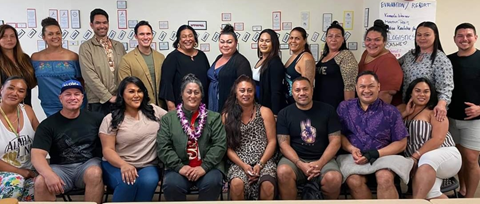
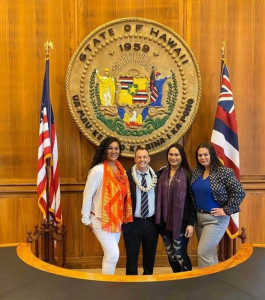
Kua’ana Project with Lt. Governor Josh Green on the Opening Day of 2018 Hawai‘i State Legislature

Honolulu’s current prosecutor ended prostitution raids and is not interested in prosecuting misdemeanor prostitution cases. This is a welcome development, but it is simply not the kind of systemic change that will center the needs of trans sex workers. As with the larger trans community’s struggle for visibility and increased legal equality, advocates must call for lasting policy changes that take trans sex workers out of the destructive realm of the criminal legal system. Instead, we should at once prioritize the well-being of our most vulnerable members and call for policy changes toward that end.      

Perhaps American society can one day get to a point where the foremost public response to a trans woman engaged in sex work is the offer of services with compassion and respect for her agency and autonomy, wherever she may be at that point in time. Those of us who have made long and difficult journeys toward self-acceptance are uniquely positioned to provide support and guidance to those who are struggling today with a range of issues. I am proud that my lived experience as a trans woman and former sex worker can help others in the pursuit of their own well-being, wherever they may be on their journey.      

Kua’ana Kua῾ana Project is grateful for the support that we’ve received from private and public sources in recent years. We look forward to continued dialogue with trans and sex workerled organizations and those who support them as we envision a more just society that no longer arrests and incarcerates as a matter of course. 


Maddalyn “Maddie Ashton” Sesepasara is the Project Coordinator at the Kua’ana Project, and a longtime member of The Hawai’i Health & Harm Reduction Center that serves Hawai’i communities. 

Former NCRP Director of Evaluation Lisa Ranghelli on what philanthropy can learn from NCRP’s largest self-evaluation project to date.

In the fall of 2016, we at NCRP began implementing a 10-year strategic framework that re-focused the organization’s efforts in helping philanthropy actively co-create a just and equitable world where all communities get the resources they need to thrive. We wanted to more intentionally connect with and funnel support to movements that are important drivers of national progress and social change. Additionally, we expanded our scope to increase the effectiveness and impact of high-net-worth donors who do not give through foundations all while continuing to play our historical role as philanthropy’s watchdog and critical friend.  

For 45 years, NCRP has worked with foundations, nonprofits, social justice movements and other leaders to ensure that the sector is transparent with – and accountable to – those with the least wealth, power and opportunity in American society. We do this, in part, by producing the kind of quality, action-oriented research that the sector can trust and use to analyze important trends, critique practices that don’t measure up and praise those modeling efforts that equitably build, wield and share power.  

We also do this by being transparent about turning that lens inward and trying to publicly learn from the same practices and challenges that face our colleagues.

Former NCRP Senior Director of Evaluation and Learning Lisa Ranghelli

So, midway through our 10-year framework, we sit down with former NCRP Senior Director of Evaluation Lisa Ranghelli, who spent much of 2021 looking all that we have tried to accomplish in the last 5 years. We are still processing the lessons, but present these initial thoughts as a way of modeling the kind of public transparency we hope becomes standard in our sector.

Elbert Garcia: Why did NCRP undertake a large-scale evaluation at this point in time?

Lisa Ranghelli: We knew we were going to want to reflect on our progress and make course corrections along the way. In turn, we augmented our internal evaluation and learning capacity by creating tools and processes to collect data and reflect on progress on an annual basis. We also set our sights on doing a more significant evaluation halfway through our decade-long strategic framework in case any major adjustments were needed.  

This year was also our 45th anniversary, so it was a great  opportunity to reflect on our impact at this milestone.  

EG: What were you hoping to learn?

LR: The midpoint review goals were: 

• Understand internally how we got here: We wanted to get our staff and board all on the same page about what we’ve done over the last 5 years and the pivots we’ve made. 

• Understand externally how we’ve shown up: We sought to gain confidential feedback on our impact, strategies and partnership from our primary constituents (i.e., nonprofit members and movement allies, funders and donors, and philanthropic allies).

• Understand what we’ve accomplished so far: We wanted to aggregate multiyear quantitative and qualitative data to gauge progress on our primary objective – influencing grantmakers to shift funding and practice in ways that support social movements and advance intersectional racial equity. 

The timing was auspicious because one of NCRP’s key supporters, the Hewlett Foundation, decided to repeat a 2017 field scan in 2020 that included a survey of foundations about their uptake of new ideas and the quality and utility of content provided by philanthropy-serving organizations (PSOs). As a member of the field scan advisory committee, I was also able to give input on the assessment tools and process, and the Hewlett Foundation team were very responsive to our ideas.  

More than 1,500 grantmakers responded – a number we could never have achieved had we done our own survey.  

Without the heavy lift of doing our own funder survey, we were able to focus on getting feedback from other stakeholders. We anonymously surveyed 49 of NCRP’s nonprofit members and other movement allies and conducted 37 confidential interviews with NCRP board members, PSOs, donor networks, past Impact Awards winners and philanthropic consultants. We assembled tracking information from the last 4 years on specific funders, including any evidence that we had influenced their practice. Our approach throughout was to discern signs of contribution, not attribution, knowing that many forces and actors sway any one person or institution’s behavior.  

Q: What were some of the key findings? 

A: The good news is that we know we are making a difference. We have contributed to more than 60 grantmakers changing their practice in ways that align with our objectives – which averages to more than 1 per month since 2017. Moreover, the Hewlett Foundation survey affirmed that NCRP content has influenced the thinking of hundreds of funders and that more organizations were likely to recommend NCRP to a peer compared to 4 years ago. This was due to the perceived quality of NCRP’s research and content, the appreciation for our willingness to be critical of philanthropy and hold the sector accountable, our progressive values, our focus on racial equity, and our alternative or thought-provoking perspective. 

We learned through our nonprofit survey that our Movement Investment Project and Nonprofit Membership Program are working in tandem to help movement leaders better understand the philanthropic landscape (67%), make connections with funders, and become more empowered in those relationships (41%). A smaller subset received the opportunity to organize with other nonprofits to jointly influence a funder or group of funders and found this peer support extremely valuable. Among survey responses from NCRP members, 62% view NCRP as a very or extremely effective ally and partner. As one respondent wrote:  

“It’s been so great to be part of a community of immigrant and refugee rights movement organizations convened by NCRP. We feel less alone, inspired by and learning from our peers in the network and totally supported by NCRP staff with information and strategic guidance.” 

Finally, we were heartened to hear positive feedback from our PSO allies and other sector leaders about how we’ve partnered with them and about NCRP’s niche in the sector. Folks most appreciated that NCRP has been both proactive and responsive in programming and content, uses both the carrot (such as the Impact Awards) and the stick (such as “Black Funding Denied) to motivate funders, and centers social movements and their needs in philanthropic engagement. It seems that all these roles come together to make NCRP a valued leader in philanthropy, as one PSO interviewee described:  

For me it’s a combination of NCRP’s thought leadership and research that are pushing the envelope and agenda, then complementing that with tools and resources. Not just igniting a conversation, but by having Power Moves to back that up, having the immigrant interactive website with numbers and work you can do, is really key. You’re not just calling out, but calling into action.” 

If anything, our allies want us to partner with them more and bring them into our projects earlier, rather than when we are ready to launch a new report or tool. They want us to convene funders more often and provide more one-on-one and peer coaching opportunities. Given NCRP’s commitment to holding an accountability stance with grantmakers, it behooves us to be explicit and transparent about what we do see as our role and to manage expectations of our sector partners.  

EG: What challenges remain for the organization – you know, areas where we might have fallen short of expectations or are in need of improvement?   

LR: We learned that our strongest influence is with funders who are already well on the road to social justice and racial equity. We’ve been much less effective at reaching funders who invest in under-resourced communities, but have not really explored equitable systems change yet. And though we’ve set an intention to engage foundation decision-makers more, we haven’t made inroads in reaching trustees.  

NCRP has also fallen short in building effective programming to sway the giving from high net worth individuals, nor have we communicated clearly what that strategy entails and which donors we are trying to influence. Our comprehensive review of the last 5 years showed that the level of ambition we brought to fully implementing all the priorities in the strategic framework was beyond our capacity at that time. This effort to reach major donors was a casualty of that. We also realized we couldn’t focus on a dozen social movements at once and pivoted to one or two at a time. The last several years have been a process of reprioritizing, narrowing focus areas, and expanding budget and staffing to better position us to meet all our goals. 

Another area of critical feedback was around how we’ve used publicly available foundation grants data to show the dramatic shortfall in sector giving designated for specific marginalized communities (immigrants and Black people). We learned that the confusion and blowback around the sources and quality of that data undermined our credibility and made it hard for funder and PSO allies to amplify those messages. This creates a greater urgency for us to seek better data through existing or alternative methods and better educate our audiences about the grants categories we use and why.  

Finally, we discovered that many of our allies don’t know about the totality of NCRP’s work, resulting in missed opportunities to engage our networks across project silos. Although we have made strides in making our content a lot more accessible and “digestible,” stakeholders had great suggestions for how we can continue to improve. We also gained insights on the accessibility, practicality and rigor of our content from the Hewlett Foundation scan.  

EG: What was most surprising or stuck with you? 

LR: Because I wore two hats at NCRP – internal learning and evaluation expert and “Power Moves” author and team member – I was in the position of both collecting data and feeling the impact of it at a personal level. Of course, I hope that makes me more compassionate in sharing evaluation results with my peers at NCRP. However, it was also a source of competing emotions. It was both gratifying and hard to see evaluative information about “Power Moves,” a program dear to my heart.  

On one hand, it was nice to see that the guide has been helpful for many funders and still has visibility and resonance in the sector after 3 years – if anything, it’s in greater demand now. On the other hand, I gained humility in hearing critical feedback about “Power Moves.” While I’ve known for a while that it can be a challenging tool to implement for funders with limited time and capacity, we got critical feedback from several consultants that was eye-opening.  

It made me realize that despite the equity goals and values of the guide and the diversity of those who gave input and helped write it, it is very much a product of our white supremacy culture and perhaps speaks best to a white funder audience. While consultants want to use it with funders, several who were interviewed found the guide and/or the project challenging to work with, and we have not done a good enough job of trying to partner with them to use it, even though we held a year-long consultant cohort for this purpose after launch.  

That’s a missed opportunity, given that philanthropic equity consultants are uniquely positioned to influence practice, and they are often invited into the funder board rooms that are hard for PSOs to reach. And personally, it’s an opportunity for me to reflect on how I still center whiteness in my work, despite my values and intentions.  

EG: What’s changed in the last 5 years and how is that reflected in this evaluation?  

LR: Shortly after NCRP began implementing its 10-year strategy, Trump was elected president, causing many philanthropic leaders to step up to defend communities of color, our democracy and so much more. NCRP’s goal to drive more foundation and donor resources to social movements became all the more urgent, and our initial focus on immigrant and refugee rights organizing was in part a response to the government’s harmful new xenophobic policies.  

Then, the pandemic and racial justice uprisings made it hard for foundation leaders to ignore the legacy of white supremacy ideologies that manifested in these twin crises, and they saw the further unleashing of grassroots power at the local level. Funders were being forced to grapple with questions of power as they watched the corruption of it at the federal level.  

I think this midpoint review showed that NCRP’s programs and tools were flexible, adaptable, and able to help funders and donors meet these moments. Simultaneously, we have been deepening our commitment and sense of accountability to our nonprofit members and other movement groups. This has affected how we approach our work. For example, “Black Funding Denied” grew directly out of conversations with our Black-led nonprofit members.  

The evaluation – and continuing efforts to actively reflect on its practices – provides us with useful information and feedback about how we continue to navigate this stronger accountability stance toward funders with integrity.  

EG: Indeed, we are still processing that evaluation and internally discussing how to build on the lessons we have learned in the next 5 years. Thank you so much, not only for carrying out this evaluation of our past work, but for all that you have done at NCRP since 2008. You will be missed, even though we know you are only a phone call – or email – away.  


Lisa Ranghelli was NCRP’s senior director of evaluation and learning until August 2021. After 13 wonderful years with the organization, she is leaving to pursue a local opportunity with the Public Health Institute of Western Massachusetts. There, she will be providing inclusive research, evaluation services and capacity building for community-based organizations and institutions working on health equity initiatives.  

Jara Dean-Coffey, Director, The Equitable Evaluation Initiative, Founder and Principal, Luminare Group 

Jara Dean-Coffey

Jara Dean-Coffey

“I increasingly find myself going to the origins of words, ideas and actions to better understand what twists and turns may have happened along the way — shaping out present day understandings.

“For philanthropy I go to the Greek origins, where philanthropy means love of humanity and supposedly first showed up in Aeschylus Prometheus Bound around 2,500 years ago. That definition still rings true to me as an aspiration for what philanthropy should be. And yet I know that in that simple word — humanity — there are differing beliefs about who is human, what it means to live in community, the idea that our existence is dependent on a collective responsibility and an understanding of our interdependence with one another and with this land — of which we are caretakers. Perhaps what is needed most of all is the desire for all to thrive.

“Forty-five years from now I hope philanthropy (which will never be a monolith) moves away from being a safe haven for wealth and moral logo for high-net-worth individuals and that instead it intentionally organizes in a way that reflects and invests in the best of us; that hearts, minds and efforts are dedicated to our shared liberation, justice and equity and that it holds love of humanity as its core raison d’etre.” 

David Callahan, Founder and Editor, Inside Philanthropy, Author of “The Givers: Wealth, Power, and Philanthropy in a New Gilded Age” 

David Callahan

David Callahan

“Hopefully, the next 4 decades will see far-reaching economic reforms that reduce today’s grotesque concentration of wealth in the hands of America’s richest households. If that happens, philanthropy will be less dominated by billionaire mega-givers than it is today, which would be a very good thing.  

“Of course, though, change at that level may not happen and I suspect that 45 years from now the richest Americans will be even richer and that the flow of money into philanthropy will be even greater. At the same time, I expect that the resources of government at all levels will be much diminished as discretionary spending is relentlessly squeezed by the costs of entitlement programs like Medicare, public pensions and interest payments on debt. In other words, we face a future in which philanthropy — and billionaire donors in particular — are likely to have even greater power to shape public life.  

“To protect our democracy, philanthropy should be more tightly regulated than it is today, with stronger requirements for transparency and stricter limits on the ways that tax-deductible funds can be used to influence public policy and elections. But stronger rules won’t be enough. We also need changed norms that encourage funders to truly share power with the communities that they serve and greatly increased giving by small donors that can offset the influence of the biggest givers.” 

Vu Le, Writer, NonprofitAF.com 

Vu Le

Vu Le

“Forty-five years from now, there is less philanthropy. Government is strong and representative after people woke up and realized that philanthropy cannot replace effective societal safety nets such as fair wages, universal health care and robust voting rights. Significant progress has been made on reparations to Black, Native and other marginalized communities for centuries of exploitation. Laws are in place so that rich people are paying their fair share of taxes and not hoarding their wealth through family foundations and donor-advised funds. Billionaires no longer exist, as that status is widely perceived by the general public to be unethical. 

“With more effective government, and the rich paying their share of taxes, philanthropy has a smaller role to play but is still vital. It focuses on what’s best for the community, not what tugs at the heartstrings of wealthy white donors. This includes nurturing and supporting vital movements, leaders and advocacy efforts, especially those from communities most affected by systemic injustice. Foundation board trustees reflect the community and are no longer mostly rich white men. There are no more grant applications; instead, each organization or movement has one comprehensive information package that they use for all funders. Decisions are made quickly, usually within days. Grants are general operating and for multiple years. 

“With a stronger, more equitable world and less need for philanthropy or nonprofits, many professionals leave the sector to pursue their dreams of selling artisanal sauerkraut or doing wedding photography.” 

Dr. Carmen Rojas, President and CEO, Marguerite Casey Foundation 

Carmen Rojas

Dr. Carmen Rojas

“Philanthropy has a once-in-a-generation opportunity to make the necessary shift from being the power, to becoming the means by which communities become more powerful. Today’s calls for transparency, trust and commitments to racial justice, if heeded, will result in a wholly transformed field.  

“My hope is that by then, we are known by grant recipients as partners as they take more creative, provocative and necessary actions in the fight against white supremacy and economic inequality. We will have practiced anticipating the types of actions that advocates will need to take in order to contest for power. They will have evidence that we can move beyond the symbolic calls for more diversity and lifting up 1 or 2 ‘rich white people whispers.’  

“Instead, our grant recipients will know that in order to shift power, we are prioritizing lifting up whole communities of leaders with proven track records of fighting for racial justice, and that this commitment is reflected in our board rooms, leadership and across our organizations. Our endowments will not be invisible assets that allow for our grantmaking and instead will be understood to be part of the tools that shift power to those people who have long been excluded from it.  

“In the future, with some practice, philanthropy committed to equity, justice and equality will shift from the well-worn practice of paying to play and will instead know what it means to fund to win.” 

Edgar Villanueva, Senior Vice President of Programs and Advocacy, Schott Foundation for Public Education, Author of “Decolonizing Wealth: Indigenous Wisdom to Heal Divides and Restore Balance” 

Edgar Villanueva

Edgar Villanueva

“In 45 years, philanthropy as an industry will no longer exist as we now know it. Tax reform has greatly reduced the way wealthy individuals and corporations store funds in donor-advised funds and private foundations, and these folks now pay their fair share of taxes, yielding an increase in public funds to support basic universal needs.    

“Because America’s demographic is now majority people of color, we no longer need to announce the first person from ‘x-marginalized community’ is leading an organization or a foundation, and it is common to have more BIPOC than white people in the boardroom.  

“By 2066, we are not having the same conversations about race, climate and economic justice, because we didn’t give up — we chose to heal. Foundations can no longer exist in perpetuity, annual payouts are greater than ever, people of color are making the decisions, and we see actual requirements that boards and staff must represent the communities that they serve.  Foundations are redistributing their endowments to BIPOC-led funds who support their communities with self-determination — an equitable shift in wealth and power.  

“Philanthropic resources to support advocacy and movement-building are more than adequate, resulting in strong, robust movement infrastructure that ensures that all people, especially BIPOC, can thrive, have regenerative economies and grow generational wealth. Philanthropy has led the way for supporting truth and reconciliation in the U.S. packaged with reparations and the returning of land. Closing the race wealth gap is within reach.” 

Amoretta Morris, President, Borealis Philanthropy 

Amoretta Morris

Amoretta Morris

“Forty-five years from now, program officers and community leaders will be one and the same. Folks with lived experience will be at the center of visioning, resourcing and creating solutions. We will rightly define ‘expert’ knowledge and who holds it. The sector as we know it will not exist, because we will democratize wealth and live in an economy anchored by collective care and deep democracy. As a queer, Black woman grantmaker from the South, and as president of the incredible team at Borealis Philanthropy, I understand this is a stretch from the present. But I believe that transformative change is possible when we trust, rather than try to control, communities.  

“If we want to realize a radically different future — whether in 5, 45 or 100 years — we have to understand our role as funders in a radically different way right now: as liberated funders. 

“Liberated funders are accountable to communities and assess their philanthropy by how well they are helping communities win freedom and self-determination.  

“Liberated funders center people who are most impacted, and seek opportunities to redistribute power, learn from and with communities and act in service of movements. 

“Liberated funders understand that the only way wide-scale social change has ever been won is by listening to community needs and solutions. 

“Liberated funders know that in order to change the systems we’re a part of, we must also be willing to change ourselves. We must interrogate our own roles, as grantmakers and personally, in upholding white supremacy. 

“Finally, liberated funders fund like they want communities to win.” 

Dimple Abichandani, Executive Director, General Service Foundation 

Dimple Abichandani

Dimple Abichandani

“The next 45 years carry extraordinarily high stakes for our planet and our people. Today’s intersecting crises of racial, gender and economic injustice, democracy under attack by authoritarian forces and impending climate catastrophe loom large when we think about the future. The heart of these crises is all about power: Who is heard? Whose interests are protected? Who is afforded agency over their lives and livelihoods. If philanthropy is to meet the challenges of our time and contribute toward a future where everyone can thrive, it will be because we invest in efforts to shift who has the power to shape our policies, our economy, our institutions and our stories.  

“In 2017, U.S. foundation assets topped 1 trillion dollars. And yet, the philanthropic habit of spending only around 5% of our assets each year in short-term restricted grants is out of step with the urgency of our times. Some philanthropic leaders will tell you that their endowments are modest in size and even if fully deployed, are unlikely to make a dent in the problems of today. Others will tell you that our responsibility is to think of future problems and needs and ensure that our assets keep growing to meet future problems. 

“It may be true that the challenges we face are no match for any one institution’s resources, but taken as a whole, the philanthropic sector is a source of significant and untapped resources that can fuel the rapid changes we need to see. Future trustees who may live on a planet riddled with climate chaos are unlikely to look back and say, ‘I wish you had done less.’ 

“Perhaps the most hopeful vision for philanthropy 45 years from now is one in which the philanthropic sector is small and barely necessary. We could go all-in now to invest in creating a society in which our healthy, reflective democracy ensures that all people’s needs are met.” 

This mid-sized philanthropy provides grassroots organizations in California and Washington with 6-figure multi-year core support grants.

Editor’s note: This article was written before the murder of George Floyd by police in Minneapolis and the subsequent uprisings in more than 400 cities. Please see the dear colleague letter that accompanies this issue of Responsive Philanthropy for more context.

Family foundations have long played an important role to provide resources for social change. NCRP explored this in depth in our 2015 report Families Funding Change 

Most people in the field know about social justice leading family foundation funders including Nathan Cummings, Surdna, Libra, Arca, Mary Reynolds Babcock, Hill-Snowdon, Overbrook, Jessie Smith Noyes and McKnight foundations plus Unbound Philanthropy, Evelyn and Walter Haas, Jr. Fund, Melville Charitable Trust, Moriah Fund and others. 

In recent years, there’s an important new entity on the scene that’s quietly making a huge difference. You’ve probably never heard of them if you don’t live in Washington, California or Arizona. It’s the Satterberg Foundation. 

Satterberg is a family foundation headquartered in Seattle. It had assets of $424 million at the end of 2019;  annual giving has been above $20 million since the foundation received an influx of assets in 2015.  

Its wealth comes from the Pigott family [pronounced pig-ott] who have a substantial ownership stake in a major trucking company. PACCAR, Inc. is an American Fortune 500 company and global leader in the design, manufacture and customer support of light-, medium- and heavy-duty trucks.  

It is traded on the Nasdaq stock market under the symbol PCAR. For those interested in learning more about the company’s history, see here

The Satterberg Foundation was created and named by the founder, Virginia Satterberg Pigott Helsell. Virginia and her husband, Bill Helsell, spent the 1960s, ‘70s, and ‘80s bringing together the children of their blended family and committed to ensure that connection far into the future.  

All the details of how the Satterberg Foundation was to grow and mature were left in the care of their children who are the foundation’s founding board. Today, the board is comprised of multiple generations of family members.  

The foundation leaders seek to help build a just society and a sustainable environment.  

“Our mission of promoting a just society and a sustainable environment is critical,” said Sean Boyd, a board member. “A society that builds trust in the public and private institutions that protect people’s rights, health and their environment by treating everyone fairly and with respect creates a neighborhood, community and a world that we all want to live in. When this mission statement was adopted it was with incredible and sadly necessary foresight that the founding board members saw the role the [the foundation] could play in helping alleviate some of the inequities of the world.“   

Multi-year core support grants are the cornerstone of Satterberg’s approach 

What I find most impressive about the foundation is that in just the past few years the foundation has funded 183 organizations in Washington and California with multi-year general operating support grants.  

Importantly, we’re not talking about small, 2-year grants. The 2018 grants were each for $300,000 over 3 years.  

The 2019 grants to a different set of organizations were for $500,000 each over 5 years. Research by the Center for Effective Philanthropy has shown that large, multi-year grants like these contribute to organizational effectiveness.  

This is exactly the kind of grantmaking that helps grantees build power to achieve justice and equity. A full list of Satterberg’s grantees can be found here

Every grantee I contacted noted how incredibly important this kind of funding is. 

“Satterberg walks the talk in terms of being responsive to grantees and putting the work first,” said Zach Norris, executive director of the Oakland-based Ella Baker Center for Human Rights. “They are about racial justice and understand making their own processes clear and painless allows us to focus on and transform the pain we see in our communities.” 

“The impact of the 5-year grants is instrumental,” Norris added. “How many times have we said we need long-term support? Too few funders listen. We fought an 8-year campaign to close youth prisons across the state of California. Without long-term support we couldn’t win campaigns like that one. That proved to be important not just here in California but across the country. If we want to transform the conditions we are living under, we have to be able to play the long game in order to win.”  

Members of OneAmerica encouraged Washington State lawmakers to adopt pro-immigrant positions during a visit to the state capital in January of 2020. Photo by Mel Ponder.

Members of OneAmerica encouraged Washington State lawmakers to adopt pro-immigrant positions during a visit to the state capital in January of 2020. Photo by Mel Ponder.

Rich Stolz, executive director of OneAmerica (the largest immigrant and refugee advocacy organization in Washington state), said: “Satterberg’s commitment to grassroots, people of color-led organizations is a model for philanthropy. I can’t tell you how much it matters to have multi-year general support funding that we can count on. The funds have allowed us to pursue strategic organizing priorities in rural communities in Washington state where there are limited resources available for that work.” 

Stolz also noted that the multi-year general support funding has “created space for longer term financial planning, and it’s allowed us to be more bold and nimble in our response to crises. It makes a difference knowing that the foundation trusts us to know what our communities want, that it respects that we need to be accountable to our base and that it isn’t trying to use us to advance its own boutique strategies or institutional ego.” 

Roxana Tynan, executive director of Los Angeles Alliance for a New Economy also praised the foundation’s long-term support. “Satterberg is helping to lead the field with long-term general support grants, aimed at organizing. They have also been great about minimizing reports and making the administration of the grant super easy. They are great listeners!” 

“The Satterberg Foundation’s general support has allowed us to be responsive to the needs of immigrant communities, especially as everything around us has been changing constantly even before the coronavirus crisis,” said Angelica Salas, executive director of Coalition for Human Immigrant Rights. “One programmatic example is how we have been able to respond to the needs of immigrant youth after the federal government revoked their legal immigration protections, which engaged us in a state and national campaign to keep them protected along with their families. That fight still continues.”  

Salas also noted that the Satterberg funding “has allowed us to build our organization’s infrastructure to be able to reach more immigrants in underserved regions and to expand our services throughout thestate of California for hard to reach individuals and families who need our protections desperately.” 

Payout double the legal minimum 

Another thing I find impressive about the Satterberg Foundation is that they have committed themselves to a 10% payout — double the legal requirement.  

“Our board of directors made a commitment decades ago to go above and beyond the 5% payout,” said Sarah Walczyk, the foundation’s executive director. “This decision is rooted in the foundation’s mission and vision to ‘Live in a world in balance with vibrant communities in which all people enjoy the opportunity to grow and thrive.’”   

Walczyk added: “We know the world we want to live in today and 20 years from now. The only way this will be possible is if we are responsive to the urgent needs of our communities, trusting them as experts to build power and sustainability rather than preserving our life span.” 

Advancing equity 

In addition to their core support grants and their high payout, the foundation’s board has other interesting and impactful ideas to advance equity.  

For example, they wielded their power by convening an Equity Summit in April 2019. You can read more about that here. 

In addition, the board has provided multi-year grants over $1 million each to regional associations of grantmakers and others in the communities they work in to advance racial equity work.   

“Satterberg Foundation’s trust and the flexibility of its Community Partnership Grant propelled our organization to a new level of impact both within our membership and in the larger philanthropic ecosystem,” Christine Essel, president and CEO of Southern California Grantmakers, said in an email.“The foundation’s investment gave us capacity to patiently plant and grow the seeds for effective cross-sector partnerships between grantmakers, government and grassroots leaders. In addition to creating a strong statewide alliance and bolstering our advocacy arm, we also built a network of members who increasingly center equity as the powerful driver of deep and lasting change.” 

Satterberg Foundation builds power by funding community-based organizations whose leaders work to build a just society and a sustainable environment.  

The board shares power by giving those groups multi-year core support, and they wield power through convening their peers and their community.  

I encourage other family foundations and foundations of all types to follow their lead to find ways to partner with Satterberg, a not-yet-well-known but successful philanthropy. 

Aaron Dorfman is president and CEO of NCRP. 

More than 250 right-wing 501(c)(3) nonprofits spent over $1 billion per year in the 7 years between 2015 and 2021. That 7-year period begins when Donald Trump’s anti-Black, anti-immigrant social media sideshow began its transformative takeover of the Republican Party into a national neo-fascist movement and ends when hundreds of far-right rioters stormed Congress in an attempt to overturn the results of the presidential election.

Between Trump’s infamous “rapists and drug dealers” speech in 2015 and January 6, 2021, a subset of more than 2 dozen nonprofits focused specifically on undermining electoral, liberal and economic democracy increased their fundraising 3-fold to over $500 million per year.

Simply put, nearly 30 years after the National Committee for Responsive Philanthropy (NCRP) first documented the “strategic philanthropy of conservative foundations” in Sally Covington’s landmark study “Moving a Public Policy Agenda,” and 15 years since the Supreme Court demolished election spending rules in favor of corporate personhood with Citizens United v. FEC, the space for right-wing donors to finance anti-democratic civil society has exploded.

Katherine Ponce
An Attack on Democracy

Organizing in the workplace, voting and protesting are fundamental pillars of a democratic society. With all 3, citizens are not only participants in the electoral process, but also active agents in shaping the policies and practices that affect their daily lives. The rights to free expression and bodily autonomy guaranteed by liberal democracy are meaningless without the electoral and economic power to back them up.

Over the past decade, we have seen the fruition of a well-financed 60-year campaign to roll back major movement-won advances made on racial, gender and economic justice that culminated in The Civil Rights Act of 1964 and the Voting Rights Act of 1965. These attacks are not random explosions of frustrated or economically excluded populists, but the deliberate work of various networks of philanthropic actors who seek to roll back or undermine efforts for a more democratic and just society.

Building power like the far right has done requires trust from philanthropy. Past NCRP research has documented the ways “regressive philanthropy” has been highly effective in supporting the goals of funders and organizations that want to take us backwards as a society, primarily through multi-year unrestricted funding focused on messy, nonlinear change led by movement-nurtured leaders. In building awareness about who is behind these well-resourced attacks on democracy, it is essential to recognize how right-wing donors have used philanthropy to maintain their own disproportionate wealth and power. Perhaps most importantly, it is essential to connect the consequences these attacks have on grassroot organizations and the communities they represent.

What Grassroot Organizations are Working Against

Last December, the entire staff at NCRP traveled down to Miami, Florida for our biannual work planning trip together. In addition to connecting with each other inside and outside of our office space, we also connected with organizations in our nonprofit membership program. During a particular presentation by a nonprofit member working to broaden and deepen democracy in Florida, our staff heard things that were cause for alarm.

Doing deep engagement work in democracy has always been difficult in the United States, but the growing opposition to progress in our federal and state legislatures continues to threaten grassroots organizations engaged in this work. Legislative trackers suggest that thousands of pieces of democracy legislation from both parties get introduced every year, and about 10% of bills pass. Much of this largely goes unnoticed by the public, but the slow and subtle shifts of power in American democracy add up with large implications. Conversations with NCRP’s national membership of grassroots organizations has surfaced 3 recent threats to our democracy:

1. Undermining the Power of Worker Organizing. Despite a 2023 worker’s strike receiving historical presidential support and an overwhelming majority of public support, labor union membership reached an all-time low in 2023 with only 10% of U.S. workers being part of a union. This movement away from union membership has had increasing impacts on stagnating wages, rising income inequality and dangerous working conditions. But in addition to the economic disadvantages, lower union membership has weakened the middle-class voice in democracy.

Unions have always held space for information sharing and collective bargaining for the common interest of a group of people. It is in the fabric of their existence to support voting as a fundamental right because it allows workers to have a say in decisions affecting their lives and workplaces. Unsurprisingly, these values led to labor playing a central part in the passage of 2 landmark pieces of legislation, the Civil Rights Act of 1964 and the Voting Rights Act of 1965. Dr. Martin Luther King, Jr. was assassinated while in Memphis supporting a public employee strike. The American labor movement has followed up that initial support by increasingly recognizing that workers are more powerful when they are not divided by racial, ethnic, gender or religious backgrounds. Research shows that over time, union membership can reduce wage inequality across race and gender. Today, Black workers have the highest union membership rate at 11.8%, and Latinx and Asian American workers are the fastest-growing sets of union members.

The labor movement, already undermined by the expansion of so-called right to work laws in many conservative states, took a huge hit in 2018 when federal courts ruled in Janus v. AFSCME that public employees no longer have to pay fees to unions to cover the costs of collective bargaining. Since this ruling, unions have been forced to represent nonmembers for free, threatening their ability to survive if too many members opt out of receiving the benefit of the union for free. Since 2019, states have filed 200 lawsuits in state and federal courts and introduced legislation that prohibits paycheck deductions for dues, mandated high membership thresholds and introduced automatic decertification. These anti-union bills continue to contribute to the fall in union membership and public perception, which ultimately has a direct effect at all the polls. An Economic Policy Institute study of the 2022 midterm elections found that local labor union power is associated with greater access to ballot drop boxes. This study found that a “1 percentage point increase in union density was associated with a 9.8% increase in the number of ballot drop boxes per capita.”

2. Restrictions on 3rd Party Voter Registration Drives. Voter Registration Drives, also referred to as 3PVRO, are often thought of as community efforts to encourage and assist people in registering to vote. Yet to date, 57 % of the population live in states that restrict registration drives.

All citizens having the agency and access to vote is painful and recent history. Since the Voting Rights Act of 1965, the law extending the right for Black Americans to vote, Congress has had to extend the law’s provisions in 1970, 1975, 1982 and most recently in 2007. Before and certainly after 2013, when a key provision of the law was invalidated by a Federalist Society–influenced Supreme Court, local attacks at the state level have increased barriers at the ballot box. With few exceptions, new restrictive bills have been introduced in each election cycle. With every bill passed, frontlines workers’ landscape shifts, uprooting how they can legally and safely do their work. In 2021–2022, 400 legislative proposals were introduced to undermine our election system. Since 2020, only 18 states have become more expansive in providing equal access to the ballot and combating violence and divisiveness, while 24 states became more restrictive.

In total, 23 states have laws restricting 3rd party voter registration drives, while 2 states do not allow them at all. In addition to introducing complicated time-bound laws for voter registration drives, Florida has successfully passed laws to increase fines on groups who do not keep up with these restrictions.

In 2021, the maximum fine a voter registration group could receive was $1,000. In 2023, that grew to $250,000. After this law took effect in 2023, registrations through drives fell by 95%, compared with the same months 4 years earlier. This shortfall has and will disproportionately affect communities of color. Since 2012, 12.8% of Black voters in Florida had used voter registration drives to register or update their registration as compared to 10.3% of Latinx voters and just 2% of white voters.

3. Criminalizing Dissent. Since 2017, hundreds of anti-protest bills have been introduced, including an uptick in bills following the 2020 uprising in defense of Black lives. Multiple successful wins among conservative candidates now show explicit model practices that have been implemented across states. These new bills have criminalized protestors, silenced organizers and ultimately created an environment where funders believe it’s appropriate to cut ties with nonprofit partners based on their beliefs, even when those beliefs are aligned with the same mission funders originally agreed to support.

The federal right to protest has historic roots in Washington DC. In 1938, the New Negro Alliance (NNA) took on the Sanitary Grocery (now Safeway) after the store sued protestors for picketing as part of a “Don’t Buy Where You Can’t Work” campaign. The NNA went on to win the case in the Supreme Court, marking an important victory in the right to protest that was instrumental later during the Civil Rights Movement.

While the federal government has largely remained unsuccessful at revising the precedent of this law, states have continued to slash individual First Amendment freedoms. Following the 2020 uprisings, the anti-Black response of new laws was not a new move but an old trick. After an unarmed Black 19-year-old was fatally shot, Florida passed an “anti-riot” law in 1967 designed to stop Tampa’s Black community from protesting.

Public attention has been heightened as we watch these most recent laws silence and criminalize Atlanta activists participating in the #StopCopCity movement and grassroots organizations for solidary with Gaza. Movement leaders, organizations and grantmakers have been sounding the alarm: It is only a matter of time before this kind of repression reaches other social justice fights like abortion funds, migrant support funds or mutual aid.

Who is Behind These Regressive Policies?

All 3 of these anti-democratic efforts follow the same fundamental approach: Attack court precedents won in the mid-1900s through mass movements of oppressed people, introduce model legislation at the state level that chips away at legal rights, and radically polarize the public around divisive issues with a flood of messaging spending. Political leaders of the conservative movement have been out in front of these strategies that are used against grassroots organizations and communities. However, this type of coordination takes a lot of behind-the-scenes work.

Between 1997 and 2004, NCRP published a series of reports detailing the strategies and influence of conservative philanthropy. In 1997’s “Moving a Public Policy Agenda,” NCRP observed $210 million total in grants for conservative causes from 12 well-known conservative foundations, or $154 million per year in 2024 dollars between 1992 and 1994. NCRP’s analysis expanded in 1999’s “$1 Billion for Ideas” which included the spending data for 20 of the largest conservative think tanks from 1996 and 1997 – totaling $321 million per year in 2024 dollars grantmaking. In 2004’s “Axis of Ideology,” NCRP included the grantmaking of more conservative foundations (77) from 1999–2001 – $157 million per year in 2024 dollars. When these statistics were published, they were among the first attempts at quantifying the power and reach of conservative nonprofits, and by their nature, NCRP underestimated both.

In light of the current successes of anti-democratic forces, NCRP decided it was time to examine the giving by donors and foundations who seek to move our nation backwards with fresh eyes. From 2015–2021, NCRP estimates that regressive public policy organizations spent on average over $1 billion per year. Their fundraising and spending increased by more than 50%, and their assets and re-granting doubled in those 7 critical years.

In addition to their sheer size and power, these foundations have also remained consistent in how they fund. In our 1990s reporting, NCRP concluded that conservative foundations were more likely to provide their grantees with general operating funds. Today one of the largest regressive philanthropic funders, the Lynde and Harry Bradley Foundation, and the largest platform for conservative Donor-Advisor Funds, Donors Trust – a giving trend that exploded in NCRP’s most recent research –continue that pattern. Combined, the Lynde and Harry Bradley Foundation and Donors Trust have granted out over $1 billion since 2015. A majority – 58% – of these grants were general operating support grants. From a best practice standpoint, grantmaking like this outperforms most philanthropic organizations. While NCRP encourages funders to provide at least 50% of their grant dollars for general operating support, the Center for Effective Philanthropy reports that of the 58% of foundations who do provide multi-year general operating support, only 11% of foundations reach that benchmark.

Through website, annual reports and tax return (Form 990) keyword searches, NCRP’s research has so far identified a group of over 2 dozen well-networked 501(c)3s that have missions to develop model legislation, messaging, and/or leaders that will limit rights and regress democracy. These organizations have adapted themselves to the Trumpist turn within the conservative movement away from free market neoliberal politics and toward post-liberal, explicitly nationalist politics, including a new and renewed focus on policies that criminalize dissent, constrain workplace democracy and corrupt our electoral processes in order to preserve minority rule. Between 2015 and 2021, the expenses of the 20 conservative think tanks whose rise to power is documented in 1999’s “$1 Billion for Idea’s held steady at just over $400 million per year, while the expenses of the newly anti-democratic vanguard of the right doubled from $200 to $400 million.

Testing our legal system takes power. Shifting the narrative arc to catalyze successful wins takes consistent long-term funding. When you are an organization that is trusted to try new things and resourced well over multiple cycles, you start to see the wins.

Where Do We Go From Here?

NCRP is continuing to update our research about right-wing donors and foundations with new tracking and analyses about regressive philanthropy. We expect to have a report out in 2025 that will detail our findings and shine a light on the donors, foundations and nonprofits that seek to undermine democracy and turn back the clock on our freedoms.

And while the anti-democratic movement has grown in size and sophistication, much of the through lines we reported on 30 years ago have remained the same. Regressive philanthropy is modeling how effective trusting aligned, grassroots issue-focused leaders can be for conservative funders in achieving right-wing goals.

How does this compare to mainstream or traditional funders? Consider this observation from a grantmaker in a report from the Center for Effective Philanthropy that documented funders’ perspectives on the $14 billion in unrestricted grants that MacKenzie Scott has given (with at least $567 million of that racial equity organizations):

“This funder said that grassroots organizations often have an emphasis on ‘lived experience, which has encouraged them to make some sort of nonprofit to support people similar to them.’ While the funder noted that starting grassroots nonprofits is ‘wonderful,’ they also suggested that, for these organizations, ‘Sometimes managing the dollars is a little more difficult, because it’s not necessarily their background…’” 

For too many, a deep mistrust exists between those with the money and will to resource progressive movements and communities impacted most by regressive policy. This mistrust is so deep that even well-intended philanthropic actors go so far as to criticize a donor who devolves their leadership to those closest to the issue. Beyond this quote, the lack of trust is evident in grantmaking practices that lean on a one-time or yearly programmatic-based funds, instead of flexible, multi-year investments.

In order to work toward a shared vision with clear goals supported by consistent narratives, we need progressive intellectuals and funders to work with and be led by movement demands. We want deep investment in progressive infrastructure directed toward a shared vision.

Certainly, one way to not just reverse the erosion of our rights but to build toward an inclusive world is to model the trust and deep pockets that regressive philanthropists show toward their grantees. Or at the very least, we should begin to ask why it’s so easy for them to do so.


As the Research Manager for Special Projects, Katherine Ponce engages in both qualitative and quantitative research projects that explore NCRP’s narrative in the philanthropic sector as they advance its mission to see more support and resources go to social movements. This includes evaluating the barriers to receiving funding for Black communities, supporting analysis for the lack of funding in the South, and measuring regressive philanthropic tactics. Most recently, Ponce was the project led for Cracks in the Foundation: Philanthropy’s Role in Reparations for Black People in the DMV. Katherine earned a dual degree, an MBA in Social Impact and an MS in Global Health Policy and Management, in 2021 from the Heller School at Brandeis University, and before that a BA from Towson University in 2015.


More Responsive Philanthropy

Fall 2024 Issue
Democracy: Before, During and After Election Years

Headshot of NCRP Board Member and Chorus Foundation Founder and President Farhad Ebrahimi

NCRP Board Member and Chorus Foundation Founder and President Farhad Ebrahimi

NCRP: Farhad, I wanted to meet with you to essentially talk about the story of Chorus Foundation that you, you know, have some involvement in [laughs]. And Chorus is still sunsetting at the end of this year, is that correct? 

FE: Yeah, yeah, this is our final year. 


NCRP: Final year. How are you feeling about, overall, about the final year? 

FE: Pretty good. I think that the personal, closing a big chapter, “what am I going to do next” stuff? I think that’s one of those things where that hasn’t really hit me emotionally yet. I’m in that space where I’m feeling a way that I’m not feeling a way yet, if that makes sense. But, as far as what we’ve done, and what, hopefully that sets up for other folks to do and things like that. I’m feeling pretty great about it. 


NCRP: Yeah, that’s, that’s awesome. And I definitely I resonate with that feeling. I think before big milestones, I’m always like, why is it not hitting me that I’m graduating, I’m leaving this thing? That’s a very real, real, real feeling. And so, I’m wondering what led to the decision to sunset Chorus.

 FE: It was always the idea for Chorus to sunset within my lifetime. So it was always an example of a family philanthropy or individual donor activity, where the idea was, this is not going to be like an intergenerational thing, this is not going to be in perpetuity. And I think the initial ideas were twofold: One was my not wanting to create some sort of thing that then is handed off to my kids or to niblings, but something that like accomplishes a job of redistributing resources, and doesn’t exist any longer than it needs to, to do that.  

But that evolved over time I think, compelled by the urgency of the work that our grantees were doing around climate. But you know, there were other tipping points as well, around economic inequality, about, you know, our democracy, that it just made more sense to move the resources now rather than later. That’s really when we shifted from being like a vague gesture, at sunsetting within my lifetime, to let’s have a strategic planned spend down over 10 years.  
But then the final phase of thinking about it was really around thinking about a just transition as applied to the philanthropic sector. As we proceeded into our spend down, we really started thinking that what we’re doing is we’re decommissioning an organization. There’s an argument elsewhere in philanthropy that organizations like this need to exist in perpetuity, because people are dependent on them. And so if we’re decommissioning something that other folks might feel like people are dependent on, what does it look like to support the kind of infrastructure at the community level that credibly makes them that much less dependent on outside philanthropic or investment organizations such as our own? That really has become our ultimate reason for thinking about spending down, but these are each additive, right? Like each of these reasons sort of reinforced the ones before it. 


NCRP: I’m wondering, along those lines, what does it mean to be informed by movements? You talked about how the state of the world, and your conversations with movements have kind of like led you to spend down. And so, I want to know, what does that mean for you? 

FE: I mean, I think it starts with being really as relational as possible and approaching our work with a radical humility. In philanthropy we can talk a lot about processes and structures: how do we get those exactly right?  How do we make decisions about who to fund if we’re making the decisions? Or how do we create processes for democratic decision making, if it’s community members making those decisions? How do we structure collaborations between funders? Things like that.

Don’t get me wrong, process and structure are legitimate areas of inquiry. It’s really important that we try to learn from past efforts and really get them right. And also, to me to what it means to be informed by and accountable to movements is that those processes and structures are ultimately only as important, or only as useful, as our willingness to change them or scrap them entirely if the movement leadership and community leadership that we’re in relationship with informs us that these structures are not working for the folks that they’re supposed to be working for. Part of it is how we show up.  

We see ourselves as an instrument of movements. And to do so we need to be flexible, we need to be emergent, we need to be relational, we need to be the kind of folks that people can reach out to easily without fear of it being like, a whole thing, reaching out to a funder. We’re receptive and ready to respond if there’s anything that we could be doing differently, or if there’s anything that we need to do because of something another funder did. And maybe it’s not even our fault, but we’re in a position to help folks deal with it. To me, being informed by movements has to do with how we take our leadership from movement folks. Not that we say what we’re going to do, and we get everything right. It’s that we’re in constant conversation. And are always willing to do things differently. And relatively quickly, and with relatively few asks of our grantee partners, for us to have what we need to be able to do things differently. 


NCRP: Thank you! So there’s a two part question here: who were the groups that first led you to this concept of Just Transition and thinking about it in the way you do? And what were the next steps in terms of ceding power kind of under that framework?  

NCRP, continued: I’m really fascinated with what you said about a Just Transition framework in terms of shifting power in the philanthropic sector, but also, Just Transition, means something in the world as well, in terms of climate justice and making sure that frontline communities are supported as we shift from a more carbon-focused economy. 

FE: And I mean, they’re directly connected to each other. I have a deep love and respect for Climate Justice Alliance, Movement Generation, specific place-based organizations like Kentuckians for the Commonwealth, Asian Pacific Environmental Network, Center for Story-based Strategy. These are all folks that engaged with Chorus. You know, they invested in our leadership. They didn’t just try to connect with us because they thought we would be more pleasant people to fundraise from, than some of the other foundations they knew. I would like to think we were more pleasant folks right to have that side of the conversation! But it was also very much about their, you know, being interested in us as people, as an organization. They wanted to see, what are we up to? What are we doing? How are we engaging with our peers in philanthropy? And part of what was in that conversation with these groups was, the clarity that they had around how climate is an on ramp to just transition as a frame and just transition as a frame is bigger than just climate.

I think the story of Chorus, in many ways is the story of a family foundation that started with like this issue, focus on climate. And through  no small ways, just transition as a frame broke out of that single-issue approach, into a multi-issue approach towards thinking of systemic change, that really centered questions of equity and power, which is a way of describing what we learned from just transition. You know, you can’t have systems change if you’re not thinking deeply about equity and power. And this discovery was at the same time that a lot of folks in climate philanthropy were scratching at the surface of like, oh, this is this is a big systemic thing, right? This isn’t just about one issue.

So those organizations, I think were trying to talk to a lot of folks about expanding, they’re thinking about what effective climate work really needs to look like. And they were not only having that influence on us, but inviting us into that process of reaching out to others in philanthropy. And then, something interesting was happening, where there’s this appetite in philanthropy, to hear about how movements are thinking about just transition and how the movements for climate and environmental justice are, you know, very clearly about more than just climate and environmental justice, right? That for those of us who had been in relation with these movements to see them show up talking about housing, or talking about policing, and mass incarceration or talking about, migration or talking about any number of other things, that it just made sense, whether there was climate in the group’s name or not. So the question became how do we how do we talk to more funders about this?


NCRP: I am curious. If you had to give a speech to these foundations that are at this inflection point, wondering, “Should we sunset? What’s the point?” and they’re kind struggling with this, what would you say to them? And don’t hold back, please?

Something I’m really interested in is how to help folks see that this process of going from holding power accountably to finding ways to share power to ultimately try to find ways to hand over power entirely, is a liberating process…. We’re actually deeply asking people to show up as protagonists and agents, just in a way that’s very different from from what they’ve been encouraged to do. And I think it’s a shift in “protagonism.” It’s not saying, you don’t get to be a protagonist anymore, people don’t value value your input anymore. It’s about saying, there are ways in which people deeply need you to show up and leadership and want to hear your wisdom, and your expertise and things like that. But it’s not about deciding where money goes in other people’s communities. That idea that like everybody who currently sits right in some structure of power and privilege can find their own version of like, what their influence can be, in a way that’s transformative and regenerative. It’s tremendously liberating to realize that, you know, you can still be a hero, just not the kind of hero the current system has shaped you to be.

For Chorus as part of our spend down, this one of the concrete examples we can point to: this is what we mean by us being the training wheels for our grantees, for community organizations and for community members to build their own infrastructure for making decisions about how money gets allocated in their own community.


NCRP: That’s such a wonderful note to end on!


Stylized, artistic picture of post Katrina flooding.

More Responsive Philanthropy

Summer 2023 Issue: Redirecting Climate Justice Towards a Just Transition