rp

NCRP’s Ryan Schlegel interviewed Mary Reynolds Babcock Foundation’s executive director Justin Maxson and network officer Lavastian Glenn about philanthropy in the South. Among the topics they discussed: foundations’ support for social change in the South, how to strengthen partnerships between Southern and national funders, and what has changed in the South since Lavastian authored an article in the summer 2013 edition of Responsive Philanthropy[1].

Ryan: It’s been three years since Lavastian wrote her wonderful piece for Responsive Philanthropy about the As the South Goes[2] report, specifically about the urgency of investing more philanthropic dollars into Southern communities. What has changed for the South in those three years?
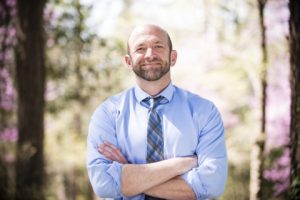
justin-maxsonJustin: National funders are paying more attention to the South. We have more conversations with funders who recognize the need to support the advancement of economic, social and racial justice.

Three things helped bring this about: First, I think the Movement for Black Lives helped increase the national conversation around race. Second, the deepening demographic shift in the South continues. And third is the growing recognition of economic inequality.

Those three realities have really prompted recognition from national funders to realize that all of those things collide so directly and systematically in the South. If you care about those issues, you have to figure out how to be in the South.

Obviously there is a lot of room between where we are and where we need to be, but I know of five to seven national foundations that are in serious exploration. They have deepened their strategy and investment in the region. That’s a positive thing.

lavastian-glennLavastian: Over the last three years, I’ve had the privilege of working with Grantmakers for Southern Progress (GSP). In traveling around the country and working deeply in the South, the platform of GSP has resonated with many people in philanthropy. There are active conversations and learning among Southern and national funders on developing racial equity or equity lens for their work. I think we’ve been successful in helping funders identify organizations and networks, actually spend time in the region and begin to break down perceptions about the lack of capacity. However, there’s more work to do.

From electoral-, get-out-the-vote- and democracy-focused foundations, there is definitely interest in the South. Part of that increased interest comes from this unusually high-pressure, high-stakes general election and the understanding that shifting demographics hold a lot of promise for new leadership, progressive policy and more inclusive civic discourse. It has been interesting to watch the shift in attitudes about people of color and ideas about what progress looks like versus the “we need to go back to America of the past” attitude.

While all of that plays out in the public sphere, we have several high-profile police shootings of, and racially motivated, violent crimes toward African-American people and people of color. It brings back imagery and memories of the Jim Crow South.

So while there is more conversation in philanthropy about the opportunities to invest in the South, all of our greatest fears about the past are front and center in 2016.

Ryan: The gap that exists between national resources and Southern communities seems to be both about the perception of and the real lack of capacity. Babcock has made a commitment over 20 years to build the capacity of Southern organizations, especially with an eye toward resilience. How can other foundations support that process?

Justin: There is absolutely a perception that the South has less capacity, and clearly the South has capacity challenges. The region has been underfunded for decades. However, between the perception and real challenges is real capacity. It takes patience and a willingness to look underneath the lid in communities, states and networks to find it.

One way to support the process is to fund networks whose work includes building the capacity of their participating organizations. This is a good approach for foundations that do not want to specifically support organizational development.

In my experience, however, organizational development and capacity building are important parts of supporting the work. Organizational support isn’t just a separate category; asking a potential grantee about his or her organizational development and its strength is something you can do if you’re supporting state policy advocacy, grassroots organizing or economic development work. For any of those strategies, these organizations need organizational support.

Lavastian: Folks doing community and economic development in South Carolina, for example, are hugely under-recognized for their work. They have created a network of community-development entities, working to improve the conditions of people living in their communities.

South Carolina, like many other states, has a particular approach to governance that prides itself on smaller government that does not invest in local communities, not to mention the legacy of overt and structural racism. What these folks have been able to do is create an infrastructure that stands outside of, and is parallel to, the mainstream. When we go to a conference and see 250 people from around the state, the majority of whom are African Americans and people of color, we know they have created that for themselves.

You have to see for yourself to understand the capacity, vision and leadership. I have to give credit to Bernie Mazyck and Michelle Mapp. Both are very smart and passionate but are also entrepreneurial; they know that this is all about making the work better.

Ryan: The South was not founded as an economic democracy. We hear from folks that one of the stumbling blocks that some funders encounter is a misapprehension or a lack of understanding of the power dynamics that play in those communities. How does Babcock approach power dynamics in those communities?

Justin: That’s a great question. It’s just hard to do. We acknowledge power dynamics in places, but fundamentally we are partner/grantee-led, so we do a lot of listening and ask a lot of questions.

We’re looking to support actors who are conscious of the relations of power and have their own theory of change. We’re not looking for a logic model, but we’re looking for groups to at least be able to say “Here’s what we’re trying to address; here’s how we’re going to go about it and why we think we’re successful.”

We have a fundamental tenet: We aim to work as much as we can with directly impacted people. That starting point generally means that they’ll have some version of a power analysis. It’s important for us to listen to their stories and their understanding.

We’re also very interested in unusual partnerships in which you have grassroots leaders in legitimate collaboration with intermediary organizations or decision-makers where these folks see shared interests and can get important things done.

Power is often central to making things happen in communities, so we listen closely to what our partners say about their strategies, their partners and how they will get their work done. There is usually a great deal of wisdom there.

Ryan: How is Babcock’s understanding of what social justice looks like different from the prevailing understanding of national funders? And how is that understanding influenced by Babcock’s specific contacts in the South?

Lavastian: We have this deeply held value that states, “We know what we know because of work in the community.”

How we move and act as funders in the region is grounded by a sense of humility. And that’s not to say that we don’t have intelligent folk on staff who can deeply evaluate issues and access research to understand how we can make a difference. We really try to practice what we preach by listening to communities and leadership on the ground. We know that it’s their call.

We’ve learned over the years that investing in people to lead processes in their local contexts brings the most impact and sustainability. As funders, it is really easy to enter into spaces with nonprofits and communities with your own plan to move the needle. We work hard not to enter in that way.

We enter by listening to how a nonprofit leader or network is describing his or her own ecosystem and analyzing political power and the kind of tools and influence it takes to achieve these goals. If it lines up with our general framework (economic opportunity, civic engagement promoting democracy, accountability to people who are directly affected, etc.), then that’s what we invest in.

Justin: As Lavastian said, it’s based in a set of values that go pretty deep. We recognize a set of connected structural challenges (racism and other isms, economic inequality, political exclusion, cultural narratives about success), and because we believe the solutions are also complicated, so we generally don’t pick an issue or one strategy.

We try to support places where there is opportunity in the context or place and do so in a way that we build resilience and effectiveness overtime. Babcock’s vision for change is rooted in a recognition of the complexity that the region faces and an understanding that the most effective solutions aren’t one-off responses. This involves support to build resilient organizations and networks and develop strong, multilayer relationships over time. We hope that allows organizations to make progress today and move the needle on longer-term challenges.

The last decade has been tough in the region, particularly politically. It takes a long-term perspective to advance social justice in the region. Partnerships between national funders and regional/local funders is key because we can help interpret context and explore connections to local work.

We recognize that this work is going to take long-term, place-based general support that expects outcomes but also to invest in building capacity such as staffing, organizational development and resources to support innovation.

Ryan: What tools or information do you think funders need to strengthen those partnerships and create sustained investment for structural change in the South?

Justin: We need as many examples of capacity and work on the ground as possible. They need to understand that there is capacity. It may look different than the capacity they’re used to, and it may need support to be made stronger, but there is significant capacity across the region.

It’s not enough to just fund the outcomes. Part of funding outcomes is actually supporting the growth of more resilient and effective organizations and making the case for integrating organizational support with support for outcomes.

So what are the most effective strategies that national funders can take to best support the work? I think it involves seeking to understand the context in a place, listening well, building relationships and real partnerships and spending enough time to do the previous things well.

While we all need to support work that aims at short-term results, our experience says we are more effective with a slower, deeper approach that builds on the skills and experience of local actors. Patient work that helps funders get a sense of the opportunities and challenges in the region is likely to be much more successful.

The Babcock Foundation believes deeply in outcomes and results. We have a thread of practicality that runs through our work, so our approach to this isn’t ideological. It really is the result of our experience.

Our experience shows that, if what you want to do is help generate outcomes in a place with tough challenges, there aren’t quick solutions. We are always pushing ourselves to understand outcomes and support work that will achieve them. We think building resilient organizations and networks supports both near-term outcomes and longer-term progress on super hard issues. We work to support community and organizational leaders who are working toward both.

Lavastian: We really need tools to help bridge differences. How do you partner with communities and with nonprofit agencies in a way that is equitable, fair and pays attention to the power dynamic? We need more tools, more training and more dedication to develop a racial equity and justice lens.

We need leadership that understands the urgency. One of the things that is really difficult about philanthropy is that it is so slow and takes so long to make decisions. I don’t know what can be done about the speed, but there’s something to be said for prioritizing work around structural change.

It is so important for us to say, “We’re going to make mistakes, but we are going to do this together and will fail forward.”

Also, funders need to know the potential funder partners within the region. So, for example, we are part of an effort to organize funders to invest in the Black Belt. It is a historic community that has experienced persistent poverty over the years. And while the community carries a lot of the passion and leadership from the civil rights movement, it has not yet reaped the benefits of all that activism. There is an opportunity to come together with communities and ask how we can support work for deep change here.

Funders also need vehicles to invest in a way to move money with a shared risk, with opportunities to leverage investment. Equity, by definition, means investing more in places that have less, or have people starting from a different point, all in order to create an equal playing field. What does that mean for philanthropy? That is probably the biggest challenge for folks investing in the South.

A common push-back is that there are just so many needs, and the South is so behind. But if you truly have an equity or racial equity framework in your grantmaking, then it is an easy choice: you invest in those who need it most.

We need to prioritize helping foundations and stakeholders to reframe what progress looks like. If your understanding does not contain an equity lens, then places like the Deep South lose out every time. There is something inherently unjust about that. That is an outside-the-box opportunity we have in philanthropy; we need to show up in places that on paper look like they can’t add up but need help nonetheless.

Ryan: I think the last bit that you said resonates most with me. If we say that we can’t invest in places under our current framework because they “don’t add up,” then that’s not a problem with those places; that’s a problem with our framework.

Lavastian: That’s right.

Ryan Schlegel is senior associate for research and policy at NCRP.

[1] See http://ncrp.org//publications/responsive-pubs/rp-archive/responsive-philanthropy-summer-2013/region-at-the-crossroads.

[2] See www.nfg.org/gsp_south.
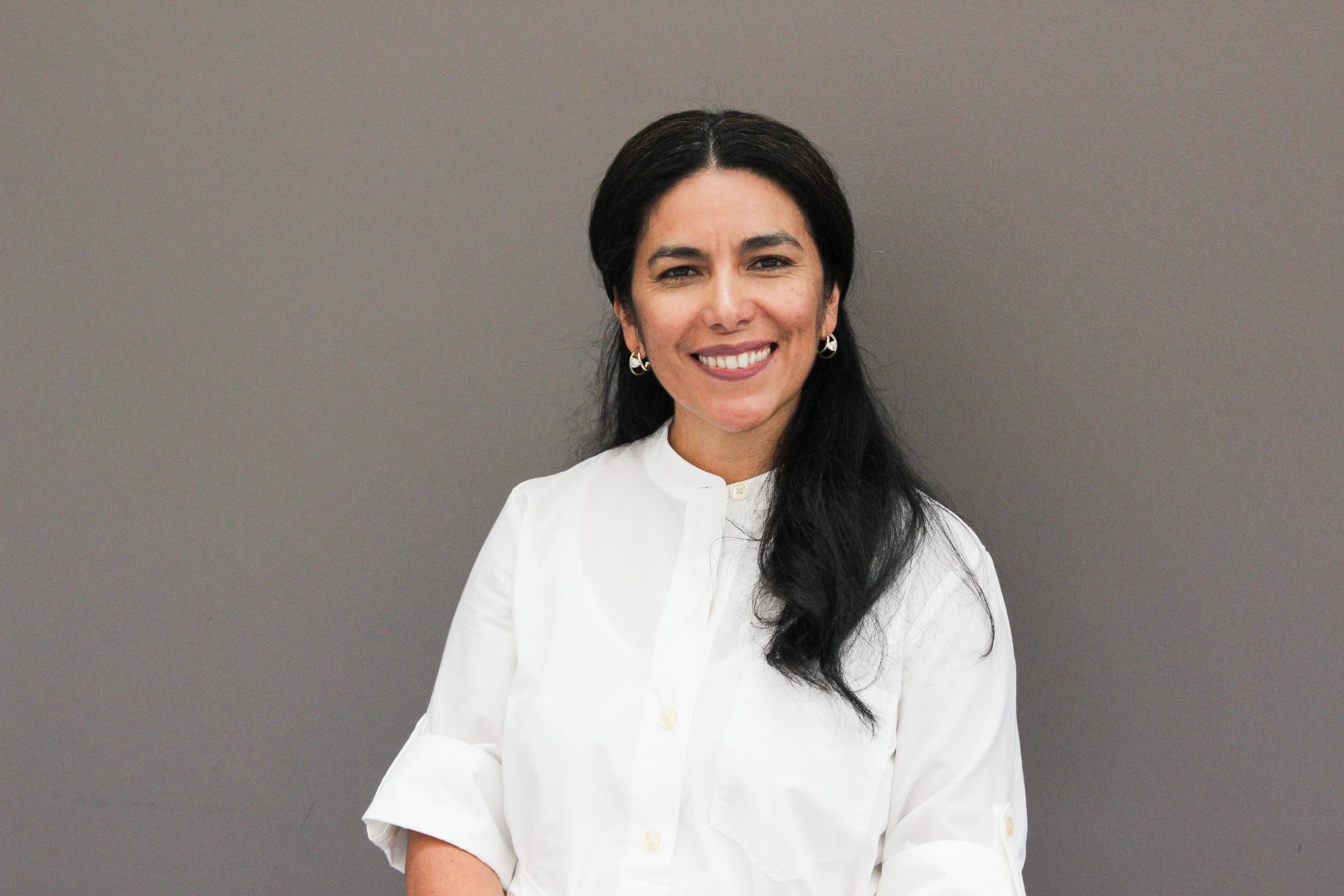
As democracy makers, and Black, Indigenous, and Latinx women who lead 4 national networks and one intermediary fund, we spend a lot of time fighting for and acting into multiracial feminist democracy. Together, we are working diligently to ensure that people’s voices are heard and acted upon in local settings, states, regions, tribal communities, nationally and even internationally.

On a daily basis, we and our member organizations engage in democratic practices – majority rule, free and fair elections, and people-centered decision-making – such as supporting warehouse and farm workers organizing together for safer jobs and renters talking with their neighbors about unfair rent hikes. In communities from Alaska to Alabama we influence decisions about the water we drink, the air we breathe, and the rates our families pay for water and energy. We work together to ensure that everyone has safe and healthy places to live, work, play and pray.

We embarked on an experiment in collective leadership, participatory grantmaking and trust-based philanthropy 6 years ago. Together, we co-created a shared set of goals to redistribute power to the people, build a stronger, more coordinated infrastructure for change, and achieve greater environmental justice outcomes.


Here are 5 lessons we learned along the way:


1.  Start with Trust
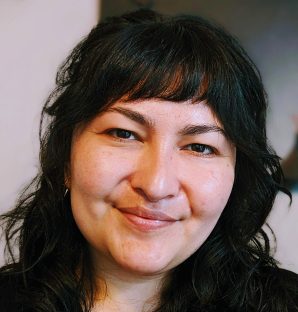
Sulma Arias

Because change happens at the speed of trust, the first step was to build trust between our networks and with our philanthropic partners. Dana Bourland, Senior Vice President at JPB Foundation, remembers, “We started by commissioning research on the landscape. We learned from that research on the landscape of networks focused on community organizing. We learned from that research that the members and participants of networks matter but are often under-resourced compared to the organization holding the network. We invited representatives from 4 networks to consider working together with us to try strengthening the larger ecosystem. They took us up on our offer. We were careful not to require that they work together. We weren’t interested in creating forced partnerships. What has emerged, though, has been dynamic and really magical.”

As we began our work together, we made some of the earliest and most consequential decisions. We asked difficult but important questions such as: How would we decide how much funding to give to individual groups within our networks? What information would we request from grantees at the beginning, in the middle and at the end of the grant? What role should donor partners play? How will we govern ourselves?

In 2018, we launched an intermediary fund called the Fund to Build Grassroots Power. We have governed it to serve as a movement-accountable resource. Since its inception, the fund has carefully built trust among partners while streamlining $34 million in funding to 135 grassroots groups in every region of the country, Guam and Puerto Rico. The combined 2023 budgets of all the grantees is $262,219,343.

We established 4 central values and definitions of each to guide our practice of building trust. The 4 values are inclusivity, responsiveness, efficiency and transparency. Each of the values are defined and listed on the Fund’s website for all to see. For example, we define efficiency like this: “We try to minimize the burden the applicant organizations face during the application and reporting processes so community members can spend less time trying to access funding and more time on their important work. We also try to balance the time our advisory board members spend guiding the fund’s strategy and decision-making with the need for authentic input from field leaders.” By stating our values and defining what it looks like when we successfully act into our values, we build trust.

A key orientation that sped up the trust-building process happened when leaders – initially from The JPB Foundation and then The Waverley Street Foundation – made it clear that grantmaking recommendations would be made by the groups. That was a huge step toward building trust. Handing over decision-making authority about recommendations to the groups communicated to us that they trusted our analysis and our ability to make strategic choices about groups across and within our networks.

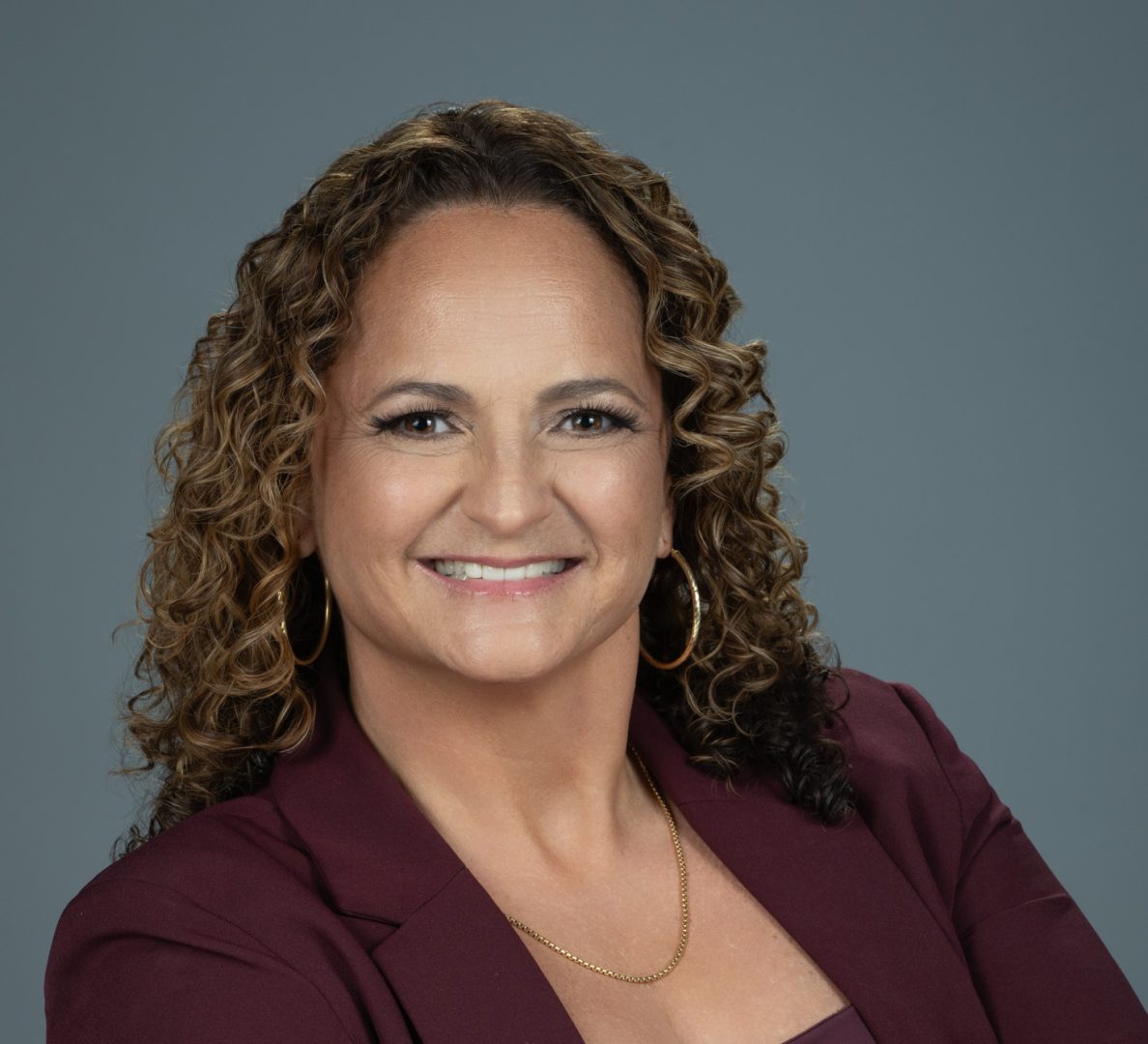
KD Chavez
2. Collaborate, Don’t Compete

The 4 of us embody the values and principles of feminist leadership, and together we share a vision of a feminist economy that ensures a just transition from fossil fuels to a regenerative economy can happen. “[Feminist] leadership is a process by which women assert their rights by continually evaluating relevant experiences, questioning their roles in society, challenging power structures and effectively catalyzing positive social change.”

And since women are overwhelmingly hit first and worst by the effects of climate inaction, we are inspired by each other as we continue to chart a path forward.

It’s not lost on us that this big, collaborative effort of 4 national networks with 190 affiliated groups in every region of the United States has worked in part because we ourselves are Black, Indigenous, Latinx, queer and femme. As people who have survived unspeakable oppression, we are responding using tools given us by our ancestors – moving together, not separately, toward solutions that shift power toward different ways of knowing.

We made the collective choice early on how to assign funds across the 4 networks. Choosing that formula was another initial step in building goodwill among the networks. We decided to allocate funds to each of the networks in proportion to the number of member organizations they had. We also created a way to consider the groups that were affiliated with multiple networks. Having that clarity early on made it easier for us as networks to be accountable to each other. Transparency about decision-making was also key, because we all had the information in front of us if there was ever a question.   

Since 2018, our networks have run 6 dockets together. In our most recent docket, we recommended $10.1 million over 2 years in grants. Of the groups who received funding, 87% of grantee organizations are led by people of color, and 77% of them are led by people who identify as women, femmes, trans or gender non-binary.   

Denise Collazo
3. Show Grantees You Trust Them

In the same way that the donors to the Fund have acted based on their trust in us, we communicate that we trust our member groups. We use the Equitable Evaluation Framework™ (EEF) crafted and co-led by partners in philanthropy, evaluation and nonprofits to make sure that the weight of evaluation falls mostly on the Fund instead of grantees.

The Fund requests very little information from grantees. This is possible because as network leaders, we have a lot of context about local affiliates and the context in which they are doing their work. The grant application process is very simple. We ask basic questions like: What is your budget? Are you a 501(c)3? Can you submit one paragraph describing your organization? All grants are general operating grants. We are making multi-year commitments to grantees. We don’t propose to know what groups need to continue their incredible work. The decision on how to spend the funds should belong entirely to them.

The groups in which we are investing do incredible work with relatively few resources. That’s why we are proud to give them as much flexibility as possible. We also don’t tell them what they need to report on. Instead, we ask for a brief report. What we have found is that these brief reports are packed with information. We trust that they will share the information with us that is the most important.

Sometimes, a group may require a reminder to send in their report. We reach out, and if they need to submit their report as a telephone conversation that we transcribe, we do that. The Fund’s evaluation also includes the feedback we’ve solicited from our member groups about what works for them and doesn’t on the funding process. We then reflect on this collectively and shift our practices accordingly. We don’t require grantees to participate in interviews or surveys. If they do, we compensate them for their time. This figure demonstrates the exchange between funders and grassroots organizations through the Fund to Build Grassroots Power.

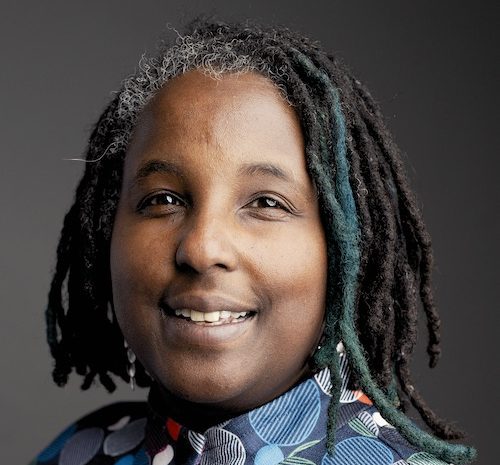
Lauren Jacobs
4. Invest in Infrastructure

The Fund’s trust-based grantmaking is grounded in 4 forms of interdependent infrastructure that create an ecosystem that makes change happen. These include local/state organizations, networks that support collectives of local/state organizations, networks and their members collaborating with each other through the Fund and other spaces, and the Fund itself as a form of collaborative cross-network infrastructure.

This year, we are putting together an impact report to highlight the wide range of interventions grantees are using to make an impact. Grantees are making impressive progress. They are actively fighting to close down dirty coal plants and taking legal action against federal agencies who allow toxins to contaminate drinking water. They are educating community members about ways to reduce emissions, like providing reduced transit fares for young people and teaching them about heat islands and how to be part of their community’s public decision-making process.

While our work together up until now has focused mostly on environmental and climate justice issues, the grants we make are general support grants. The groups we are investing in are the people who serve on the front lines in communities. This works well because the same group that’s holding local governments accountable for transitioning their fleets to electric vehicles may also be helping farmworkers get access to wages taken from them via wage theft. While philanthropy is often divided up into discrete issue areas, people in communities are not.   

Peggy M. Shepard
5. Looking Ahead to the Next 5 Years

The strength and stability that trust-based philanthropy can provide alongside our movements is now more critical than ever given the current political landscape. Recognizing the urgency of this work and the need to have a dedicated leader building the fund, the steering committee hired Denise Collazo as inaugural executive director. Denise will partner with us to continue to grow the resources available to grassroots groups who fight to advance a just transition from fossil fuels to a regenerative economy, with examples including reducing energy burdens, advancing clean energy and ensuring clean water for all. Generally, a household energy burden over 6% is considered unaffordable.

We are proud to be co-founders of this important endeavor. We are happy to be partnering with the JPB Foundation, the Waverley Street Foundation and future philanthropic partners. While we have plenty of ideas about how to make the Fund better, we are reminded as organizers to continue to follow the expertise of grassroots groups that are on the frontlines of building a multiracial functioning democracy in the face of rising authoritarianism. Their vision for the future of the Fund is our north star and will guide our next chapter. With this deep trust and direction set from the ground up, we’re excited to see what groups across the country supported by the Fund continue to win for our communities in the coming years.


Sulma Arias brings over 20 years of organizing experience to her role as Executive Director for People’s Action Institute and People’s Action. Sulma’s organizing work spans many issues, including immigrant rights, voting rights, and economic justice, and her practice has always centered directly impacted people to build power. Sulma has worked closely with local and national organizations to build and advance strategic campaigns that build power. Sulma also has extensive experience training organizers and growing organizing capacity and building strong community-led organizations across the country.

KD Chavez is the Interim Deputy Director of Climate Justice Alliance. They are a revolutionary mother, organizer, and strategist who leads by way of ancestral knowledge and the land. They have spent the last decade in social justice philanthropy moving millions to the frontlines and working to advance freedom through culture shift and intentional investments.

Denise Collazo is the Executive Director of the Fund to Build Grassroots Power. For twenty-five years, Denise helped build Faith in Action (formerly PICO National Network), the nation’s largest organizing network of faith and spiritual communities. Most recently she served as Chief of External Affairs. Denise cut her teeth organizing in San Francisco during Mayor Willie Brown’s term. She has run large voting programs at local, state, and national levels and has raised $100M+ for grassroots organizations efforts.

Lauren Jacobs is the Executive Director of PowerSwitch Action (formerly the Partnership for Working Families). A longtime labor organizer with UNITE, SEIU, and the Restaurant Opportunities Center, she has organized thousands of janitors and security officers, and led campaigns that won breakthroughs in wages, healthcare, and other benefits. Lauren is a proud native New Yorker, a daughter of Harlem, an intermediate knitter, and a terrible but dedicated artist.

Peggy M. Shepard is co-founder and executive director of WE ACT for Environmental Justice and has a long history of organizing and engaging Northern Manhattan residents in community-based planning and campaigns to address environmental protection and environmental health policy locally and nationally. She has successfully combined grassroots organizing, environmental advocacy, and environmental health community-based participatory research to become a national leader in advancing environmental policy and the perspective of environmental justice in urban communities — to ensure that the right to a clean, healthy and sustainable environment extends to all.

More Responsive Philanthropy

Fall 2024 Issue
Democracy: Before, During and After Election Years

Laura Garcia

The climate crisis is everywhere we look with record heatwaves, extreme cold snaps, floods, wildfires, droughts, and storms. Natural disasters continue to increase in frequency and scale, with hundreds of once-in-a-lifetime crises occurring with alarming frequency. The climate crisis is driven by and is vastly amplifying injustices, and philanthropy has the opportunity to act.

The climate crisis disregards borders, yet borders divide how impacts are experienced and how communities are resourced to respond. For the past few years, the Global North has contributed to 92 percent of total global emissions, with per capita emissions triple those in the Global South. Yet, Global South communities living on the margins shoulder the burden of impact while holding the least responsibility for the crisis. In the past decade, extreme weather events have displaced an average of 20 million people annually, mostly in the Global South, and displacement is only expected to worsen.
Chung-Wha Hong

Importantly, the wealthiest 1-10 percent in each country now emit more than the remaining 90 percent of a country’s population. The disparity in emissions between countries and now even more so within countries reflects a stark legacy of colonialism and global extractivism. And frontline communities, such as Black and Indigenous peoples, other communities of color, cis and trans women and girls, people living with disabilities, and queer and gender non-conforming people are often hit hardest by climate-related disasters as they lack access to resources, systems, and structures to respond to and recover from crises.

The State of Climate Philanthropy and Shifting Power
Kate Kroeger

Grassroots social justice movements are leading meaningful, ambitious, and equitable solutions to the climate crisis. Grassroots-led climate action mobilizes communities to resist and reduce fossil fuel emissions, hold polluters responsible, and create sustainable and regenerative food and energy systems. However, even as grassroots movements lower emissions and cool the planet, they are woefully under-resourced. Indigenous resistance to fossil fuel projects has avoided at least 25% of annual US and Canadian greenhouse gas emissions. Yet, Indigenous Peoples have the least access to funding. They only receive 0.03% of funding in the U.S. and 1.2% of international funding. Women’s environmental initiatives receive less than 0.02% of funding. And less than 1% of international funding to grassroots organizations is unrestricted, highlighting how grantmaking practices undermine communities’ sovereignty and self-determination.

When only 2% of philanthropic funding goes to climate mitigation, philanthropy has a clear mandate: dramatically increase investment in frontline-led grassroots movements that are building the post-carbon regenerative economies and communities we need to survive.


Spotlight: Gender-Sensitive Grantmaking


Women are critical first responders to climate impacts and are on the frontlines of ambitious efforts to draw down emissions. Women-led movements are protecting land, territory, and waterways in every corner of the globe, yet receive disproportionately low funding because of philanthropy’s biases. Philanthropy has the responsibility to ensure that women leaders have the resources they need to make decisions at local, national, and international levels.


The CLIMA Fund has supported the Articulación de Mujeres de La Vía Campesina, the women’s delegation of the 200 million-strong, international peasant movement. This grassroots formation recognizes that women do the majority of peasant farming and are at the helm of creative climate solutions. The group’s work in centering care and integrating a zero-tolerance policy for violence against women across the global La Via Campesina network has resulted in an increase in the number of women in decision-making roles on organizational boards.


The group also advocates for gender-sensitive policymaking at the national and international levels. It drafted a Comprehensive Law on Violence against Women for submission to the Honduran National Congress and presented to a United Nations Human Rights Council Working Group on the discrimination faced by women in rural areas. Its Access to Solidarity Credit program also promotes women’s economic independence and dignity. Funding the Articulación de Mujeres de La Vía Campesina’s work is a lesson for funders to look beyond grantmaking silos and resource movements as they respond to short-term crises and achieve long-term systemic change.

The cover of CLIMA Fund’s Soil To Sky report.


Applying a justice lens to our grantmaking


Funding grassroots climate justice movements requires changing norms, practices, and beliefs across philanthropy. We share here some recommendations, in part, from our most recent report, Soil to Sky: Climate Solutions That Transform:

  1. Move funding globally. The climate crisis does not end at nation-state borders, neither should well-funded, effective climate action. Most grassroots movements are advancing transformative action outside U.S. borders and our funding can support frontline groups globally, particularly in the Global South.
  2. Provide unrestricted, long-term funding. Flexible funding allows grassroots groups to be nimble, responsive, and self-determined. It allows funders’ own hypotheses to be questioned and provides space for grassroots movements to bring forward their expertise of what to prioritize, how to convene, or how to track their success. Unrestricted funding shifts power to grantees and supports the experimentation and creativity necessary to meet the uncertainty of this ecological moment.
  3. Acknowledge the inherent conflicts of interest present in the sector where philanthropy has benefitted from inequity. We must examine how our biases, norms, and assumptions show up in our theories of change, strategies, criteria, and evaluation, with an intent to shift toward greater equity. We also have the opportunity to shift away from traditional, top-down agenda-setting and give decision-making power to the communities our work serves. Embedding a power-conscious and reflexive lens into funding decisions means recognizing that our work is not apolitical and changing grantmaking practice is part of achieving our stated hopes of climate justice.
  4. Provide holistic support. Funders can provide non-financial support to grassroots movements by supporting movement connectivity and movement actors’ access to other funders, media, and policymakers. Funders can also be open to examining prevalent biases, simplifying application and reporting processes, and receiving feedback.
  5. Stop funding false solutions and other top-down climate projects that undermine effective climate action and cause harm. In addition, divest endowments in extractive, polluting industries, which undermine the work of millions of grassroots actors around the world.
  6. Resist Western models of success. Funders have an opportunity to redefine what success looks like. Funders can emphasize collective organizing over single campaigns or individual climate actors, and systems change over technical measurements of emissions reductions. As funders expand definitions of success, greater recognition of climate injustices and calls for accountability would also be seen as victories.


Unequal power dynamics in society are reflected in inequitable funding practices, ultimately determining what kind of climate action receives support. Philanthropy can become much more impactful when it is able to step into the discomfort of examining prevalent assumptions within our practices and cultures. We may find that our grantmaking has a more significant impact when we lead with humility and trust.

The climate crisis is centuries in the making and will require a long-term response that centers justice and equity, instead of quick fixes. It will require transforming the systems at the root of the crisis: systems that harm people and treat the Earth as other (e.g., as separate from humankind or as a commodity). This work requires supporting movement ecosystems that advance communities and solutions commensurate with the scale of the challenge. The most innovative approach lies in trusting those who are working every day to address the crisis and holding harmful actors accountable to help us find our way through it.

____________________________________________________________________________________________________

Laura Garcia, Chung-Wha Hong, Kate Kroeger, and Solomé Lemma make up the Leadership Committee of the CLIMA Fund. 

Stylized, artistic picture of post Katrina flooding.

More Responsive Philanthropy

Summer 2023 Issue: Redirecting Climate Justice Towards a Just Transition

Displaced On Repeat: Black Americans and Climate Forced Migration


Jacqueline Patterson, Founder and Executive Director of the Chisholm Legacy Project, writes about how the climate change that is forcing millions around the world to flee to America is also driving the internal migration of frontline Black and Latine peoples in the South and Southeast.

This is the default image
Chorus Foundation Retrospective: A Q&A with Founder & Chair Farhad Ebrahimi


NCRP’s Senowa Mize-Fox chats with NCRP Board Member and Chorus Foundation Founder and Chair Farhad Ebrahimi on what funder organizing looks like in the context of a just transition.

This is the default image
Philanthropy Must Jumpstart Just Transition to a Regenerative Economy


Marion Gee, Co-Executive Director of the Climate Justice Alliance, discusses the different regenerative practices that grantmakers and intermediaries can implement to address the climate crisis in a way that builds up, rather than steals from, impacted communities.

Jacqueline Patterson
Defining the Climate Continuum in the Context of Cyclical Black Displacement 

From the Trans-Atlantic human trafficking massacre to the impacts of the current climate crisis, a consistent thread in the story of Black people in America is displacement and forced migration. These are not disparate incidents but directly interconnected actions rooted in systemic racism.

In the same way as we view the inextricable historic underpinnings of the plight of Black Americans, we must see the systemic roots of climate change through the same lens as a continuum from the drivers of climate change to the impacts being experienced today.

As such, a review of the relationship between displacement/migration and climate change includes the abuse of the environment that also harms Black communities and encompasses the disproportionate impacts on Black communities when the earth fights back, as manifested through catastrophic climate change.

The Elusiveness of “Home” Has Characterized Black Existence in the United States  

From the time we were taken from our lands, our homes, our families, our culture, and what would have been our generational wealth, to then become the generational wealth of settler colonialists and their progeny, we have lived an existence with displacement at its foundation. Post emancipation the properties that were available to us were the land that was hardest to farm. And we were not provided the land grants that White Americans had access to in the 1860s and beyond, such as the Morill and Homestead Acts. From anticipation onward, Black communities had extreme housing and land insecurity and substandard quality. By design. 

Pollution is a direct driver of both climate change and Black displacement. 

Greenhouse gas emissions, driven by energy production and manufacturing industries that are more concerned about profits than people and planet, are responsible for the climate crisis. At last count, 71% of Black Americans lived in counties in violation of federal air pollution standards and an African American family with household earnings of $50,000 was more likely to live next to a toxic facility than a white American family with earnings of $15,000. As a result, Black Americans are more likely to breathe contaminated air, live on toxic soil, drink poisoned water, and be displaced from unlivable conditions. 

  1. Mossville, Louisiana is located in the area that has come to be known as “Cancer Alley”. Over many years, Mossville has been inundated with industrial activity and its accompanying extreme pollution. This has resulted in cancer of epidemic proportions and eventually, a buyout of this community, at a egregiously unfair rate for the Black residents, and the creation of a “ghost town”.i 
  2. Historic soil contamination spanning decades in East Chicago, Indiana resulted in the forced relocation of over 1200 people after the soil in the community found to have lead levels upwards of 30x allowable levels and the blood tests of 31% of the children in the community revealed concerning levels of lead. ii 
  3. After the poisoning of the Flint, Michigan river by manufacturing industries and the subsequent poisoning of the Flint water supply, the city’s population has dropped 21% and reached its lowest point in more than 100 years, according to the results of the 2020 U.S. Census. iii 

As Black People, we continue to be forced from our native lands due to greed via climate impacts 

From the images of Haitian people being chased by US border patrol agents who used their reins as whips to the images of immigrants from various African nations stuck in Mexico in substandard conditions, one can glean the desperation that drives people from disaster stricken, drought ravaged, or otherwise uninhabitable circumstances to seek refuge in the United States. Seven of the nations most vulnerable to climate impacts are countries inhabited primarily by Black people. The United States is 4 percent of the global population yet it’s responsible for 25% of the emissions that drive climate change. Yet when it comes to offering sanctuary in this land of plenty, we have some distance to follow to live up to the value implied in “Give me your tired, your poor, your huddled masses….”

At the Holding Institute in Laredo Texas, which provides services to hundreds of immigrants per day, the director, Pastor Mike, shares that the majority of people who come into their care have left their countries due to the drying of the breadbasket due to climate change. The people crossing the Mexico border are not only from Latin America, but also include people who emigrated from nations in Sub Saharan Africa because it is easier to enter the US through the Mexico border. 

Marie and her sister Jean live in Maryland. They are originally from Cameroon. Marie speaks with great sadness of how her sister came to be in the United States.  When Jean’s farm dried up due to climate change driven drought, and she was unable to earn a livelihood and feed her family, she engaged in a risky border crossing. While crossing the border she was sexually assaulted and became HIV positive. Eventually she made it to the United States, but the path was one of trauma and tragedy. The uncertainty she faces as someone who is undocumented means that insecurity and vulnerability persist. 

“No one puts their child in a boat, unless the water is safter than the land,” Excerpted from “Home” a poem by Warsan Shire, a Kenyan Born Somali Poet. 

Black Farmers Have Lost 90% of Land We Owned in 1910—And Now, Climate Change  

By 1997, Black farmers lost more than 90 percent of the 16 million acres they owned in 1910, due to lack of access to financing.iv Black American farmers lost roughly $326 billion worth of acreage during the 20th century, according to the first study to quantify the present-day value of that loss.v At this point, only 2% of farmland, across the entire United States, is owned by Black Americans.vi  And climate change is further deepening risk for farmers. “Global warming does not discriminate, but the system that prepares farmers for it does.”vii 

Outside of Birmingham Alabama, Denise, a Black farmer, fears for the future of farming along the Black Belt as she and her fellow growers do not have the means to install complex irrigation systems or take other measures necessary to mitigate the impact of climate change on their crops 

The Seas Are Rising. The Lands Are Becoming Inundated. Black Communities Are Being Displaced. 

Black Americans are more likely to live in coastal states and cities.  Though Black households are less likely to be waterfront properties, they are more likely to be in low lying areas that are prone to flooding. As these communities face chronic flooding, neighborhoods are being displaced. And those who are fortunate enough to live in areas that aren’t being flooded, are being displaced as owners of waterfront properties are moving inland to escape inundation by the rising seas.  Besides often being deprived of stormwater management infrastructure, Black communities also face inundation when development hampers natural protections such as wetlands. 

“That oil refinery shouldn’t be here. That road shouldn’t be here. My house shouldn’t be here. Mother Nature is mad, and she has come to reclaim her land.” Resident of Port Arthur, Texas as she looked out over the floodwaters and the ravages of Hurricane Harvey.  

 A housing complex in an area in Lee County Florida that is dubbed, “Little Haiti” because of the proliferation of Haitian residents, was severely damaged by Hurricane Michael.  Unlike other communities that received help, this housing complex were provided little assistance. Local leaders were convinced that it was because there was an intention to starve people out of that land as it was prime real estate. Near the water but not flood prone. They were convinced that the aim was to provide no assistance to this community in hopes that people will leave, paving the way for take over and redevelopment of the property at a hefty profit.  

Spoken word artists and survivors of Super Storm Sandy, Naima Penniman and Alixia Garcia of Climbing Poe Tree in speaking of sea level rise, disaster capitalism, and displacement asserted, “They are selling the rain. They are leasing the rivers. They are auctioning off the ocean to the highest bidders. As giant chunks of ice dislodge from the North Pole. There is disaster profiteering from the torrential storms and the wrath of global warming. Who gets paid to rebuild? And who will they rebuild for?” 

Picture of New Orleans underwater after Hurricane Katrina
New Orleans underwater after Hurricane Katrina
In the Eye of The Storm: Black Communities Are Caught in the Climate Driven Disasters’ Crosshairs

Due primarily to compromised housing stock, storms tend to cause greater damage and loss in Black Communities.  Displacement happens when access to resources, such as homeowners’ insurance, is lacking and recovery resources are insufficient for filling the gap, thereby rendering people unable to garner the means to re-establish themselves. Lower-income Black populations are also more likely to be renters and lack the financial resources to rebuild in places where disasters strike, making them more likely than white people to be displaced from their homes.

Disaster driven displacement of people can also lead to gentrification when displaced residents are unable to return to their homes or neighborhoods and are replaced by higher-income residents. Disasters can also accelerate the process of gentrification by creating opportunities for real estate speculation and development. After a disaster, developers may be attracted to areas with lower property values, leading to an influx of investment and higher housing costs that displace existing residents.

Climate Action: When Purportedly Good Intentions Backfire for Black Communities. 

Urban Renewal programs dating back to the 80s were derisively dubbed “Negro removal” as these projects resulted in displacement of Black communities.  Similarly, efforts including the community development block grants ended up being a windfall for developers but losses for communities. Without centering community driven planning and decision making for climate action planning, Black communities face similar risks, given the myriad vulnerabilities already detailed here.  

“In Brooklyn, New York, various sustainability projects, including park cleanups, riverbank restorations, and the transformation of a toxic industrial canal into the “Venice of Brooklyn,” have all sought to improve the quality of life and environmental health of communities in the densely populated borough. But these environmental improvements have helped fuel affordability challenges. Rental prices have increased disproportionately around Prospect Park, which underwent a $10 million restoration beginning in the 1980s. A recent geospatial analysis found that housing around community gardens in Brooklyn catered primarily to higher-income residents.”viii  

Another illustrative example is the unintended harm that can be caused by programs such as FEMA Flood Risk Mapping, which is ostensibly intended to identify areas of risk and provide resources to ensure that communities located in flood plains can relocate to safety. In the case of Sandbranch, Texas, a predominantly Black community 14 miles south of Dallas, FEMA declared the community to be in a 1% flood zone.  The community has never been flooded since its inception in 1865. This designation has been used to displace residents in this unincorporated area after county officials have denied the community access to basic resources to make the community livable, including running water and trash pick-up. As a result, reportedly, after assessing the property values, which are exceedingly low given lack of basic services, and subtracting an assessed amount for demolition the homes on the property, community members have been offered checks for $350 for their properties. Out of desperation after suffering under such conditions, some have taken the offer and, in effect been forced out by making their community unlivable. Meanwhile, after the sale, when one reviews property values, in some cases they have quadrupled, leading to speculation that there are other plans afoot for the land the community occupies.  

Displacement Leads to Ripple Effects for Impacted Black Communities:

Socio-Cultural Erosion 

Displacement driven by gentrification or otherwise disrupts the familiar and established ties of a place, creating a disorienting new locale. For people displaced as the neighborhood becomes unaffordable, this is more than just nostalgia or discomfort with the unfamiliar. Often, they must accept longer commutes and separation from the support structures provided by old neighbors and family. 

Violence Against Women 

Post disaster displacement and the relief and family unification systems can put women who have escaped their abusers at renewed risk. Crowded living conditions in temporary shelters in the aftermath of a disaster can result in women and girls being forced to live with strangers in relatively insecure settings, which can increase the risk of violence and sexual assault. Post disaster increase in stress and trauma can exacerbate existing tensions and conflicts within households and communities, leading to an increase in violence against women as a way of exerting power and control. Loss of livelihoods and economic insecurity can also increase the risk of violence against women as they are forced to rely on men for financial support or engage in transactional sex to meet basic needs, putting them at greater risk of exploitation and abuse. 

Redistricting and Gerrymandering 

Displacement due to disasters impacts redistricting resulting from the shifts in population distribution. As population numbers change, some take advantage and, in a bid to institutionalize compromised democracy, they will redraw district boundaries to consolidate power. This practice, called gerrymandering, exacerbates the already existing political marginalization of frontline communities. Even the distribution of disaster recovery resources can be impacted as communities are compromised in their ability to advocate for fair and equitable distribution.  


Systemic, Intersectional Challenges, Rooted in Racism, Require Multi-Solving Models  

Any tactic that occurs within the context of a racist, extractive economy will be a band aid at best because it will be happening in a system that is designed to continue to harm, objectify, instrumentalize, and displace Black communities.  As such, the only real solution is complete systems change, shifting from an extractive economy to a regenerative/living/solidarity/caring economy.  

Jacqueline Patterson is the Founder and Executive Director of the Chisholm Legacy Project.

Stylized, artistic picture of post Katrina flooding.

More Responsive Philanthropy

Summer 2023 Issue: Redirecting Climate Justice Towards a Just Transition

Tim Wallace

A few months ago, I was advised by a program officer at a national foundation to be careful when describing Legal Aid Justice Center because we might get pigeonholed as a direct service provider. They said that national foundations typically aren’t interested in funding direct services. They want to fund system change. This advice was prompted by my simply mentioning that we do direct services in addition to system change via community organizing, policy advocacy, impact litigation, and communications. 

On one level, I get it. Direct services vs. system change is a useful binary, especially as progressive philanthropy has had to communicate its increasing focus on the root causes of injustice. But taken too rigidly, that binary can be dangerously reductive in ways that work against the goal of getting more resources and power into the hands of directly impacted communities.  

This essay explores that central claim by examining how that binary has operated and continues to operate to shift accountability for system change work away from the people most directly impacted by oppression. Keeping to the theme of this issue, it’ll end with a reflection on what this means for how we understand civic engagement and some suggestions for concrete steps philanthropic institutions can take to place accountability for the work where it belongs, with directly impacted communities and not with traditional centers of wealth and power.

The Traditional Use of the Binary

Traditionally, philanthropy has used the binary of direct services vs. system change explicitly to deny resources for system change. Foundations would say they don’t fund “advocacy” or they only fund “direct services.” The U.S. tax code reinforces this exclusionary use of the binary with its prohibition on foundations giving funds for lobbying.   

Where accountability comes into play is in the natural consequence of funders saying they will fund one thing but not another, which is that organizations tend to specialize in one or the other. This is especially driven by philanthropists who say outright that they won’t support organizations that do system change in any way.  

What results is the ivory tower of policy advocacy. Because their organizations do system change work and NOT direct services, the people doing system change work end up a step removed from the people who have daily, personally accountable relationships with directly impacted persons. 

The Legal Aid Example:
This weaponization of the binary has been particularly devastating in the legal advocacy space. 

The federal Legal Services Corporation (LSC) is the single largest funder of civil legal services in the country. They fund a nationwide network of legal aid organizations such that every city and county in the United States is covered by an LSC-funded legal aid. Prior to 1996, those organizations were free to do both direct individual services and system change work. 

That changed in 1996 when, as part of welfare reform, Congress put in place a “super restriction” on LSC-funded legal aid programs. Essentially overnight, federally funded legal aids were prohibited from lobbying at the federal, state, or local level, employing community organizers, filing class-action lawsuits, engaging in voter registration, or representing undocumented people3 or people who are incarcerated.  And it isn’t just that they can’t use federal dollars to do these things. Any organization that takes a dime of funding from LSC cannot spend any of their money on those activities, no matter the source of the funds.  

In response to the new super restriction, many legal aid programs split into two programs, one federally funded to do direct services and the other giving up LSC money to do systems change. Some programs, like ours at Legal Aid Justice Center, sought private funding in order to continue doing both. Many others, particularly in communities that didn’t have as much access to private funds, just stopped doing the systems change work entirely. 
So federal enforcement of the binary resulted in a massive loss of local system change capacity and helped ensure that in many places, the lawyers working to help individuals survive systems of oppression were artificially separated from the lawyers directly fighting those same systems. 

But What About Today?

The binary of direct services vs. system change has been weaponized by those who oppose progressive system change resulting in that system change work being less connected to and less accountable to directly impacted individuals and communities. But what does that have to do with the way that progressive foundations are using the binary today? Aren’t they just trying to correct for that divestment of system change advocacy?

Absolutely they are. But using that binary not only to justify changing their priorities but also in a rigid sense to divide non-profits into one or the other kind, risks perpetuating the ways that the binary functions to separate those working against oppression from those most proximate to it. 

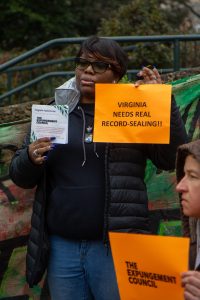
Sheba Williams at Nolef Turns Expungement Rally.

Allow me to introduce you to Sheba Williams. Sheba is exactly the kind of person that progressive funders are looking for and exactly the kind of person that advocacy organizations should be accountable to. She is a Black woman with lived experience of the kind of oppression she organizes to address. She is politically savvy and absolutely at the center of criminal system reform efforts in Virginia. But if you had to fit the non-profit she founded and leads, Nolef Turns (www.nolefturns.org), into the binary in order to determine whether it was a fit for your priorities, it would be direct services.  

Nolef Turns’s mission is to reduce recidivism by supporting and advocating alongside those with court and justice involvement. When we talked about this article, Sheba said to me, “the advocacy comes last for our organization, which is ‘interesting.’ The direct service is what really made it abundantly clear that we needed to participate in the advocacy.” 

For directly impacted leaders like Sheba, their advocacy would not happen but for the direct services, and the impact of the advocacy on individuals’ need for direct services is the ultimate measure of the advocacy’s success. This makes perfect sense, because she is directly and personally accountable to the people on whose behalf she advocates.  

Put another way, Sheba’s identity as an advocate and her effectiveness as an advocate are inseparable from her role providing material support to individuals in her community. So when national funders, as one did this past year, insist on Sheba spending their grant on advocacy and not on direct services, they are committing a category mistake. Sheba’s advocacy is inseparable from the direct services she provides. 

So what should philanthropy do differently? 

    1. Look within the ranks of direct service organizations for ones whose leaders are directly impacted themselves and who view their work through a systems lens. Find leaders, like Sheba, whose work both mitigates the harm of oppressive systems and strategically informs transformative change. When you find them, give them substantial, unrestricted, multi-year grants so they can sustain their operations, allowing them space and stability to engage in advocacy. 
    2. If you’re serious about investing in historically divested communities, stop asking them, “How will you sustain this work long-term?” You are the newcomer, not them, and you can afford the risk.   
    3. Do ask all of your potential grantees, “Who are you accountable to and in what ways?”  Give them enough space to be as specific and individual as possible, and if they don’t have robust and intentional structures in place to center their accountability within directly impacted individuals and communities, be wary. 
    4. Examine your own practices for ways that you shift accountability away from communities and towards yourself. For example, the more your RFPs resemble contracts that state exactly what goals and tactics will be employed, the more the staff funded by the grant will feel they have to adhere to what was written even if what community is asking for has changed and even if you tell them you will be flexible. Ask them instead, “What are your goals and tactics at the moment? How and why might they change?” 
    5. Be wary of rigid binaries.  For example… 


Civic Engagement vs. Advocacy:

In certain contexts, civic engagement vs advocacy can be another category mistake. The goal of civic engagement cannot simply be to get more sympathetic politicians elected. The measure of political power is not in the number of politicians you help elect, it’s in whether or not those politicians actually act on your community’s behalf. To build political power, you must be able to do more than elect politicians, you must be able to influence those politicians and hold them accountable to your community between elections as well.

If progressive philanthropy holds too rigidly to the binary of civic engagement vs. advocacy, then like in direct services vs. system change, they risk shifting accountability and power away from communities facing oppression. The end goal is NOT to build power for a particular political party. The end goal is to dismantle systems of oppression and build a better world for everyone.  

In both binaries, it cannot be either/or. It must be both/and. 


Tim Wallace is the Director Development of the Legal Aid Justice Center (LAJC), headquartered in Charlottesville, Virginia. LAJC’s mission is to partner with communities and clients to achieve racial, social, and economic justice by dismantling systems that create and perpetuate poverty.

To accomplish their mission, they integrate individual legal representation, community organizing, policy advocacy, group & class litigation, and communications into multifaceted campaigns to accomplish community goals. They  are committed to building and living within systems of accountability to individuals and communities directly impacted by oppression.

Find out more at www.justice4all.org.   

The Sex Worker Outreach Project Los Angeles (SWOP LA) is a sex worker-led and sex worker–centered organization that provides crucial harm reduction, community support and mutual aid to current and former sex workers in LA and beyond. We do everything we can to support sex workers, including coordinating street-based outreach, cash aid, community-building events, resource referrals and advocacy. Last year, we even published a zine! Our hope is to not just provide a formal platform for sex workers helping sex workers in Los Angeles, but also to provide a forum for folks to share resources and help foster the informal networks between community members. These connections are especially valuable for those of us working in the often criminalized and highly stigmatized field of sex work. 

The SWOP Los Angeles logo, which is in the form of a heart with a red hand making a fist on the left side and a heart in the color black on the right. The text “SWOP LOS ANGELES” is directly under the shape of the heart.

There is no other formal organization in Los Angeles with the same scope and mission as SWOP LA, although there are many other sex workers here who do great work for the cause— both independently and with organizations. As SWOP LA, we have no shortage of dreams and plans for building safety and resources for our community. However, as a completely volunteer-run organization, we are limited by our funding to support the people power and cost of actualizing these visions. 


One area we have been focusing on lately, which has serious implications for funders, is monetary mutual aid. When the COVID-19 pandemic began in the spring of 2020, we saw the “adult industry” explicitly barred from accessing government aid like the Paycheck Protection Program and Economic Injury Disaster Loan. Left out of any relief during the pandemic, we, the most vulnerable sex workers, were caught in precarious situations where we were forced to choose between meeting our basic needs and protecting our health. In response, we created our own Emergency Relief Fund, which has to date distributed $20,250 to online applicants and another $5,300 to street-based workers. That said, the major limiting factor to expanding our services is funding. 
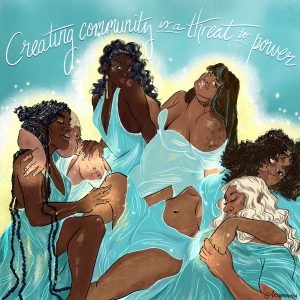
 

Sex workers like many marginalized groups that have been surviving in spite of and not due to formal social supports know what we need to thrive as a community. Yet, sex workers and organizers so often find themselves having to shape and reword their needs to put together a project that meets the requirements for the funding they desperately need. It is very demoralizing when these proposals get rejected and the precious time that could be spent providing direct services to workers is wasted on another rejected application that won’t address the growing gap in our financial resources to support our community. 


One strong and timely example we would like to highlight of how a lack of funding impacts sex workers is in how it displaces us from coordinating our own research into our own lives and communities. We are currently working on a study with a team of academics at an R1 university to understand the effects of a recent bill that decriminalized condom possession on sex workers.  This study engages with the sex worker community and has the potential to inform local policy. Community-engaged research is time consuming by nature, and the added barriers of having to adhere to university timelines, IRB protocols and bureaucratic slowdowns hinder the positive impact that the findings of this study could have for the community. Although it’s amazing that this sex worker study was even funded to begin with, it’s hard to not think about how much more efficient this process would be if we were just given the necessary training and funding to do it ourselves. The timelines that the ivory tower imposes onto community organizations like SWOP LA are not conducive to meeting community needs because their goals and ours are not the same. Academic research goals of producing knowledge for knowledge’s sake carry violence that doesn’t honor sex workers and other marginalized communities that are working to produce knowledge that will help us survive.  


Academic institutions should continue to fund studies that uplift and directly involve sex workers, but this in itself will not be our main path toward liberation. If universities really want to support sex workers, they can fund us directly so we can lead the research ourselves. Limited funding also means we don’t have the resources to sustain our operations. Our organization is led by members of the sex worker community whose efforts are supported by volunteers and allies. 


Our working board consists of 5 members who receive a small monthly stipend to support the work of ensuring continued organizational viability. Some of this work is public-facing, such as organizing general meetings or community events, while other administrative tasks like bookkeeping, grant-writing and website maintenance take place behind the scenes. When all of these duties fall on such a small group of people, it forces all of us to take on many roles, contributing to burnout and limiting our capacity to take on new projects that could benefit the community. 


Most non-profits are overworked and underpaid, and we as a sex worker-led organization are no exception. Multi-year funding for sex worker–led organizations is essential to us to maintain a sustainable future. Consistent funding creates stability and longevity for the work we do and ensures and improves our services back to the sex worker community that we serve. By having more consistent funding, we are able to see our projects through, ensure current service continuity, fine tune the process and create a system of successorship within our leadership pool.  


Having the time to organize is in itself a privilege that can lead to an organization being led by only those who have time to spare if people are not paid. At SWOP LA, it is foundational that our makeup is representative of the community we serve, and having the funding to pay sex workers for our contributions breaks down the systemic barriers that prevent this from happening.  


Illustration by Rebeca Soto for Third Wave Fund

By ensuring our survival, we are also able to continually improve our programs and contribute to the well-being of sex workers local to us and across the United States. In addition, multi-year funding is an investment back into the sex worker community. We have found that the more we give to the sex worker community, the stronger we become and the more rapport we build among sex workers as an organization they can trust. By maintaining our presence as providers of services for sex workers in Los Angeles County, the larger we grow. The more sex workers and allies we involve, the more unified we stand in advocating for our safety as sex workers and against the criminalization of our bodies and the work we do. 


SWOP LA is dedicated to the safety of sex workers and decriminalization of sex work. The criminalization of sex work keeps all of us down and compromises the safety of those of us working in the sex trade. Currently, our community members do not have equal access to social services, health care and resources to navigate the legal system. We cannot feel free to report violence done against us without fear of potentially being arrested ourselves, losing our housing or having our children taken away. Decriminalization gives workers choice and a voice in this world and allows us to exercise control and autonomy over our own bodies. However, decriminalization is a long-term goal that many in our community simply cannot afford to invest in without financial support. Urgent work like addressing mental health, rent and bail needs often supersedes the important work of advocating for political change. However, not funding decriminalization efforts is extremely short sighted. Without decriminalization, organizations like ours will continually operate in crisis management mode, only ever mitigating the harms of stigma and criminalization. The underlying problems remain unchanged. 


Sex workers are integral to this world, and we all have a right to survive and thrive in our community. Through our participation in coalition efforts that resulted in legislative victories like SB233, we have proven to be part of a large and powerful effort to push for the decriminalization of sex work. However, in order to build upon this momentum, we are in a constant state of searching and applying for funding to keep us afloat. This takes away precious time from doing the work itself. 


When we reflect with other sex worker organizers, there is a commonly felt sense of the urgency to fight for the laws and policies that bring us closer to liberation. Working toward sex worker liberation is not just a thought experiment we are interested in, it is vital to our survival and the survival of our community. This is not just another side hustle organizing gig for us, it’s our lives and the lives of the people we love at stake. 


Members of the SWOP LA Board of Directors — Lucy Khan, Co-Director, Tiffany H., Co-Director, Kim Fuentes, Services and Outreach, and Ashley Madness, Secretary and Fundraiser — wrote this piece together.

Stephanie Peng

Hardly a day goes by that I don’t read the words “impact,” “evaluation metrics” or “return on investment” in one of the many reports and white papers that inundate the sector – and with good reason. Data can help us understand how funding is flowing to the most urgent social movements of our time and give us insights on how to fund movements in the long-term.  

A significant portion of my time in the last few years has been devoted to understanding how the sector’s current philanthropy data infrastructure measures – or more often doesn’t measure – movement support, and how NCRP can help change that.  

And while every movement has its own set of qualitative and quantitative collection and analysis challenges, one thing is certain. If foundations are going to continue to center movement organizations and leaders in their grantmaking, they must delve deeper – and more equitably – into what many think is the boring side of data.  

Data as a Bridge to Change 

Philanthropy’s growing interest in movements comes amidst an unprecedented public health crisis, last year’s uprisings following the murders of George Floyd, Breonna Taylor, and so many more Black lives, and a recent coup attempt. But as we can see in the recent NCRP/Candid analysis of their COVID giving data, data on philanthropic support for social movements can be challenging to come by.  

The sector doesn’t have much experience – at scale anyway – in measuring support for intersectional movements. For example, the reproductive justice movement crosses issue area, population and strategy in ways that our current grants classification systems aren’t designed to handle. Support for social movements also moves in indirect ways – a grant could be distributed amongst a coalition via an intermediary or funding for a national community organizing umbrella organization can supply financial or capacity support to chapters around the country.  

NCRP has spent a good portion of its 45 year history trying to get better at providing non-profit and foundation members and allies with the data insights they need to hold philanthropy accountable. In service of that mission, NCRP released “Won’t You Be My Neighbor?” an interactive data dashboard that shows how local foundations were supporting their immigrant communities and organizations dedicated to advancing the immigrant rights movement.  

The 2020 dashboard includes visualizations of local-to-local funding for all 50 states, with 4 different metrics of funding. The data included over 20,000 data points, all packaged into one fancy dashboard that allowed you to view a big picture national view, then zoom in to a specific state’s data. In short, it was a data lover’s dream.   

It was the first time that NCRP released such an extensive, community-requested dataset in an interactive digital format. We created the tool after our initial release of “The State of Foundation Funding,” which provided a broader national look at funding for the pro-immigrant and pro-refugee movement. When we heard feedback from organizations and foundations that localized data would be more helpful in finding gaps in funding, we created a tool that would be easy to use and could also show an accurate picture of funding for local immigrant communities.  

In doing this kind of deep data dive, we came away with three key takeaways, not just for our own future efforts, but for any foundations looking to use data to inform strategies to fund movements: 

First: We Need to Re-build our Data Infrastructure with Movements in Mind

Movements like racial justice, migrant justice, reproductive justice and others evolve quickly to meet constantly emerging threats, and they are inherently intersectional, encompassing multiple identities, strategies and issues. Foundation grantmaking, and the systems used to track those grants, are not.  

Our colleagues at Candid can attest to the challenge of tracking charitable dollars down to the grassroots in a complicated ecosystem of funders, recipients and pass-throughs – often of varied legal status – that usually comprise a social movement. Candid’s work is made even harder because most foundations don’t even directly provide Candid with this dataCandid instead has to rely on getting it circuitously via public disclosure 1 to 3 years after the grant has been made.  

In fact, neither Candid’s Philanthropy Classification System nor GivingUSA’s philanthropy taxonomy – both of which were understandably influenced by the IRS’s National Taxonomy of (tax-)Exempt Entities (NTEE)– were ever designed to describe complicated, modern social movements.  

While some foundations’ grantmaking are starting to center the priorities and needs of movement organizations, the systems to track the funding to go to these organizations still overwhelmingly reflect the generally siloed and rigid structures of foundation strategies that are often divided by populations, strategies and issues. The structure of grantmaking data does not reflect the funding explicitly for organizations led by communities most impacted (i.e. Black-led organizations) or the intersectionality of populations and issues of movements. By the time the data is publicly available, it is often 2 or more years behind. 

More foundations are starting to realize the importance of funding organizations led by BIPOC – who are often the ones most impacted by inequitable structures and policies – instead of funding large white-led organizations. However, it is still not possible to track grants specifically for BIPOC-led organizations.  

Foundation grantmaking data also cannot track the intersecting populations that grants are designated for. The pro-immigrant and pro-refugee movement includes Black LGBTQ immigrants, and we can track funding for Black people, LGBTQ people and immigrants, but not all 3 identities together. When philanthropy relies on data that only captures one part of a movement instead of the whole spectrum, it will only fund part of a movement.  

Detailed and timely grantmaking data should not be an afterthought. We know anecdotally how communities are constantly threatened and that funding for movements generally needs to increase, but old data capture realities from a different time – like when federal funding for refugee resettlement or federal funding for health services, was still available. Our most recent and complete year of funding data is 2017, which means it misses 3 years of communities defending themselves against racism and harmful policies by the Trump administration as well as 3 years of increased foundation funding to those communities.    

Foundations need to ensure their grantmaking data is public, up-to-date, and accurately reflects the populations and communities at the center of movements and the whole spectrum of issues involved in a movement. Accurate, timely and public data on grantmaking designed with movements in mind will not only help inform foundation strategy, but it will also help grassroots organizations hold foundations accountable to their commitments. Current data that is also coded for the specific issues and populations it is intended for increases transparency and accountability in the sector and helps communities advocate for better funding and resources to help their communities thrive. 

Yes, longer-term work and investment is needed to ensure that the sector’s data infrastructure can accurately track grantmaking on a large scale in real-time. In the meantime, it is each foundation’s responsibility to ensure its data is up-to-date with grant descriptions that specify details about specific beneficiary populations, issues and strategies. 

Second: Numbers Can Only Tell 1 Part of the Story
Infographic: Philanthropic Support of Pro-Immigrant and Pro-Refugee Movements
Data from NCRP’s initial data report on the philanthropic support of the pro-immigrant and pro-refugee movements

In reality, a state likely shows 0 deportations because residents of that state were processed and then deported from another state. The data source we used only included deportations that occurred in a given state, and not where individuals may have been transferred from. This method of tracking data was flawed from the beginning as so much of immigration enforcement process, from processing to detention centers to legal cases to the actual deportation of an individual, takes place in several states. 

After our dashboard launched, we received feedback from organizers in multiple states telling us that our that our data did not capture the realities of the threats that communities face. This feedback made complete sense. How could the stress and trauma of seeing a beloved family member, friend or community member transferred through detention centers and court systems and finally deported be summed up as 0 deportations for a state?  

In our research, our data showed that many states had no immigrant deportations. Upon first glance, a funder might think “Great news! That state must care about immigrants. We don’t need to fund in that state.”


A similar challenge surface last summer when NCRP published “Black Funding Denied, an analysis of explicit community foundation grantmaking to Black communities. The brief report was created in response to the recent uprisings for Black lives as well as calls from NCRP nonprofit members and movement allies for philanthropy to support Black communities.  

The response from the majority of foundations was to question our methodology. In defining our scope, we only included grants that were explicitly designated for Black communities instead of grants that included Black communities as one of many intended beneficiaries, such as a grant to an art museum or food bank, which could have multiple intended beneficiaries.  

While this definition was – and still is – a key metric in ensuring long-term equitable foundation support for Black and other communities, the question still brings up the overall challenges of how to accurately track all the philanthropic funding to specific communities, knowing that funding might flow through indirect channels. With many grantmakers leaving their grant descriptions blank, and Candid’s own coding of data using its Philanthropy Classification System to fill in the blanks, details about grantmakers’ intents behind each grant are bound to be lost in translation, ultimately leaving us with an incomplete picture of the full grantmaking data.  

Numbers may not necessarily lie, but they can only tell part of the story. We encourage movement organizations to share their experiences that provide further nuance to the numbers that we publish. Any foundation that wants to use data to inform its strategy to fund movements should look beyond the numbers and listen to the experiences and strategies proposed by movement organizations and communities. They are the experts on the issues and solutions in their communities, and letting them explain how closely publicly available data reflects their experiences – as well as amplifying their voices and experiences – is much more powerful than just publishing numbers.  

When making funding decisions, foundations should not rely only on statistics and numbers. In addition to the structural challenges described above, there is always more to the story than just numbers. Use the data as a starting point or a point of context – but listen to what communities have been saying for years. Listen to their experiences, and follow their lead.  

Third: If You Build it, They Will Come. 

Perhaps the most valuable takeaway from spending over 1 year on a project that is “unsexy” and mundane in the eyes of many funders is that if we invest the time and resources to build a tool that empowers communities to advocate for more funding and points out gaps in funding that could inform foundation strategies, everyone will use it. 

Since we released our dashboard, we have worked with organizations in several states to start conversations with their local foundations to increase funding for their work. Foundations also have responded and appreciated the opportunity to fill the gaps in the funding that we highlight. Of course, that’s only for foundations seeking to address funding gaps and fund the strategies that the movement has indicated it needs, rather than the strategies the foundation wants to fund. Others, unwilling to hold themselves accountable to their grantmaking, defend their actions. Either way, foundations and nonprofits have indicated that they are interested in and ready to take action using the data we’ve published.  

With “Black Funding Denied,” we received a huge response from the philanthropic sector – largely positive from nonprofits, along with some backlash from foundations. Nonprofits saw the data as a tool to hold foundations accountable to their commitments and press for more funding, while initial foundation responses ranged from being privately appreciative of the accountability to outright public denial of their lack of funding for Black communities by attempting to discrediting the data in the report. However, even among critics in the sector, there was an acknowledgement that despite the supposedly “flawed structure” of the data, substantial increases of grantmaking to Black communities are necessary. 

Improving Data is Only the Beginning

There are more than enough quantitative and qualitative reports on how movements have been underfunded for decades. We also know that communities on the frontlines of these movements know best how additional funding and resources can help build power toward a more equitable future. Data can be an important tool to get us the better world we are all striving to make by having it as an active tool that movements can use to hold foundations accountable to their commitments to equity and justice.  

But the responsibility of leadership does not rest on movements alone. It is time for foundations to pay attention to more than just the fancy and aesthetically pleasing “after” of the research process and time to examine the nuts and bolts of its data. They need to reconsider how their own data methods are structured if they are going to use it to make informed decisions about funding communities on the frontlines of social movements. 

Publishing accurate and up-to-date data is only the beginning. Foundations should also invest in long-term data infrastructure by funding research and improving methods of data collection. The return on investment of data that can capture the totality of resources that are and are not flowing to movements creates better insights that lead to better funding decisions and more resources for movements. 

At the end of the day, investing in the communities most impacted by structural barriers provides them – and all of us – the resources and power to succeed and thrive. 

Stephanie Peng is NCRP’s Senior Associate for Movement Research.

We are at a moment of national reckoning. The COVID-19 pandemic, its disproportionate impact on Black and brown communities and the horrific murders of Black people that ignited protests last summer have laid bare the deep injustices that define this country.  

In these times, the corporate and philanthropic sectors cannot remain on the sidelines. The new reality is that business and social issues are intertwined, and companies and corporate funders have an inescapable role to play in our democracy — an obligation to lead, not follow. 

But supporting social justice issues is uncharted territory for many socially responsible companies and corporate funders. While there has been a recent surge in conversations within philanthropy about how to build and sustain social justice movements, the funding remains anemic, and only a tiny sliver comes from corporate foundations.   

Between 2003 and 2016, the median corporate foundation directed just 3.2% of its grantmaking to social justice — most of which was funneled to national nonprofits, not underfunded grassroots leaders. (Based on new NCRP analysis of Candid data on corporate foundation giving from 2003 to 2016, conducted for the Levi Strauss Foundation.)

At the Levi Strauss Foundation (LSF), we’re committed to changing this by investing in communities and leaders of color. In 2010, our foundation launched the Pioneers in Justice initiative, a 5-year program empowering a cohort of next-gen leaders of established Bay Area civil rights organizations — all of them leaders of color — to experiment with bold new strategies for movement-building. The program was so successful that it became our foundation’s hometown strategy. 

Former Levi Strauss Foundation Executive Director Daniel Lee stands in front of a Levi's sign.

Daniel Lee

In 2015, we selected a second cohort of social justice leaders of color for “Pioneers 2020” (named for their graduation year). This group was more grassroots, working to ignite systemic change in the areas of gender equality, climate change, criminal justice, LGBTQ rights, racial equity, immigrant rights and gun violence. 

Additionally, since early 2017, our foundation has also granted over $5 million to local, national and global movement leaders and organizations defending the rights of immigrants and refugees, women, Muslims, transgender people, and Black and brown communities.   

Through all of these partnerships, we’ve recognized the immense value offered by investing in grassroots social justice organizations. They are bulwarks against injustice, first-movers when things happen, and have deep wells of local trust.  

What we didn’t anticipate when we began this work was how much it would transform us as well. Partnering with social justice leaders has had profound impact on our foundation and our parent company, Levi Strauss & Co (LS&Co). We’ve learned that partnering with movement leaders is not top-down but side-by-side, with learning and influence flowing both ways; it also calls for uncomfortable candor, radical empathy, and a kind of flexibility not often practiced in corporate philanthropy.  

Yes, we’ve helped grassroots leaders strengthen their voices, reach new audiences and elevate their ability to lead today’s movements. But in turn, they have improved our ability as a corporation and foundation to deliver on our core values: empathy, integrity, originality and courage.  

Lessons learned from unlikely allies 

For other companies and corporate funders seeking to venture into this largely uncharted territory, we wanted to highlight a few of our most important lessons learned. 

1. Widen the stakeholder lens.  

Corporations and their foundations often view the terrain of social justice and movement-building as risky. But these risks diminish when the corporate sector widens the aperture of “stakeholders” to include not only shareholders and customers but also local communities — particularly the most vulnerable within those communities.  

As Seth Jaffe, executive vice president and general counsel of LS&Co. and an LSF board member, put it: “I think we’re coming to an age where everybody in a company, particularly if they have a foundation, needs to see the stakeholder world as far broader and needs to be thinking about how the decisions we make impact not just our company but society as a whole.”   

2. Bridge sectors and worlds.  

Through the Pioneers initiative, our corporate foundation intentionally sought to invest in “big picture” thinkers who aspired to convey their messages to new audiences. With the external context changing quickly over the past 4 years, these grassroots leaders had a frontline perspective that our foundation and business leaders were eager to learn from as well.  

In 2017, we began the practice of inviting our grantees to give “state of the state” talks to foundation board and staff, sharing their insights into evolving movement ecosystems, needs they were seeing on the ground and where they felt Levi Strauss funding and influence could make a difference on critical issues.  

Social justice leaders and foundation boards don’t typically interact, and, if they do, it is only briefly and with some degree of formality. But welcoming movement leaders on a regular basis into the board room — and introducing them more widely around the company and foundation — was essential.  

It enabled a funder-grantee dynamic that was less about “us” and “them” and more about recognizing common values and commitments. The bonds and connections that formed between Pioneers and foundation board members were among the initiative’s most important outcomes, nurturing a level of honesty, insight and mutual empathy that would not have emerged otherwise.  

3. Learn from social movement leaders.  

In a letter to employees sent just after the 2016 election, LS&Co. CEO Chip Bergh signaled that the company would be taking bolder stands in response to the political moment. Soon after, he began actively using the company platform to address issues that LS&Co. has long cared about, including gun violence.  

In 2016, following an incident where a customer accidentally shot himself while trying on jeans at a Levi’s store, Bergh issued a statement requesting that no firearms be brought into company stores, factories or offices.  

Then in 2018, in the wake of the shooting at Marjory Stoneman Douglas High School in Parkland, Florida, and a subsequent surge of anti-gun-violence activism, Bergh and LS&Co. were determined to go further. The company established the Safer Tomorrow Fund, directing more than $1 million in grants to nonprofits and youth activists working to end gun violence in America.  

Levi Strauss Foundation Pioneers in Justice participant Vanessa Moses, executive director Causa Justa :: Just Cause, at May Day rally in 2019.

Levi Strauss Foundation Pioneers in Justice participant Vanessa Moses, executive director Causa Justa :: Just Cause, at May Day rally in 2019.

The company also tapped one of our Pioneers in Justice, Pastor Mike McBride, who founded the Live Free Campaign to connect disparate groups such as suicide victims, white suburban students and Black and brown youth in urban neighborhoods in their advocacy for gun safety. His insights helped inform the company’s emerging anti-gun violence platform and bring racial equity to the center of that discussion.  

“We cannot stand by silently when it comes to the issues that threaten the very fabric of the communities where we live and work,” wrote CEO Bergh in an op-ed in Fortune magazine in September 2018.  

A year later, LS&Co. led the way on a CEO Letter calling on the U.S. Senate to pass gun safety legislation — one that garnered 145 CEO signatures when it was released, an unprecedented mobilization of corporate involvement on this issue.  

And this past September, following the police shooting of James Blake in Kenosha, Wisconsin, Bergh penned a second Fortune article: “We can’t solve racial inequality if gun violence and voter disenfranchisement persist.”  

He wrote, “I’m the first to admit that I’m still learning and that we have work to do in our own house. But the more I comprehend how structural racism intersects with gun violence and voting policies … the more I am committed to using my and my company’s platform to highlight and address the human-made structures that nurture America’s racial caste system.”  

Even the Pioneers noted how unusual it was for a business to advocate for corporate responsibility and legislative change.  

“They are taking calculated but significant risks on issues of gun violence and trying to shift their advocacy in ways that go far beyond statements,” said McBride, who used one of the first Safer Tomorrow Fund grants to launch the first National Black and Brown Gun Violence Prevention Consortium, which works to scale proven grassroots gun violence reduction strategies in impacted communities around the nation.  

4. Advance corporate policies and culture.  

In late 2018, LS&Co.’s human resources team drafted a Global Transgender and Gender Transition Guideline and turned to Pioneer Kris Hayashi, executive director of the Transgender Law Center (TLC), to review the draft and help with the launch. Hayashi and other TLC leaders were invited to speak at a corporate HR briefing and then an all-staff town hall.  

At both events he underscored the importance of shifting corporate policies and cultures and shared his vast knowledge of inclusive practices. Afterward, a seasoned human resources colleague remarked, “I’ve been in this company for 20 years and have never had to ask these questions about trans visibility — but I realize by not asking these questions we’re not doing our work.”  

For Hayashi and the other Pioneers, this kind of alliance was an unheard of opportunity to extend their influence into the private sector. At the same time, they were seeing how their alliance with corporate foundation could build their visibility as leaders and create a larger platform for their causes. As Hayashi said, “Building a relationship with Levi Strauss & Co. has raised the impact of our organization’s work, and the movements and campaigns that we represent.”  

Once again, the influence went both ways. In June 2019, at the San Francisco Pride event, TLC staff and supporters marched beside LS&Co. employees, marking the first time a company and nonprofit had paired up.  

That same week, Hayashi spoke at an employee forum on the topic of “frontiers of justice and inclusion in the LGBTQ+ movement.” The discussion addressed issues of immigration, transgender justice, youth empowerment, aging, gender and intersectionality.  

5. Put your money where your voice is. 

LS&Co. has a long history of exerting its advocacy to advance equality in the U.S. Over the last 4 years these efforts have intensified as the company has weighed in on transgender inclusion, the Muslim Ban, Deferred Action for Childhood Arrivals (DACA), voting rights and gun safety. It has been helpful for our foundation to simultaneously make investments in movement advocates who’d devoted themselves to advancing policy reform in these areas.  

For example, we supported the International Refugee Assistance Project’s mobilization of lawyers at John F. Kennedy International Airport in New York and San Francisco International Airport’s international arrivals hall following the Muslim ban, the TLC’s work following the administration’s efforts to legally erase transgender people, and United We Dream and Define American’s efforts to organize DACA recipients. 

LS&Co. was a founding member of “Time to Vote,” a nonpartisan coalition that’s grown to include 1,600 businesses committed to removing barriers to vote; the company and foundation also invested $2.9 million in grassroots voting rights groups like Black Futures Lab, Black Voters Matter, She the People and Native Organizers Alliance.  

6. Leverage corporate platforms.  

We are in a “movement moment” full of pain and promise, and it’s important for those of us with access to capital, influential platforms and global brands to use every tool at our disposal to drive change. Since June, the Levi’s corporate brand has hosted an Instagram series called “Use Your Voice: Live,” featuring conversations between movement leaders, artists and influencers, and reaching 7 million followers.  

The program has featured LSF grantees including Mike McBride, Tarana Burke (MeToo movement), LaTosha Brown (Black Voters Matter),Jose Antonio Vargas(Define American), Aimee Allison (She the People), Ai-jen Poo (National Domestic Workers Alliance), Alicia Garza (Black Lives Matter), Jeanine Abrams (Fair Count), Cristina Jimenez (United We Dream) and Desmond Meade (Florida Rights Restoration Coalition).  

Leveraging this media platform has enabled these leaders to reach much broader audiences on critical issues of the day, including systemic racism, gender justice, immigration and gun violence prevention. During the past 2 months, this series has focused on increasing voter turnout and combatting disenfranchisement and reached hundreds of thousands of consumers.   

By building bridges between grassroots leaders and brand audiences that never existed before, our company and foundation have been able to play a more additive role in bolstering movements and bringing about systems change.  

The connection between business and politics 

We believe this work reflects the new reality that business and politics are intertwined — and that companies and their foundations have a critical role to play in defending our democracy and in shaping the future.  

Over the last 4 years, we’ve seen businesses take bolder stands on issues such as climate change, gun safety, immigration and civil rights. But very few companies are pairing these actions with strategic investments in social justice movements or partnerships with social justice activists. 

“Corporations remain invisible in our work at our own peril,” said McBride at the outset of the Pioneers program. “How can we challenge the corporate sector to be better political champions?”  

The willingness of our grantee partners to step into that relationship has given both LS&Co. and LSF practice in funding social justice movements and in elevating our own values and voice.  

“If there’s anything I’m most proud of, it’s the way that we have been able to align the goals of the foundation, the goals of the Pioneers and leaders like them, and the longer-term goals of the company in having an outsized impact on the world and leading through our values,” said Seth Jaffe. “The Pioneer program started as a way for us to invest in these great organizations but helping them has helped us as well.”  

The big revelation of the Pioneers initiative was how profoundly the Levi Strauss Foundation, and the Levi Strauss & Co., would be changed by entering in unlikely partnership with these social justice leaders. It inspired us to do more, changed how and who we fund, and to take moral stands in ways that would not have been imagined.  

In this “movement moment,” it is time for all of us, as institutions and individuals, to ask ourselves hard questions about who we align with, who we stick our necks out for, who we give money to and who we’re willing to be changed by. What we stand for matters, but who we stand alongside matters even more. 

Daniel Lee is the former executive director of Levi Strauss Foundation and vice-chair of NCRP’s board

A Q&A with National Birth Equity Collaborative’s Dr. Joia Crear-Perry 

NCRP’s Movement Investment Project initiative has been committed to hearing the experiences of Black, Indigenous people of color-led organizing in the reproductive access space.

And while NCRP has been vocal and responsive to the current threats against abortion access, we must remember that the reproductive justice framework is not simply a catalyst for abortion services. This work expands across sectors and movements like most topics, but is often reduced to 1 or 2 mainstream issues.

The reproductive justice framework consists of several pillars that hold up this work, and a major part is held by those committed to addressing the maternal mortality crisis through a birth justice lens.

NCRP Impact Award Winner Groundswell Fund describes birth justice as core to achieving reproductive justice and the disparities that birthing people of color experience that lead to their harmful experiences and their deaths are at the core.

This trend has caused an influx of distrust and unease within the movement amongst organizations and leaders. But we must address what systems are responsible for the turmoil.   

As much as philanthropy removes itself from movement politics and tensions, the sector can no longer recuse itself especially when its existence is harming both the narrative of the work and the Black leaders on the frontlines.  

A consistent pattern that the movement has raised suggests that philanthropy’s presence dehumanized the maternal mortality crisis and that current grantmaking practices aren’t saving us, just romanticizing our deaths and trauma. 

The data and numbers that the sector collects are more than learning tools or justification for grantmaking. They are the deaths and traumas of marginalized people, and it is philanthropy’s responsibility to ensure that their proximity to power does not overshadow or manipulate the messaging from the frontlines and those most impacted. 

National Birth Equity Collaborative logoDr. Joia Crear-Perry, founder and president of NCRP nonprofit member National Birth Equity Collaborative and contributor to Black Maternal Health Research Re-Envisioned: Best Practices for the Conduct of Research With For, and By Black Mamas in collaboration with other Black Women Scholars and the Research Working Group of the Black Mamas Matter Alliance, spoke with NCRP about what trends she has seen as someone leading national work focused on the maternal mortality crisis and the safety of Black birthing people. 

Editor’s note: Some of the responses were edited to fit the format of the article. 

How can the sector ensure the narrative around maternal mortality not be dehumanized and use their proximity and power as a catalyst for the voices of leaders like you to control the narrative? 

Improving maternal health — including maternal mortality — requires that we understand the root causes of the inequities observed in maternal health outcomes. Structural determinants of health including structural racism are the root causes of inequities in maternal mortality and maternal morbidity.  

Women and birthing people are most burdened by the maternal health crisis and thus should be centered in developing solutions to improve maternal health outcomes.  

Centering the voices of Black women and birthing people and partnering with Black-women-led community-based organizations allows us to identify not only the gaps in health care systems, but also community-level resources to optimize their pregnancy and birthing experiences.  

Relying on quantitative data and only centering clinical outcomes (e.g., maternal mortality and morbidity) and not maternal well-being is at a detriment to Black birthing populations. Black feminist thought requires that we center the narratives of Black women and birthing people to understand their experiences.  

To have the largest impact, philanthropic organizations may invest in Black-women-led community-based organizations, Black researchers, Black scientists and Black evaluators to examine the efficacy of models of care and interventions proposed by directly impacted populations.  

In what ways have you seen philanthropy center the realities of the maternal mortality crisis in their funding practices?  

Dr. Joia Crear-Perry

Dr. Joia Crear-Perry

We have not seen the sector address the realities of maternal mortality in their grantmaking. Foundations have failed to center those who are the most marginalized and refrain from following the leadership of Black-led reproductive justice organizations that are committed to maternal health.  

To effectively address the reality of the crisis, philanthropy would have to invest in Black women and provide them with the resources to lead, the sector would have to yield their power and remove themselves to avoid interfering with the work.  

Grantmakers have the tendency to group maternal mortality into reproductive health funding or create portfolios focused on maternal child health, with an emphasis on the child, neither allows for the work of Black-led maternal health leaders to base build truly sustainable efforts.   

What funding patterns is the sector currently committed to that leads them to neglect the many levels to the maternal mortality crisis? 

Now grantmakers are largely focused on high profile, white-led organizations that have not grounded their work in the reproductive justice framework.  

Philanthropy’s commitment to erasing Black-led organizations and the misuse of the reproductive justice lens has led the sector to advocating around provisions that are not Black-women-centered, such as optional extensions of Medicaid postpartum coverage.  

There has been a consistent pattern of the sector reinforcing and replicating systems of disadvantage by acting as gatekeepers and choosing who gets to hold the work regarding to maternal mortality. According to the Centers for Disease Control’s latest data, maternal mortality steadily increased between 2011 and 2014 with significant racial disparities.  

In 2011, funders designated only $2.5 million specifically to Black maternal health, and that was tapered by more than 50% in 2014. And while funding for Black maternal and perinatal health increased again and more than doubled between 2014 and 2018, the proportion of funding that was designated for Black people has remained at only 1.5% of total funding for maternal health in the same years. 

Is there other data pertaining to maternal mortality or birth disparities that you would urge the sector to add to their focus? What points are they and why? 

A recent study published in November 2020, suggested that physician-patient racial concordance is associated with infant mortality. The study found that Black infants cared for by Black doctors were more often to survive to their first birthday than Black infants cared for by white doctors. 

In fact, the infant mortality rate was also reduced for white infants when the attending physician was Black compared to when the attending physician was white. These data are compelling and support the need for diversifying the health care workforce and specifically supporting clinical training pipeline programs for Black trainees and other trainees of color.   

How can the sector ethically invest in maternal mortality without erasing the stories of those we lose and dehumanizing the work that leaders such as NBEC are holding? 

The following calls to action are simply a starting point to ethically investing in this work, it will take major shifts and accountability to truly fund this work without erasing the narrative of the lives lost to this crisis:

1. Allocate more funding to Black-led organizations and ensure the sector is following the leadership of Black women, they hold the solutions but are severely under-resourced.

2. Invest in community-based organizations to allow them to continue to do the work and build upon community by harnessing their power within the sector.

3. Center the voices of the most marginalized, specifically Black birthing people and birth workers.Solutions to the crisis should be driven by those closest to the crisis.

4. Create more funding streams for Black-led reproductive justice groups.Currently the few streams of funding available create competition among the organizations as each attempt to secure funds. The sector cannot continue to use funds to cause tension or distrust amongst leaders of the movement.

5. Recognize philanthropy’s anti-Black sentiment and the structural forces it creates.

We ask that the sector look to leaders like the National Birth Equity Collaborative and Groundswell Fund for examples of ethical, trauma-informed organizing and grantmaking that is grounded in birth justice.  

Foundations should be more proactive in this work, such as upcoming opportunities like the Black Mamas Matter Alliances and Black Maternal Health Virtual Conference, “the premiere assembly for Black women, clinicians, professionals, advocates, and other stakeholders working to improve maternal health using the birth justice, reproductive justice, and human rights frameworks.”  

Philanthropy can no longer wait on organizations to hold the emotional and intellectual labor to collect these stories and data points for their grantmaking practices, they must be intentionally present in spaces that focus on the issues.  

How can philanthropy step up to improve the quality of sex ed?

The U.S. has long been considered a leader in higher education systems worldwide, but every year we send young people to college with a dearth of knowledge about something that is often considered a hallmark of the college experience: sex. 

This isn’t just a blip that leads to awkward moments. It can cause real harm in the lives of young people. Miseducated and unaware adolescents cause harm to others, which in and of itself has individual and community costs.  

One or 2 examples of the ripple effect of miseducation would appear to strengthen the case for a systematic reimaging of how we educate young people to not just live to the best of their potential, but also maintain safe and healthy communities.    

Sex education varies widely by where someone went to school: not just geographically, but public versus private and city versus suburbs, too. We know that some states have different standards by county or district, or no standard at all, so education can differ widely based on grade, school or even individual teachers.  

Often though, these programs offer an abstinence-only approach, leaving young people poorly equipped for sexual decision-making, and often instead treating them to scare tactics, shaming and enforcement of strict gender roles and harmful sexual stereotypes.

The most recent data from trusted movement resource Guttmacher reportsthat only 30 states and Washington, D.C., mandate that, when provided, sex and HIV education programs meet certain general requirements: 

  • 17 states require program content to be medically accurate.  
  • 26 states and D.C. require instruction to be appropriate for the students’ age.  
  • 9 states require the program to provide instruction that is appropriate for a student’s cultural background and that is not biased against any race, sex or ethnicity.  
  • 3 states prohibit the program from promoting religion.  

At best, students in a comprehensive sex education program are taught the basic mechanics of sex, reproductive anatomy and a wide array of sexually transmitted infections along with other topics in their health education or similar class. However, comprehensive does not mean detached from stigma and humiliation.   

Sometimes, the same companies make materials for “non-judgmental” sex education programs as the shame-filled abstinence-only sex ed programs, but even the former have been known to offer incorrect, incomplete or stigmatizing materials for students to learn from.  

Would we accept this in any other category of education? 

Sexual education word concepts banner. Instruction and guidance on human sexuality. Infographics with linear icons on green background. Isolated typography. Vector outline RGB color illustration

A lot of the fault is in the funding.  

While many states have their own funding programs and there are federal dollars available as well, the nature of those programs is heavily dependent on who is in charge at the executive level.  

During the late 1990s and through the George W. Bush years, for example, more than $1.5 billion in federal dollars went to abstinence-only sex education programs.  

Some school districts simply don’t have sex education programming in their budgets, so they accept free or low-cost materials made available by hundreds of groups around the country that are opposed to comprehensive sex ed.  

These curricula, often faith-based, are notorious for promoting shame and misinformation through “sexual risk avoidance” trainings. Some of these programs are run through a local crisis pregnancy center – or anti-abortion fake clinic – and include harmful lies about abortion, contraception and other reproductive health decisions. 

Aside from simply not working, programs that stigmatize sexual activity have damaging, even traumatic, impact on young people who have been sexually active, or who have experienced abuse.  

Commonly, these programs teach young people – and particularly young women – that if they’ve had sex, they are like chewed gum, dirty sneakers, used toothbrushes or tape that’s been stuck to other people’s skin, picking up loose hair and skin and grime along the way.  

Telling young people that they’re unclean and unwanted for having experienced sex leaves emotional scars that could stay for life.  

What is philanthropy doing to support sex ed? 

While the sector cannot fill every gap that those elected to lead create, we know that philanthropic support for sex education exists. From 2015-2019, $195 million was allocated to sex education focused work, however only 22% of total funding was designated specifically for comprehensive sex education.   

Philanthropy can not only shift what funding access to comprehensive sex education looks like from foundations, this is an opportunity for philanthropy to develop a blueprint for federal and state funding to follow. The sector has been a system that sets the mold for government funding practices in the past and should use its power to encourage change.   

Sexual education concept icons set. Human sexuality and physiology idea thin line RGB color illustrations. Anatomy and reproductive health teaching. Vector isolated outline drawings. Editable stroke

There has to be a better way.  

Leaders of this work along with the funding support of the sector can create and sustain programs that promote truly comprehensive sexual health education, affirming that having sex is an individual decision that one should neither be shamed for choosing nor for holding off on.   

Investing in this work must be rooted in nuanced, honest conversations about consent in how we teach young people about sex, and model that boundary-setting is healthy, normal and will make their sexual lives better, not restrain them.  

We also need to support education on LGBTQ identities and relationships, so students can feel affirmed in their sexuality and prepared for what to expect, regardless of whether their sexual life takes heteronormative shape.  

This is a vital part of the sector’s larger responsibility to center reproductive health care as basic health care, including the full range of access to all methods of contraception and abortion. 

Philanthropy owes it to young people to respect their individuality and autonomy, to give them the tools to become experts of their own bodies and build better futures. 

Shireen Rose Shakouri is deputy director of Reproaction, a national organization leading bold actions to increase access to abortion and advance reproductive justice.