Dear Reader,

We are in a moment of great pain – but also a moment of great social transformation.

The combined crises of the COVID-19 pandemic and uprisings against law enforcement have exposed the broken parts of our systems and institutions in an unprecedented way.

Philanthropy has an opportunity to respond to these gaps with courage. Black-led organizations fighting for social justice have repeatedly explained the need for more funding and better relationships with philanthropy. For decades our sector has been aware of health and resource disparities that led to disproportionate impact of COVID-19 pandemic.

In this issue of Responsive Philanthropy, our authors invite us to act boldly on best practices and shift priorities to support organizations who work to correct the weak points in our society.

Rev. Dr. Starsky Wilson of the Deaconess Foundation reminds us that now is the time to be explicit about race, anti-Blackness and racial equity. Funders can use communications platforms and advocacy resources to help movement leaders push policy beyond what is pragmatic for a just-recovery.

Nichole June Maher of Group Health Foundation urges philanthropy to find the willpower to wield its social, political and economic power and acknowledge its ongoing role in social inequities.

Aaron Dorfman, NCRP CEO, shares reflections from Satterberg Foundation grantees about a model that other family foundations can follow. A popular and helpful practice that every foundation could do, especially in moments of crisis, is increase payout.

Finally, we hear from several funders and donors about why they give to 501(c)4 organizations, a critical strategy for supporting organizations that fight to correct broken systems.

Philanthropy at its best trusts frontline, movement organizations, Black-led organizations and others with deep networks in marginalized communities deserve that trust now more than ever as they lead the charge for significant policy change and social transformation.

Don’t miss this opportunity to be a partner in the nation’s social transformation.

Best,

Jeanné L. Lewis

Vice President and Chief Engagement Officer

“The principle of equality, which is at the core of democratic values, has very little meaning in a world where the oligarchy is taking over.”  

– bell hooks 

Annissa McCaskill

How can responsive philanthropy nurture equity and justice? The United States attempts to portray itself as an ideal democracy where representatives are elected by “the people.” But is it possible for a country to truly be democratic when it was founded on the systematic exclusion of Indigenous, Black and brown people? This country has a “democracy issue”, and responsive philanthropy is unfortunately the main answer to it.

But why are we more often reactionary, rather than proactive in our philanthropy? Why is philanthropy that empowers the disenfranchised most often a response to crisis, rather than the basis of a new, improved approach to resourcing organizations and initiatives? Why, after the crisis simmers down, can we not sit in the real discomfort that we feel, the tension between the world we live in and the one we aim to create? The answer, dear friends, is that democracy and traditional philanthropy must fulfill their promises for those who typically are only identified as “other.”

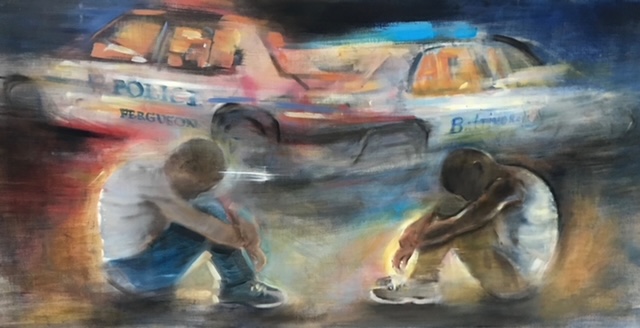
Philanthropy’s Response to Ferguson

On August 9, 2014, Michael Brown Jr., was murdered by a white police officer as he was walking to his grandmother’s home in Ferguson, Missouri. I found out about his death via social media. I watched as people uploaded images as events unfolded. Then I watched “democracy” stall. Michael’s body lay in the street in front of Canfield Green Apartments for 4.5 hours before it was removed. The dignity of being covered was given by a resident who provided a sheet, not by the authorities who were on site to “investigate.” His death was treated as if it was a minor administrative issue until the community made clear that it was not and insisted that it be treated like the deep, tragic loss that it was.

Jia Lian Yang

The Ferguson Uprising was a response to the status quo. In the uprising, we witnessed what happens when generations of residents are systematically excluded from justice, resources and yes – democracy. We also saw a flood of responsive philanthropy and goodwill statements. However, the Philanthropic Initiative for Racial Equity noted in “Mismatched: Philanthropy’s Response to the Call for Racial Justice”: “Even with the increased attention to the impact and importance of Black-led organizing, especially since the Ferguson uprising in 2014 and the growing focus on Black Lives Matter movement work, of all funding directed toward Black communities, the percentage awarded for grassroots organizing in 2015-2018 never exceeded 2 percent.”

Now, 10 years after the murder of Michael Brown Jr., we see a walking back of the promise of responsive philanthropy and goodwill statements, even as efforts to advance anti-racist systems change come under fire. Local and national peer organizations dedicated to creating a new, more equitable society are being told by the philanthropic community that priorities have shifted, and their work is no longer aligned. In short, social justice and equity are no longer trendy, and diversity, equity and inclusion (DEI) is now being used as a slur.

In the face of growing white supremacist, fascist and authoritarian movements, the philanthropic community seems to be running scared. Now, more than ever, we need it to boldly step forward. The way to restore democratic movements is not only funding anti-racist systems change organizations and initiatives, but also providing long-term commitments to grassroots organizing.

Centering Community Grantmaking 

We used the phrase “Ferguson is everywhere” during the uprising. This was not just a reference to the rage felt in the wake of Michael’s murder, but the understanding that the foundation of our democracy is flawed. Broken societies built on exclusive social contracts aren’t easily fixed, nor are they stable.

Forward Through Ferguson (FTF) was created to carry on the legacy of the Ferguson uprising and to ensure that the 189 calls to action outlined by the Ferguson Commission are never forgotten. Since we were founded, responsive philanthropy has been essential in supporting our work promoting justice for all, youth at the center, opportunities to thrive and racial equity. At FTF, we advance racial healing and justice by addressing the funding disparities that Black and brown-led organizations face compared to their white counterparts.

The Ferguson Commission report called for the creation of a 25-year endowed and managed Racial Equity Fund to support organizations and initiatives that promote racial healing and justice. For the St. Louis Regional Racial Healing + Justice Fund (RH + JF), which was the pilot program of the Racial Equity Fund, FTF served as project manager while the Deaconess Foundation served as the fiscal administrator. The RH + JF was managed by a community governance board composed of between 9 to 15 Black and brown residents from across the St. Louis region. Across 3 RH + JF cycles, the community governance board distributed over $1.3 million to Black- and brown-led initiatives in areas like education, arts, racial justice, maternal health, youth mentorship, urban farming, holistic wellness and general capacity building.

Those involved with the RH+JF were firmly committed to the kind of proactive and forward-thinking social justice grantmaking that community residents have long sought from philanthropic partners. As the national multiracial nonprofit organization Resource Generation states, “social justice philanthropy focuses on the root causes of social, racial, economic and environmental injustices.” Within a democracy, philanthropic organizations have a unique opportunity to support initiatives that strengthen civic engagement, protect democratic values and promote social justice. The RH + JF evaluative process will end in September with a presentation of what has been learned.

However, one thing that remains uncertain is whether we can secure long-term partners and resources to create an endowed, perpetual fund. This has been a question that has long hovered over the process. At its inception, financial partners and resources for the RH + JF were scarce. Now, at the completion of the RH + JF pilot, we are still seeking investors willing to join us in this generationally impactful work.

By investing in the Racial Healing + Justice Fund, philanthropic organizations can support the transformative work being done by Forward Through Ferguson and contribute to building a more equitable and just society. We believe the Fund serves as a model for responsive philanthropy that prioritizes the needs of marginalized communities while addressing systemic barriers that perpetuate racial disparities.

The Funding Disparities that Weigh Down Black- and Brown-led Organizations 

Despite the important work being done by FTF and other Black- and brown-led organizations, there exists a significant disparity in the amount of funding we receive compared to our white-led counterparts. Studies have shown that philanthropic dollars are disproportionately allocated to organizations led by white individuals, while Black- and brown-led organizations struggle to secure the resources they need to sustain their work.

Recent local fundraising data illustrates that point too clearly. In 2022, the local Give STL Day initiative raised $4.053 million for local nonprofits spanning 12 categories, including human services, animal and health focused organizations. Less than 2% of the funds raised went to Black-led and Black-benefiting organizations. Results remained similar in 2023, which led the St. Louis Community Foundation to conduct focus groups and address the funding disparities experienced by Black-led and Black-serving organizations.

Of course, communities are not standing still but mobilizing to shift practices. In 2018, Young, Black & Giving Back Institute Founder Ebonie Johnson Cooper created Give 8/28 Day – a giving day focused on and dedicated to grassroots, Black-led and Black-serving nonprofits. In 2023, this national day of giving raised $220,000 to support Black-led and Black-serving nonprofits. Yet we cannot do it alone. We know that it is possible to focus on addressing funding gaps experienced by Black-led and serving organizations and that we need to continue pressing for data that can evaluate and inform such efforts, both locally and nationally.

This funding disparity reflects broader systemic issues of inequity and funding gap and supports the transformative work being done by organizations like Forward Through Ferguson. Addressing the disparities in funding for Black- and brown-led organizations is crucial for advancing equity and social justice. Philanthropic organizations must actively work to dismantle systemic barriers and biases that hinder access to resources and support for Black- and brown-led organizations. By centering DEI in their grantmaking practices, philanthropy can help create a more level playing field and amplify the impact of organizations working toward racial healing and justice.

A Crucial Time for Resourcing – and Democracy

Moving forward, it is imperative that philanthropic organizations embrace responsive philanthropy as a guiding principle in their work. By remaining attuned to evolving community needs, fostering collaboration and partnership, and prioritizing equity and justice in their grantmaking practices, philanthropy can play a pivotal role in nurturing a more inclusive, equitable, and participatory democracy.

In conclusion, responsive philanthropy in democracy is a powerful force for positive change, particularly in addressing racial disparities and advancing social justice. By supporting initiatives that empower marginalized communities, amplify diverse voices, and promote equity and inclusion, philanthropic organizations can contribute to building a more just and equitable society for all. Through strategic partnerships, capacity-building efforts, and a commitment to amplifying marginalized voices, philanthropy can help bridge the funding gap for Black- and brown-led organizations and foster a more inclusive and equitable philanthropic sector.

At Forward Through Ferguson, we acknowledge that we often sit in discomfort between the future that we are working toward and the reality within which we exist. In the spirit of responsive philanthropy, let us continue to work together toward a future where all voices are heard, all communities are empowered, and all individuals have the opportunity to thrive and contribute to a more just and equitable society. We ask that the philanthropic community join us in sitting in discomfort until ALL can be comfortable.


Annissa G. McCaskill is the Executive Director of Forward Through Ferguson, where she is responsible for supporting staff in its work of centering racial equity in systemic systems change, building organizational stability, and advancing strategic leadership. She is a proud member of Alpha Kappa Alpha Sorority, a graduate of the HBCU Livingstone College, and has forged a career shattering barriers as the first African American to be both elected to serve as President of the M.P.A. Student’s Association and nominated for the prestigious Presidential Management Fellowship at Indiana State University, and the first African American to hold municipal positions in Chesterfield, MO; University City, MO; and Belleville, IL.

Jia Lian Yang (she/they), MDiv/MSW, is a storyteller, cultural worker, and facilitator. Born and raised in San Jose, California, she came to St. Louis in 2012 to pursue a Master of Social Work at Washington University in St. Louis and Master of Divinity at Eden Theological Seminary. They are the Director of Storytelling & Communications at Forward Through Ferguson, where they manage data storytelling initiatives such as #Transforming911 and craft narratives around grassroots efforts to advance Racial Equity.

More Responsive Philanthropy

Fall 2024 Issue
Democracy: Before, During and After Election Years

A personal reflection by Dawn Knickerbocker (Anishinaabe), Vice President of Communications and External Affairs for Native Americans in Philanthropy.  

Forty-five years ago, Congress passed a pivotal law. Recognized as the Indian Child Welfare Act, or ICWA, this law is connected to Tribal sovereignty, and holds a deeply personal significance for my own family.  

It is unfathomably painful to comprehend the reality endured by so many Native Americans during the time of child removal, and yet it continues to shape our present-day experiences. If you are not familiar—the federal government, through the Child Welfare League of America, allocated funds primarily to churches to remove Native children from their homes, placing them in white households. The scars of this injustice linger, etched upon our collective memory, and serve as a stark reminder of the ongoing struggle for healing and justice.  

Thirty years before the Indian Child Welfare Act (ICWA) was passed, my father and his siblings were swept up in the colonial project and government policy of assimilation designed to make Indians forget who they are, and forget their culture, language, and community. When my dad was about ten years old, he and one of his sisters were taken away—put into the state foster care system. He recounts that time in his life very rarely, and nearly always with sadness. “We were sent to the wolves,” he would say.  

Some of his siblings were “lucky,” and were put into foster homes with caring people and were eventually reunited with our Tribe and relatives. My father and his sister were adopted by a family who were abusive and severed all ties with our Native culture, traditions, and Tribe. It was only after my dad was emancipated at the age of sixteen that he began to try to find his way back. With court records sealed and with no support, it took him years to locate a sibling.  

Dawn Knickerbocker (Anishinaabe)

When my father finally found one sibling, then several others, and eventually his mother, father, grandparents, and aunts and uncles, the land was gone—and the community was fractured and many of our relatives in crisis. To this day, we are on a healing journey. While some of my dad’s siblings did not survive, my dad lives on to tell his story and to work to make us whole. 

Against all odds, all has not been lost. I am proud to come from a very long line of Anishinaabe farmers and caretakers of the land. As young children, my siblings and I were taught how to sow seeds, how to plant and harvest with the seasons. Along with the knowledge of how to care for the land, is the connection to our language and stories that hold the instructions to our way of life. In my estimation, it is a miracle that I have this knowledge today and pass teachings to my own children. In every generation, there has been an attack on the wholeness of my family. Our family continues to heal from the policies of the past. 

After ICWA passed in 1978, we became a foster family. Several of my cousins who were lost to the system found their way into our home. This practice of healing in my family has continues and two of my siblings are now social workers, and our family has now adopted and are raising three children who we would not have known if it had not been for ICWA.  

ICWA came to pass after a big national survey  found that about a third of Native children had been removed from their family and their Tribes. For my own reservation, White Earth Nation, many recall the pain of removal and estimate that over 25 percent of the children and placed into non-Native/ white foster and adoptive houses.  

Native families were told that adoption was the only option if they were to survive, others, like in my family, were a part of church-sponsored programs that facilitated Indian children working in families’ homes –like live-in domestics–while purposefully stripping away their culture and identities in place of a colonized identity. This very racist thinking is hard to fathom today. However, this is the living, breathing reality and present-day experiences of Native Americans. 

At the same time as the removal of our children, there was an effort to remove our land. In my band, White Earth —85 percent of the land is held by non-Native landholders, including the federal, state and county governments. One of the essential elements of Native culture is the profound connection and sense of reciprocity that the people of this continent maintain with their lands and connection to the Mother Earth. As this land’s stewards, we have intimate knowledge of the caretaking and protection of the ecosystem, the biodiversity, and the relationships with the water, air, and animals.  

Woven deep within our family and the Anishinaabe People, is the memories of the caretakers of the land since time immemorial. My ancestors have observed glaciers come and go, the dance of countless species, the nurturing of seeds passed down through generations, and the rise and fall of Nations upon our sacred homeland. Against the relentless tides of change, our sovereignty and culture have endured, resilient and unyielding. The sacred lessons and the gifts of the wisdom of my ancestors—on how to care for the land—remain intact. 

When ICWA Faced the Supreme Court

There is a small group of people who claim ICWA is a bad law. The chief complaint is that this law prevents white people from adopting whomever they wish. There exists a small contingent of individuals who express criticism towards ICWA, arguing that it is a flawed law. Their main concern centers around the perception that this legislation unfairly restricts white individuals from adopting children without limitations. 

The focal point of a recent Supreme Court case revolves around a toddler of Navajo and Cherokee descent. During his infancy, a white couple residing in the suburbs of Dallas expressed a desire to adopt him. However, federal law mandated that Tribal involvement was necessary for the adoption to proceed. Initially, the Brackeens’ case appeared to be a typical adoption dispute. However, the situation took an unexpected turn when one of the most influential corporate law firms in the United States took up the couple’s cause, assisting them in launching a federal lawsuit. The repercussions of this case extend far beyond the fate of one child or the future of a single law. Rather, they pose a genuine threat to the entire legal framework that safeguards the rights of Native American communities.  

Amidst this contentious landscape, it is important to note the resolute support that ICWA receives from a diverse range of advocates. Child welfare champions, constitutional scholars, bipartisan elected leaders, and Tribal Nations across the country stand united in their endorsement of ICWA. They recognize it as the benchmark for child welfare legislation, setting the standard for protecting the safety, well-being, and health of children. The Justices’ decision to take up this crucial law harkens back to a distressing era when Native children were disproportionately separated from their families. 

The significance of ICWA stretches beyond mere adoption preferences. It symbolizes a commitment to justice, resilience, and rectifying historical injustices. The law embodies our collective determination to protect the rights and well-being of Native children, safeguarding their cultural heritage and forging a path towards a more equitable and inclusive future.  

Connection to Environmental Justice  

We are living at a time when resistance to the progress we have been making on racial equity is heightened, with books being banned in our schools and African American and Native American studies courses are altered or removed. There are concerted efforts to ban even conversations about race in our classrooms, workplaces and government. 

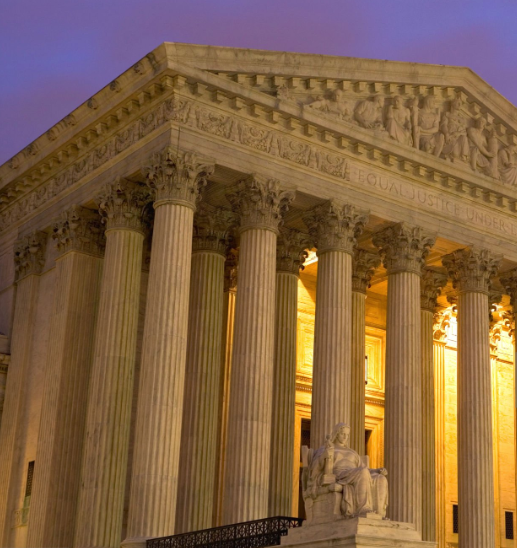
In the courts, we are facing attacks on tools used to address unjust patterns of racial discrimination and exclusion. The U.S. Supreme Court ruled on a series of cases that could determine whether race can be acknowledged and factored in voting rights, tribal sovereignty and the Indian Child Welfare Act, and affirmative action in higher education. 

Collectively, these movements to separate us from reality are meant to silence the truth and connection to this land. My people’s land was stolen, acre by acre. The case against ICWA seeks to redefine Tribal membership as a racial rather than a uniquely political designation, as a steward of this land, contending that it puts white foster parents at a disadvantage when attempting to adopt Native children. The fact that white foster parents were supported with the best lawyers petro dollars can afford reveals the new strategy to steal land, child by child. 

Rebecca Nagel, the host of This Land podcast , writes “It’s sinister…but when you understand history, using the children of Native nations to attack Tribal sovereignty is sadly something the U.S. has been doing for generations.” 

For funders that are interested in taking the next step but are not sure where to start, we suggest four commitments to strengthen partnerships with Native organizations and communities: 

  • Learn about Native peoples and their history.
  • Evaluate your organization’s practices.
  • Build relationships with Native communities and nonprofits and with peer funders that have relationships in Indian Country.
  • Begin funding.

We can speak for ourselves, and you have to actually look at people who are your colleagues who are serving. When we are at the table, the conversations change 

Click here for a list of resources for Native families interacting with the child welfare system from the National Indian Child Welfare Association. 

________________________________________________________________________________________________________

For the purposes of this article, the terms Native, Native American, and Indigenous are used interchangeably. The term “Indian,” “Indian Tribe,” and “Indian Country” are legal terms referring to US Federal Indian laws and policies (see, e.g., Title 25 of the US Code, titled Indians).  

Stylized, artistic picture of post Katrina flooding.

More Responsive Philanthropy

Summer 2023 Issue: Redirecting Climate Justice Towards a Just Transition

Dakota Hall

It is time for philanthropy to fund the bold 501(c)(4) political activities of youth-led organizations. Youth organizers building power for their communities year-round need the sustained ability to take partisan political stances on the issues. For young people, it is often necessary to employ a mix of heightened lobbying and aggressive political activity to achieve policy wins. We are at a critical moment where we cannot leave the issue education to chance at the ballot box. This is what true victory looks like.   

It is harmful when philanthropy demands huge impact with small budgets. To sustain innovative and impactful organizing work at the local level, youth-led organizations need to be well-resourced and c4 funding must increase. Currently, c4 funding moves too late and only in election years. It is no secret that funders are risk-averse and do not invest in new strategies, but we cannot even maintain the current status quo with the type and level of funding that philanthropy is currently willing to give.  

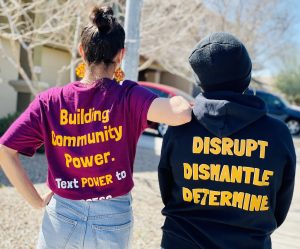
AZ PODER

For local youth-led organizations in the Alliance Network, partisan political funding enables organizations to deepen their impact, be innovative in building power for their communities, and allows youth organizers to have the conversations that need to be had in our communities year-round. These dollars are critical for accountability work, growing a pipeline of strong political champions, and how we win elections and policy change. With c4 funding, youth organizations would have the ability to hire more staff to run electoral programming, provide young leaders with paid development opportunities, create impactful digital voter guides in multiple languages, and target specific communities for legislative efforts. Funding 501(c)(4) activities allows youth organizers to make lasting structural change in their communities and deepen youth civic participation. This isn’t about political parties; it’s about moving the political process closer to the people. It’s about investing in a more accurate and engaged electorate by allowing the groups on the ground to have the full, robust conversations our communities deserve.  

 Young people delivered the election for President Biden and Democrats. In 2020, 50% of all young people under 30 voted, up from 39% in 2016 – making up 13.8% of all ballots cast. This is what happens when youth organizations are invested in far before fall semester. But we know what happens when funding goes away from the youth movement. In 2014 – after funding for youth organizing went away and the infrastructure cracked – we saw youth voter turnout lag behind more than any other group with people under 30 making up only 7.2% of ballots cast. In 2018, no age group saw a larger surge in turnout than voters under the age of 30 – growing their ballot share to 11.4%. What changed in four years? Funders saw the errors of divestment and reinvested to rebuild some of the youth infrastructure lost. But there is still much to rebuild.  

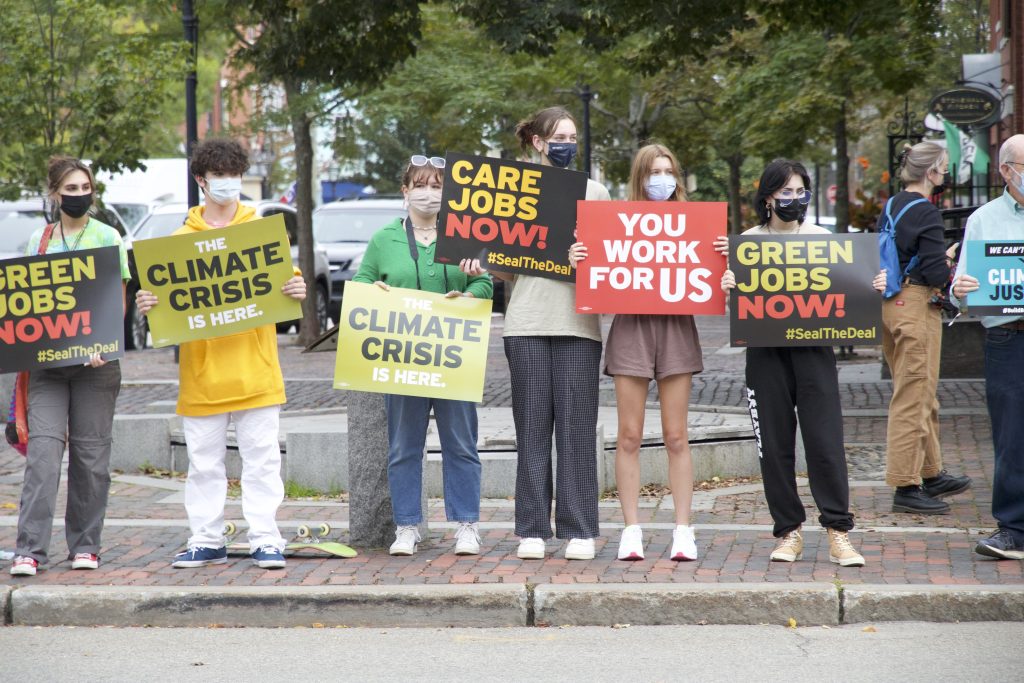
New Hampshire Youth Movement

We cannot afford to go back to 2014. Young people must be at the center of any winning coalition, and not be an afterthought. Youth-led organizations must receive multiyear investments, to stop the guessing game of where money will come from, not just when fall semester starts in an election year.  

The brilliance of youth organizers is always evident. In Kansas, young people at Loud Light are fighting against partisan gerrymandered maps and winning. In Cook County, young people at Chicago Votes were able to write and pass legislation that ensured that individuals within Cook County Jail had the ability to register to vote and put polling locations within that jail. In Wisconsin, because of the dedication of young people at Leaders Igniting Transformation to fight the school-to-prison and deportation pipeline, young Black and Brown students can attend school safely in Milwaukee. 

The youth movement knows how to organize people. Now, we need philanthropy to organize money to deliver bold resources to match our energy, so that together we can build power to delivery victories. Investing in youth organizations to run 501(c4) programming will allow us to have the power necessary to motivate voters, and drive unprecedented turnout in November, and far beyond.  This funding must be sustained year to year and not just in major election years, to ensure young people have a voice in shaping public policy that directly impacts their lives. 

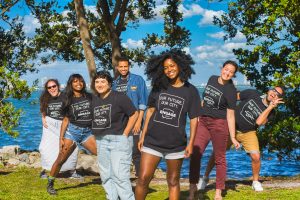
Engage Miami

The Alliance supports a growing network of the best youth electoral and issue organizing groups in the country. We are in 18 states, supporting 20 groups that have been building trust and power in the communities for years – and in some places over a decade. The combined power of our network is astounding. When an Alliance organization registers a young person to vote, those young people turn out on average at least 10+ more than 10pts higher than the state average. We are able to achieve that because we don’t stop at voter registration, we organize before and after voter registration to ensure young people’s voices are heard at the ballot box. We all win when young people are organized, but it takes organized money to make that happen.  

Persuasion and mobilization are important. There is no mobilization without early persuasion of young voters to participate in elections. And that requires c4 funding. Young people mobilized year-round by Leaders Igniting Transformation, MOVE Texas, and New Era Colorado were 26% more likely to vote than those who were only contacted in the final days and weeks before the 2020 election. It is local youth-led political homes organize youth daily, not just for elections, but a full spectrum of activities that combines leadership development, advocacy, and civic engagement. To produce these kinds of results, our groups need investment now , especially c4 investment, to be sustained for years to come. Not just as an afterthought in September. 

But this is more than just about elections. This is about movement change. For young people’s vision about their community to become reality, they must be resourced. Groups that led historic youth turnout in 2020 are struggling to raise resources to keep staff on board, invest in growing team skills, adjust program, and scale to new communities in an environment where newly passed voter suppression laws, gerrymandering, and lack of federal action set up crippling barriers to grassroots organizing.  

Young people continue to lead some of the most transformative work in our country, whether they are fighting to save our planet, demanding livable wages, or ensuring our communities are thriving, safe, and healthy. We challenge philanthropy to think bigger and bolder in how it supports groups in building long-term power, infrastructure, and sustaining year-round civic engagement organizations to get the desired outcomes we want in our communities. Investing political activity dollars in youth organizing now will aid groups in laying the groundwork for what is to come in 2024 and beyond. 


Dakota Hall is the Executive Director of Alliance for Youth Action and Alliance for Youth Organizing, a national network of local organizations that works with young people to engage in our democracy as voters, organizers, and leaders. In 2017, Dakota founded an organization named Leaders Igniting Transformation (“LIT”) to help Black and Brown youth in Milwaukee achieve social, racial, and economic justice. Under Dakota’s leadership, LIT successfully advocated to remove the Milwaukee Police Department from the Milwaukee Public Schools and ended the use of metal detectors on campuses and suspensions for children in elementary school. 

Christian Giraldo

Who keeps us safe?

Third Wave Fund is a national feminist and gender justice activist fund that resources the political power, well-being and self-determination of social movements led by young women of color, queer, trans, intersex and gender non-conforming youth. Third Wave Fund upholds that we will achieve deep political, economic and social change if and only if we invest in people directly impacted by systems of power to design solutions and lead the charge toward transformation.

Third Wave Fund has been funding sex worker–led organizing for more than 20 years because we know that resourcing sex worker liberation is central to our goals of gender and reproductive justice. Our grantees taught us that sex workers and people in the sex trade face high rates of violence and discrimination, not because of anything inherent to sex work, but because sex work itself is criminalized, stigmatized and interlocked with other systems of oppression, including gender-based violence, white supremacy, poverty, ableism, queerphobia1 and transphobia.

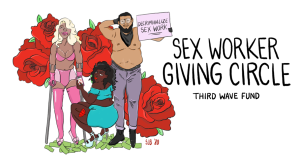
The SWGC logo, with artistic credit to JB Brager

We see time and again what movement leaders confirm: Sex worker–led groups have the best strategies to confront and transform the oppressive social and economic conditions of their own lives. Given this political and philanthropic insight as well as our investment in fostering leadership from the communities we fund, Third Wave Fund stepped up its commitment to sex worker-led movements with the creation of the Sex Worker Giving Circle (SWGC) in 2018.

The SWGC is a cross-class, multi-racial and intergenerational giving circle made up of people with current or former experience in the sex trade. Our approach to grantmaking is participatory, inclusive and high touch. This means Third Wave Fund is deeply engaged with sex workers living and organizing at the intersections of multiple oppressions and lived experiences. Through SWGC, current and former sex workers participate in a Fellowship program with a popular education-style curriculum that prepares members of the community to mobilize resources, strengthen their relationships, engage directly in grantmaking, and receive support to bring their voices and leadership into philanthropy and social movement organizing. The program is completely by us and for us, and all of the grantmaking decisions are made by sex worker Fellows, guided by the input of sex worker advisers, and supported by the programmatic and fundraising know-how of sex worker staff.

In 2021, the SWGC expanded the Fellowship program to meet the ongoing challenges and uncertainty caused by the pandemic, and we took advantage of our new lives working and organizing from home to launch our 4th overall and 1st fully national cohort of sex worker Fellows. Our first national Fellowship reviewed 35 applications, met with 18 prospective grantees and chose 12 grantees for funding, including 7 new organizations. In total, the SWGC has broken the $1.55 million grantmaking mark, with a total of 36 groups awarded grants since the start of the fund.

How funders can be part of the solution: 4 key lessons

The SWGC has grown tremendously over the last 4 years, and we’ve learned many important lessons from sex workers doing on-the-ground work that we would like to share with the broader field of philanthropy.

First, we have learned to provide unrestricted general operating grantmaking dollars and multi-year commitments whenever possible. This allows groups to cover the real office, salary and overhead costs of existing as well as the tools and physical and virtual spaces to do their work. During the COVID-19 pandemic lockdowns, groups depended on general operating funds to provide life-saving monetary mutual aid and other urgent material resources to the broader community, which kept the movement alive and healthy enough to fight another day. Sex workers found themselves in the impossible reality of needing to stretch every last penny of their shoestring budgets to feed, house and care for their comrades, most of whom had been systemically excluded from government unemployment and economic stimulus packages due to working in informal and street-based economies or lacking eligibility documentation. The never-ending task of organizing sex worker survival cost the movement community members who didn’t have the resources to take in a moment of stillness and recovery and literally worked themselves to death. Sex workers have taught us that when their own economic and material realities are nourished and not under constant interrogation and attack, they are empowered to speak to funders and other resource gatekeepers with less fear and more sex worker power. More sex worker power keeps communities alive.

Second, the movement taught us to center trauma-informed approaches to grantmaking during these chaotic times through coordinating our program with empathy, accountability, flexibility, creativity, humility, generosity, approachability and urgency. The pandemic, economic recession, violent displays of white supremacist police brutality, alliance of ideologically paternalistic anti-sex worker forces and expansion of the for-profit carceral state have worn down sex working communities and deteriorated the physical and mental wellbeing of sex workers. Now more than ever, funders must account for the disparity in power dynamics between philanthropy and the movements we support and how these dynamics are always present, even if we’re actively trying to dismantle them. We must approach conversations by radically self-critiquing our participation as funders in creating power differentials and understanding that our every action creates a world. Funders must always ask ourselves: What kind of world are we creating for sex workers in our grantmaking and interactions with the movement? We must also reflect on how we show up in conversations with the movement and the power that we wield – reluctantly or not – and lean into the necessary discomfort of acknowledging the many power differentials we may unwittingly contribute to and that make up sex workers’ scarce material realities.

Third, as a bilingual English/Spanish program, the SWGC learned that funders must embrace and systematize language justice as core to our values. Spanish-speaking grantees taught us that monolingual Spanish-speaking groups face the baseline exclusions confronted by all sex working communities, coupled with systemic injustice around language barriers, racism, colorism and immigrant status. High levels of discrimination and racist policing made many Spanish-speaking and Latinx sex workers afraid of engaging with state bureaucracy on any level and deprived them of an avenue for accessing resources to meet their basic needs. Lack of language accessibility creates challenges for Spanish-speaking groups that make it harder to write grant applications, organize fundraising campaigns, communicate with funders who are not prioritizing their inclusion, and secure legal non-profit status and bank accounts. There are fewer resources and information available in Spanish, and many philanthropic programs do not acknowledge language disparities in their processes. Some programs may provide and accept applications in Spanish, but do not have staff who can speak to grantees in Spanish, provide support, and attest to the disparity in access to resources and opportunities faced by monolingual Spanish-speaking people in the United States.

Finally, we have learned that funders who support sex workers’ rights must stop imposing unnecessary and harmful bureaucratic challenges on groups on the ground. Ideally, funders should grant to groups without requiring fiscal sponsors, who may at times act as gatekeepers, hurt the work of grantees, and further traumatize a community that is already maligned and kept from life-saving resources. If fiscal sponsorship is required, it is crucial to allow grantees to apply for funding before obtaining sponsorship—and then support them in finding a fiscal sponsor who is a good match as a condition of grant receipt, while making funds available to cover any fiscal sponsorship fees so that groups can use the full amount of their grant. Additionally, funders should support groups that have a diversity of tax statuses, ranging from groups with no legal status at all to groups that are fiscally sponsored, as well as groups that have gained their own 501(c)(3) status. In the case of groups working toward securing 501(c)(3) status, funders should do everything in their power to support their petitions and accompany them in their journey jumping through the infinite and spiritually draining hoops of the nonprofit industrial complex.

Accompliceship, not charity

Artistic credit: Grae Rosa

We see amazing potential for participatory programs led by directly impacted communities to shift the discourse away from voyeuristic donor-driven charity and into accompliceship and wealth redistribution. To realize the dream of sex worker liberation and decriminalization, we must build mutual trust with sex workers and transform the power dynamics that paint the realities and material conditions of sex working communities.

As we move into our spring 2022 cycle, we reflect on the fact that sex workers at the intersection of interlocking systems of oppression are finally being funded to organize openly, unapologetically and on their own terms. This is in itself a momentous deal! It means that people who have been organizing from their phones can get a laptop for the first time, create virtual spaces for sex workers to build alliances across the country, and stay connected to members of the community incarcerated for working to survive. It means we are investing in the healing justice of movement leaders who have been tirelessly building support systems while emptying their own sex work-funded pockets to maintain their people’s survival. Directly funding the well-being, bodily autonomy and organizing of sex workers most impacted by oppression is in itself a radical vision and our biggest impact. With a little creativity and a lot of trust in the leadership and experiences of sex workers, it can be a big part of your impact too.


Christian Giraldo is the Program Officer of the Sex Worker Giving Circle at Third Wave Fund. 

This year’s NCRP Impact Awards, held on Wednesday, Oct. 27 at the 2021 Unity Summit, was a joyous celebration of the best that philanthropy has to offer.   (more…)

Fundamentally, NCRP exists to ensure that philanthropy is responsive to those with the least wealth, power and opportunity in American society, and that it serves public purposes rather than the interests of those who control the purse strings.

As I reflect on NCRP’s 45-year history, I think about the amazing contributions of Bob Bothwell and Rick Cohen, NCRP’s first 2 executive leaders, and the incredible work done by the dozens of talented, driven staff who put their hearts and minds into holding philanthropy accountable.

I also think about the many passionate, smart people who have served on NCRP’s board of directors over the years, and especially about those who have served as board chair. Without their vision and courage, NCRP wouldn’t be what it is today, and philanthropy would have less of a positive impact on society.

NCRP’s greatest contributions over the past 45 years can be grouped into 2 related buckets: accountability and social justice. The field has made progress in both areas since 1976, but there is still more to be done.

Holding philanthropy accountable to the public good

NCRP has helped lawmakers and the public realize that private philanthropy shouldn’t be thought of as an entirely private endeavor. Because of the substantial preferential tax treatment donors and foundations receive, private philanthropy should be thought of as a partially public enterprise in which donors and all American taxpayers join forces in pursuit of the common good. Foundations and donors must therefore be accountable to society more broadly.

The number 45, used here to signify NCRP's 45th anniversary.When NCRP was founded, most foundations didn’t share any information whatsoever with the public, and there was no sense that foundations should be accountable to anyone outside their organizations. All of NCRP’s work over the last 45 years is based on the idea that it’s legitimate to question and challenge what wealthy people do with tax-advantaged dollars, through foundations or other giving vehicles. Four efforts stand out to me as having most helped advance this argument:

1. Transparency is essential for there to be accountability, and NCRP has pushed for greater transparency since the founding of the organization. In 1980, NCRP introduced its first report on foundation accountability, Foundations and Public Information: Sunshine or Shadow, at the annual conference of the Council on Foundations. In part because of the massive amount of attention that report received, many foundations soon after that began publishing annual reports. Voluntary transparency has continued to improve over the past 4 decades, though the increase in giving through donor-advised funds and LLCs has made a portion of domestic giving far less transparent.

2. NCRP later worked with Sen. Dave Durenberger, R-Minn., to add additional relevant information to the 990-PF tax form that foundations file with the IRS, giving the public more insight into foundation operations and spending. Voluntary transparency only goes so far, and government-mandated transparency plays an important role, too.

3. In 2009, NCRP released Criteria for Philanthropy at Its Best, which included 4 criteria and 10 aspirational benchmarks against which foundations could be assessed. It was an attempt to raise the bar about the standards to which foundations should be held. The field had a strong reaction to the report, and NCRP was called “presumptuous” and “breathtakingly arrogant” by the leader of one large foundation.

4. From 2013 to 2016, NCRP assessed a dozen of the nation’s largest foundations through the organization’s Philamplify initiative. The assessments were made public, and some funders made changes based on those reports. (One of my personal favorite moments from this initiative was the video NCRP produced about the Hess Foundation.)

NCRP President and CEO Aaron Dorfman speaks with a Hess Corporation security official, whose face is blurred, during a visit to try to meet with Hess Foundation board chair John Hess.

In 2015, NCRP President and CEO Aaron Dorfman attempted to get access to the secretive Hess Foundation as part of NCRP’s Philamplify initiative. Watch the entire video here.

In recent years, there has been an explosion in public critique of philanthropy. Scholars, journalists and philanthropy serving organizations have sharpened the conversation in helpful ways and have advanced how we all think about philanthropic accountability.

However, philanthropy remains mostly unaccountable. Most donors and foundations aren’t sharing power at the governance level. While we’ve seen a handful of foundations expand their boards, too many still have small, homogeneous boards.

Government oversight is, in many ways, weaker than it has ever been. The exempt organizations division of the IRS has been starved of resources, and they investigate or audit an incredibly small number of foundations each year.

The audit rate for tax returns filed by tax-exempt organizations in fiscal year 2020 was estimated at 0.13% by a recent Treasury Department inspector general report. Individual filers were 3 times as likely to have their return audited, and business were 5 times as likely. Audit rates in the exempt organization division at the IRS, low as they are, appear to be falling still.

Some attorneys general have stepped in to play a more robust role, notably in New York, Minnesota and California. But it’s not enough. In the coming years, I hope to see more donors and foundations voluntarily sharing power, and I also hope to see more robust action from regulators.

Enabling social justice nonprofits to drive societal change

NCRP has helped donors and foundations make a meaningful contribution to building a society that is more fair and just. This is perhaps the most significant way NCRP has influenced philanthropy over the past 45 years.

There is more funding than ever for advocacy, community organizing, civic engagement and other strategies that allow people who have been oppressed to build power, change systems and pursue justice.

The nonprofits funded to do that important work have dramatically improved American society. While still not enjoying full equality or freedom from oppression, there is no doubt that our society is better now than it was in 1976 for LGBTQ people, for people of color, for women, for people with disabilities and for others who have been marginalized.

Nonprofits and their funders helped drive those change. There were 5 things NCRP did that made a difference:

1. In the late 1980s and into the 1990s, NCRP issued reports critical of United Ways and community foundations for their lack of support for people of color and for social justice work. Those critical reports were not always received well at the time, but it’s clear that United Ways and community foundations are now much more responsive to people with the least wealth, power and opportunity than they used to be. They still have room to improve, but it’s undeniable that they have been getting better.

2. From 1979 to 1988, NCRP was part of a coalition of organizations that, through a massive multi-faceted campaign, succeeded in getting the Combined Federal Campaign (CFC) – the workplace giving program for employees of the federal government – to open participation to advocacy organizations in addition to nonprofits that provided services. There has been approximately $50 million annually going to advocacy organizations through the CFC every year since then. The total given to advocacy groups through the CFC might be upwards of $1.5 billion at this point. Some of that money has supported conservative advocacy organizations, but much of it has been for progressive causes, too.

3. From 1997 to 2007, NCRP published dozens of reports examining conservative philanthropy. Those reports helped liberal and progressive donors and foundations realize how they were being outspent and out-organized by people who had a very different vision for what kind of society they wanted to create. The reports contributed to the creation of new entities like the Center for American Progress and the Democracy Alliance. The most popular and influential from that series of reports were Moving A Public Policy Agenda and Axis of Ideology.

4. From 2009 to 2012, NCRP documented the incredible benefits for families and communities when foundations and other donors invest in community organizing, advocacy and civic engagement. Through the Grantmaking for Community Impact Project, NCRP studied the work of 110 nonprofits in 7 different parts of the country and found that for every dollar invested in organizing and advocacy, communities reaped $115 in benefits. The summary report from that series, Leveraging Limited Dollars, has been used by hundreds of foundations to protect or expand their funding for these strategies that help people who have been oppressed fight for justice and liberation.

In more recent years, NCRP has helped donors and foundations think about power. Power Moves, the self-assessment toolkit NCRP released in 2018, has been downloaded by thousands of foundation staff and trustees, and many are using the tool to improve how they build, share and wield power in pursuit of justice. Through the Movement Investment Project, NCRP is helping funders get better at supporting movements, a critical ingredient for driving policy change and societal change more broadly.

There is no doubt that progress is being made on increasing funding for social justice. Between 2003 and 2015, support for social justice strategies hovered around 9% of all domestic grantmaking — “spiking” to 11% during the election years of 2008 and 2012. Beginning around 2015, a broad-based increase in social justice funding began, and in 2018 (the most recent year of complete data available), 14% of domestic grantmaking was for social justice work. Preliminary data for 2019 indicate the upward trend continued.

Crucially, it looks like increased funding for social justice is coming from more than just the largest, most identifiably “progressive” foundations. NCRP split Candid’s FC1000 dataset into 2 parts responsible for roughly equal total grantmaking in any given year: the largest 100 foundations and the next-largest 900. The share of funding for social justice from the relatively smaller 900 foundations doubled from 5.5% in 2014 to 11% in 2018.

In spite of that progress, however, there is still much to be done. Foundations and high-net-worth donors still do a terrible job getting resources to groups led by Black people, Indigenous people, Latinx people and other people of color. That must change if we are going to move our society forward and help America live up to its ideals. Social justice funding is still only 14% of the grant dollars given out by the nation’s largest funders. We can and must do better.

American philanthropy has made extraordinary contributions to improve society over the past 45 years, and our nation and its people are better off because of it. In the coming years, NCRP will continue to challenge donors and foundations to operate in ways that benefit those with the least wealth, power and opportunity.

Aaron Dorfman is president and CEO of NCRP.

Abortion storytelling is labor. It’s time philanthropy invest in it. 

When I had my abortion in 2005, I was 19 years old, and I was sure I might be the 4th person ever to have an abortion — after my then-favorite rapper Lil’ Kim, a close cousin and an ex-best friend.  

Of course, that was not true, but that’s what it felt like as I walked up to the clinic unsure of what the future would hold.  

I felt so lonely in the clinic, even as the clinic workers’ smiles warmed every room I sat in for counseling and an ultrasound. I was certain in my decision, but that didn’t change the fact that I still felt the need to hide it from my pro-choice family.  

I was worried that they might judge me for becoming pregnant in the first place and begrudgingly support my decision to have an abortion. I wasn’t willing to take a risk that I might not get the exact unflinching support I needed at the moment, so I didn’t tell any loved ones that I was having an abortion.  

What I know now is that everything I was feeling stemmed from abortion stigma — defined as the shared understanding that abortion is morally wrong and socially unacceptable.  

Abortion stigma is everywhere; it’s the general messaging that abortion is bad, the decision should be kept a secret and it should be apologized for.  

It shows up in the way in which politicians use euphemisms to avoid saying the word, to labeling those of us who have abortions as “fast girls” or “loose women.”  

These signals are all over our society and tell those of us who have abortions that even if we decide to seek out care, we should do it in secret and never talk about it again.  

But this isolation leads to loneliness and the feeling that we’re among the only people in our community, or even the world, who have abortions — as I felt for so many years. 

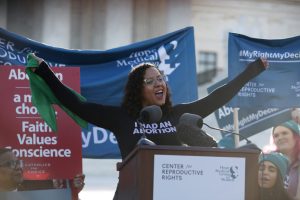
We Testify abortion storyteller Kenya Martin speaks at the oral arguments for the June Medical Services v. Russo case at the U.S. Supreme Court, March 4, 2020. Photo credit: Center for Reproductive Rights.

We Testify abortion storyteller Kenya Martin speaks at the oral arguments for the June Medical Services v. Russo case at the U.S. Supreme Court, March 4, 2020. Photo credit: Center for Reproductive Rights.

The importance of abortion storytelling 

During the next 6 years, I only told a few people that I’d had an abortion. The more I shared my story, the more I’d hear “I had one, too,” in response.  

As I met more people who’d had abortions, I realized how much commonality we had in our stories, yet they weren’t being shared widely nor were they represented in public discussions of abortion access.  

Moreover, when experiences were brought into the conversation, they focused almost exclusively on young, white cisgender women who sought abortions in order to finish college studies.   

While those women’s stories are vital, they only give us a glimpse into a narrow narrative that doesn’t necessarily reflect the experiences of most people who have abortions — the majority of whom are people of color, already parenting, living on low-incomes and navigating difficult financial, logistical and legal barriers to abortion care.  

Our narratives deserve to be told, not just so we can find one another, but also because the exclusion of our experiences means the full truth about abortion is not being told. 

Without our stories, the anti-abortion movement and those who want to restrict access to abortion care are able to fill the void with caricatures of us, usually based on racist, sexist and xenophobic stereotypes long ingrained in our nation’s memory.  

They talk of “taxpayer funding of abortions” to conjure the anti-Black “welfare queen” trope in hopes that the audience will forget that Medicaid insurance recipients also pay taxes and that no matter what, everyone deserves unfettered access to medical care.  

They have a vested interest in keeping us silent so they can tell a different story, one that erases our humanity and encourages people to ignore empathy in favor of more restrictions, criminalization and white supremacist control of our families.  

We cannot undo the harm of white supremacy without confronting the real experiences of the people it impacts. 

Abortion story tellers need support 

When I began sharing my abortion story, it was to counter the horrific messages that anti-abortion leaders were spreading about Black women like me who had abortions.  

I wanted to talk about the complexities of becoming pregnant when I wasn’t ready to parent and the ways that the lack of sexual health education and racist and sexist stereotypes about young Black women impacted me.  

But when I shared, I often found myself as the lone Black person sharing my story, which opened me to vicious threats and violent harassment. I questioned whether storytelling was a safe vehicle for change. 

The reproductive health, rights and justice movement had not invested in protecting abortion storytellers to ensure that when they spoke out, their voices would be met with love, support and care.  

Storytellers were asked to share their stories at public testimonies and left to handle the backlash on their own.  

We needed to see abortion storytellers as the leaders they are and invest in their future, health and well-being so that their storytelling experiences were good ones, not solely memories of harassment and threats.  

The more we can support abortion storytellers — in public, with love, encouragement and accolades — the more we’re modeling what the treatment of people who have abortions should look like and more people will be willing to step into the sunlight with their truths. We had to create a new theory of change. And we did it through We Testify. 

We Testify Executive Director Renee Bracey Sherman hypes up the crowd as the rally emcee at the oral arguments for the June Medical Services v. Russo case at the U.S. Supreme Court, March 4, 2020. Photo credit: Center for Reproductive Rights.

We Testify Executive Director Renee Bracey Sherman hypes up the crowd as the rally emcee at the oral arguments for the June Medical Services v. Russo case at the U.S. Supreme Court, March 4, 2020. Photo credit: Center for Reproductive Rights.

Elevating abortion storytelling through We Testify 

We Testify is a nonprofit organization dedicated to the leadership and representation of people who have abortions. We invest in abortion storytellers to elevate their voices and expertise, particularly: 

  • those of color. 
  • those from rural and conservative communities. 
  • those who are queer-identified. 
  • those with varying abilities and citizenship statuses. 
  • those who needed support when navigating barriers while accessing abortion care.  

Through We Testify, people who’ve had abortions meet one another to build fellowship and solidarity around their shared experiences and learn about the challenges that others experienced in obtaining care.  

The We Testify storytellers support each other as they speak out on abortion access issues, as well as other intersecting reproductive justice issues such as incarceration, immigration, sex work, disability justice and more.  

The bond of their cohorts creates the support and confidence they need to speak out and change the conversation about who has abortions and why.  

The pressure to keep our abortions a secret is a weighing one that can only be lifted by openly sharing, being validated and knowing that others who have similar experiences are waiting in the wings to share their stories, too. 

As part of We Testify, we deeply believe in reproductive justice, which is a human rights framework ensuring everyone is able to decide if, when and how to grow their family, and raise their families free from violence and coercion.  

To operationalize this, We Testify storytellers are encouraged to not only share their abortion experiences but the systemic issues that set in play the various barriers or privileges that affected their experience.  

The storytellers share our stories with a goal to let others know they’re not alone and identify the systemic changes that could make access easier for those who need abortions in the future. 

Through We Testify, abortion storytellers attend a retreat where they receive training to ensure they’re able to share their stories as they want and in a way that feels most empowering to them.  

They also receive training to protect themselves from targeted harassment, not perpetuate abortion stigma and communicate effectively with reporters and media.  

Philanthropy must support abortion storytelling 

Because storytelling is labor, the We Testify storytellers are compensated for their engagement in the program.  

Many are living on low-incomes, have experienced financial hardship as a result of sharing their abortion stories with loved ones, or are trying to break into the social justice movement. Compensating them for their labor is core to our economic justice values. 

But that can only continue if philanthropy values storytelling as a theory of change and storytellers as our next generation of leaders.  

Storytellers have long been seen as messengers for fundraising events and presentations, but if we are to create true change in our communities, we have to see that they are leaders who can create a new vision for abortion access.  

They’ve been closest to the pain, so they must be closest to the power. That can only happen if storytelling is invested in as a way of organizing and building the power of people who have abortions, and then seats at the table are created for us to sit in and imagine a different world. 

Abortion storytellers have been breaking the silence for decades and are leading the way to envision what the future of justice we seek to create will be.  

Their legacy is in the truths they tell about our nation’s healthcare system and how people are treated when we’re collectively told not to love out loud people who have abortions or honor them with the respectful care they deserve.  

We’d be wise to not only listen to their wisdom but deeply invest in their leadership. Storytellers are our messengers for the future and will always remind us that someone we love has had an abortion. We have the tools to create a better system. It’s time that we listen and invest. 

Renee Bracey Sherman is the founder and executive director of We Testify. 

My experience of anti-Blackness at the Chan Zuckerberg Initiative and an urgent appeal to our sector

In the wake of the murders of George Floyd, Breonna Taylor, Ahmaud Arbery and Tony McDade, the Chan Zuckerberg Initiative (CZI) published an open letter expressing support for the nationwide protests and the call for racial justice.

On June 5, Priscilla Chan, who owns and operates CZI alongside her husband, Facebook co-founder Mark Zuckerberg, said: “I stand in solidarity with the Black community and all those risking their own health and safety in the fight for justice, equity, and inclusion.”

She went on to punctuate the sentiment by declaring, “Black Lives Matter.”

The statement, which remains prominently displayed on the CZI website, stands in stark contrast to my experience as a Black man working at CZI for the past 2 years.

Public statements versus the internal reality

During my time at CZI, I served in multiple departments and roles, performing a wide range of duties, including grantmaking, grants management and operations. Throughout my experience, I have been consistently alarmed by the racially discriminatory practices displayed in the organization’s treatment of Black employees and its approach to grantmaking, which operates devoid of racial analysis and often with reckless disregard for how internally devised “solutions” will affect Black, Indigenous and people of color (BIPOC) communities.

While working at CZI, I made well-documented efforts to highlight these concerns for members of the CZI leadership team, all while contending with numerous incidents of racial discrimination, including pay inequity, threats to my job security from senior leaders and acts of retaliation made against me.

While these incidents made my experience at CZI contentious and oppressive, I was equally disturbed by accounts from Black colleagues who were facing similar issues at the foundation. These are not my stories to tell, but I must note that the most egregious acts of bias and discrimination were those perpetuated against Black women, who were consistently undervalued, underutilized and treated with callous disregard and disrespect.

Noting that my previous efforts to see these issues brought to light had gone unanswered, on Aug. 20, 2019, I met with Priscilla Chan. I told her that incidents of racial discrimination were occurring at CZI and requested that she investigate these issues further.

My appeal was met with the all-too-familiar sophistry of a leader who wishes to avoid responsibility by minimizing the experiences of their employees. Although she initially expressed concern regarding my statements, she quickly veered the conversation toward a broader discussion of diversity, equity and inclusion (DEI) practices.

She explained to me that “DEI may look different for each of us” – seeming to imply that claims of discrimination could simply be matters of misinterpretation. I countered this line of reasoning, stating that CZI’s DEI strategy was inadequate and amounted to a tokenizing, quota-based approach to diversity.

I explained that, while CZI had successfully recruited Black talent, it had failed to empower and integrate the perspectives of Black employees into the work – a point supported by multiple engagement surveys that indicated Black employees suffered a significantly lower sense of inclusion and belonging at CZI, and further evidenced by the exponentially higher rate at which Black employees left the organization.

Knowing that I had only been afforded 10 minutes to discuss these issues, I came prepared to offer a course of action, suggesting that Chan prioritize hiring a seasoned DEI professional with a proven record of success working with similarly stunted organizations.

She pushed back on this idea, indicating that she preferred to select a more junior individual for the role, out of a desire to “give them the opportunity to develop in the role and in their understanding of these issues. In the same way we’ve been able to develop you on the Criminal Justice team.”

This patronizing comment told me all I needed to know about my employer and confirmed the old adage: A fish rots from the head.

While on the Criminal Justice Reform team at CZI, I was paid significantly less than non-Black colleagues in the department, less than employees across the organization who held similar responsibilities and less than the originally advertised salary for the position I held.

Days after joining the Criminal Justice Reform department, I was warned by a senior member of the team that I should avoid pushing for grantmaking strategies that centered racial equity, as Mark Zuckerberg and Priscilla Chan did not believe race was relevant to the issue of mass incarceration. I was told that previous attempts to educate the couple on this matter had contributed to a former employee being terminated.

Every indication I received while working at CZI told me that this was a place that did not value my professional expertise, identity or lived experience and that if I hoped to keep my job, I would need to suppress my values, beliefs and opinions.

Despite having joined CZI with substantial nonprofit and philanthropic experience, Chan’s comment underscored her perception of me as someone who was enjoying the good fortune of “developing” my talents at the foundation. This stood in stark contrast to the reality of working at CZI, which had revealed itself to be an extractive and exploitative environment for me and numerous Black employees.

I left the conversation unsatisfied with her responses and her lack of leadership, but remained hopeful that she would take appropriate action to address the matters of racial discrimination.

That hope would prove to be naive. Following our discussion, no follow-up meeting was scheduled, no HR representative reached out to me, and no one intervened on behalf of myself or my colleagues. Nothing was done.

CZI’s Black employees send a letter to Priscilla Chan

I cannot speak to why Chan did not take our conversation seriously, but I know that her negligence allowed inexcusable stress and harm to continue against Black employees. Further, I know such negligence is not the mark of someone who truly believes and understands that Black Lives Matter.

As reported by The Washington Post in August, the issues of racial bias and discrimination at CZI came to a head when CZI’s Black employee resource group sent a letter to Priscilla Chan.

In the letter, the collective body of Black employees outlined the systemic racism, discrimination and anti-Blackness present at CZI, citing its treatment of Black employees, its underinvestment in the Black community and the lack of action taken by leadership to address these persistent disparities.

In addition, the letter included a list of recommendations that the group believed would serve as good-faith first steps towards building a more inclusive and just environment for Black employees.

Unfortunately, Chan once again failed to grasp the seriousness of the issues the letter raised, refusing to meet several of the group’s requests, most notably declining to provide transparency into CZI’s pay equity data as it related to Black employees.

Instead of working through the plan of action that was put forth by Black employees, she tasked a recently hired chief operating officer with devising and implementing an alternative course of action. Having witnessed the dynamics of passing the buck and placating employees with half measures play out multiple times at the foundation, I recognized that further efforts would be in vain. On Aug. 31, I left CZI.

Earlier this week, I filed a discrimination claim against CZI with the California Department of Fair Employment and Housing and the U.S. Equal Employment Opportunity Commission on behalf of myself and fellow Black employees who have experienced racial bias and discrimination at the foundation.

In addition, I have chosen to publish the claim in its entirety here, detailing the discrimination and systemic racial bias I have faced and witnessed while working at CZI.

After careful deliberation and counsel from colleagues in the field, I felt compelled to take these actions to ensure that CZI and its leaders are held accountable. I believe it is irresponsible and dangerous for an organization of this magnitude and influence to operate without care or consideration for race, while tackling issues related to voting rights, housing, criminal justice, immigration and education – issues steeped in a history of systemic racial bias and inequity.

Further, I know that my experience of discrimination at CZI is indicative of a larger problem concerning the treatment of Black people in philanthropy, and I believe my silence would only serve to reinforce the acceptability of similar practices.

***

CZI is not the first philanthropy that has sought to portray a commitment to racial justice, while privately operating in a discriminatory and racially biased manner.

Too often philanthropy devolves into a grotesque performance, where funders court a public image as “progressive,” “trust-based,” “anti-racist” and “responsive to community needs,” all while failing to do the work required to earn those accolades.

Inevitably, Black employees become enrolled in this performance and are resigned to serve as window dressing for institutions that we ourselves recognize as deeply flawed.

Against our better judgment, we are expected to publicly uphold, defend and promote philanthropies that we are rarely positioned to shape or influence. Worst still, if we attempt to affect change from within these institutions, we are reprimanded, our voices are suppressed, or we are quietly asked to leave.

This is an unprecedented moment in our country’s long and grisly history of racial and economic inequity. We find ourselves contending with a global pandemic that has disproportionately ravaged the Black community, a renewed social movement to end the violence and brutality perpetuated against Black bodies, and a presidential election that has seen the topic of white supremacy become a central matter of discussion and debate.

Now, perhaps more than ever, philanthropy should be rushing to center Black voices and expertise and to build authentic partnerships with the broader Black community.

Yet, as I speak to colleagues, friends and associates in the field, I am disheartened by accounts of Black professionals who, like myself, have been disempowered and displaced in this moment.

Programs are being cut, positions are being eliminated and the established trend of Black professionals leaving the industry at an alarming rate seems likely to only continue, in the face of the growing need for our presence and “lived experience.”

Even now, BIPOC professionals who have spent the last decade calling for foundations to embrace racial equity as a priority across their grantmaking, organizational culture and operations, are finding that their appeals continue to go largely ignored as institutions remain resistant to change.

All the while, many of these same institutions have been the quickest to capitalize on opportunities to publicize and self-applaud the marginal efforts they have undertaken to “respond to the moment.”

I think I speak for many of my colleagues in the field when I say I did not enter this industry to settle for the appearance of doing good. I am a Black man who grew up across the low-income neighborhoods of Queens, N.Y., and have experienced firsthand the effects of urban poverty and the intricacies of generational disenfranchisement.

I have faced many of the same barriers and challenges affecting the communities our sector purports to serve. My commitment to Black liberation and my deeply held desire to empower BIPOC and historically marginalized communities is not a matter of academic curiosity or charitable sentiment – it is core to who I am.

I believe philanthropy, much like our country, has arrived at a critical juncture and the choice before us is clear:

We can accept, as many of our harshest critics have indicated, that this industry is irredeemable and beyond self-reform.

We can accept that justice cannot serve as a guiding principle for a sector that emerged as a byproduct of this country’s history of racial and economic inequity.

We can resign ourselves to “performative philanthropy” and accept that our work will remain inextricably tied to generating publicity for individuals who have often amassed their fortunes through extractive and unethical means.

We can accept the status quo and allow this moment to pass, just as it always has.

Or alternatively, we can commit ourselves to doing the hard work of reimagining all that this industry is and can be.

We – industry executives, practitioners and professionals who came to this work seeking to center the needs of the communities we cherish, only to find ourselves enrolled in shadow theater – can commit ourselves to holding institutions accountable even when that means prioritizing our duty over our jobs.

We can commit ourselves to serving as true partners and co-conspirators for movements and communities entrenched in the fight for liberation.

We can commit ourselves to denouncing acts of performative philanthropy, recognizing that when institutions fail to align their private actions with their publicized values, when they choose media attention over community empowerment and power hoarding over trust, and become bastions for bias and extensions of white supremacy – We can commit ourselves to calling these institutions to task and exposing them for what they really are.

This is the choice before us, and the stakes have never felt higher.

Ray Holgado is a grantmaking, finance and operations professional based in San Francisco. He currently serves on the board of directors of the Andrus Family Fund and worked at the Chan Zuckerberg Initiative from September 2018 through August 2020.

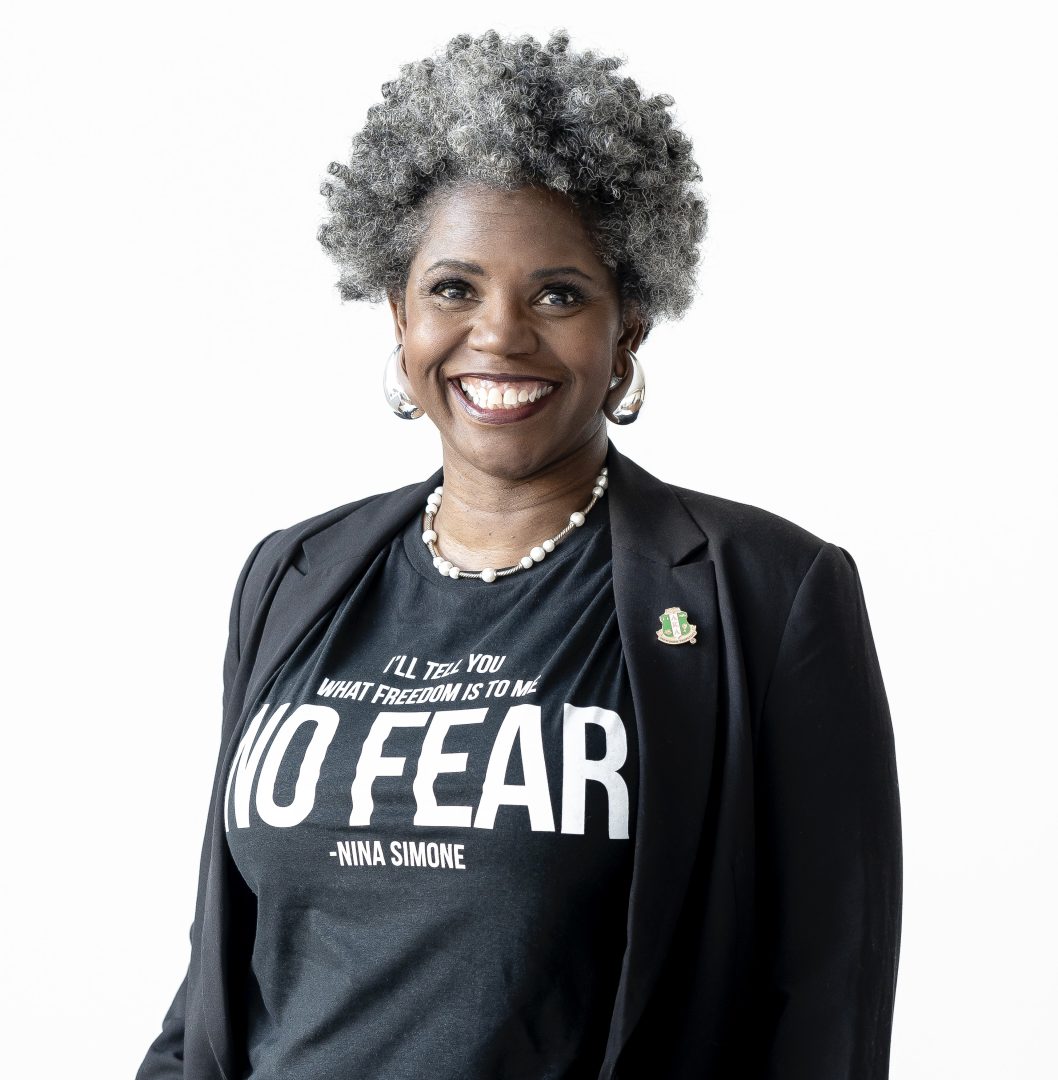
For Washington state’s Group Health Foundation, the current coronavirus pandemic has only reaffirmed the importance of community leadership to advance equity.  

Editor’s note: This article was written before the murder of George Floyd by police in Minneapolis and the subsequent uprisings in more than 400 cities. Please see the dear colleague letter that accompanies this issue of Responsive Philanthropy for more context.

An early and unsettling headline from this pandemic came on a Friday in March from The New York Times: “‘Chilling’ Plans: Who Gets Care as Washington State Hospitals Fill Up?”  

At the time, we were the American epicenter for the outbreak as hospital and state leaders were planning for what was believed to be inevitable: Washington would soon see more patients than it could care for. Leaders were drawing up criteria to help hospitals decide who would get life-saving treatment and who wouldn’t.  

There were frightening implications: People of color, people with disabilities and older people would be denied life-saving care at staggering rates if criteria such as age and underlying health conditions were to move forward.  

At Group Health Foundation, we were worried about what would eventually become true: Black, brown and Indigenous people are overly represented in infections, fueled by longstanding systemic inequities. Our team thought if we didn’t speak up in that moment, we would regret it for years to come. As our board chair said: “It’s always the right time to do the right thing.”  

Over the weekend, we talked about what the right thing meant for us. We weighed countless options and struggled to find our voices. We are grantmakers, not health care providers; what would we know about making such painful and unimaginable choices?  

While we struggled with our next steps, Disability Rights Washington (DRW) already knew what to do. In reaction to the same news report and within the same weekend, DRW connected internally, organized with partners in and out of state, and filed a complaint the following Monday with the U.S. Department of Health and Human Services’ Office for Civil Rights. Seven other states also sent in complaints modeled after DRW’s.   

Five days later, the agency issued a statement affirming that “our civil rights laws protect the equal dignity of every human life from ruthless utilitarianism.” In the 3 days it took for us to figure out our best role, DRW assumed theirs to reaffirm the rights of people across the country. 

Equity is a leading value at Group Health Foundation. We aspire to seek community wisdom for funding decisions and prioritize lived experiences when hiring staff and recruiting board members. We are committed to making mostly general operating grants and minimizing unnecessary hoop-jumping for grantees.  

Yet, despite our aspirations and commitments, the rapidly changing, quick pace of this public emergency even got us momentarily distracted from a core belief: trust and follow community leadership on matters that impact them most.

We struggled, but what we did do right in this case was something we have always done: fund nonprofits that are culture- and identity-specific, multiracial and whose leadership and board are reflective of the communities they serve. We are grateful to have supported Disability Rights Washington in 2019 and 2020.  

I share this story because it was humbling for us. And I believe in this moment humility is something philanthropy could use more of, including examining our role in creating the inequities we see today and how we can work to undo them in the future.  

Philanthropy is complicit in perpetuating harm 

Covid-19 stamp on the state flag of Washington.We find ourselves in a pivotal moment, living through a pandemic that has claimed more than 114,000 lives in the U.S. and nearly 4 times as much worldwide. At the end of it, many of us will likely have lost someone — a family member, a friend, a colleague. We will know even more people who have lost a job, closed a business or missed a mortgage payment. 

As a result, we are all grieving concrete losses, even grieving dreams and ideas about how we thought 2020 would turn out. There is certainly a lot of pain, and one of the most painful reckonings as we do this work is admitting how philanthropy is complicit in the inequities we see now.  

Modern philanthropy’s promise was to make the world a better place. Billions of dollars later, philanthropy has done a lot of good and perpetuated the disparities we see in health, education, employment and other areas of well-being.  

Our sector was founded by dynasties of white families who believed wealth equaled expertise. Our professional inheritance is tied to this world view and how it lives on in the way we operate today.  

What we now have is the legacy of our decisions: decisions on who gets funding (overwhelmingly white-led institutions), what issues are worth funding (without naming racism as a root cause), which prescriptive strategies to fund (instead of trusting community-designed solutions) and how to measure success (usually through a Eurocentric framework).

In recent years, we have taken best-selling critiques about philanthropy in stride — nodding in agreement as we launched book clubs, joined panel discussions, appeared on podcasts and drafted op-eds. The word “equity” has become ubiquitous, flowing freely from our speeches, annual reports, mission statements and funding strategies, signaling that we have a deeper understanding of the world around us.  

The dollars have not flowed to match our words. Numerous reports show funding for specific racial and ethnic communities have either stagnated or decreased; and the 1,000 largest foundations in the U.S. gave only 10% to communities of color.  

The subtext? Philanthropy knows better than community; that people who talk about equity know how to advance it — not communities experiencing inequities every day.  

When the coronavirus crisis hit, too many of us put down our newly acquired equity lenses and defaulted to business as usual. Some of us resumed the practice of spreading resources evenly across grantees all the while knowing that this pandemic did not evenly impact communities. 

Yet, the best responses came from foundations that understood how racism, classism, ableism, ageism, heterosexism — and other -isms — work, and how they interact to compound inequities.  

These funders understood from their grantees for whom social isolation would be most damaging. They understood which communities are overrepresented in jobs that put them at higher risk of exposure: cleaners and janitorial staff, food-processing plant employees, grocery store clerks, delivery drivers and warehouse workers. They understood who could not access public assistance based on immigration status. They understood whose humanity would be denied because of their race or ethnicity. They understood that racism plus classism is a public health crisis. 

Here in Washington, we were able to quickly bend our infection rates thanks to our culture- and identity-specific nonprofits. They proactively addressed these challenges and their success was because they had earned the trust of their communities.  

These groups responded to immediate needs: child care when schools were closed, food and supplies during shelter-in-place orders, technology for mental health counseling and culturally specific and non-English communication to prevent spread. Our nonprofits also stood up to systems by stopping evictions and foreclosures, pushing for better unemployment insurance and work conditions and, in the case of DRW, ensuring federal protections are in place for treatment. The work was going to happen with or without philanthropy, but our dollars helped defray costs, allowing them to serve more of the community.  

“Center those most impacted,” is not new insight. Yet we in philanthropy have largely ignored this advice, even when presented with a plethora of data, reports and stories that prove it is the fastest path to change. We come up with sophisticated reasons for our inaction, but they all boil down to a lack of willpower.  

Many of us in philanthropy are afraid to lose what this world offers us: job security, access to power and the chance to influence and shape the work of others. Afraid of damaging our reputation and dismantling the cozy places we’ve found ourselves in, we have made choices that protect our role and hedge against “risks.” 

However, the real risk is allowing our privilege to become our expertise.  

Remember who is doing the work

A sign that says "Let's Stop COVID-19. Do your part. Stop the Spread."

Let’s Stop COVID-19 sign in downtown Bellevue, Washington, during the pandemic.

We at Group Health Foundation are fortunate because we are new and get to build our organization from the ground up. Our team has benefitted from all the insight our peers in philanthropy have shared with us and we will forever be grateful for the lessons learned. If there is a common sentiment I can share, something I have heard time and again from both nonprofit leaders and retiring foundation presidents it is this:

Be more courageous, take more risks and remember who is doing the work.

Let’s remember who is doing the work and recognize that anything we want to accomplish is entirely dependent upon the community organizations we fund, not us. Let’s commit significant resources to organizations that are for and led by Black, Indigenous and people of color, immigrants and refugees, people with disabilities, members of the LGBTQIA+ community and people who have experienced poverty.

And when we do, let’s resist the urge to position ourselves as the expert, leader or savior of their work.

Let’s also stop normalizing and promoting the notion that certain communities are destined to suffer. This narrative upholds a society where it is acceptable to undervalue whole groups of people. We recently saw this play out nationally when too many people were quicker to decry broken windows over stolen Black lives.

Let’s take more risks by shouldering the burden that comes with challenging the status quo. Let’s apply pressure on those with whom we share institutional power to echo what generations have been asking for: comprehensive unemployment insurance for all workers, humane immigration policies, abolition of the prison industrial complex and health care as a human right.

Let’s demand a government that is accountable to the people it serves and ensure that future leaders reflect their communities. There is no shortage of brilliant leaders all around us. They are running nonprofits and organizing in their communities, and they can tell you off the top of their head — without a request for proposal process or a slide deck — what equity looks like for their people.

Let’s build a society where those who design policies are the people who experience inequities rather than those people who just talk about equity.

Let’s be courageous and acknowledge the generational harm that chattel slavery and attempted genocide has had on Black and Native communities. Let’s work to truly understand how its legacy has created a blueprint for racism and fascism that has hurt everyone in this country and apply that understanding to how we approach our work. Let’s always call racism for what it is.

We can create a better society if we put our full support behind the nonprofits doing the work. These organizations and leaders show they can do a lot with a little; imagine what we can build together if we develop the courage to trust and follow community leadership.

In philanthropy, we hold the trifecta of power: economic, political and social. Now is the time to wield it so that communities can lead us through recovery and what comes after.

The last time I wrote an NCRP article was 15 years ago. I was a young executive director of a Native American organization. Ironically, the piece was called “The New Same Old Story.” I was deeply frustrated with philanthropy and wanted change. I was not naïve; I understood I was just one more person in a long line of leaders who had been asking philanthropists to believe in community-driven solutions, trust community leaders and get real resources to those who carry our society’s burden of inequity.

I never imagined that one day I would be part of philanthropy, let alone a foundation CEO. I closed that article with a principle gifted to me by a friend and lifelong mentor from the Quinault Indian Nation:

“The people are beautiful, already.”

I believe this more today than ever before. We will all be fine if we remember this when we make grants.

Nichole June Maher is president and CEO of Group Health Foundation. She previously served as the CEO of Northwest Health Foundation and executive director of Native American Youth and Family Center. Nichole is also co-founder of the Coalition of Communities of Color.