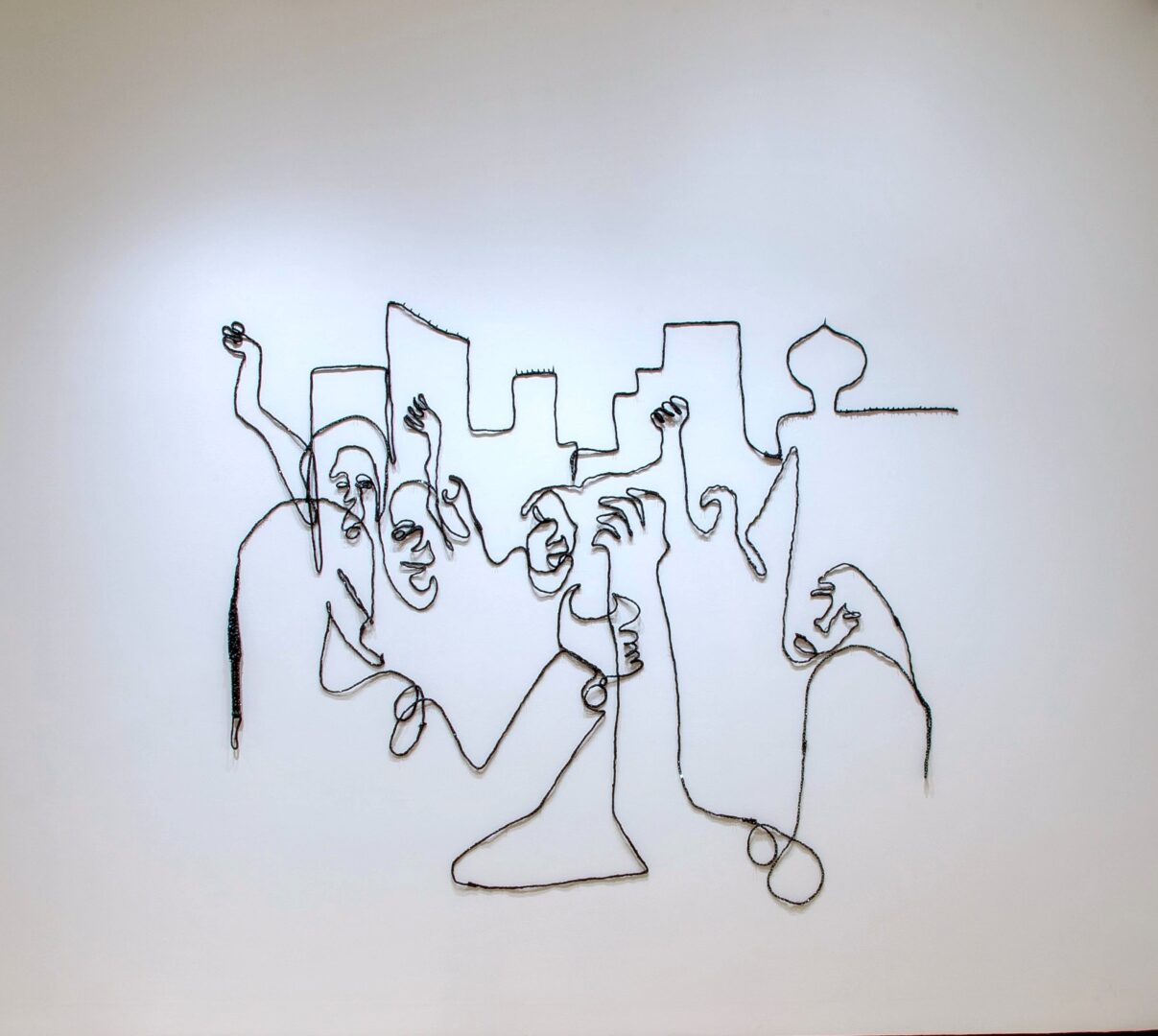
Pyaari Azaadi, We Were Making History 3, 2013
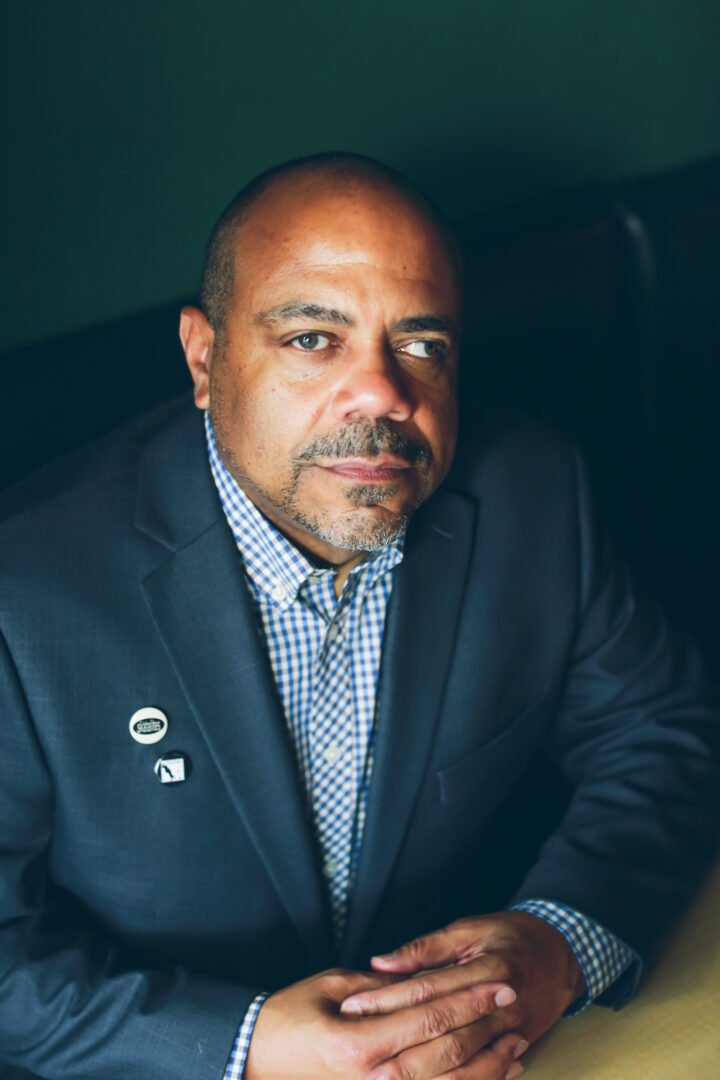
Eric Ward
Eric Ward

In this moment of mounting political repression, too many in philanthropy are still asking “is this really happening?” when they should be asking “what are we willing to do about it?”

We are not in a cycle of backlash. We are not experiencing a wave of polarization. We are facing a deliberate, coordinated, and accelerating authoritarian project – one that targets not only civil rights protections, but the very possibility of a multiracial democracy.

If those of us committed to the work of bridging, making democracy work, and securing an inclusive America want to be on the right side of history, we must stop acting as if these are disconnected issues. The attacks on trans rights, voting rights, public education, birthright citizenship, reproductive justice, environmental justice, and nonprofit legitimacy are not isolated events. They are linked by design – powered by a shared worldview that sees inclusion as a threat and equity as subversion.

And yet, much of philanthropy still operates in silos – responding to each threat as a separate fire rather than seeing the arsonist at work. And if you want to know where the fire starts, look at who controls the story. One of the first targets of any authoritarian movement isn’t the vote – it’s the voice.

The War on Story, the Erasure of Data

Authoritarian movements understand something we in philanthropy sometimes forget: Narrative is power. Data is power. Stories are how people make meaning – and meaning is how they decide what’s just, what’s normal, and what’s worth fighting for.

That’s why disinformation isn’t just a symptom of authoritarianism – it’s a core strategy.

We’re watching the deliberate erosion of truth:

  • School boards across the United States have banned over 10,000 books in the past year alone – many featuring LGBTQ+ and Black protagonists, which is an unprecedented surge that targets identity, memory, and belonging.
  • Data collection is being gutted – from bans on race and gender data in some states to restrictions on public health reporting around maternal mortality and climate impact.
  • Culture workers and storytellers are being targeted, labeled as “radical” or “un-American,” defunded, or intimidated into silence.

This isn’t new. Every authoritarian regime begins by going after artists, educators, and record-keepers. They understand the stakes. Do we?

If we don’t fund the storytellers, data collectors, culture organizers, and narrative strategists, we cede the battlefield to those who will. This erosion of narrative and knowledge isn’t happening randomly. It’s part of a larger strategy – one drawn from a well-worn authoritarian playbook.

A Playbook of Suppression

The opposition isn’t improvising. It’s operating from a tested playbook refined over decades and modeled globally in places like Hungary, India, Brazil, and Russia. That playbook includes 3 main tactics:

  • Roll Back Gains. We’re witnessing the dismantling of civil rights infrastructure like the repeal of Roe v. Wade and over 30 states introducing anti-diversity, equity, and inclusion laws in 2024 alone. These moves are often packaged as neutrality or fairness, but they are designed to obscure disparities and silence demands for justice.
  • Fracture Mutual Accountability. The goal is to isolate and exhaust each group before moving to the next by targeting specific communities—trans people, undocumented immigrants, and pregnant women of color—the goal is to isolate and exhaust each group before moving to the next. These attacks become wedges used to divide movements and limit public empathy.

What We’re Really Up Against

Let’s connect the dots:

  • Voter suppression now includes targeting trans communities. According to the Williams Institute, over 200,000 transgender adults in states with strict voter ID laws could face barriers to voting because their IDs do not reflect their gender identity, which disproportionately affects their access to the ballot box.
  • Birthright citizenship, grounded in the 14th Amendment, is under renewed attack. Trump’s 2018 executive order attempt signaled a broader movement to redefine who qualifies as “American.”
  • Reproductive justice is being criminalized. The Guttmacher Institute reports that 13 states now ban abortion entirely, and in several states, laws intended to restrict abortion have been used in ways that open the door to investigating or even prosecuting pregnancy outcomes like miscarriages – creating a chilling effect, especially for Black and brown women.
  • In at least 17 states, “critical infrastructure” laws have been used or proposed to increase penalties for protests often aimed at environmental and Indigenous organizers challenging pipelines and fossil fuel projects.
  • Bills like the Stop Terror-Financing and Tax Penalties on American Hostages Act threaten to undermine the credibility of social justice nonprofits by using broad definitions that could be weaponized under the guise of national security.

All of this is happening while diversity, equity, and inclusion efforts are rolled back, movement leaders are surveilled, and entire communities are painted as “extremists” in media echo chambers.

This isn’t fearmongering – it’s a pattern. If philanthropy is to be relevant in this moment, we must treat narrative, data, and story not as supplements to our strategy, but as central pillars of it. This isn’t the first time regimes have tried to erase truth and control meaning. In fact, we’ve seen this story before – and we’ve seen how resistance rises.


Sidebar: Voices Under Attack – Who’s Being Targeted and Why It Matters

If you want to know where the authoritarian playbook is being tested, follow the storytellers under fire.

  • In Florida, a Black history teacher was fired after showing a documentary on civil rights and voting suppression.
  • In Texas, educators and districts are being investigated for allegedly teaching banned materials, including lessons from the 1619 Project – part of a broader crackdown on race and gender education.
  • In Georgia, data scientists analyzing voter suppression patterns are being sued or sanctioned.
  • In 2024, a senior data reporter at ProPublica was subpoenaed in an IRS lawsuit, raising alarms about growing efforts to chill investigative reporting and suppress public-interest data.

These aren’t outliers, they’re indicators of where this project is heading. When state power is used to criminalize research, censor art, or silence educators, it’s not about protecting the public. It’s about shrinking the space for collective truth-telling.

Philanthropy cannot afford to watch this from the sidelines. These are the canaries in the coal mine – and if we don’t act quickly and boldly, we won’t just lose information. We’ll lose infrastructure, memory, and the very idea of accountability.

Lessons from Past Authoritarian Crises

If we need historical proof that story and data are essential to resisting authoritarianism, we don’t have to look far.

In apartheid South Africa, underground newspapers and rogue radio broadcasts kept hope alive for generations of Black South Africans. They provided counter-narratives that exposed the violence of the regime and connected people across isolated townships.

During the Jim Crow era, the Black press – outlets like the Chicago Defender and the Pittsburgh Courier – not only reported on lynchings and racist laws but also organized national campaigns for justice. These were not just newspapers, they were organizing tools, lifelines, and resistance infrastructures.

In the former Soviet Union, dissident intellectuals and artists created “samizdat” – a clandestine publishing network that spread censored literature, political critiques, and moral witnesses. It was illegal. It was dangerous. And it was critical to the eventual collapse of state-controlled ideology.

We are not facing the same context – but we are facing the same logic: Control the story, and you control the future. Philanthropy must recognize that to fund storytelling and data is to fund resistance.

What Philanthropy Must Do 

Narrative and data must be invested in with foresight and cannot become afterthoughts of the resistance. These must become front-line strategies. That means:

  • Funding storytellers, artists, and independent media: We already have powerful story workers like the Black Trans Media collective in New York and Indigenous youth running TikTok campaigns in the Pacific Northwest. Fund them. Trust them. Let them lead.
  • Funding data infrastructure: Projects like the National Equity Atlas and the COVID Black data initiative show what’s possible when data is gathered by and for communities. These efforts need to scale – not shrink – especially as government data becomes increasingly politicized or inaccessible.
  • Funding narrative strategy: Institutions like the Pop Culture Collaborative, MediaJustice, and ReFrame are building long-term narrative power across movements. These aren’t just “comms shops” – they are architects of belonging, resilience, and hope.
  • Funding long-term organizing: Too many groups are forced into survival mode. Imagine if we funded narrative and data like we fund electoral cycles, with multi-year commitments, full cost coverage, and alignment with base-building strategies.
  • Funding boldly: Let’s reward risk. Let’s protect leaders who speak uncomfortable truths. And let’s build infrastructures – legal, digital, and cultural – that make it safer to tell the truth and harder to erase it.

Clarity and Courage

I often ask myself: What’s the difference between those who shape history and those who react to it?

It’s not intelligence.

It’s not resources.

It’s not even intention.

It’s clarity—about what’s really happening.

And it’s courage—to act accordingly.

The opposition has both. They are unapologetically funding their vision of the world. They’re

not afraid to offend. They are thinking in decades.

So the question is: Will we?

This isn’t just a political fight. It is a moral one—about whether we believe in the dignity of all people. About whether we believe that data and stories, in the right hands, are tools of liberation—not threats to be silenced.

Philanthropy has the power to make that difference. It has the power to protect the truth—and the people who carry it.


Eric K. Ward is the Executive Vice President of Race Forward and a Senior Fellow with the Southern Poverty Law Center. A recipient of the Civil Courage Prize, he has been active in philanthropy since the early 1990s, from McKenzie River Gathering to present board roles at Proteus Fund and NCRP. Eric is also the producer of the documentary “White With Fear” and a longtime strategist at the intersection of racial justice, democracy, and inclusion. 

NCRP CEO and president Aaron Dorfman

Dear Reader,

The current administration has created a whirlwind of uncertainty, fear, rage, anxiety, and harm – including in philanthropy, the nonprofit sector and in movement spaces.

In spite of it all, I believe deep in my bones that another world is possible. It is the grassroots movement groups that hold the wisdom to get us to that world. In this edition of Responsive Philanthropy, we hear from experts on how stories of courage and data-driven narratives that provide cold hard facts have historically helped fight authoritarianism – and still do today.

As my NCRP colleague Ryan Schlegel reminds us, authoritarianism is not made by accident. It is explicit, well-conceived and well-funded. His piece highlighting the increasing anti-democratic funding serves as a stark reminder of the urgent need to counteract these forces through the strength of community-held power.

This issue of RP offers a diverse and thoughtful look at our current political climate and the dire call to action to fund democracy. We hear from authors and co-authors Scot Nakagawa, Ludovic Blain, Ryan Schlegel, Arthur Larok and Niranjali Amerasinghe, and Eric Ward. These authors challenge us to look at the tools that have helped authoritarian regimes succeed and what the left must do to fight back now using the power of storytelling and cold, hard facts. Because as NCRP Board Member Eric Ward says, “If philanthropy is to be relevant in this moment, we must treat narrative, data, and story not as supplements to our strategy, but as central pillars of it. This isn’t the first time regimes have tried to erase truth and control meaning. In fact, we’ve seen this story before – and we’ve seen how resistance rises.”

The way that we address increasing authoritarianism will have a lasting impact on the world we are envisioning. A world safe for immigrants, LGBTQ+ people, and communities of color. The ways that funders specifically support movement groups, which have already been doing the work of creating diverse counter-authoritarian narratives, has the ability to reshape the sector entirely.

Now is not the time to be meek.

Be courageous,

Aaron Dorfman
NCRP President and CEO

Pyaari Azaadi, We Were Making History 3, 2013

Summer 2025 Issue
Supporting Data and Stories That Fight Authoritarianism

Dear Reader,

On the eve of the 2024 United States presidential election, we find ourselves raising the alarming question of whether democracy in the United States as we know it will survive. This edition of Responsive Philanthropy (RP) confronts some of the ways philanthropy contributed to getting us to this challenging place and what is needed as we march forward, regardless of the outcome of the election.

In these tumultuous times, the fragility of our democratic institutions and the forces undermining them have become glaringly apparent. As we confront these challenges, these 5 incisive RP articles shed light on the threats to democracy and propose vital solutions to fortify our collective future.

My NCRP colleague Katherine Ponce provides a sobering analysis of how right-wing nonprofits have channeled significant resources to dismantle democratic norms. Highlighting the explosive growth of anti-democratic funding, her piece serves as a stark reminder of the urgent need to counteract these forces with strategic, values-driven philanthropy.

This issue of RP offers a robust critique and thoughtful analysis of the current philanthropic and political climate. Authors and co-authors include Annissa G. McCaskill and Jia Lian Yang; Sulma Arias, KD Chavez, Denise Collazo, Lauren Jacobs, and Peggy Shepard; Rana Elmir; and Rye Young. These authors challenge us to reimagine our approaches to funding, activism and solidarity by urging us to shift from reactionary stances to proactive and principled engagement. As we grapple with these issues, let us heed their call to action with urgency and resolve.

Funders should be supporting year-round civic engagement and democracy efforts – not just in election cycles – and move more money faster and earlier like the All by April campaign did earlier this year. It’s impossible to hold on to progress if funding delays require organizations to completely restart their work every other year.

This issue of Responsive Philanthropy underscores a crucial message: Our democracy’s resilience depends on addressing both the overt and subtle threats it faces. By embracing thoughtful, proactive strategies and shifting our philanthropic focus, we can better uphold the principles of equity and justice. As we engage with these insights, let us commit to fostering a more robust and inclusive democracy for all.

Unidos en la lucha,

Russell Roybal

More Responsive Philanthropy

Fall 2024 Issue
Democracy: Before, During and After Election Years

Dear Reader, 

NCRP’s commitment to climate justice predates this appeal to invest in social movements. The devastation of a rapidly heating planet has been an ongoing concern; the question has always been how philanthropy should address climate change, not whether it should.

The clarion call to invest in movements is heightened when movements intersect with environmental injustices: as Indigenous communities fight corporations to protect their land and water, as migrants are forced to leave homes devastated by climate change and pollution, and as communities that have been underserved and marginalized build mutual aid to replace extractive economic models.

The same disturbances surfaced in climate justice work that we saw in other movement spaces. The needs, experiences, and expertise of communities directly affected by climate change and environmental injustice were discounted in favor of a few influential funders. Billionaires styled themselves as experts and saviors, but the push to “move fast and break things” doesn’t work for the climate crisis.

Though climate change is an existential threat to everyone, organizations on the front lines have been coming to terms with the shift and have been finding real solutions. To responsibly invest in the climate justice movement is to invest in a just transition. As our board member Farhad Ebrahimi describes as he reflects on the Chorus Foundation, “What does it look like to support the kind of infrastructure at the community level that credibly makes them that much less dependent on outside philanthropic or investment organizations such as our own?” 

The way that we address climate change has the ability to change the planet. And the ways that funders specifically support a movement of Indigenous people and people of color fighting to protect their water, air, and community has the ability to reshape the sector entirely. The just transition model has been saving communities directly impacted by pollution, disasters, and climate change. This model could be a paradigm shift in the practice of philanthropy – if we let it. 

The stakes have never been higher, and the path has never been clearer.   

Be bold,

Aaron Dorfman
NCRP President and CEO

Stylized, artistic picture of post Katrina flooding.

More Responsive Philanthropy

Summer 2023 Issue: Redirecting Climate Justice Towards a Just Transition

Headshot of NCRP President and CEO, Aaron Dorfman in color

Dear Reader,

It seems like every news story brings a new reason to catastrophize about our democracy. The stakes have never been higher, some lawmakers are blocking every piece of legislation that would help build a stronger society, and once revered institutions are losing public trust.

Times like these feel discouraging until we look to movement groups on the ground. This summer’s Power Issue highlights movement groups building their community’s political power and challenges funders to wield their power well. At a time when American society seems to transform every week, movements remind us that change comes at the speed of trust. 

Karundi Williams and Kavita Khandekar Chopra of re:power (whose Board I serve on) powerfully describe this, saying that “civic engagement work can move beyond being transactional, to being transformational.”

Nonoko Sato from the Minnesota Council of Nonprofits writes that frontline groups doing civic engagement are hampered when funders don’t audaciously support the work.   

Dakota Hall from the Alliance for Youth Organizing agrees, challenging funders to boldly support 501(c)(4) organizations. Addressing foundations who fear being viewed as partisan, he says, “This isn’t about political parties. It’s about moving the political process closer to the people. It’s about investing in a more accurate and engaged electorate by allowing the groups on the ground to have the full, robust conversations our communities deserve.”  

In Puerto Rico, the directors of Mentes Puertorriqueñas en Acción describe their own ladder of civic engagement from volunteering to leadership, and map how marginalized young adults can become activist leaders when they are centered. They ask, who are we building power for?  

Asserting that a community-focused political process involves meeting needs, Tim Wallace pushes back against funders’ arbitrary categorization of direct service and advocacy organizations, arguing that the nonprofits advocating most effectively can do so because of deep relationships to communities through their direct service.   

Laleh Ispahani from Open Society Foundations shares the evolution in thinking that has occurred at the foundation in recent years. They no longer fund civic engagement around particular issues in siloes. Instead, she writes, they have learned “that the best way to advance reforms is by ensuring that impacted communities have enough power to shape the policies that shape their lives.” She shares about OSF’s “10-year strategy to build a pro-democracy, multi-racial majority in the U.S., an open society alliance fully committed to inclusive democracy, with enough political, economic, and cultural power to govern.”  

From youth engagement to voting rights to reproductive justice, frontline groups have been building communities and building lasting power in a hostile climate for years. These nonprofit groups show that the challenges the U.S. face are far from unprecedented – and that they can be overcome. More than that, they give philanthropy the unique opportunity to do more than just keep current systems from crumbling, showing that if we are bold, we can all be part of transforming our society for the better.   

Be bold,   

Aaron Dorfman 
NCRP President and CEO 


Dear Reader,

It is no secret that philanthropy was designed with little consideration of whether there would be space where I could find safety, community and agency.

A seat at a table where my philanthropic counterparts were not discussing their commitment to rescue some part of my identity through their giving and performative statements of solidarity. A room that has not found a reason to silence me because of its commitment to respectability, white supremacy or misogyny.

And while I have struggled to find that space that holds me in my entirety, I found refuge amongst familiar comrades: other current and former sex workers.

Sex worker–led spaces have consistently been what I have considered to be my movement homes. The frontlines across movements, from labor rights, racial justice, reproductive access, LGBTQ rights and gender equality, are being led and influenced by sex workers.

Our knowledge and experience have been vital in the work toward liberation and freedom from violence, and our presence continues to shift work in transformative ways. Despite the sector’s attempts to cast sex workers into the shadows, we are in fact your program officers, development coordinators and movement engagement managers.

Unfortunately, criminalization, violence and stigma have led to philanthropy silencing sex workers, erasing our contributions to the sector and leaving sex worker-led movements under-resourced.

From 2015–2019, sex workers received less than 1% of all human rights funding. This is a result of the sector treating sex workers and those in the sex industry as something parallel to the work that foundations have committed to, something far beyond the invisible funding lines that they have drawn. In actuality, there is not a single issue or movement that does not center or intersect with the oppressions that sex workers face.

National Committee for Responsive Philanthropy (NCRP) is proud to feature just a few of the sex worker–led funding and movement initiatives that help move society closer to doing more for those who are marginalized, underserved and disenfranchised.

“Funder Lessons from 4 Years of Resourcing Sex worker–led Organizing and Grantmaking at the Sex Worker Giving Circle” by Christian Giraldo, program officer at Sex Worker Giving Circle at Third Wave Fund, highlights the truths and realities of “who keeps us safe.”

The Sex Worker Outreach Project Los Angeles (SWOP LA) introduces its work that references “how a lack of funding impacts sex workers is in how it displaces us from coordinating our own research into our own lives and communities.”

In “Trans and Sex Worker Justice Needs Steady Allyship,” Maddalynn Sesepasara at the Kua’ana Project demands that “the absence of funding for trans-led and sex worker-led organizations who have decriminalization advocacy in their portfolio ensures that the battle for organizational survival will have to be simultaneously waged on multiple fronts.”

“Be Fund(ed) or Die: The Precarity of Sex Worker Organizing” by Red Schulte, with contributions and considerations from The Support Ho(s)e Collective, is about the importance of “accompliceship, not charity” and names the “potential for participatory programs led by communities directly impacted to shift the discourse away from voyeuristic donor-driven charity and into accompliceship and wealth redistribution.”

We hope you hear the storytellers from the frontlines of sex worker–led initiatives and use them as a resource and guide to allocate more funds to the work they are committed to.


In Solidarity,
Brandi Collins – Calhoun
NCRP Movement Engagement Manager

Dear reader, 

The last issue of “Responsive Philanthropy” celebrated NCRP’s 45 years and asked what philanthropy should look like in the next 45. This issue celebrates philanthropy now and looks at what this sector is doing to build the future that we want. It’s actually something we like to do every two years at NCRP’s Impact Awards. 

For many, this year’s virtual Impact Awards takes place in a world significantly changed from the world in which our last one in Seattle was held. However, grassroots movement groups have been ready for this moment for decades. They’ve shed light on needed systemic changes and work daily on the courageous work of transforming society regardless of the media spotlight.  

The 2021 Impact Awards celebrated those funders who stepped up in important and innovative ways to support these movements. These issues featured in the speeches they delivered when accepting their awards. They are leading with courage and helping show how philanthropy can play a truly meaningful role in building a more fair and just society. Their focus on amplifying communities and deep roots in movement are a glimpse of what the philanthropy of the future can look like, right now.  

I was blown away by their work, and I am sure you will be too. Congratulations again to California Wellness Foundation, Nellie Mae Education Foundation, Third Wave Fund and Four Freedoms Fund.  

Rounding out the issue, our Senior Associate for Movement Research Stephanie Peng argues that the right kind of data fuels movements and challenges funders to find it. We also take a step inward as NCRP’s former Evaluation Director Lisa Ranghelli shares our progress at the midpoint of a decade-long strategic campaign to push grantmakers to wield and share their power more effectively. Changing the world often begins at home, and I am proud that we continue to not just push the sector to do better, but also ourselves.  

As I mentioned in my closing remarks at the Impact Awards, to build a fairer and more just world, leaders of philanthropies must have the courage to drive change and make their organizations better. My hope is that this and every issue of RP provides readers the inspiration to be that courageous changemaker in their institution.  

You know what needs to be done.  

You can make it happen.  

Everyone at NCRP will have your back while you push for what’s right.

Dear Reader, 

In 1976, a group of courageous nonprofit leaders decided they would attempt to hold philanthropy accountable to the needs of communities who had been marginalized in society. They made the important decision to transition from an ad hoc coalition, the Donee Group, to a permanent organization and thus birthed the National Committee for Responsive Philanthropy. A grant from the Rockefeller Foundation provided the initial seed money. 

In this issue of Responsive Philanthropy, we look back at the most important accomplishments of NCRP’s first 45 years and look forward to how philanthropy can be better both in the near-future and another 45 years from now. 

In “NCRP at 45: What it means to be philanthropy’s critical friend,” I reflect on NCRP’s first 45 years, from Bob Bothwell’s amazing leadership in the 20th century, to the incredible work done under Rick Cohen, to my own tenure that began in 2007. While NCRP has done research and advocacy on many different philanthropic issues during that time, what our greatest accomplishments have in common is that they have fallen into 2 important and related areas: accountability and social justice. 

Daniel Lee, NCRP’s board vice-chair who recently stepped down after 13 outstanding years leading Levi Strauss Foundation, discusses the lessons the foundation – and its parent company – learned from working directly with grassroots leaders in “Working with grassroots leaders has changed our foundation (and business) for the better.” 

Lee writes, “We believe this work reflects the new reality that business and politics are intertwined – and that companies and their foundations have a critical role to play in defending our democracy and in shaping the future.” 

Lee is not the only philanthropy leader using NCRP’s anniversary to look into the future. We asked 7 visionary leaders from across the sector to answer the question “What should philanthropy look like 45 years from now?” They gave us a variety of answers, with some seeing a future where philanthropy has more power to do good, and others seeing a future where philanthropy plays a much smaller role. 

In its 45 years, NCRP has benefitted from incredible leadership on its board. We asked each of our 7 previous board chairs to tell us which accomplishments they think are NCRP’s most important. Read what they have to say in “‘Disruption is my jam’: 7 Former board chairs discuss NCRP’s greatest accomplishments.” 

We hope you enjoy this issue of Responsive Philanthropy. Do you have a favorite NCRP accomplishment or an idea for how philanthropy should look in the future? Email us at community@ncrp.org and let us know! 

Best regards, 

Aaron Dorfman 

Dear Reader,

When I became pregnant with my first child, I had health insurance, financial stability and excellent prenatal care.

I had a home, nutritious food, a car, a hospital located nearby and someone to drive me there.

I hadn’t done anything to deserve these things. I had them largely because as a white, upper class woman there are multiple societal structures built to give me the right to make certain choices — and to rob others of the same opportunity.

I was able to choose to delay parenthood until my 30s because I had the right to access comprehensive sex education and contraception. I chose an OB/GYN that provided premium care because I had access to the right to health care. My parents and grandparents were not redlined or subjected to predatory lending, but instead had access to the right to housing that created the generational wealth I used to buy a home in the neighborhood of my choice.

“Choice” in mainstream, predominately white-led reproductive rights discourse typically refers to the individual right to make one specific choice: whether (or not) to have an abortion.

A reproductive justice lens looks at the society surrounding that individual — not just at one choice, but at the multiple of choices that people should be able to make about their bodies and lives and why some groups of people have the right to do so while others do not.

Who gets to make which choices — or gets a choice at all — is a structural issue. NCRP’s new focus on reproductive access and gendered violence in our Movement Investment Project continues our support for frontline groups combatting the structures that stand in the way of social justice.

We are proud to feature movement leaders who help connect the dots and urge us to think differently about the nexus of reproductive access, race, class and inclusion.

The power of personal stories to reflect and shift societal structures is the focus of We Testify, whose founder Renee Bracey Sherman contributed “Sharing abortion stories means investing in storytellers as leaders.”

In “Sex education funding: There has to be a better way,” Reproaction Deputy Director Shireen Rose Shakouri calls on philanthropy to support the right to comprehensive sex education in the face of a conservative movement that seeks to limit young people’s choices through shaming, stigma and misinformation.

Philanthropy must invest in Black-led organizations to improve maternal mortality,” a Q&A by NCRP staff of National Birth Equity Collaborative President Dr. Joia Crear-Perry, makes clear that systemic racism is at the root of inequity in maternal health and morbidity, and investing in Black women-led organizations and solutions are the only path forward to addressing it.

We hope you engage with the critical questions and calls to action from our authors and look forward to working collectively to support reproductive justice!


Dear Reader,

Leadership matters, especially in challenging times.

I am feeling deep gratitude for the nonprofits (501c3 and 501c4) that played such an incredibly important role this year protecting democracy. Their work was absolutely pivotal.

Joe Biden and Kamala Harris have been elected president and vice president of the U.S. Control of the Senate won’t be decided until the January runoff elections in Georgia. While the full implications of the election remain uncertain, one thing is crystal clear: Philanthropic funding for movements will be needed more than ever in 2021. Sustained grassroots organizing is essential if we hope to make progress on the pressing issues facing our nation and the world.

In this issue of Responsive Philanthropy, we explore courageous leadership and damaging failures of leadership at some of the nation’s largest philanthropies.

Our lead story is about the Chan Zuckerberg Initiative (CZI) and allegations of racial discrimination toward Black staff. In “Performative philanthropy and the cost of silence,” Ray Holgado, a former CZI employee who this week filed a discrimination claim against the philanthropy with the California Department of Fair Employment and Housing and the U.S. Equal Employment Opportunity Commission, offers a blistering critique and suggestions for how the field can move forward. 

The NoVo Foundation’s decision earlier this year to eliminate its gendered violence program is an egregious example of philanthropy abandoning Black women and girls. In “Filling in NoVo’s void,” Brandi Collins-Calhoun, NCRP’s senior movement engagement associate, shares a deeply personal account of how this decision is impacting Black women in philanthropy and social justice movements. She also challenges other donors to step up and urges NoVo to execute a responsible exit – something the foundation has committed to in general terms without offering any specifics thus far.

The above examples notwithstanding, it has not been all bad news for philanthropic leadership in 2020. In fact, many high net worth donors and foundations have been leading in phenomenal ways. My contribution to this issue lays out some shining examples of how “Donors and foundations are increasingly supporting movements.”

We hope you enjoy this issue of Responsive Philanthropy. Comments are always welcome at community@ncrp.org.

Best regards,

Aaron Dorfman