
Overview of NCRP’s Reproductive Access and Gendered Violence Movement
At NCRP, our approach to reproductive liberation and freedom from violence is shaped in partnership with sector partners and grassroots organizations across the Reproductive Access and Gendered Violence (RAGV) Movement. Together, we are building a shared framework grounded in a rigorous analysis and guided by the leadership of those most impacted by the harms we’re challenging.
I remain committed to the reproductive justice framework for what it makes possible and for the way it held me while I held others through moments of uncertainty and hope.
It’s a framework that has never been abstract or untethered; it has only been a place of refuge, clarity, and collective breath. It’s the throughline that connects reproductive access to freedom from gendered violence by insisting that bodily autonomy and safety are inseparable.
This is my love letter to reproductive access and gendered violence work, not as an idea, but as a living practice carried by people who show up repeatedly. I write with deep appreciation for the providers, organizers, healers, funders, and strategists who have committed their lives to this work. You have built systems of care where none were guaranteed, and you have done so with safety, autonomy and dignity at the core.
I am grateful for what this movement has already made possible. For the clinics kept open against the odds and the networks of care that have moved people across imaginary lines, away from fear and isolation and toward safety and autonomy. For the organizers who have built trust where systems failed and the frontlines that have refused to accept half-assed solutions as the ceiling of our collective imagination.
This movement has given us language and vision as offerings to name harm without being consumed by it and ways to dream beyond survival. It has held space for complexity, honoring that people arrive with many truths at once, as caregivers, as survivors, as providers, as funders, and as people shaped by love, loss and responsibility. The reproductive access and gendered violence movements have taught us that reproductive liberation is not a single outcome, but a practice that insists on dignity, safety and agency across a lifetime.
I hold deep appreciation for the grassroots folks out of the South who carry this work with care and precision, often under extraordinary pressure. And I am equally grateful for those in philanthropy who choose to stand in authentic partnerships with this movement on the front lines, not behind them, who invest not just resources, but trust, patience and long-term commitment.
My relationship to this work is personal and enduring. It has held many parts of who I am across different seasons of my life, and it continues to shape how I understand justice, care and responsibility. I remain committed not just to honoring what has been built, but to supporting what is still becoming and the work ahead that will be carried by new leaders, new strategies, and the same fierce devotion to freedom.
This is an offering of gratitude to everyone who has labored, invested and believed. May our love for this work keep us present, keep us growing, and keep us building a world where safety, autonomy and care are realized, never deferred.
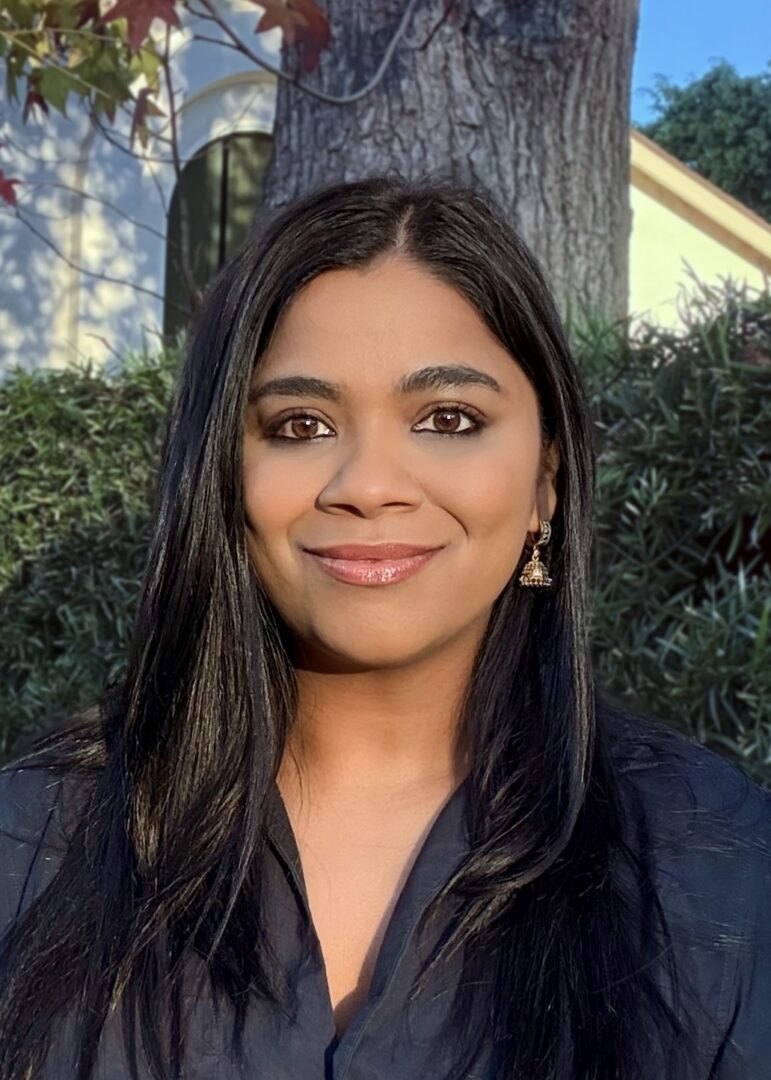
—Brandi Collins-Calhoun NCRP Movement Engagement Manager

Recent Reproductive Access and Gendered Violence Projects:
- The Cost of COVID: How the Pandemic Shifted Abortion and the Funds That Guard Patient Access, Rights and Justice
- Funding the Frontlines Roadmap: Supporting Health Equity Through Abortion Access
- The Hidden Costs of Crisis Pregnancy Centers: Deceptive by Design
- The Importance of Understandings and Investing in Sex Worker Movements
- Filling in NoVo’s Void
Survivor-led Solutions, Sector Strategies
NCRP’s gendered violence work is rooted in the understanding that gendered violence is produced by systems, not isolated incidents. To help funders and field partners align strategies and language, we’ve asked our partners organizations that have long been holding this analysis to share their definitions and framing. These contributions are movement and intermediary-led, center survivor experiences, highlight systemic harms, and emphasize continuity and care over episodic responses. Together, they create a shared framework for philanthropy to move from siloed approaches toward integrated, well-resourced and survivor-centered strategies. This is a living resource, a call-in to the sector to follow, learn, and act in alignment with communities on the front lines.
Reproductive access, gendered violence and LGBTQ+ rights are not separate stories. They find each other at the margins and intersections of the work and the hurt. They are chapters of the same book, written on bodies that have been policed, punished and politicized for daring to exist outside of someone else’s control. They are held together by a shared truth: Bodily autonomy is sacred, and safety, dignity and joy are not privileges, but birthrights.
Gendered violence expands beyond physical harm; it is structural, systemic and institutional. It is produced and reinforced through policing, health care, economic policy, education and philanthropy itself. Gendered violence shows up wherever power fears freedom, including in the targeting of trans people, especially trans people of color, whose lives are treated as disposable – for bodies forced to birth and coerced into sterilization – and the moments where queerness itself is framed as a threat, punished by law, culture or silence.
Through it all, we see the way movements refuse to abandon one another. We see the way the reproductive justice framework teaches us that autonomy means nothing without the conditions to thrive. We see it in the way LGBTQ+ organizers have long understood that survival requires community, care and imagination. And, in the way survivors transform pain into power through storytelling and healing justice, insisting on not just an end to violence, but daring to imagine and create a future rich with pleasure, safety and self-determination.
Philanthropy can be a partner to it all … but not with control or distance. Nor with fear dressed up as strategy. Instead, philanthropy can be a partner through trust and agency.
Philanthropy must fund work that is led by those most impacted – not as a gesture, but as a commitment. It can resource the long game, cultural change, base building and healing work that doesn’t always fit neatly into a grant report but can change lives all the same. Movements do not grow in silos, and investments in one fight strengthen them all, if we understand the intersections.
Philanthropy has a role: Not as a savior, but as a partner willing to be transformed, sit with discomfort, move money at the speed of harm, and believe that queer and trans people, survivors and people who may become pregnant are not problems to be solved, but visionaries shaping a more liberated world.
Protecting bodily autonomy in all its forms is not just resisting oppression; it is practicing freedom. None of our freedoms are singular, and none of our wounds exist alone. Our liberation is bound together.
—Russell Roybal NCRP Executive VP and Chief Impact Officer
Abortion Access
NCRP’s abortion justice work is grounded in the understanding that attacks on abortion access are not isolated policy debates; they are part of broader systems that control bodies, families and futures. Abortion restrictions operate alongside criminalization, economic exclusion, family regulation and surveillance to maintain racialized and gendered hierarchies of power. Abortion seekers and storytellers sit at the center of this analysis, offering lived expertise and political leadership that exposes how these systems operate together.
I sit in deep gratitude for abortions. I honor those who dared to imagine a world that did not yet exist, who organized, risked and labored so that people could decide what happens to their own bodies and futures.
This current regime may have stripped choice away, but because of the reproductive justice framework, I know the truth that what has been created once can be created again – and transformed into something even more just, expansive and loving than before.
Nearly 50 years of Roe taught us that possibility is real. Reproductive justice further reminds us that legality alone is not liberation. It teaches us to envision a world where certainty replaces fear, where autonomy is not conditional and where care is rooted in dignity rather than punishment.
I honor the legacy of Black women and queer ancestors who birthed the reproductive justice framework. They understood that decisions about pregnancy do not exist in a vacuum, but are shaped by poverty, racism, environmental violence, state surveillance and systemic neglect. I honor those who fought beyond choice – for the right to have children, not have children, and parent children in safe and healthy environments. I honor the imagination that widened the lens – beyond abortion alone to contraception, fertility, prenatal care, lactation, parenting support and community care – recognizing that life does not simply begin or end at conception.
I pray for and uplift abortion providers. To the clinics that continue to offer care under impossible restrictions. To the nonprofits who fund, organize and listen deeply to communities they serve. To the doctors, nurses, physician assistants, midwives, doulas and telehealth providers who adapt as the landscape shifts beneath them. To the mutual aid networks that move mountains – coordinating travel, lodging, childcare, food, and safety – so people can access care with dignity and respect. May your work be protected, resourced and sustained.
To every person who has chosen to terminate a pregnancy: I celebrate and honor the joy, relief, grief, complexity and certainty that can live together in that decision. I honor you for trusting yourself, listening to your body and choosing your future.
I thank my own mother for sharing her fertility stories with me – for her honesty about how hard decisions can be and teaching me that the choice was never anyone’s but the person who made it. That lesson lives in my bones.
I applaud the artists who tell the truth when words fall short – who paint, sculpt, write and perform the emotions that surround abortion and reproductive justice. Those who show us how community holds us, how silence is broken, and how humanity is revealed through experiences of choice and care.
As I reflect on the NCRP Reproductive Access and Justice Teams past, present and future, I thank you for the roadmap, courage to imagine beyond what exists and continuing to build the road ahead.
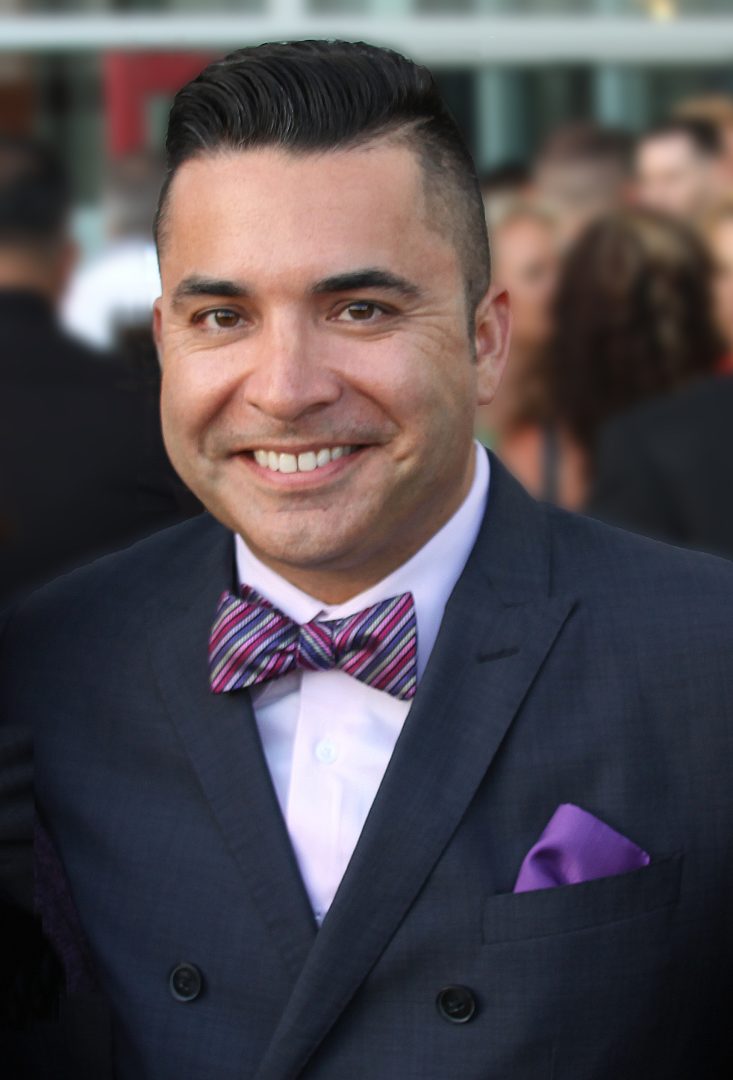
—Suhasini Yeeda NCRP Editorial Manager
This work is shaped by movement leaders who have demonstrated that storytelling is not just about shifting narratives; it is about building community, leadership, and power. We Testify’s Founder Renee Bracey Sherman said, “They’ve been closest to the pain, so they must be closest to the power. That can only happen if storytelling is invested in as a way of organizing and building the power of people who have abortions and then seats at the table are created for us to sit in and imagine a different world.” Influenced by this leadership, we recognize that abortion storytellers must be holistically supported : prepared to share safely, cared for throughout the process, connected in community and compensated for their labor. Storytellers are not communications tools; they are strategists and movement leaders.
Through this work, NCRP is helping philanthropy move beyond siloed, crisis-driven funding toward long-term, integrated strategies that are accountable to communities building power on the ground.
Birth Justice & Family Autonomy
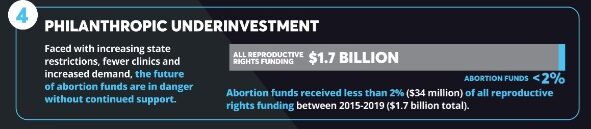
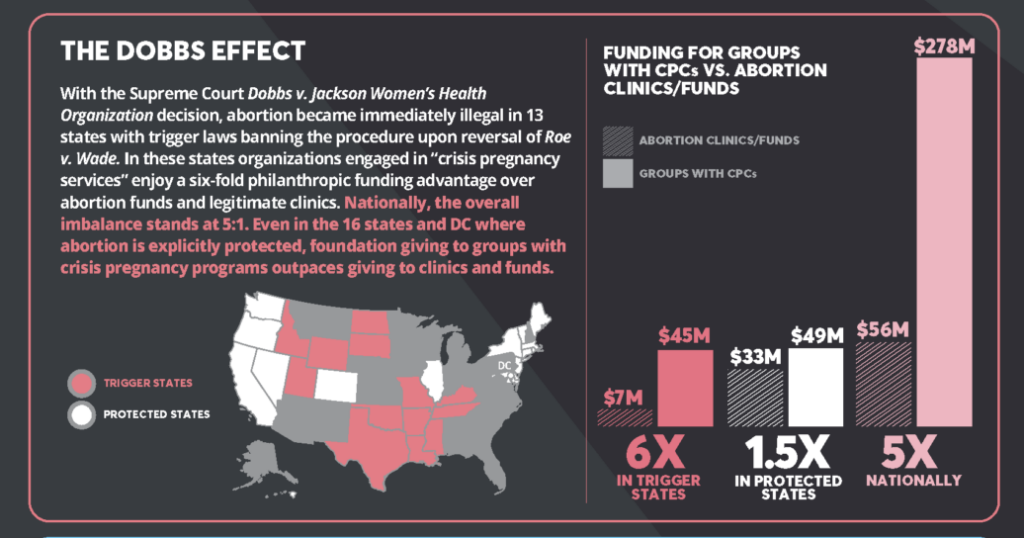
NCRP’s work on crisis pregnancy centers (CPC) is rooted in a birth justice analysis that recognizes reproductive control as a system of racialized surveillance over bodies, families and futures. Birth justice requires sustained investment in community and cultural care, including the mass mobilization, leadership development and training infrastructure built through HBCUs and Black-led community solutions that have long advanced care models rooted in trust, dignity and collective wellness. Listening to these leaders, particularly those building birth justice ecosystems in the South and through HBCU networks, helped surface how crisis pregnancy centers were expanding alongside this work. That same place-based listening, including our recent CPC analysis focused on Appalachia, revealed how CPC growth adapts to distinct regional conditions while advancing a shared national strategy. That listening is what led NCRP to deepen research into the scale, strategy and funding infrastructure behind CPC growth.
CPCs are not just a threat to abortion access; they are part of a broader opposition infrastructure targeting the full reproductive justice spectrum, particularly in Black, rural and other communities facing systemic disinvestment. As the sector elevated the Black maternal health crisis, CPCs simultaneously positioned themselves as community solutions, expanding gaps left by underinvestment while reinforcing stigma, misinformation and pregnancy outcome control. Addressing CPC harm is essential to protecting abortion access, birth justice and family autonomy and must be funded as core reproductive justice infrastructure.
Community-Based, Culturally Competent Solutions:
- Creating Black Systems of Care and the Next Generation of Black Maternal Health Leaders
- Disrupting Disparities and Exclusion in Lactation
- Upcoming Alabama Birth Equity Initiative Abortion Funds and Birth Justice
- Upcoming In Our Own Voice HBCU Blog
About the Data
NCRP researchers obtained mission statement text from Part I, Line 1 of the IRS Form 990 for 1,107 organizations identified as crisis pregnancy centers.
Research leads Stephanie Peng and Tenaja Henson used a combination of manual text analysis and Python coding to identify clusters of keywords and sentiments within these mission statements. Each mission statement was then categorized based on the number of keyword matches within thematic clusters.
Three primary clusters emerged:
- Anti-abortion and religious ideology – Keywords referencing faith-based missions and explicit anti-abortion ideology.
- Medical framing and inaccurate depictions of abortion – Keywords suggesting medical services or promoting misleading narratives about abortion.
- Hope, care and illusion of choice – Language emphasizing support, empowerment or choice while obscuring the organization’s anti-abortion agenda.
Approximately 3% of CPC mission statements did not clearly indicate their mission or used vague language such as “serving the community.”
And despite their role in the anti-abortion movement, only 17% of CPC mission statements explicitly used anti-abortion or religious language. Many CPCs are guided by evangelical Christian ideology, yet their public messaging often avoids explicit references to religion or opposition to abortion.
Instead, CPCs rely on strategic ambiguity, presenting themselves as neutral support organizations while advancing a clear goal: limiting the reproductive and parenting choices available to pregnant people.
This approach makes it far more likely that someone seeking pregnancy-related services will encounter a CPC that appears supportive and unbiased while actively working to discourage abortion.
Expanding Autonomy and Safety to Sex-Workers
NCRP’s Reproductive Access and Gendered Violence work recognizes that sex worker–led organizing is central to the fight for liberation, racial justice and reproductive freedom. Sex workers are not outside the movements they shape; they are program officers, organizers and movement leaders whose knowledge and experience drive strategies across labor rights, reproductive access, LGBTQ liberation and gender justice. Despite criminalization, stigma and systemic exclusion, sex worker–led spaces have consistently functioned as movement homes, sites of leadership development, community care and transformative strategy.
As Third Wave Fund’s Carlton V. Bell II articulated,“Sex worker-led organizing is routinely expected to sanitize, shrink and assimilate itself into frameworks that were never designed with us in mind. These frameworks often demand narratives of redemption, respectability, or reform that evoke pity rather than power. We’re told to tone it down, clean it up, make it make sense for people who’ve never had to trade their body, their gender expression, or their intimacy for survival.”
NCRP’s approach centers the expertise of sex workers, ensuring that funding, strategy and movement-building practices recognize the leadership, safety and agency of those most impacted. Through this work, NCRP calls on philanthropy to move beyond performative gestures and underinvestment. Supporting sex worker–led organizing strengthens cross-movement infrastructure, addresses systemic violence, and ensures that programs, policies and narratives are informed by the lived experience and leadership of those at the frontlines of reproductive justice, gender equity and liberation.
Lessons from the Frontlines: Understanding Sex Worker-led Movements:
- From the Frontlines: Understanding Sex Worker–Led Movements
The March 2022 issue of NCRP’s flagship Responsive Philanthropy journal lifts up the strategies, struggles and insights of sex worker–led movements, highlighting how funding and philanthropy shape the conditions for liberation, survival, and justice. - Funder Lessons from Four Years of Resourcing Sex Worker–Led Organizing and Grantmaking at the Sex Worker Giving Circle
Third Wave Fund, NCRP’s 2021 “Smashing Silos” Impact Award winner, shares 4 key lessons for funders supporting sex worker–led organizations: provide unrestricted, multi-year grants; center trauma-informed, empathetic grantmaking; build multilingual structures emphasizing language justice; and stop demanding fiscal sponsors for effective grassroots groups. As Third Wave Fund writes, “Directly funding the well-being, bodily autonomy and organizing of sex workers most impacted by oppression is in itself a radical vision and our biggest impact.” - Survival and Liberation: Our Struggles as a Sex Worker Organization in Los Angeles
Sex Worker Outreach Project Los Angeles demonstrates the importance of unrestricted, multi-year funding for day-to-day survival. Their all-volunteer, sex worker–led mutual aid work is constrained when time is lost to repeated grant applications that fail to address the growing gap in resources. - Trans and Sex Worker Justice Needs Steady Allyship
The Kua’ana Project serves Pasifika trans women and sex workers in Honolulu, advancing public health, decriminalization and Indigenous rights. Project leader Maddalynn Sesepasara emphasizes that steady, flexible allyship ensures organizations can balance direct services with advocacy, which are both critical to sustaining transformative work. - Be Fund(ed) or Die: The Precarity of Sex Worker Organizing
Support Ho(s)e contributors, led by Red Schulte, share the realities of working with funders in a space with limited support. When funders make mistakes, the lack of accountability compounds harm for organizers, underscoring the urgent need for responsible, informed and consistent investment in sex worker–led movements.
This issue offers funders a front row view of the leadership, strategies and resilience of sex worker organizers and a clear guide for how philanthropy can support them with respect, trust and long-term resources.

Advising Sex Worker-Centered Funds:
The RAGV project lead partnered with other sex workers that serve as philanthropic and movement leaders to advance peer-led funding models that shift power, strengthen movement infrastructure and align resources with community-defined priorities.
The project has served as an adviser for the Sex Worker Giving Circle [SWGC] Fellowship, reviewing applications, selecting fellows, sharing program work with networks and providing insights on applicants and their organizing. The SWGC Fellows have awarded over $550,000 in grants to U.S. sex worker–led movements and empowered people with current or past experience in the sex trade to make all high-level funding decisions, ensuring resources flow directly to those closest to the work. By pairing peer-led grantmaking with training and support, the program strengthened the leadership, resilience and sustainability of sex worker organizing.
Most recently, the project advised New Moon Fund’s Seed Funding initiative, launched with support from ViiV Healthcare’s AMP grant, by helping guide program design, selection processes and strategic insights on applicants and their work. The initiative provides $1,000 per month for 12 months to up to 15 U.S.-based sex worker–rights groups, prioritizing sex worker and survivor-led organizations focused on harm reduction and HIV/AIDS prevention and treatment. By pairing peer-led funding with strategic support and movement-informed guidance, this initiative ensures that resources reach the groups most positioned to advance health, safety and autonomy for sex workers.