
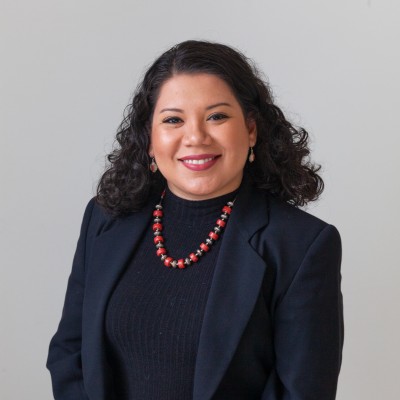
Black Broad Branch Project Co-Founder Mariana Barros-Titus
Mariana Barros-Titus

When Washington, DC was established as the capital of the United States by the Residency Act of 1790, the city’s framers aimed to build a beacon of democracy for all the world to see. In its role as the federal city, DC was meant to serve as the national symbol for democracy.

In many ways, their vision for the city to serve as a national manifestation of America’s democratic values has come to fruition; even if not exactly as they originally envisioned. Always, the local history of democracy in the District of Columbia has been a fractured one; its promise deeply warped by the nation’s struggle with systemic exclusion and racism.

In fact, if democracy is, at its core, about representation and voting rights, then today’s residents of the District continue to have woefully limited access to full democratic standing. Furthermore, one’s positionality dictates the degree to which individual Washingtonians experience the impacts of the lack of full representation. Depending on an individual’s unique identity, including racial and economic factors, access to democracy certainly looks different.

However, democracy is meant to be not just a form of government, but an accessible vehicle across social classes to achieve stability through choice. As detailed in NCRP’s Cracks in Foundation report and other materials, for Black Washingtonians, the experience of democracy and choice has historically been complicated and often interrupted.

TROUBLING EXCLUSION RIGHT FROM THE START

From the beginning of colonial contact with the native tribes that used to call this area their home, land and land ownership have been used to shape the development of the metropolitan city we know today. Its roots are firmly embedded into—and fueled by—the exploitation of cheap labor and resources.

The 17th century land grabs yielded tobacco exportation, which solidified the area’s early economic powerhouses. Local production of tobacco was very successful in the 18th century. However, it was a labor-intensive crop that also depleted the land’s nutrients.

Black and enslaved labor was used to create the high yields of the early tobacco industry, but by the turn of the 19th century, the crops yielded were fewer and fewer. This forced plantation enterprises to adopt new economic models away from crop production and toward extracting value from the exploitation of their enslaved labor. The economic dynamics of Washington’s early years, which baked enslavement and inequality into their foundations, created social and political systems in the area and the legacies of inequities that we are grappling with today.

BLACK PLACE-MAKING IN WASHINGTON

Prior to the turn of the 20th century, the federal city of Washington was limited to the original L’Enfant plan (L’Enfant-Ellicott Plan). Most of the land that had been donated to the federal government by the state of Maryland remained rural farmland into the late 1800s. This created rural enclaves of freedmen and women who were living in what was known as Washington County, often around the former sites of Civil War era forts.
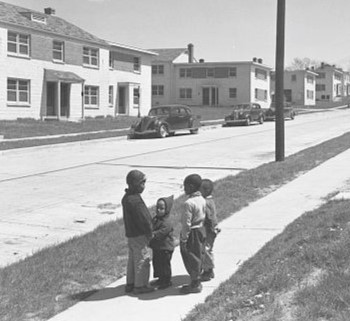
 

Picture of Black children playing outside Washington, D.C.'s Barry Farms Housing Development in 1944.
Photo of Black children playing outside Washington, D.C.’s Barry Farms Housing Development in 1944

This was the case of the Pointer/Harris and Dorsey/Shorter families who lived on Broad Branch Road NW, in what is current-day Chevy Chase DC. Their ancestors, just a few generations back, had been born into enslavement and achieved their freedom through manumission prior to the Emancipation Proclamation.

The Black Broad Branch community [then known as Dry Meadows] preceded the establishment of the Chevy Chase Company by nearly 50 years. They began to form as an African American enclave that thrived on community support, entrepreneurship, and the relative freedom of living outside of the city’s imposition of the racial codes that dictated Black life in Washington.

In the build-up to the Civil War and in the years immediately following it, Washington’s population and federal presence saw a rapid spike. The friction between the economic interests behind the system of enslavement and the sovereignty of American democratic ideals came to a boil and brought people to Washington for different reasons.

In the 19th century, the population in Washington County grew quickly as formerly enslaved people sought freedom. For Black men, joining the military offered them an opportunity to gain the rights of citizenship. For those who did not have access to the military route, including many Black women, freedom petitions and the purchasing of one’s freedom became ways to achieve manumission. Whichever way it was achieved, relative freedom was possible for Black residents of Washington, DC before most anywhere else in the country.
For four generations, the Dry Meadows community thrived along Broad Branch Road NW and cultivated the land both for their own nutrition and to sell cash crops. The Dorsey-Shorter family also built an addition to their family farmhouse that housed the neighborhood’s first grocery store. The families also traveled to nearby Georgetown to sell their crops and goods in more densely populated markets.

Beginning in the 1890s, they watched as the neighborhood around them transformed from the rural farmland of Washington County to a developed residential neighborhood similar to what we know Chevy Chase DC to be today. This made their land plots much more appealing to the burgeoning white community that would increasingly find multiple ways to encroach on their lives — and land.

DESIGNED EXCLUSION

Like many other cities in the United States, today’s demographics and economic—and thus, political—distribution of power in Washington, DC have been shaped by the use of the process of eminent domain in the early 20th century. Eminent domain, coupled with racially restrictive covenants, was used to intentionally create segregated neighborhoods well into the 1960s.

In 1929, this practical cocktail was used to forcibly remove the Black Broad Branch families by the National Capital Planning Commission (NCPC). This is the same process that was used in the neighboring Reno City as it was enveloped into Tenleytown. The area surrounding the Dry Meadows community on Broad Branch Road NW became more densely populated and exclusively white. Large plantations in the upper Northwest, including the Belt estate and that of Horace Jones, were subdivided into single family lots that implemented racial covenants in their deeds.


As the developers attracted more white residents to their new enclaves, the new residents organized and lobbied through white citizens associations for segregated schools. Congress and the local Commission acquiesced and used the process of eminent domain to raze the lots inhabited by Black families on Broad Branch Road NW and developed Lafayette Elementary School, intended to be a white-only school. The interruption of Black place-making and the decoupling of Black communities from choice and self-sufficiency through racially exclusive political processes was repeated in the nation’s capital time after time throughout the 20th century.

In the Dry Meadows community, the Dorsey/Shorters were the last ones to give up their land to the NCPC. Subsequent generations of the Pointer/Harrises (who by then also had the surname Moten) ended up spread out across the rest of the city. Many of them, like the Scott family from the community displaced to make room for today’s Meridian Hill Park (also known as Malcolm X Park), were impacted by eminent domain yet again in future generations.

MAKING THE UNSEEN VISIBLE AGAIN

Current-day descendants from the Pointer/Harris and Dorsey/Shorter lineages have been traced down and interviewed by the Black Broad Branch Project, a public history project. The project collected 16 oral histories from 8 descendant-narrators and used those as a means to document the generational implications of being forcibly dislocated from their land, along with asking the descendants to define what redress would look like for them. Their definitions of redress were then used to create a strategic plan for reparations. Oral history, as a methodology and as a philosophy, can be a powerful tool to engage narratives and experiences of historically under-represented communities.

Written documents cannot capture the totality of someone’s experience. They are often limited in capturing the full details and nuances of quotidian life. In addition, documenting daily life in written form may not be part of a communities’ cultural traditions. As such, orality as a method of capturing life histories and experiences, allows for the democratization of cultural narrative-shaping. The oral history process allows such histories and perspectives to be included in repositories, where cultural institutions shape historical narratives. Such historical narratives deeply impact how individual people in Washington, DC navigate their spaces.

In the case of Black Broad Branch, oral histories allowed for descendants to illustrate the material and spiritual/intangible impacts that forced dislocation left in its wake. Their oral histories were used to capture generational outcomes that many Washingtonians have suffered from as a result of patterns  of land dispossession and the weaponization of policy and private equity partnerships in the 20th century.

BETTER UNDERSTANDING OUR SHARED HISTORY

The generational arc captured by projects like the Black Broad Branch Project, offers a case study in reflecting how wealth creation and land dispossession have shaped the conditions that predominantly Black communities in Washington navigate today.

The interruption of Black placemaking (and choice) is at the crux of how Washington, DC came to be the city we know today. Racialized social norms informed racially exclusive political policies that then created harmful material and economic dynamics in the lives of Black Washingtonians.

Understanding these processes and being transparent about the systems that have resulted from their legacies, is a necessary first step to uproot the inequities that the city is grappling with in the present. It also serves as a microcosm for exploring how the nation as a whole has come to be in the present.

If a shared goal for us is to create a more equitable future, what would it look like for this history to be shared widely and honestly? The end goal should not simply be to cast culpability on victors and declare victims, but rather to understand that regardless of lineage and ancestry, all of us have inherited this shared history. Grappling with it is our shared responsibility.


Mariana Barros-Titus is a seasoned community organizer working at the intersection of public history and advocacy. Her work focuses on charting the history of community formation in the District of Columbia, including studying Black placemaking and how the legacy of racially restrictive covenants has shaped the demographic and economic distributions of the District. As co-founder of the Black Broad Branch Project, she has documented a Black community that was forcibly dislocated when Chevy Chase DC was developed around their ancestral land. In addition, her work traces the history of community formation, transformation, and processes of integration within DC’s Latine communities. This work has included the creation and maintenance of the Researching Latino/a/x DC research guide, which is aimed at addressing the archival silencing of Latino/a/x experiences within formal memory-keeping institutions. 

Mariana is currently Senior Manager of Community Engagement for the DC History Center. Her ongoing responsibilities in this role include supporting the DC History Center’s work toward connecting across all eight wards of the city. She also provides staff support to the Center’s stakeholder advisory groups, including the DC History Center’s Community Council and the Latino/a/x Advisory Group. She holds a B.A. in Political Science from the University of the District of Columbia.

CONTACT (S):  Russell Roybal rroybal@ncrp.org 
                           Elbert Garcia, egarcia@ncrp.org 

NCRP:  Philanthropy Must Play An Active Role in Reparations for Black People

Cracks in the Foundation: Philanthropy’s Role in Reparations for Black People in the DMV, the newest report from
the National Committee for Responsive Philanthropy, examines grantmakers’ role in repairing the harm
created by the wealth generated from the systemic exclusion and exploitation of Black people in the Washington, DC area. 

WASHINGTON, DC – At a time when so many are willing to give up any discussion of America’s past in exchange for a false semblance of civil discourse, a new report from the National Committee for Responsive Philanthropy makes the case that foundations have an immediate opportunity and responsibility to address society’s past harm in order to help communities heal and thrive. 

Cracks in the Foundation: Philanthropy’s Role in Reparations for Black People in the DMV details how the disparities in areas like education, income, employment and housing for Black residents in the District of Columbia, southern Maryland, and northern Virginia areas (commonly known as the DMV) are not random or natural occurrences but are a string of conscious choices that repeatedly harmed communities.  

Using publicly available quantitative and qualitative research, the report details how the great wealth that later made philanthropy possible in the DC area came at the expense of the social stability and economic success of Black residents. The report examines these harmful actions in four distinct sectors: media, housing, employment, and healthcare. It also provides a framework for foundations to not only understand their past, but how they may start acknowledging and addressing these harms with community residents.

The report is available for download at ncrp.org/reparations 

“Despite individuals and some organizations being generally aware of the historical exploitation of Black people in this country, philanthropy has never really reckoned with how the ill-gotten gains from systemic discrimination and exclusion were the seed capital for so many modern grantmakers,” said Dara Cooper, a national strategic consultant and organizer. “This report helps us connect the voices of the past with the data of the present in order to give foundations little excuse to address and redress historical and ongoing exploitation of Black DMV residents and families.”

“We hope that foundations in the DC area will acknowledge these stories of harm and use the tools included in this report to establish and deepen connections with local groups and organizations and contribute financial resources and social capital for reparative action,” said NCRP President and CEO Aaron Dorfman. “These collective efforts are crucial for the immediate and long-term healing of impacted Black communities in the region.”

Regional funder if, A Foundation for Radical Possibility, is one of eight foundations included in the report  as illustrative of the role that the sector has historically played in the systemic limiting of opportunities of local Black residents. They provided the lion’s share of funding for the report soon after embarking on their own journey into the foundation’s wealth generation and past actions.

“This report illustrates if’s commitment to racial justice, which requires accountability for injustice, both past and present. We are holding ourselves accountable for the harm we have caused,” said if Co-CEOs, Hanh Le and Temi F. Bennett. “Addressing anti-Blackness is ground zero for racial justice in America. Given the backlash to the alleged “racial reckoning” of 2020, our sector is in fight or flight mode. if is fighting, always. We invite others to join us.” 

Although discussions about reparations for Black people have existed since the U.S. Civil War, the current movement for reparations has picked up steam in recent years with cities like Evanston, Ill. and states like California creating their own commissions and reports to help quantify the harm done and propose healing solutions. In philanthropy, recent articles by the BridgeSpan Group and Liberation Ventures and webinars by Justice FundersPhilanthropy Northwest and Decolonizing Wealth  have made additional cases for reparations role in building a culture of repair and redress as foundations more deeply explore the impact of their initial seed capital.  

Local organizers, like DC Movement for Black Lives Policy Table Coordinator Christian Beauvoir, see foundations’ role in reparations both as natural moral and practical extensions of their charitable missions.  

“Every institution that claims to value Black people has a responsibility to make right every time that it has not,” said Beauvoir. “But reparations is more than just a legal framework for responding to harm. It says I see the violence that your ancestors endured when they deserved care, I see the discrimination they experienced when they deserved homes, schools, or doctors and because these histories still live in your DNA and in the institutions that surround you, I am committed to repairing what I have destroyed.” 

“Philanthropy’s history of wealth generation presents a unique opportunity and responsibility,” says report author and NCRP Research Manager for Special Projects Katherine Ponce. “We hope this report and its community-centered research framework persuades – and, if necessary, pressures — decision-makers to shifting social and economic resources back to those whose rights, livelihoods and safety have been unjustly stripped away through historical actions reflecting structural anti-Black racism.” 

The Need to Acknowledge and Address Past Harm Directly 

Past research by NCRP and others have noted philanthropy’s general underfunding of Black communities and Black-led institutions and non-profits. Yet increased funding to Black communities and racial justice work – while critical – is not the same as reckoning with harm done to specific Black people through the wealth origins of an individual institution.   

Cracks in the Foundation looks to catalyze that process by (re)centering the conversation on those most impacted and harmed back by the wealth that was directly and indirectly generated through systemic racism and discrimination.  

“By compiling, contextualizing and publishing biographical and other historical information about the origins of philanthropic wealth, the stories of harm experienced by Black people become unavoidable and, more importantly, actionable – especially for funders with a commitment to racial equity or racial justice,” writes Ponce. “Research that connects and centers stories of local Black communities can generate energy, opportunities, and concrete actions for foundations to engage in reparations and healing efforts. This report is both an invitation and a roadmap for local foundations – studied and otherwise – to do exactly that.”  

DC native and NCRP Board Chair Dr. Dwayne Proctor sees the report as a crucial tool for funders to both address past harms and create a more equitable future for everyone.  
 
“This report speaks to generations of history of Black people in the region and the throughlines to their oppression. I am encouraged to read a report that not only tells these stories but applies them to new and tested frameworks,” said Dr. Proctor, who also services as the President and CEO of the Missouri Foundation for Health. “If readers can connect the overlaps between the social determinants of health and the necessary healing of Black families today – real and transformative conversations about repair can begin.” 

Local Feedback and Input 

Ponce and NCRP researchers consulted with local academics, community leaders and oral history experts like the DC History Center. In cases where researchers could connect sufficient public evidence to a specific foundation, NCRP offered those foundations an opportunity to respond and identify current levels of related funding.  

For previous Horning Family Foundation Board Member Andy Horning, conversations into the past are both personal and professional as the family foundation wades through a year of reflection and paused operations. As place-based foundation whose grantmaking is explicitly dedicated to centering Black people and Black communities in Washington, DC, he understands that there is no way around the vulnerability that comes with facing and doing something about the past.  

“For white people, undoing racism and understanding white supremacy is a critical first step when they engage in philanthropy.  It isn’t easy work,” says Horning. “Expect a direct challenge to who you are and have seen yourself to be.  It requires incredible courage to step forward into the discomfort AND deep self-compassion when it inevitably becomes difficult. Its a reckoning, a grappling with the hard new reality of understanding ourselves and the world white supremacy has created.” 

Dorfman acknowledges that the report will be uncomfortable even to the most progressive leaders and board members.  

“We understand that for many organizations, this report will be personal. Founder legacies are complicated and this kind of reckoning process forces everyone connected to a foundation to be vulnerable,” says Dorfman. “But we also hope that foundations both mentioned and unmentioned will seize the chance to not only to exercise responsibility, but to also provide courage to those in their sector who may want to act, but do not know where to start.” 

Although the report’s immediate focus is the Washington, DC area, the report’s methodology and recommendations can also serve as a model for funders and organizers in other cities and regions. The framework, community-centered process, and suggested actions also have potential applications not just for philanthropy, but for any institution in the public or private sector grappling with these uncomfortable, but necessary questions. 

“This research stands on the shoulders of the generations of advocates that have been dreaming and implementing interventions in philanthropy that disrupt and transform the status quo,” says Jennie Goldfarb, Director of Operations & Strategic Engagement at Liberation Ventures. “Right now, foundations have a chance to model holistic repair. This report is the first step and I’m so proud of everyone involved in bringing this across the finish line. My hope is it fuels a movement of funders committed to truth telling and being in right relationship with each other and the organizations they fund.” 

ABOUT NCRP 

The National Committee for Responsive Philanthropy (NCRP) has served as philanthropy’s critical friend and independent watchdog since 1976. We work with foundations, non-profits, social justice movements and other leaders to ensure that the sector is transparent with, and accountable to, those with the least wealth, power and opportunity in American society. 

Our storytelling, advocacy, and research efforts, in partnership with grantees, help funders fulfill their moral and practical duty to build, share, and wield economic resources and power to serve public purposes in pursuit of justice. 

The following is a transcript of Episode 3 of NCRP’s video series, Unpacking Philanthropy. 


Check out the video here on LinkedIn. 

Hello, and welcome to Unpacking Philanthropy. I’m Aaron Dorfman.  

For the past several years, there has been a lot of talk in philanthropy about “racial healing.” Much of the conversation was driven by the W.K. Kellogg foundation. 

I was skeptical of this concept at first. Some of you may have been, too. Some you still may be. 

The concept of racial healing seemed fuzzy to me, and of limited utility and no nutritional value. Kind of like the outer shell of a lychee fruit. 

You see, I’ve devoted the past 30 years of my life to pursuing social, racial and economic justice. The driving force of my work has been to help communities build enough power to change systems and policies. 

I sought tangible, sweet victories that improved people’s lives. I celebrated wins like the passage of the Affordable Care Act, Marriage Equality, and increases in the minimum wage. To me, those were and are the sweet fruit of the lychee, not the fuzzy red outer shell. 

In my 50s, I still want those tangible policy changes that help us become a more fair and just society. I want them more now than ever. 

But the truth is, racial healing is more like a peach than a lychee. The outside of a peach might not look like much. But it has great nutritional value, too. No one peels a peach before eating it. Its outer shell is just as delicious and – like racial healing – as essential as the rest of the fruit. 

According to the Kellogg Foundation, Racial Healing is a process that helps us repair the damage caused by racism and restore communities to wholeness. And truth-telling about past harms is essential to the process. 

So what changed my perspective? 

In 2021 and 2022, I participated in the Racial Healing Certificate Program offered by the School of Community Philanthropy at the Clinton School for Public Service at the University of Arkansas.  

We had an amazing cohort for the inaugural run of this new program, and incredible faculty advisors like John Powell and Manuel Pastor. 

We went on a learning tour that took us to Little Rock, Arkansas and Montgomery, Alabama. 

As I toured the National Memorial for Peace and Justice in Montgomery, I allowed myself to be fully present as I soaked in all the names of people who had been lynched, including in places where I’ve lived. 

At The Legacy Museum, I was moved by the exhibits showing our path from Enslavement to Mass Incarceration. 

In Little Rock, I learned more than the few paragraphs I was taught in school about the brutal reaction to integrating Little Rock High School. 

Some would have us believe that the harms of slavery and segregation are in the distant past. But they aren’t past. And until we deal openly and honestly with those harms, we can’t heal and move forward into a more lush future where everyone thrives. 

Where – and how does philanthropy begin to reckon honestly with past harms? Later this month, NCRP will look to help answer those questions when we release our Reckoning Initiative report.  We’ve been studying how fortunes that make philanthropy possible were built on exploitation and harm to Black people. We’ll publish the stories that too few of us know and invite foundations to reflect on the uncomfortable truths that our research unearths.

onest truth-telling is a first step towards healing. To build a sweet, delicious future and move our society towards justice we have to be honest about the harms of the past.  

I invite you to be bold, friends, and come on this journey with us.